• Home
  • Latest
  • Fortune 500
  • Finance
  • Tech
  • Leadership
  • Lifestyle
  • Rankings
  • Multimedia
HealthInsurance

Former Aetna CEO says he’d eliminate employer-sponsored insurance to fix the U.S. healthcare industry in wake of UnitedHealthcare shooting

Sasha Rogelberg
By
Sasha Rogelberg
Sasha Rogelberg
Reporter
Down Arrow Button Icon
Sasha Rogelberg
By
Sasha Rogelberg
Sasha Rogelberg
Reporter
Down Arrow Button Icon
December 13, 2024, 4:43 AM ET
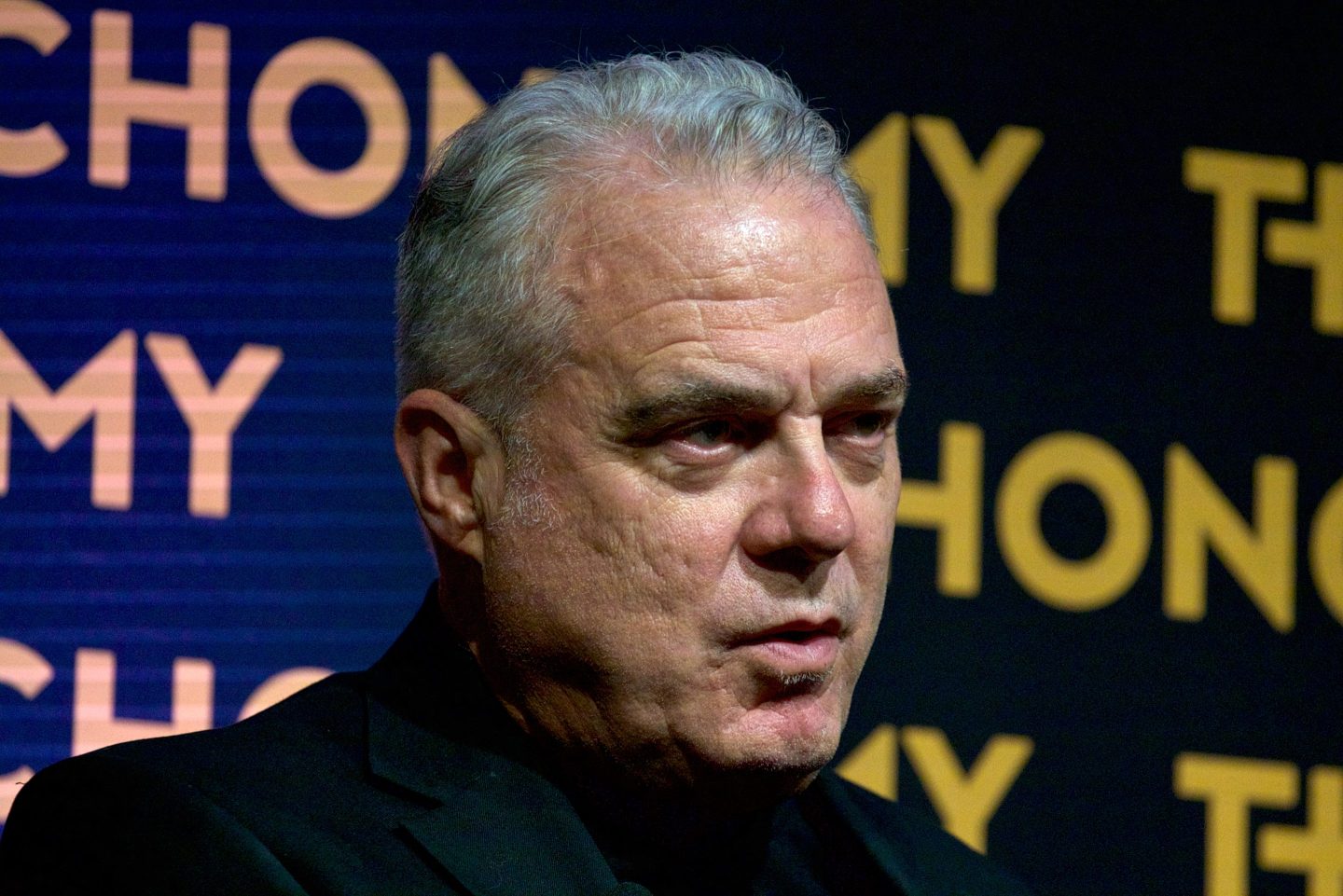
Mark Bertolini is mid-sentence. He is in front of a blue screen with yellow writing on it.
Mark Bertolini, CEO of Oscar Health, argued for the elimination of employer-provided insurance.Wes Bruer/Bloomberg—Getty Images
  • Mark Bertolini, former Aetna CEO and current chief executive of Oscar Health, said Americans’ frustration with insurance systems is justified. Employer-sponsored health insurance, which insured over 160 million Americans, has lost some of its efficacy because companies have less leverage with insurers to lower premiums. Instead, employees should choose their own plans from a marketplace, where Oscar has positioned itself to target individuals uninsured by their employers.

The murder of UnitedHealthcare CEO Brian Thompson ignited a renewed wave of frustration over the U.S. healthcare system, which critics say has gained notoriety for being exorbitantly expensive while falling short at improving health outcomes. Mark Bertolini, former Aetna chair and CEO and current chief executive of Oscar Health, believes he’s found a solution to the industry’s pitfalls: the elimination of employer-sponsored health insurance.

Recommended Video

“Probably the most important thing is that healthcare has now become very individualistic: ‘I want it to be fit for me,’” Bertolini told CNBC’s “Squawk Box” on Thursday. “‘And when my employer buys my healthcare coverage, they buy for the average.’”

Bertolini has led Oscar Health since April 2023, after VC Joshua Kushner co-founded the company in 2012. Kushner has served as vice chairman of the board since its founding. The insurance company is an individual health care provider under the Affordable Care Act (ACA) and has continued to expand its availability in the marketplace for those who aren’t getting employer-covered insurance. While Oscar partnered with Cigna in 2020 to provide group insurance to small-and mid-sized businesses and gain access to its provider network, it has struggled to sustain that branch of its business and has redoubled efforts to expand coverage to employees to compete with the larger firms from which employers seek coverage.

More than 60% of Americans under 65, or about 164.7 million people, were insured through their employer in 2023, making it the largest source of insurance for non-senior Americans, according to health policy nonprofit KFF. The system has allowed a wide swath of Americans to receive subsidized health insurance, and for their employers to save money through tax breaks by providing group health coverage. 

But the system can also result in uneven coverage and massive variability in what employees need to contribute to the plan, with insurance premiums for enrolled employees increasing by more than 50% on average from $4,940 for single coverage in 2010, to $7,590 in 2022, according to the U.S. Census. As the cost of care in the U.S. balloons, making up almost 20% of the gross domestic product, the system as it stands is growing less sustainable.

Bertolini argues that relationships between insurers and physician practices tighten in mergers. Employers no longer have the same bargaining power against insurance providers to lower premiums, and that power of negotiation only diminishes for small-and mid-sized firms. 

“The companies have no leverage,” he said.

As an alternative, the healthcare CEO proposed that employers continue to contribute to employees’ insurance, but instead of enrolling them in a group plan, allow them to select an individual plan that fits their needs. A relatively younger and healthier employee, for example, should get a lower premium than their older colleague who has a large family.

“Instead of defined benefit, you allow that employee, with some assistance, to understand what’s going on in their use of healthcare to get them into the right plan,” Bertolini said.

Bertolini is effectively describing Oscar’s $3.4 billion business model. The marketplace-based insurance company reported $54 million in losses last quarter, shortly after the election. Though Donald Trump has proposed scrapping the ACA, the company said in a statement accompanying its earnings it is “positioned for long-term growth—appealing to GOP desires for consumer choice and a free market approach.” 

Oscar did not respond to Fortune‘s request for comment.

Changing an 80-year-old insurance model

The desire to reinvent the insurance industry comes amid a wash of criticism of the U.S. healthcare system in the wake of Thompson’s death, which precipitated death threats to other healthcare executives and the removal of senior executive and board member information from insurers’ websites to protect employees’ safety 

But “the anger is justified,” Bertolini said, particularly as rates of claims denials have increased, according to Experian Health’s 2024 State of Claims.

“You can’t talk to anyone in this city and not get a story about a claim denial or a prior authorization…getting the right drugs,” Bertolini added.

These frustrations have been 80 years in the making, he said, and are a result of a system built after World War II to accommodate a growing economy and population. It no longer suits today’s population, in his view. 

In the early 19404s, having so much of the U.S. population in military service caused a severe labor shortage, and in order to entice the remaining eligible population to join the workforce, employers began hiking wages. Fearing a wave of inflation as a result of the hiring push, President Franklin Roosevelt created the Office of Economic Stabilization and authorized wage controls through the Stabilization Act of 1942. The move forced employers to instead use increased health insurance benefits as an incentive. To accommodate the growing number of Americans receiving health care through employee-provided insurance, Congress passed the Hill-Burton Act in 1946 to build and expand U.S. hospitals. 

“We created both demand and supply increases that have not slowed since the population boom happened,” Bertolini said. The problem now is that in 1940, health care spending made up 4.5% of the GDP compared to today’s nearly 20%.

“As you look at these changes over time,” he added, “we’ve just outrun our ability to afford the way we do it.”

Join us at the Fortune Workplace Innovation Summit May 19–20, 2026, in Atlanta. The next era of workplace innovation is here—and the old playbook is being rewritten. At this exclusive, high-energy event, the world’s most innovative leaders will convene to explore how AI, humanity, and strategy converge to redefine, again, the future of work. Register now.
About the Author
Sasha Rogelberg
By Sasha RogelbergReporter
LinkedIn iconTwitter icon

Sasha Rogelberg is a reporter and former editorial fellow on the news desk at Fortune, covering retail and the intersection of business and popular culture.

See full bioRight Arrow Button Icon

Latest in Health

Finance
Lorem ipsum dolor sit amet, consectetur adipiscing elit, sed do eiusmod tempor incididunt ut labore et dolore magna aliqua. Ut enim ad minim veniam
By Fortune Editors
October 20, 2025
Finance
Lorem ipsum dolor sit amet, consectetur adipiscing elit, sed do eiusmod tempor incididunt ut labore et dolore magna aliqua. Ut enim ad minim veniam
By Fortune Editors
October 20, 2025
Finance
Lorem ipsum dolor sit amet, consectetur adipiscing elit, sed do eiusmod tempor incididunt ut labore et dolore magna aliqua. Ut enim ad minim veniam
By Fortune Editors
October 20, 2025
Finance
Lorem ipsum dolor sit amet, consectetur adipiscing elit, sed do eiusmod tempor incididunt ut labore et dolore magna aliqua. Ut enim ad minim veniam
By Fortune Editors
October 20, 2025
Finance
Lorem ipsum dolor sit amet, consectetur adipiscing elit, sed do eiusmod tempor incididunt ut labore et dolore magna aliqua. Ut enim ad minim veniam
By Fortune Editors
October 20, 2025
Finance
Lorem ipsum dolor sit amet, consectetur adipiscing elit, sed do eiusmod tempor incididunt ut labore et dolore magna aliqua. Ut enim ad minim veniam
By Fortune Editors
October 20, 2025

Most Popular

Finance
Lorem ipsum dolor sit amet, consectetur adipiscing elit, sed do eiusmod tempor incididunt ut labore et dolore magna aliqua. Ut enim ad minim veniam
By Fortune Editors
October 20, 2025
Finance
Lorem ipsum dolor sit amet, consectetur adipiscing elit, sed do eiusmod tempor incididunt ut labore et dolore magna aliqua. Ut enim ad minim veniam
By Fortune Editors
October 20, 2025
Finance
Lorem ipsum dolor sit amet, consectetur adipiscing elit, sed do eiusmod tempor incididunt ut labore et dolore magna aliqua. Ut enim ad minim veniam
By Fortune Editors
October 20, 2025
Finance
Lorem ipsum dolor sit amet, consectetur adipiscing elit, sed do eiusmod tempor incididunt ut labore et dolore magna aliqua. Ut enim ad minim veniam
By Fortune Editors
October 20, 2025
Finance
Lorem ipsum dolor sit amet, consectetur adipiscing elit, sed do eiusmod tempor incididunt ut labore et dolore magna aliqua. Ut enim ad minim veniam
By Fortune Editors
October 20, 2025
Finance
Lorem ipsum dolor sit amet, consectetur adipiscing elit, sed do eiusmod tempor incididunt ut labore et dolore magna aliqua. Ut enim ad minim veniam
By Fortune Editors
October 20, 2025
Rankings
  • 100 Best Companies
  • Fortune 500
  • Global 500
  • Fortune 500 Europe
  • Most Powerful Women
  • Future 50
  • World’s Most Admired Companies
  • See All Rankings
Sections
  • Finance
  • Leadership
  • Success
  • Tech
  • Asia
  • Europe
  • Environment
  • Fortune Crypto
  • Health
  • Retail
  • Lifestyle
  • Politics
  • Newsletters
  • Magazine
  • Features
  • Commentary
  • Mpw
  • CEO Initiative
  • Conferences
  • Personal Finance
  • Education
Customer Support
  • Frequently Asked Questions
  • Customer Service Portal
  • Privacy Policy
  • Terms Of Use
  • Single Issues For Purchase
  • International Print
Commercial Services
  • Advertising
  • Fortune Brand Studio
  • Fortune Analytics
  • Fortune Conferences
  • Business Development
About Us
  • About Us
  • Editorial Calendar
  • Press Center
  • Work At Fortune
  • Diversity And Inclusion
  • Terms And Conditions
  • Site Map
  • Facebook icon
  • Twitter icon
  • LinkedIn icon
  • Instagram icon
  • Pinterest icon

Latest in Health

PoliticsModerna
FDA backtracks and agrees to review Moderna mRNA flu vaccine after initial rejection
By Lauran Neergaard and The Associated PressFebruary 18, 2026
7 hours ago
Healthsleep
The 4 Best Bed Frames of 2026: Expert Tested
By Christina SnyderFebruary 18, 2026
10 hours ago
Successthe future of work
As boomer and Gen X bosses retire, working from home will make a major comeback, new research predicts—and you have work-life balance loving Gen Z to thank
By Orianna Rosa RoyleFebruary 17, 2026
2 days ago
HealthHealth
Confronting Asia’s growing rate of chronic conditions means tackling cultural issues as much as medical ones
By Stuart A. SpencerFebruary 15, 2026
3 days ago
Susan Blumenthal
AICancer
Meet the American spies who helped mammograms save more lives
By Erik GermanFebruary 15, 2026
4 days ago
HealthDietary Supplements
5 Best Nootropics of 2026: Expert Reviewed Supplements
By Christina SnyderFebruary 13, 2026
5 days ago

Most Popular

placeholder alt text
AI
Thousands of CEOs just admitted AI had no impact on employment or productivity—and it has economists resurrecting a paradox from 40 years ago
By Sasha RogelbergFebruary 17, 2026
1 day ago
placeholder alt text
Personal Finance
You need $2 million to retire and 'almost no one is close,' BlackRock CEO warns, a problem that Gen X will make 'harder and nastier'
By Sydney LakeFebruary 17, 2026
1 day ago
placeholder alt text
Economy
Trump crackdown drives 80% plunge in immigrant employment, reshaping labor market, Goldman says
By Nick LichtenbergFebruary 17, 2026
1 day ago
placeholder alt text
Personal Finance
Current price of silver as of Tuesday, February 17, 2026
By Joseph HostetlerFebruary 17, 2026
2 days ago
placeholder alt text
Economy
$56 trillion national debt leading to a spiraling crisis: Budget watchdog warns the U.S. is walking a crumbling path
By Nick LichtenbergFebruary 17, 2026
1 day ago
placeholder alt text
Economy
Top Trump advisor furious about true cost of tariffs being revealed, vows to punish New York Fed for ‘worst paper’ ever in history
By Jake AngeloFebruary 18, 2026
7 hours ago

© 2026 Fortune Media IP Limited. All Rights Reserved. Use of this site constitutes acceptance of our Terms of Use and Privacy Policy | CA Notice at Collection and Privacy Notice | Do Not Sell/Share My Personal Information
FORTUNE is a trademark of Fortune Media IP Limited, registered in the U.S. and other countries. FORTUNE may receive compensation for some links to products and services on this website. Offers may be subject to change without notice.