Good morning. I’m back from San Francisco and overwhelmed by the incredible response we received at Fortune Brainstorm AI. Many thanks to those of you who attended and participated.
For those who missed it, a limerick:
The AI is already here,
revolution is nothing to fear,
unless your concerns
conflict with returns
in which case upskill your career.
…or just watch the sessions here. The news below. —Andrew Nusca
Want to send thoughts or suggestions to Data Sheet? Drop a line here.
Meta suffers global outage
The portfolio of popular communication services run by Meta—including Facebook, Instagram, Threads, and WhatsApp—experienced a worldwide outage Wednesday.
Users reported being unable to access the services, whether via desktop or mobile, from about 12:30 p.m. Eastern.
“We’re aware that a technical issue is impacting some users’ ability to access our apps,” the company wrote at about 1:48 p.m. ET. “We’re working to get things back to normal as quickly as possible and apologize for any inconvenience.”
Almost four hours later, it added: “We’re 99% of the way there - just doing some last checks.”
Meta didn’t say whether the outage was caused by an internal deployment error or an external malicious actor. But it’s hardly unprecedented.
In March, several of the company’s platforms forced users to log out and prevented them from logging back in. And in 2021, the company’s services suffered an outage that lasted for more than seven hours, the result of configuration changes to key equipment.
FTC chair Lina Kahn exits, Andrew Ferguson enters
Big Tech nemesis Lina Khan is out as Federal Trade Commission chair, to be replaced by conservative commissioner Andrew Ferguson…who is also going to give the sector a hard time.
“At the FTC, we will end Big Tech’s vendetta against competition and free speech,” Ferguson tweeted after his appointment by President-elect Trump. “We will make sure that America is the world’s technological leader and the best place for innovators to bring new ideas to life.”
Ferguson is a crusader against content moderation, earlier this month calling for the investigation of platforms’ “opaque, unpredictable processes for banning users and censoring content,” and even suggesting the FTC should “confront advertiser boycotts which threaten competition among those platforms.” That’s presumably an X reference.
It’s less clear whether he will otherwise apply competition law as strictly and aggressively as Khan has.
Meanwhile, Trump also named Jacob Helberg—a massive TikTok-ban advocate, and husband of tech investor Keith Rabois—as the guy who will “guide State Department policy on Economic statecraft, promoting America’s Economic security.”
Maybe TikTok shouldn’t be holding its breath for Trump to save its skin after all. —David Meyer
Google debuts Gemini 2.0
At long last, Google has debuted the next version of its flagship artificial intelligence model.
With twice the speed of its predecessor, Gemini 2.0 can generate images and audio in several languages, write code, and facilitate—naturally—web searches.
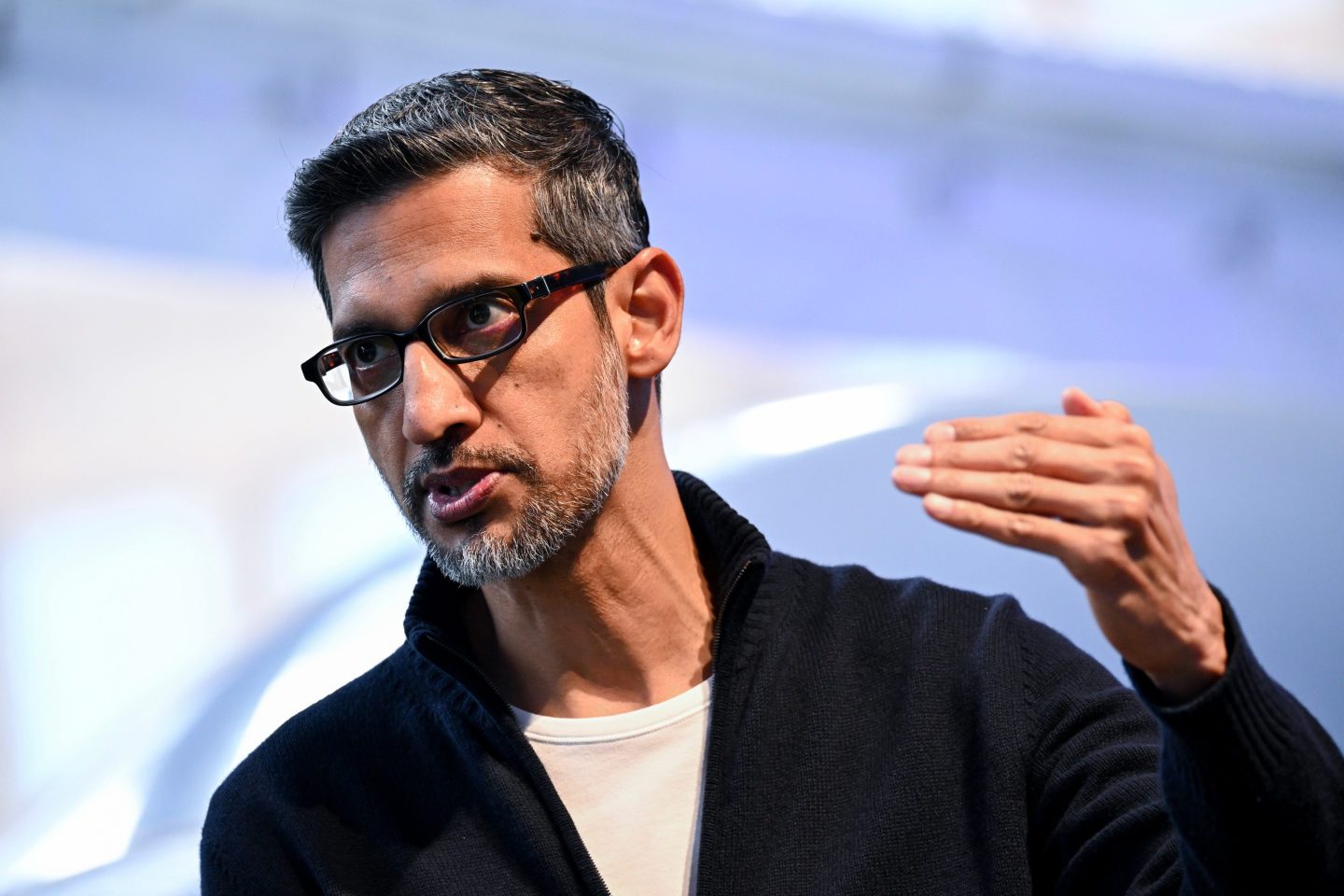
“Over the last year, we have been investing in developing more agentic models,” CEO Sundar Pichai wrote in a blog post, “meaning they can understand more about the world around you, think multiple steps ahead, and take action on your behalf, with your supervision.”
It’s all part of the great race to make a better “universal assistant,” as Pichai puts it. The biggest of Big Tech—Amazon, IBM, Google, Meta, Microsoft, OpenAI, Salesforce, Nvidia—and an array of smaller players are racing to build AI agents to automate business processes and reshape the corporate labor landscape.
Gemini 2.0 runs on the company’s sixth-generation proprietary processors, dubbed Trillium. The new model will begin its roll out to developers and testers, with Google product integration to follow.
Adobe stock drops 8% after gloomier outlook
Adobe reported a record $5.61 billion in revenue in its fourth quarter results yesterday, but a lower forecast than expected sent the company’s stock price down 9% to about $500.
The San Jose company reported solid numbers for its digital media (up 12% year over year to $4.15 billion) and digital experience (up 10% to $1.40 billion) segments. “Digital media” includes cloud-based applications like Photoshop, Illustrator, InDesign, and Acrobat; “digital experience” includes analytics, social, ad targeting, and other customer-centric services.
But the company’s forecast for fiscal year 2025 revenue—about $23.4 billion—was softer than Wall Street’s expectation of about $23.8 billion, stoking fears that the company is losing ground in the artificial intelligence race.
Adobe has been adding generative AI features to its creative products, and it has a homegrown model called Firefly. It introduced a video-focused tool in October that would be integrated into its Premiere editing app and yesterday announced additional pricing tiers for AI tools.
But a rash of well-funded AI startups have demonstrated impressive technologies that may one-up Adobe’s offerings, foremost OpenAI, which introduced Sora, its video generation model, just three days ago.
Apple Intelligence updates come to iPhones, iPads, Macs
More Apple Intelligence features are emerging in the latest batch of operating system updates from the company.
iOS 18.2, iPadOS 18.2, and macOS Sequoia 15.2 are now available, offering ChatGPT integration in Siri and Writing Tools, a dedicated image-creation app called Image Playground, and a feature called Genmoji that allows you to create custom emoji.
Elsewhere are tiny but meaningful changes. You can now share the location of a lost AirTag with others. You can once again add volume controls to the lock screen. And if you’re a News+ subscriber, you get daily Soduku puzzles.
As a reminder, the new AI features are limited to English-language users in the U.S., Australia, Canada, New Zealand, South Africa, and the U.K. More will arrive beginning in April.
More data
—SCOTUS dismisses Nvidia appeal to avoid a securities fraud lawsuit by shareholders.
—AI robots “will drive a ton in labor savings,” Amazon’s former consumer boss says.
—Nasdaq closes above 20,000, a record. Alphabet and Meta also closed at record highs.
—Micron wins $6.2 billion federal award. A CHIPS Act gift to spur U.S. plant expansion.
—Stellantis partners with China’s CATL on a $4.3 billion EV factory in Spain.
—Meta donates $1 million to Trump inaugural fund. Mark Zuckerberg is not done with politics, actually.
Endstop triggered