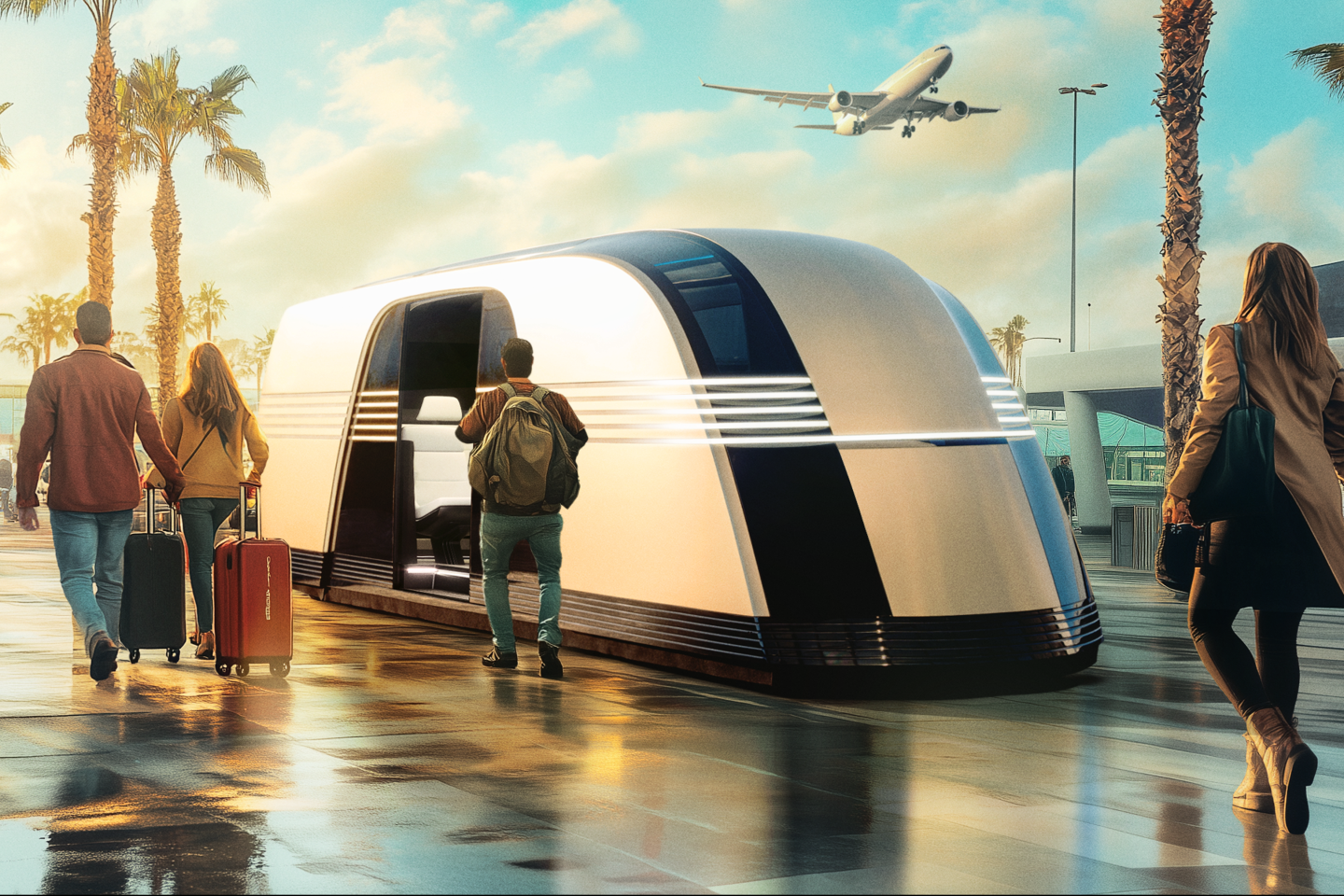
With more theater than technology, Elon Musk and Tesla finally announced their plans for a robo-taxi service rollout in California and Texas next year. The jury is still out on whether Tesla can actually deliver as promised, but a number of other companies are already doing this. In San Francisco and Phoenix, Alphabet’s autonomous taxi company Waymo has been operating commercially since 2021. GM and Uber just announced that Cruise self-driving taxis will be part of the Uber platform from 2025 in select cities.
For Elon Musk and other robotaxi tech leaders, these innovations offer more than the latest driverless technology. They promise a revolution in how we move about our cities and communities—an era of accessible and safe ride-hailing convenience. In other words, they promise a better commuter experience.
“With autonomy, you get your time back,” Musk recently said over a video backdrop of Los Angeles gridlock at its worst. But despite this lofty promise, an influx of self-driving, on-demand cars will not improve traffic. Instead, it will worsen congestion on already clogged-up American roads.
Deadheading is a dead-end
In 2022, Americans spent 8.5 billion hours stuck in traffic wasting over 3 billion gallons of fuel, according to the latest Texas Transportation Institute Urban Mobility Report. The large-scale proliferation of robotaxis will only make this worse. Unlike personal vehicles, robotaxis, traditional taxis, and ride-hailing services have to travel without a passenger to get to a pickup location. This is known as deadheading—and it adds additional driving to the system.
Many studies demonstrate this effect. In major U.S. cities, ride-hail vehicles travel up to 1.6 miles per each passenger mile traveled. That’s over a 50% increase compared to driving your own car—even when you account for added driving to find parking.
Robotaxi companies would argue that centralized vehicle routing algorithms can reduce this impact, but deadheading is inevitable in any taxi system. It is more pronounced during rush hour, when traffic is at its worst, as commuter demand tends to be very directional, necessitating longer trips between a drop-off and the next pickup.
We simply cannot replace personal vehicles with taxis (human-driven or autonomous) without a substantial increase in congestion.
But what if instead of funneling resources towards innovating robotaxis, we focus on improving and automating a mode of transportation that—when operated well—is proven to reduce traffic? What if we imagine a future in which buses are self-driving and responsive to commuter needs?
The bus is primed for autonomy
For years, researchers and journalists have made the case that a better bus service is a simple way to improve cities and impact millions of Americans’ lives. Improving bus service is relatively cheap. It does not require building large new infrastructure. Buses are also more environmentally sustainable and provide more equitable access to mobility, compared with cars.
However, buses continue to be under-funded, and since the pandemic, there has been a major bus driver shortage across the country. On top of these issues, the sprawling nature of many U.S. cities makes it harder to design traditional bus lines that everyone can access by walking to a bus stop.
Autonomy could help address many of the issues holding the bus back. A robo-bus would bring new technology and excitement to mass transit, and perhaps along with it more attention and funding to the bus as a mode of transportation. More importantly, it would address the driver shortage and change the economics of operating smaller buses or shuttles, making them more cost-effective. (Labor costs can make up to 70% of transit operating budgets.)
Small autonomous buses, similar to the Robovan that made a brief cameo at Tesla’s Cybercab event, can operate as demand-responsive microtransit shuttles. Imagine a self-driving shuttle that works like Uber Pool and gets commuters from home or work to the nearest bus or train station, or even moves them door-to-door in areas without enough demand for traditional bus service.
While the leaders in autonomous vehicle technology are focused on cars, making the transition is not hard. Automating buses is not so different. In fact, automating transit vehicles is in many ways easier than deploying robotaxis, as they typically operate on a smaller set of larger roads and generally have fixed stops. The robotaxi, robo-shuttles, and buses (autonomous or not) can be integrated to design a system that improves everyone’s commute. Some companies are already building such systems and cities are experimenting with autonomous microtransit pilots. Perhaps the most ambitious such effort is underway in Oslo.
Bringing the latest technology and research and development investments to the mass-transit domain has the potential to have a much larger impact on society than just autonomous ride-hailing. This is not so different from the vision being promoted by Tesla and Waymo. It just requires extending the idea to sharing rides when traveling through congested corridors. Take a high-quality bus—and save time in congested corridors instead of crawling through traffic in your car. You will still take a robotaxi or shuttle when traveling to locations with lower travel demand.
Elon Musk recently stated that “buses will not be needed when Tesla rolls out unsupervised full self-driving, as they will take people point to point for a similar cost to a bus ticket.” Regardless of the cost, we should not replace hundreds of buses with tens of thousands of robotaxis.
More must-read commentary published by Fortune:
- Former Intel CEO Craig Barrett: Splitting up America’s leading chipmaker is a bad idea
- We led some of America’s largest companies. Here’s why we are voting for Harris, not Trump
- How the Democrat-leaning news media is unwittingly aiding Trump
- As activist Starboard engages constructively, here’s a potent prescription for Pfizer’s future success under Dr. Bourla’s watch
The opinions expressed in Fortune.com commentary pieces are solely the views of their authors and do not necessarily reflect the opinions and beliefs of Fortune.