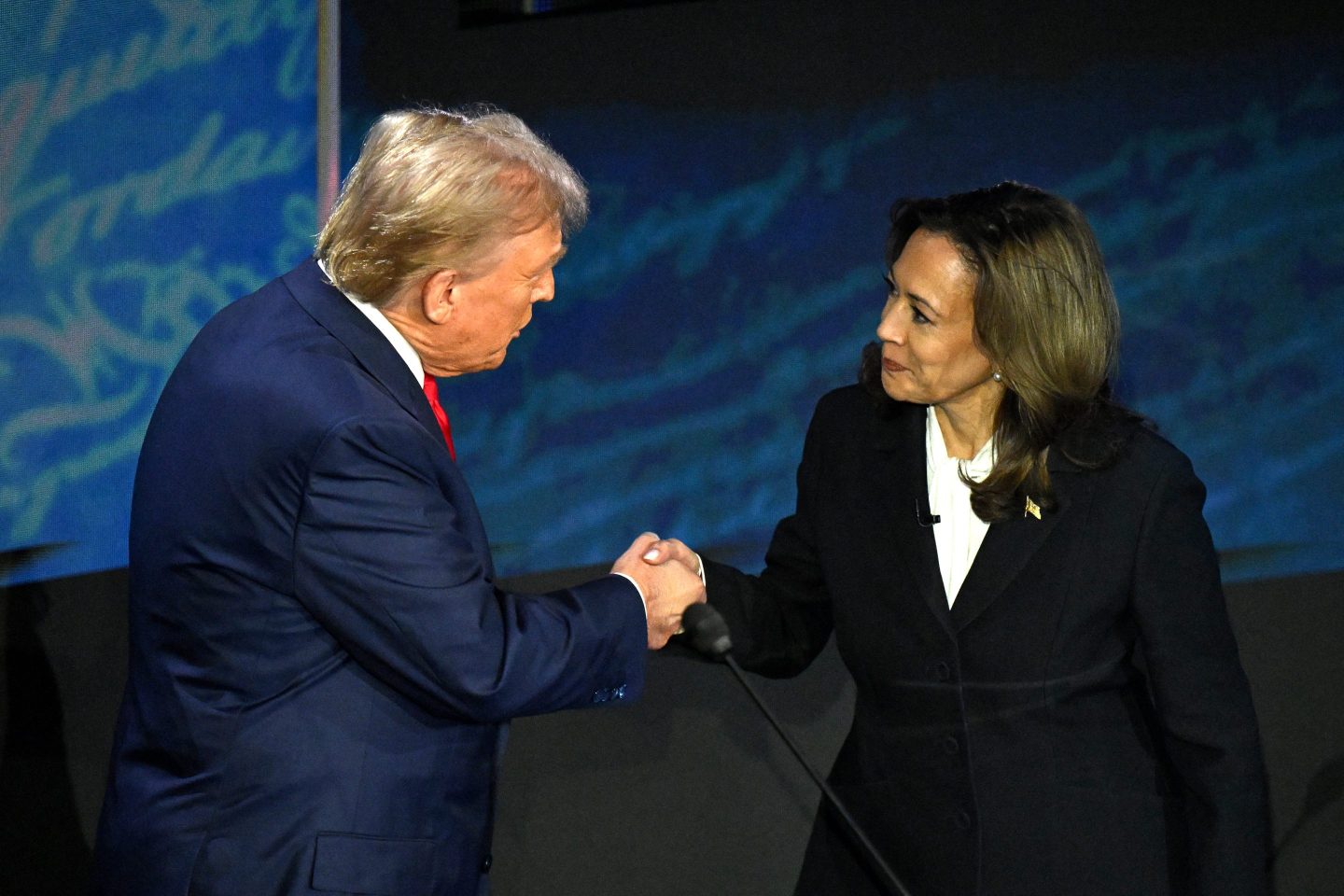
Vice President Kamala Harris has touted a new economic plan to drive “broad-based economic growth,” but her policies contradict this message. Her narrowly targeted America Forward tax credit for “industries of the future” and tax hikes for the rest would reshape investment yet fail to stimulate more investment overall—much like former President Donald Trump’s protectionist proposals for a universal tariff and higher tariffs on China that would reallocate, but not grow, economic activity.
Tax policies, whether rates, deductions for initial investment costs, or credits for investment and production, can change the cost of capital. A higher cost of capital leads to less capital investment, while a lower cost of capital leads to more capital investment.
Unlike industry-specific policies, which (mostly) reallocate investment from one sector to another, broad policies that lower the cost of capital across the entire economy can lead to more overall investment across the board.
Unfortunately, Harris has not outlined a broad pro-investment vision. The suite of policies she’s crafted include higher taxes on business income across the board, with top rates of 28% on corporate firms and 39.6% on non-corporates, and narrowly targeted tax breaks for certain industries or technologies. It’s not hard to see that the resulting policy environment would be generally less favorable to investment—unless one is lucky enough to be on the receiving end of the new subsidies.
In fact, we’ve estimated at the Tax Foundation that the net effect of Harris’s previously announced tax policies would be to shrink the size of the economy by 1.7% and the capital stock by 2.6% within a decade (2% and 3%, respectively, in our 35-year projection). Investment tax credits may lower the cost of capital in some sectors—but they won’t offset the broad negative impact of higher taxes on the overall economy. Altogether, we estimate Harris’s tax and spending policies could increase the 10-year budget deficit by about $1.5 trillion.
Worse, targeted subsidies themselves may prove to be counterproductive, as they risk creating boondoggles and misallocations by favoring certain sectors over others. A review of 50 years of targeted policies in the United States conducted by the Peterson Institute concluded that “the track record of such efforts has achieved mixed success at best.” Import protection and single-firm subsidies have seldom paid off in the past, and there’s little reason to believe that will change under the next U.S. president.
Indeed, while the industrial policies pursued by the Biden administration—namely tax credits for green energy and semiconductors—have seemingly led to a boom in construction spending in the subsidized industries, aggregate investment spending is little changed compared to pre-policy baselines. Whether the higher construction spending in subsidized industries yields higher overall growth for worker productivity or the U.S. economy remains to be seen, but there are plenty of reasons for skepticism.
Just as Harris’s combination of higher taxes for all and selective subsidies for a few doesn’t add up to broad-based economic growth, Trump’s proposed tariffs would reallocate investment across sectors by changing relative prices and ultimately hurt growth.
While Trump has championed some pro-growth tax reforms—like full expensing for investments in machinery, equipment, and R&D—his protectionist tariffs and the resulting retaliation from trade partners would undermine those gains. And in terms of domestic tax reform, he has been more focused on targeted tax breaks for specific types of income, such as tips, overtime pay, or Social Security benefits. We estimate the plan so far, excluding Trump’s new overtime tax proposal, would shrink the size of the economy by 0.2% within a decade.
We don’t have to look far to see the track record of protectionist tariffs. The 2018-2019 trade war tariffs imposed by then-President Trump, combined with retaliation from foreign trading partners, depressed investment growth, reduced overall employment, and shrunk real incomes. Though tariffs certainly create benefits for protected industries, those benefits represent costly transfers from others in the economy. Altogether, Trump’s tax and tariff policy proposals could increase the 10-year budget deficit by nearly $3.8 trillion.
Both candidates’ policies would ultimately stifle the kinds of broad economic expansion they claim to seek. To achieve broad sustained growth, the next president should pursue tax policies that lower the cost of capital across all industries, rather than reshape investment through subsidies or other forms of protection. Unfortunately, Harris and Trump are making the same mistake in trying to reshape investment and redistribute income and economic activity to their favored sectors.
More must-read commentary published by Fortune:
- An economic catastrophe is lurking beneath Russia’s GDP growth as Putin ‘throws everything into the fireplace’
- EPA administrator: Rolling back Biden-Harris infrastructure and climate investments would mean backlash in American communities
- ‘Godmother of AI’ says California’s well-intended AI bill will harm the U.S. ecosystem
- We keep celebrating low unemployment—but data shows jobs and economic activity have been shifting to big business
The opinions expressed in Fortune.com commentary pieces are solely the views of their authors and do not necessarily reflect the opinions and beliefs of Fortune.