• Home
  • Latest
  • Fortune 500
  • Finance
  • Tech
  • Leadership
  • Lifestyle
  • Rankings
  • Multimedia
CommentaryTech

WEF Chair Klaus Schwab: It took just under 4 years to connect 1B people to vital digital services. We must redouble our efforts as the world enters the age of AI

By
Klaus Schwab
Klaus Schwab
Down Arrow Button Icon
By
Klaus Schwab
Klaus Schwab
Down Arrow Button Icon
September 24, 2024, 11:00 AM ET
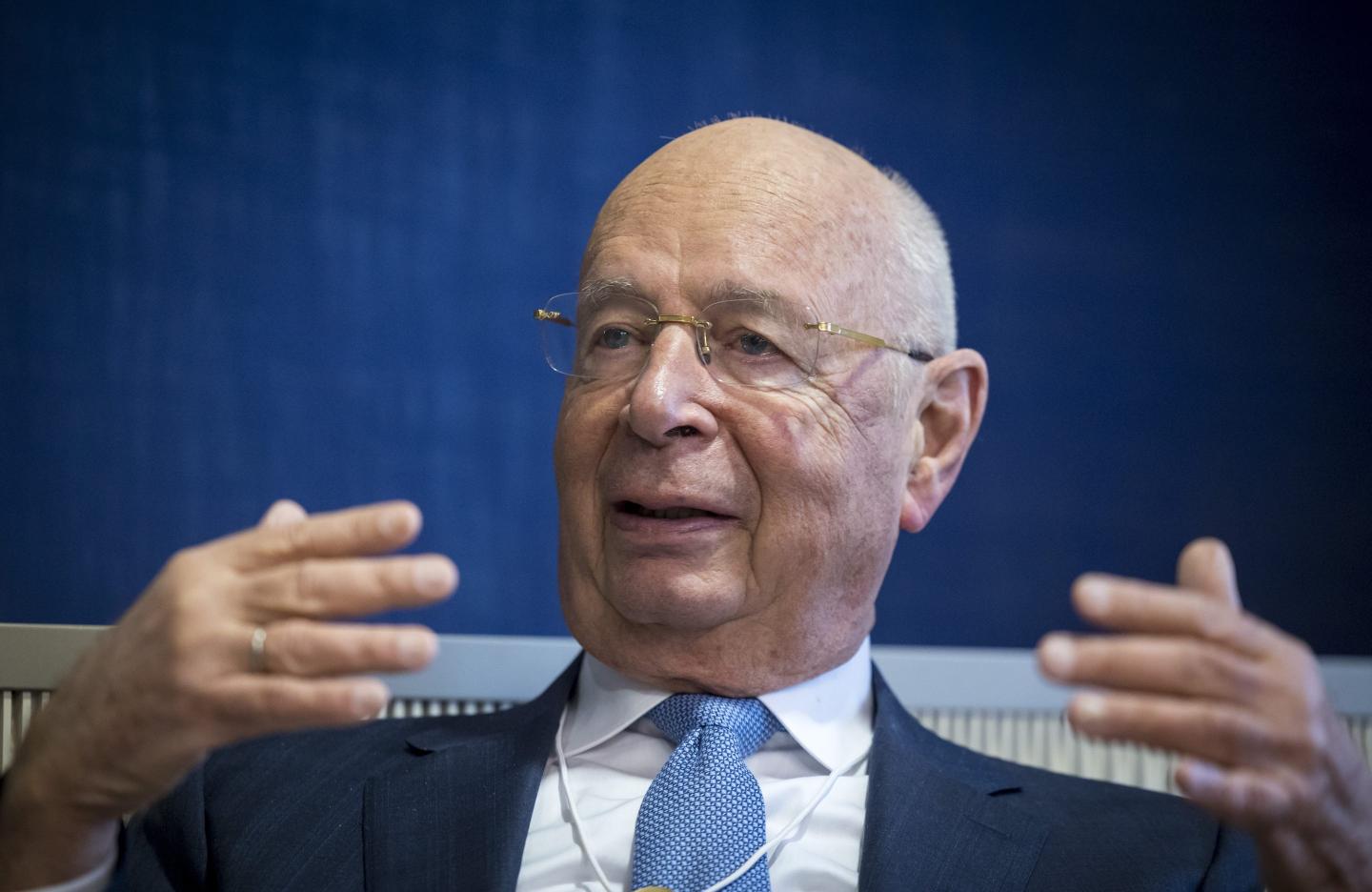
Klaus Schwab is the chairman and founder of the World Economic Forum.
Klaus Schwab is the chairman and founder of the World Economic Forum.Thomas Koehler - Photothek - Getty Images

As the Fourth Industrial Revolution paves the way for greater technological integration, we stand on the brink of the Intelligent Age, an era defined by blending artificial intelligence (AI) and cutting-edge technologies into everyday life. Yet amid this sweeping transformation, we are confronted with a profound paradox: The same technologies that hold extraordinary promise for unprecedented growth, innovation, and human progress also risk deepening divides and exacerbating inequalities. For the Intelligent Age to truly deliver on its potential, we must urgently confront one of its most critical challenges: ensuring digital inclusion for all.

Since its inception in 2021, The EDISON Alliance, a World Economic Forum initiative together with 170 partners, has successfully connected over 1 billion people globally—ahead of its initial 2025 target—to essential digital services in healthcare, education, and finance in over 100 countries. This progress spans over 100 countries, with notable advancements in South Asia and Africa. This remarkable milestone is a testament to the positive impact that can be achieved through the power of public-private partnerships in addressing the global digital divide.

Despite this remarkable success, the global digital divide remains vast. Achieving universal internet access by 2030 is projected to cost $446 billion, according to the Tony Blair Institute. While this may seem like a high price tag, such an investment could deliver $8.7 trillion in benefits to developing countries. A return on investment exceeding 1,800% is a compelling opportunity that any investor should be eager to pursue.

The digital divide is a layered and complex challenge, cascading across economic, educational, social, and geographic lines. Today, some 2.6 billion people around the world—nearly one-third of the global population—remain unconnected to the internet, depriving them of access to essential services and opportunities. Digital exclusion contributes to broader issues: 4.5 billion people lack adequate healthcare; 1.4 billion do not have a bank account, and the number of children out of school continues to rise, now reaching 250 million globally.

The first pillar of addressing the digital divide is building reliable and resilient digital infrastructure. This is a vital investment not just for developing countries, but also in developed nations where significant disparities exist in access to high-speed internet. With the rise of artificial intelligence (AI) and other frontier technologies, the need for high-quality digital infrastructure will be more critical than ever to handle the massive data flows, real-time analytics, and seamless connectivity that AI technologies depend on.

However, access alone is not enough. While mobile broadband networks cover much of the world, many encounter barriers that prevent them from getting online. These obstacles include the high cost of devices and data plans, lack of digital literacy and skills, and absence of relevant local content.

Beyond infrastructure, digital literacy is a key challenge. While access to the internet is essential, knowing how to navigate and use digital tools is just as important. To address this, governments and organizations must invest in comprehensive digital education programmes that empower citizens with the knowledge and skills necessary for the safe, responsible, and productive use of digital services. This is especially important for older adults and underserved populations where the largest gaps persist.

In Norway, for example, the Digital Throughout Life programme emphasizes lifelong learning, equipping individuals with the skills to adapt to technological advances. Similarly, Singapore’s Digital Skills for Life and Seniors Go Digital frameworks build fundamental digital skills for people of all ages. India’s National Digital Literacy Mission programme focuses on bridging the digital divide by ensuring that every household has at least one person proficient in basic digital skills.

We must also break down the barriers that keep women from fully participating in the digital economy. Today, the mobile internet gender gap remains at 15%. To put this into perspective, one out of seven women is without the tools they need to participate in today’s digital economy. This gap is not just a social issue, it is an economic one. The Alliance for Affordable Internet estimates that over the last decade, low- and middle-income countries have lost $1 trillion in gross domestic product (GDP) to the gender gap in internet use due to the digital gender divide.

Moreover, affordability remains a formidable barrier. In some parts of Africa, the cost of a basic internet package can be as high as 20-30% of an average monthly income. Coupled with the high cost of devices, this effectively excludes many who would benefit most from digital opportunities for education, healthcare and financial services.

The 1 billion milestone is not just a number—it represents hundreds of millions of stories of new opportunities and lives that have been transformed. In Madhya Pradesh, India, the EDISON Alliance supported the creation of digital dispensaries, improving access to quality, affordable healthcare in remote areas. In Rwanda, the alliance facilitated access to credit and financial services for small and medium-sized enterprises (SMEs), helping local businesses to grow and thrive.

As we look to the future of the Intelligent Age, the rapidly evolving digital landscape threatens to widen the digital divide where marginalized communities and low-income countries risk being further excluded from the benefits and potential. To bridge this gap, we must prioritize strategic investments in underserved regions. Targeted policies must address the digital gender divide, as well as the specific needs of SMEs, which are the backbone of the global economy.

Empowering 1 billion lives digitally is an extraordinary achievement, but it is only the beginning. As we move forward, we must reaffirm our commitment to ensuring meaningful connectivity for all—regardless of where in the world they live or their socioeconomic background. This means not only expanding digital access, but also enhancing digital literacy and ensuring that the benefits of the digital revolution are shared equitably across all communities.

The EDISON Alliance has shown us what is possible when we come together with a shared purpose. Now, let us build on this momentum to create a digitally inclusive world where everyone has the opportunity to participate in the global digital economy and access the essential services that improve lives and drive progress.

More must-read commentary published by Fortune:

  • Inflation, housing, immigration, taxes: The Harris-Walz economic policy scorecard
  • The ‘sustainability recession’ will end soon—and not by choice
  • AI development is being hijacked by Big Tech and rich nations, UN report warns
  • The most underrated leadership skill, according to Jake Sullivan

The opinions expressed in Fortune.com commentary pieces are solely the views of their authors and do not necessarily reflect the opinions and beliefs of Fortune.

Join us at the Fortune Workplace Innovation Summit May 19–20, 2026, in Atlanta. The next era of workplace innovation is here—and the old playbook is being rewritten. At this exclusive, high-energy event, the world’s most innovative leaders will convene to explore how AI, humanity, and strategy converge to redefine, again, the future of work. Register now.
About the Author
By Klaus Schwab
See full bioRight Arrow Button Icon

Latest in Commentary

Finance
Lorem ipsum dolor sit amet, consectetur adipiscing elit, sed do eiusmod tempor incididunt ut labore et dolore magna aliqua. Ut enim ad minim veniam
By Fortune Editors
October 20, 2025
Finance
Lorem ipsum dolor sit amet, consectetur adipiscing elit, sed do eiusmod tempor incididunt ut labore et dolore magna aliqua. Ut enim ad minim veniam
By Fortune Editors
October 20, 2025
Finance
Lorem ipsum dolor sit amet, consectetur adipiscing elit, sed do eiusmod tempor incididunt ut labore et dolore magna aliqua. Ut enim ad minim veniam
By Fortune Editors
October 20, 2025
Finance
Lorem ipsum dolor sit amet, consectetur adipiscing elit, sed do eiusmod tempor incididunt ut labore et dolore magna aliqua. Ut enim ad minim veniam
By Fortune Editors
October 20, 2025
Finance
Lorem ipsum dolor sit amet, consectetur adipiscing elit, sed do eiusmod tempor incididunt ut labore et dolore magna aliqua. Ut enim ad minim veniam
By Fortune Editors
October 20, 2025
Finance
Lorem ipsum dolor sit amet, consectetur adipiscing elit, sed do eiusmod tempor incididunt ut labore et dolore magna aliqua. Ut enim ad minim veniam
By Fortune Editors
October 20, 2025

Most Popular

Finance
Lorem ipsum dolor sit amet, consectetur adipiscing elit, sed do eiusmod tempor incididunt ut labore et dolore magna aliqua. Ut enim ad minim veniam
By Fortune Editors
October 20, 2025
Finance
Lorem ipsum dolor sit amet, consectetur adipiscing elit, sed do eiusmod tempor incididunt ut labore et dolore magna aliqua. Ut enim ad minim veniam
By Fortune Editors
October 20, 2025
Finance
Lorem ipsum dolor sit amet, consectetur adipiscing elit, sed do eiusmod tempor incididunt ut labore et dolore magna aliqua. Ut enim ad minim veniam
By Fortune Editors
October 20, 2025
Finance
Lorem ipsum dolor sit amet, consectetur adipiscing elit, sed do eiusmod tempor incididunt ut labore et dolore magna aliqua. Ut enim ad minim veniam
By Fortune Editors
October 20, 2025
Finance
Lorem ipsum dolor sit amet, consectetur adipiscing elit, sed do eiusmod tempor incididunt ut labore et dolore magna aliqua. Ut enim ad minim veniam
By Fortune Editors
October 20, 2025
Finance
Lorem ipsum dolor sit amet, consectetur adipiscing elit, sed do eiusmod tempor incididunt ut labore et dolore magna aliqua. Ut enim ad minim veniam
By Fortune Editors
October 20, 2025
Fortune Secondary Logo
Rankings
  • 100 Best Companies
  • Fortune 500
  • Global 500
  • Fortune 500 Europe
  • Most Powerful Women
  • World's Most Admired Companies
  • See All Rankings
  • Lists Calendar
Sections
  • Finance
  • Fortune Crypto
  • Features
  • Leadership
  • Health
  • Commentary
  • Success
  • Retail
  • Mpw
  • Tech
  • Lifestyle
  • CEO Initiative
  • Asia
  • Politics
  • Conferences
  • Europe
  • Newsletters
  • Personal Finance
  • Environment
  • Magazine
  • Education
Customer Support
  • Frequently Asked Questions
  • Customer Service Portal
  • Privacy Policy
  • Terms Of Use
  • Single Issues For Purchase
  • International Print
Commercial Services
  • Advertising
  • Fortune Brand Studio
  • Fortune Analytics
  • Fortune Conferences
  • Business Development
  • Group Subscriptions
About Us
  • About Us
  • Press Center
  • Work At Fortune
  • Terms And Conditions
  • Site Map
  • About Us
  • Press Center
  • Work At Fortune
  • Terms And Conditions
  • Site Map
  • Facebook icon
  • Twitter icon
  • LinkedIn icon
  • Instagram icon
  • Pinterest icon

Latest in Commentary

hollywood
CommentaryMarketing
I spent 20 years learning to navigate an industry. Then I built a campaign for the man who’s dismantling it
By Matti YahavApril 29, 2026
19 hours ago
aging
HealthLongevity
We’re the CEOs of Peloton and the Hospital for Special Surgery. Living longer isn’t enough, we need to live better, too
By Bryan T. Kelly and Peter SternApril 29, 2026
20 hours ago
gen z
Commentarydisruption
AI won’t kill your job — it will kill the path to your first one
By Jeffrey Sonnenfeld, Stephen Henriques, Johan Griesel, Andrew Alam-Nist and Peter YuApril 29, 2026
20 hours ago
greer
CommentaryTariffs
No, tariffs are not strengthening the economy
By Alex DuranteApril 29, 2026
21 hours ago
AI is changing who gets to be an expert. Are your colleagues ready to become ‘directors of intelligence’?
AIProductivity
AI is changing who gets to be an expert. Are your colleagues ready to become ‘directors of intelligence’?
By Bruce BroussardApril 29, 2026
23 hours ago
gen z
CommentaryEducation
Gen Z has the wrong idea about college. Your career doesn’t start after you graduate 
By Ashley BigdaApril 29, 2026
23 hours ago

Most Popular

Apple cofounder Ronald Wayne—whose stake would be worth up to $400 billion had he not sold it in 1976—says that at 91, he has no regrets
Success
Apple cofounder Ronald Wayne—whose stake would be worth up to $400 billion had he not sold it in 1976—says that at 91, he has no regrets
By Preston ForeApril 27, 2026
3 days ago
‘Take the money and run’: Johns Hopkins economist Steve Hanke on why the UAE quit OPEC
Energy
‘Take the money and run’: Johns Hopkins economist Steve Hanke on why the UAE quit OPEC
By Shawn TullyApril 29, 2026
1 day ago
‘The cost of compute is far beyond the costs of the employees’: Nvidia executive says right now AI is more expensive than paying human workers
AI
‘The cost of compute is far beyond the costs of the employees’: Nvidia executive says right now AI is more expensive than paying human workers
By Sasha RogelbergApril 28, 2026
2 days ago
Jamie Dimon gets candid about national debt: ‘There will be a bond crisis, and then we’ll have to deal with it’
Economy
Jamie Dimon gets candid about national debt: ‘There will be a bond crisis, and then we’ll have to deal with it’
By Eleanor PringleApril 29, 2026
21 hours ago
‘They left me no choice’: Powell isn’t going anywhere—blocking Trump from another Fed appointee
Banking
‘They left me no choice’: Powell isn’t going anywhere—blocking Trump from another Fed appointee
By Eva RoytburgApril 29, 2026
13 hours ago
More than two-thirds of U.S. schools say they’re unable to afford the cost of student free lunch—and MAHA’s dietary guidelines may make it worse
Economy
More than two-thirds of U.S. schools say they’re unable to afford the cost of student free lunch—and MAHA’s dietary guidelines may make it worse
By Sasha RogelbergApril 29, 2026
23 hours ago

© 2026 Fortune Media IP Limited. All Rights Reserved. Use of this site constitutes acceptance of our Terms of Use and Privacy Policy | CA Notice at Collection and Privacy Notice | Do Not Sell/Share My Personal Information
FORTUNE is a trademark of Fortune Media IP Limited, registered in the U.S. and other countries. FORTUNE may receive compensation for some links to products and services on this website. Offers may be subject to change without notice.