• Home
  • Latest
  • Fortune 500
  • Finance
  • Tech
  • Leadership
  • Lifestyle
  • Rankings
  • Multimedia
FinanceMarkets

A Nobel winner’s famous metric says stocks are way overpriced. Should you be worried?

By
Greg McKenna
Greg McKenna
News Fellow
Down Arrow Button Icon
By
Greg McKenna
Greg McKenna
News Fellow
Down Arrow Button Icon
September 4, 2024, 6:00 AM ET
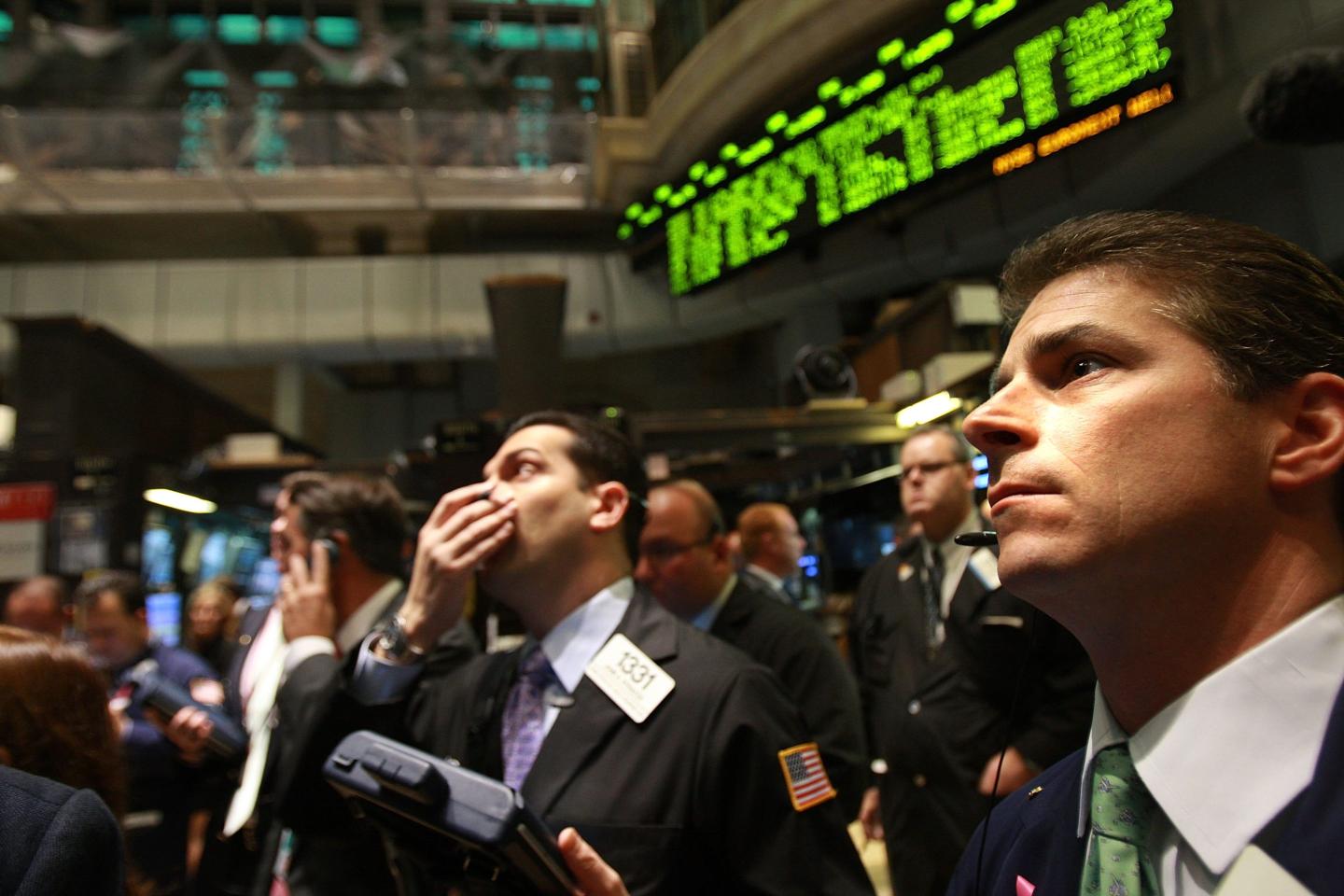
One man in center of the photo on the floor of the New York Stock Exchange covers one hand over his mouth (his other hand is holding a tablet) while another man in the foreground looks up in the same direction with a worried look on his face.
The stock market is currently pricier than before the 2008 crash, according to Robert Shiller's cyclically-adjusted price-to-earnings ratio. Spencer Platt—Getty Images

A single metric never tells the whole story of where the market is going. That said, one famous variant of the price-to-earnings ratio—a classic way to assess stock values—indicates the stock market is historically expensive. The variant is known as the “cyclically adjusted price-to-earnings ratio,” or CAPE, and it shows the S&P 500 is currently pricier than before the Great Recession, as well as “Black Tuesday” in 1929, fueling speculation that another bubble is soon liable to burst.  

Recommended Video

The P/E ratio, perhaps the most basic and widely used relative metric in finance, can help investors determine whether a company’s stock is overvalued relative to competitors, the broader market or its own historical returns. The same calculation can be done for a benchmark index like the S&P, but there’s a problem.  

“The ups and downs of the business cycle may give you a lot of noise than what the underlying earnings potential of the entire equity market will be,” said Bill Sterling, founder and global strategist at Boston-based GW&K Management.

In the 1990s, longtime Yale economics and finance professor Robert Shiller decided to minimize short-term volatility in corporate profits by using inflation-adjusted 10-year earnings data in his calculations. The metric became the foundation for Shiller’s argument that the dot-com frenzy would prove to be a bubble. The CAPE, also known as the Shiller P/E ratio, reached an all-time high in December 1999, just before his prediction bore out.

As the chart below shows, the adjusted P/E ratio has recently climbed well above its historical mean, as well at its average level since 1990. The message? Listen to the Nobel laureate’s measure and sell.

If only it were that simple. Executives at a range of investment firms told Fortune, however, that the CAPE's best days as a leading signal may be in the past. They said the metric’s commonly cited limitations, as well as structural changes to markets over time, have greatly undermined the measure’s usefulness.

For instance, since the early 1990s, the market has only been cheaper than its long-run average for a few months after the 2008 crash.

In November 2021, the measure peaked above 40. It was the CAPE's highest reading since October 2000, during the early days of the dot-com debacle.  

The S&P has gained 21% since. Simply put, the Shiller P/E ratio has been ineffective, said Michael Green, portfolio manager and chief strategist at Simplify, an ETF manager that specializes in risk strategies.

“If you had paid attention to it,” he said, “you'd be out of business today.”

Why Robert Shiller's metric is not a holy grail

Even while admiring Shiller’s work, experts caution the CAPE falls short of capturing the market’s earnings potential. Chief among them is that the metric is, by nature, backward looking, said Eric Beyrich, an equity portfolio manager at Florida-based investment firm Sound Income Strategies.

“You're inflation-adjusting historical earnings,” he said of the CAPE, “and the market is pricing future earnings.”

Many also question comparing current and historical returns when a stock market that was once 30% railroads, as Sterling put it, is now highly concentrated in high-growth tech stocks. The rise of private equity, Beyrich said, has also greatly affected the constituency of the index. Developments like outsourcing, he added, have structurally pushed corporate profits higher.  

Green, meanwhile, can provide many other explanations for why corporate profits will remain above their historical average, even in a recession. More fundamentally, however, he believes the rise of passive investing—including target-date funds common in 401k plans and so-called “quant funds” that use algorithms to trade off market signals—has changed how markets operate.  

Green emphasized his research does not represent a consensus view. Still, there is wide agreement that investors can’t treat measures like the CAPE and other price-to-earnings ratios as a holy grail.  

“They're discussed all the time because they're easily accessible,” Sterling said, “and they do have some informational content, but you shouldn't put too much weight on it.”

Join us at the Fortune Workplace Innovation Summit May 19–20, 2026, in Atlanta. The next era of workplace innovation is here—and the old playbook is being rewritten. At this exclusive, high-energy event, the world’s most innovative leaders will convene to explore how AI, humanity, and strategy converge to redefine, again, the future of work. Register now.
About the Author
By Greg McKennaNews Fellow
LinkedIn icon

Greg McKenna is a news fellow at Fortune.

See full bioRight Arrow Button Icon

Latest in Finance

Finance
Lorem ipsum dolor sit amet, consectetur adipiscing elit, sed do eiusmod tempor incididunt ut labore et dolore magna aliqua. Ut enim ad minim veniam
By Fortune Editors
October 20, 2025
Finance
Lorem ipsum dolor sit amet, consectetur adipiscing elit, sed do eiusmod tempor incididunt ut labore et dolore magna aliqua. Ut enim ad minim veniam
By Fortune Editors
October 20, 2025
Finance
Lorem ipsum dolor sit amet, consectetur adipiscing elit, sed do eiusmod tempor incididunt ut labore et dolore magna aliqua. Ut enim ad minim veniam
By Fortune Editors
October 20, 2025
Finance
Lorem ipsum dolor sit amet, consectetur adipiscing elit, sed do eiusmod tempor incididunt ut labore et dolore magna aliqua. Ut enim ad minim veniam
By Fortune Editors
October 20, 2025
Finance
Lorem ipsum dolor sit amet, consectetur adipiscing elit, sed do eiusmod tempor incididunt ut labore et dolore magna aliqua. Ut enim ad minim veniam
By Fortune Editors
October 20, 2025
Finance
Lorem ipsum dolor sit amet, consectetur adipiscing elit, sed do eiusmod tempor incididunt ut labore et dolore magna aliqua. Ut enim ad minim veniam
By Fortune Editors
October 20, 2025

Most Popular

Finance
Lorem ipsum dolor sit amet, consectetur adipiscing elit, sed do eiusmod tempor incididunt ut labore et dolore magna aliqua. Ut enim ad minim veniam
By Fortune Editors
October 20, 2025
Finance
Lorem ipsum dolor sit amet, consectetur adipiscing elit, sed do eiusmod tempor incididunt ut labore et dolore magna aliqua. Ut enim ad minim veniam
By Fortune Editors
October 20, 2025
Finance
Lorem ipsum dolor sit amet, consectetur adipiscing elit, sed do eiusmod tempor incididunt ut labore et dolore magna aliqua. Ut enim ad minim veniam
By Fortune Editors
October 20, 2025
Finance
Lorem ipsum dolor sit amet, consectetur adipiscing elit, sed do eiusmod tempor incididunt ut labore et dolore magna aliqua. Ut enim ad minim veniam
By Fortune Editors
October 20, 2025
Finance
Lorem ipsum dolor sit amet, consectetur adipiscing elit, sed do eiusmod tempor incididunt ut labore et dolore magna aliqua. Ut enim ad minim veniam
By Fortune Editors
October 20, 2025
Finance
Lorem ipsum dolor sit amet, consectetur adipiscing elit, sed do eiusmod tempor incididunt ut labore et dolore magna aliqua. Ut enim ad minim veniam
By Fortune Editors
October 20, 2025
Fortune Secondary Logo
Rankings
  • 100 Best Companies
  • Fortune 500
  • Global 500
  • Fortune 500 Europe
  • Most Powerful Women
  • World's Most Admired Companies
  • See All Rankings
  • Lists Calendar
Sections
  • Finance
  • Fortune Crypto
  • Features
  • Leadership
  • Health
  • Commentary
  • Success
  • Retail
  • Mpw
  • Tech
  • Lifestyle
  • CEO Initiative
  • Asia
  • Politics
  • Conferences
  • Europe
  • Newsletters
  • Personal Finance
  • Environment
  • Magazine
  • Education
Customer Support
  • Frequently Asked Questions
  • Customer Service Portal
  • Privacy Policy
  • Terms Of Use
  • Single Issues For Purchase
  • International Print
Commercial Services
  • Advertising
  • Fortune Brand Studio
  • Fortune Analytics
  • Fortune Conferences
  • Business Development
  • Group Subscriptions
About Us
  • About Us
  • Press Center
  • Work At Fortune
  • Terms And Conditions
  • Site Map
  • About Us
  • Press Center
  • Work At Fortune
  • Terms And Conditions
  • Site Map
  • Facebook icon
  • Twitter icon
  • LinkedIn icon
  • Instagram icon
  • Pinterest icon

Latest in Finance

inflation
EconomyInflation
The biggest jump in 3 years: gas’ effect on core inflation in March revealed
By Christopher Rugaber and The Associated PressApril 30, 2026
14 minutes ago
inflation
EconomyGDP
U.S. GDP rebounds from lackluster end to 2025, grows at 2% rate in first quarter
By Paul Wiseman and The Associated PressApril 30, 2026
15 minutes ago
google
InvestingMarkets
Google shares hit all-time high on blowout earnings, market cap doubles to $4.4 trillion in just a year
By Michael Liedtke and The Associated PressApril 30, 2026
24 minutes ago
AWS
Big TechMarkets
Amazon’s cloud sales are growing the most in 15 quarters. Investors sent the stock down on AI capex fears
By Anne D'Innocenzio and The Associated PressApril 30, 2026
32 minutes ago
Current price of gold as of April 30, 2026
Personal Financegold prices
Current price of gold as of April 30, 2026
By Danny BakstApril 30, 2026
2 hours ago
April 30, 2026
Personal FinanceCertificates of Deposit (CDs)
Top CD rates from major banks on April 30, 2026: Chase CDs, Bank of America CDs, Citibank CDs, and more
By Joseph HostetlerApril 30, 2026
2 hours ago

Most Popular

Apple cofounder Ronald Wayne—whose stake would be worth up to $400 billion had he not sold it in 1976—says that at 91, he has no regrets
Success
Apple cofounder Ronald Wayne—whose stake would be worth up to $400 billion had he not sold it in 1976—says that at 91, he has no regrets
By Preston ForeApril 27, 2026
3 days ago
Jamie Dimon gets candid about national debt: ‘There will be a bond crisis, and then we’ll have to deal with it’
Economy
Jamie Dimon gets candid about national debt: ‘There will be a bond crisis, and then we’ll have to deal with it’
By Eleanor PringleApril 29, 2026
1 day ago
‘They left me no choice’: Powell isn’t going anywhere—blocking Trump from another Fed appointee
Banking
‘They left me no choice’: Powell isn’t going anywhere—blocking Trump from another Fed appointee
By Eva RoytburgApril 29, 2026
20 hours ago
‘The cost of compute is far beyond the costs of the employees’: Nvidia executive says right now AI is more expensive than paying human workers
AI
‘The cost of compute is far beyond the costs of the employees’: Nvidia executive says right now AI is more expensive than paying human workers
By Sasha RogelbergApril 28, 2026
2 days ago
‘Take the money and run’: Johns Hopkins economist Steve Hanke on why the UAE quit OPEC
Energy
‘Take the money and run’: Johns Hopkins economist Steve Hanke on why the UAE quit OPEC
By Shawn TullyApril 29, 2026
1 day ago
Google Cloud revenue is now 18% of Alphabet's business. Is this the beginning of the end of Google's search identity?
Big Tech
Google Cloud revenue is now 18% of Alphabet's business. Is this the beginning of the end of Google's search identity?
By Alexei OreskovicApril 29, 2026
13 hours ago

© 2026 Fortune Media IP Limited. All Rights Reserved. Use of this site constitutes acceptance of our Terms of Use and Privacy Policy | CA Notice at Collection and Privacy Notice | Do Not Sell/Share My Personal Information
FORTUNE is a trademark of Fortune Media IP Limited, registered in the U.S. and other countries. FORTUNE may receive compensation for some links to products and services on this website. Offers may be subject to change without notice.