• Home
  • News
  • Fortune 500
  • Tech
  • Finance
  • Leadership
  • Lifestyle
  • Rankings
  • Multimedia
CommentaryPolitics

Kamala Harris is wrong. American economic history is replete with failed price control policies

By
Kerry Jackson
Kerry Jackson
and
Wayne Winegarden
Wayne Winegarden
Down Arrow Button Icon
By
Kerry Jackson
Kerry Jackson
and
Wayne Winegarden
Wayne Winegarden
Down Arrow Button Icon
September 3, 2024, 9:33 AM ET
Kerry Jackson is the William Clement Fellow in California Reform at the Pacific Research Institute. Wayne Winegarden, PhD, is a PRI senior fellow in business and economics.
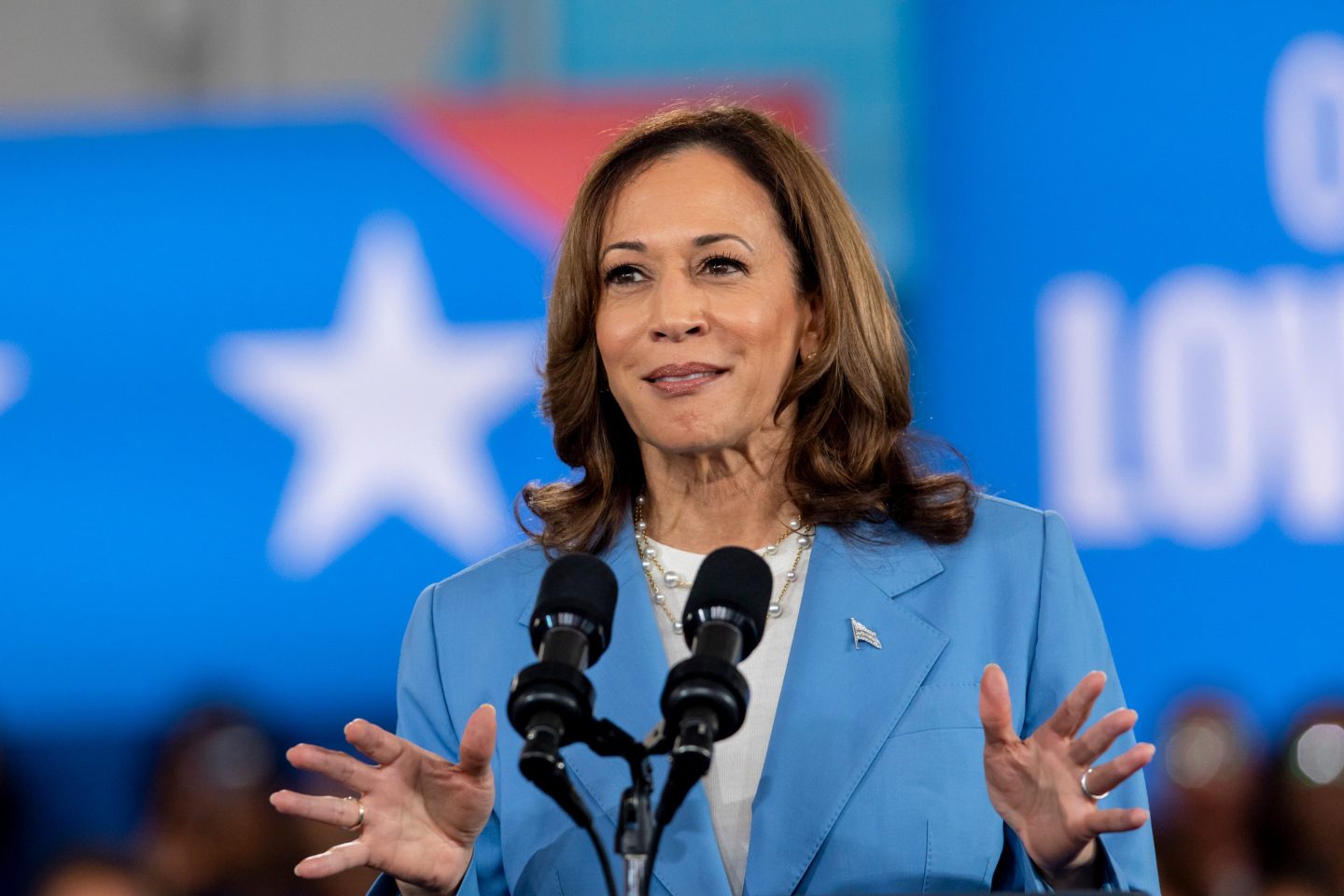
U.S. Vice President Kamala Harris speaks at a campaign event in Raleigh, North Carolina on Aug. 16. Harris seeks to convince voters that she would act swiftly to address one of their top concerns: rising consumer costs.
U.S. Vice President Kamala Harris speaks at a campaign event in Raleigh, North Carolina on Aug. 16. Harris seeks to convince voters that she would act swiftly to address one of their top concerns: rising consumer costs. Rachel Jessen—Bloomberg/Getty Images

Politicians routinely pander to voters with ideas that sound appealing but are harmful in practice. The reflexive vow to impose price controls to stop those greedy corporations from gouging consumers with high prices exemplifies this type of poor policy. Yet in one of her first policy proposals as the Democratic Party’s White House candidate, Kamala Harris insisted that the country needs “the first-ever federal ban on price gouging on food and groceries.” She would set “clear rules of the road to make clear that big corporations can’t unfairly exploit consumers to run up excessive corporate profits on food and groceries.”

While these accusations are vague, they still clearly do not apply to the grocery business. In 2022 when inflation was peaking, the average profit margin for a grocery store was 2.3%. Not only was this profit margin lower than 2021 (2.9%) but it is also well below the average business profit margin between 8 and 9%. Making the exploitation argument even weirder, profit margins fell further to 1.6%  in 2023.

While shortages in the wake of the COVID-19 pandemic caused supplier prices to rise at a higher rate than overall inflation, if grocers are exploiting consumers and price gouging, then they are clearly the worst price gougers ever. Grocery retailing is a low-margin, high-volume business. Consumers are neither exploited nor gouged. They can patronize the grocery store of their choice to find tens of thousands of products.

As is all too often the case, good economics makes bad politics. It is politically expedient to blame companies. Identifying businesses as the scapegoat also gives the Democrats’ preferred price control policy a veneer of logic. After all, if businesses raising prices causes inflation, it follows that prohibiting those price increases will remedy it.

The problem is that history is not on the vice president’s side. American economic history is replete with failed price control policies.

To counter the inflationary pressures from World War II, for instance, FDR implemented a vast system of price controls and rationing.

While prices no longer increased while the controls were in place, problems of shortages and “shrinkflation” replaced visible price increases. Ultimately the price controls were removed in 1946 and the annual inflation rate skyrocketed to more than 20% in 1947.

President Richard Nixon also failed to learn from history and implemented a wage and price control regime that froze wages and prices in 1971 for 90 days. The controls were then gradually lifted over time. Rather than relief, the decision produced “shortages and long lines,” says the John Locke Foundation, which “frustrated consumers for years.” 

The list of examples goes on, but the theme is the same: Price controls fail to arrest inflation and ultimately impose costs that far exceed the burdens associated with the original inflation. Importantly, the adverse consequences of price-gouging laws do not only apply when targeting inflation. These controls never work regardless of the promise and often result in perverse if not outright cruel outcomes.

Today, price-gouging rules persist in local laws across America. Take the case of John Shepperson, a Kentucky man who bought 19 generators from Home Depot, took time off from his job, rented a truck, and drove 600 miles to Mississippi where victims of 2005’s Hurricane Katrina needed electricity. “John offered to sell his generators at twice the price he paid, to help cover his costs and make a profit,” recounts American Enterprise Institute economist Mark Perry.

Though “people were eager to buy” his generators Mississippians in need never had the chance to do so. Shepperson was arrested for violating Mississippi’s price gouging law and held for four days. The generators were confiscated, says Perry, and never made it to consumers with urgent needs. The prices Shepperson wanted to charge were expensive. But when the locally available generators sold out, as they will in an emergency, those who arrived after the last one was purchased became victims to both the storm and laws that create artificial scarcity.

Historically, price controls fail to meet the hope of their advocates because such policies do not address the root causes of the problem and introduce a slew of harmful and unintended consequences. The Harris price-gouging plan follows this same script. It fails to understand the causes of inflation and does not account for the harmful consequences price caps inevitably impose.

Given that history, the best we can hope for is that the vice president’s proposal is merely pandering to voters, and she has no intention of following through. Otherwise, consumers will pay a very high price indeed.

More must-read commentary published by Fortune:

  • An economic catastrophe is lurking beneath Russia’s GDP growth as Putin ‘throws everything into the fireplace’
  • The ‘sustainability recession’ will end soon—and not by choice
  • ‘Godmother of AI’ says California’s well-intended AI bill will harm the U.S. ecosystem
  • Clichés, exaggerations, overstatements: Our analysis of 23,000 annual reviews shows top performers get the worst feedback

The opinions expressed in Fortune.com commentary pieces are solely the views of their authors and do not necessarily reflect the opinions and beliefs of Fortune.

Fortune Brainstorm AI returns to San Francisco Dec. 8–9 to convene the smartest people we know—technologists, entrepreneurs, Fortune Global 500 executives, investors, policymakers, and the brilliant minds in between—to explore and interrogate the most pressing questions about AI at another pivotal moment. Register here.
About the Authors
By Kerry Jackson
See full bioRight Arrow Button Icon
By Wayne Winegarden
See full bioRight Arrow Button Icon

Latest in Commentary

Steve Milton is the CEO of Chain, a culinary-led pop-culture experience company founded by B.J. Novak and backed by Studio Ramsay Global.
CommentaryFood and drink
Affordability isn’t enough. Fast-casual restaurants need a fandom-first approach
By Steve MiltonDecember 5, 2025
23 hours ago
Paul Atkins
CommentaryCorporate Governance
Turning public companies into private companies: the SEC’s retreat from transparency and accountability
By Andrew BeharDecember 5, 2025
23 hours ago
Matt Rogers
CommentaryInfrastructure
I built the first iPhone with Steve Jobs. The AI industry is at risk of repeating an early smartphone mistake
By Matt RogersDecember 4, 2025
2 days ago
Jerome Powell
CommentaryFederal Reserve
Fed officials like the mystique of being seen as financial technocrats, but it’s time to demystify the central bank
By Alexander William SalterDecember 4, 2025
2 days ago
Rakesh Kumar
CommentarySemiconductors
China does not need Nvidia chips in the AI war — export controls only pushed it to build its own AI machine
By Rakesh KumarDecember 3, 2025
3 days ago
Rochelle Witharana is Chief Financial and Investment Officer for The California Wellness Foundation
Commentarydiversity and inclusion
Fund managers from diverse backgrounds are delivering standout returns and the smart money is slowly starting to pay attention
By Rochelle WitharanaDecember 3, 2025
3 days ago

Most Popular

placeholder alt text
Economy
Two months into the new fiscal year and the U.S. government is already spending more than $10 billion a week servicing national debt
By Eleanor PringleDecember 4, 2025
2 days ago
placeholder alt text
Success
‘Godfather of AI’ says Bill Gates and Elon Musk are right about the future of work—but he predicts mass unemployment is on its way
By Preston ForeDecember 4, 2025
2 days ago
placeholder alt text
Success
Nearly 4 million new manufacturing jobs are coming to America as boomers retire—but it's the one trade job Gen Z doesn't want
By Emma BurleighDecember 4, 2025
2 days ago
placeholder alt text
Success
Nvidia CEO Jensen Huang admits he works 7 days a week, including holidays, in a constant 'state of anxiety' out of fear of going bankrupt
By Jessica CoacciDecember 4, 2025
2 days ago
placeholder alt text
Big Tech
Mark Zuckerberg rebranded Facebook for the metaverse. Four years and $70 billion in losses later, he’s moving on
By Eva RoytburgDecember 5, 2025
19 hours ago
placeholder alt text
Real Estate
‘There is no Mamdani effect’: Manhattan luxury home sales surge after mayoral election, undercutting predictions of doom and escape to Florida
By Sasha RogelbergDecember 4, 2025
2 days ago
Rankings
  • 100 Best Companies
  • Fortune 500
  • Global 500
  • Fortune 500 Europe
  • Most Powerful Women
  • Future 50
  • World’s Most Admired Companies
  • See All Rankings
Sections
  • Finance
  • Leadership
  • Success
  • Tech
  • Asia
  • Europe
  • Environment
  • Fortune Crypto
  • Health
  • Retail
  • Lifestyle
  • Politics
  • Newsletters
  • Magazine
  • Features
  • Commentary
  • Mpw
  • CEO Initiative
  • Conferences
  • Personal Finance
  • Education
Customer Support
  • Frequently Asked Questions
  • Customer Service Portal
  • Privacy Policy
  • Terms Of Use
  • Single Issues For Purchase
  • International Print
Commercial Services
  • Advertising
  • Fortune Brand Studio
  • Fortune Analytics
  • Fortune Conferences
  • Business Development
About Us
  • About Us
  • Editorial Calendar
  • Press Center
  • Work At Fortune
  • Diversity And Inclusion
  • Terms And Conditions
  • Site Map

© 2025 Fortune Media IP Limited. All Rights Reserved. Use of this site constitutes acceptance of our Terms of Use and Privacy Policy | CA Notice at Collection and Privacy Notice | Do Not Sell/Share My Personal Information
FORTUNE is a trademark of Fortune Media IP Limited, registered in the U.S. and other countries. FORTUNE may receive compensation for some links to products and services on this website. Offers may be subject to change without notice.