The U.S. could be on the precipice of a nuclear power resurgence as the rise in AI and electrification of everything add significant stress to an aging grid. At the same time, utilities are retiring coal plants that we have relied on for nearly a century. To securely meet America’s unprecedented demand for energy, it’s clear that more reliable, alternative energy sources, like nuclear, are needed.
Policymakers seem to agree and the American public does too—nuclear energy is at its highest level of public support in a decade. Yet, as we face this complex set of factors, most players in the nuclear power sector are purely focused on designing the next reactor, rather than addressing the delays and cost structures that have hindered our nuclear infrastructure for a generation.
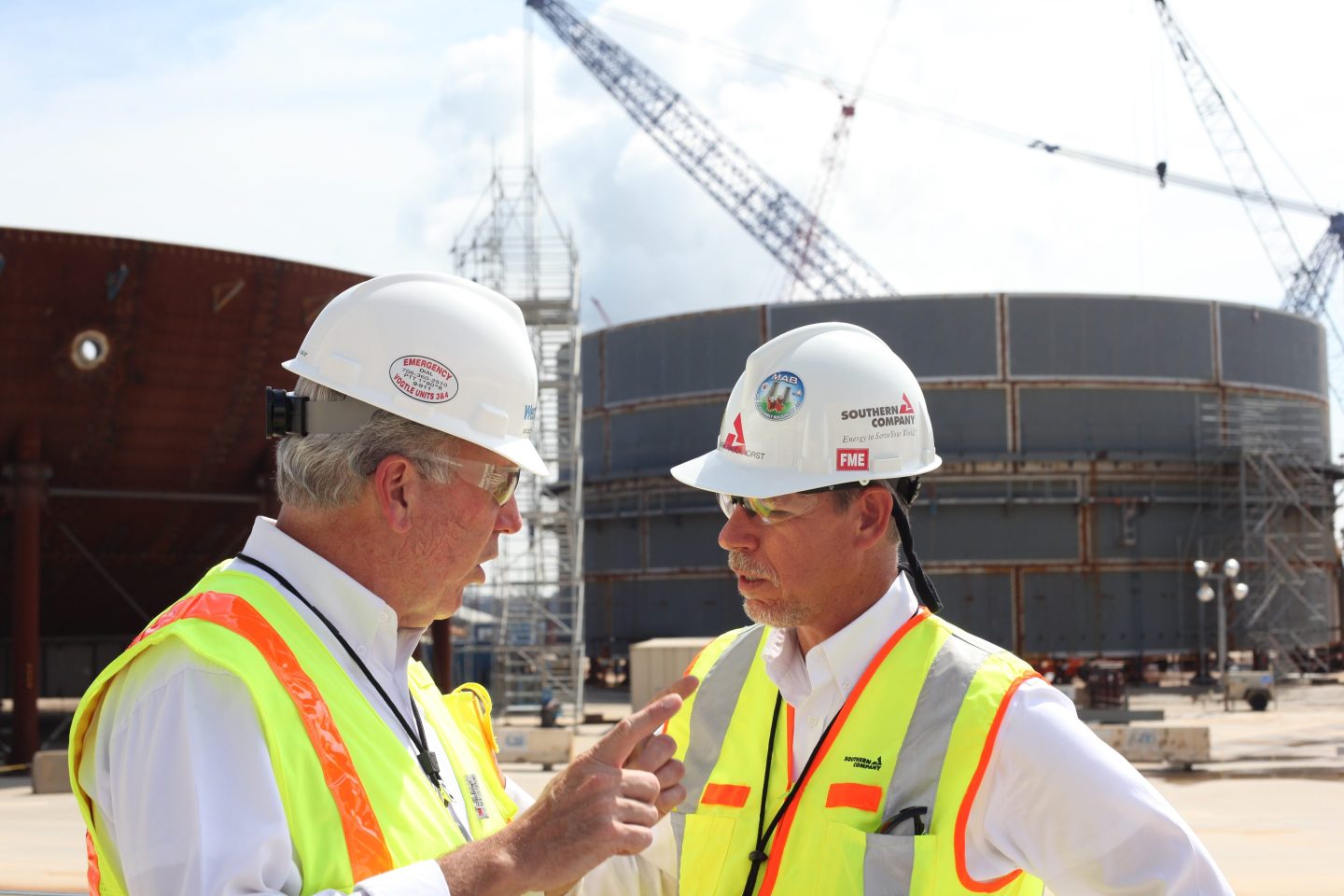
The U.S. currently lags behind other countries in the construction of nuclear power projects due to an unfortunate combination of project delays, cost overruns, and lack of required capital. While China has 30 new commercial reactors under construction, the U.S. primarily relies on plants built between 1970 and 1990 with no new government-approved plants under construction. The recent completion of two new reactors at the Vogtle plant in Georgia is a prime example of America’s new beginning for nuclear power, but these alone are not enough.
Although the Georgia plant’s expansion became notorious for costing significantly more and taking far longer than estimated to complete, a 2022 Massachusetts Institute of Technology report suggests the next reactor built in the style of Vogtle Units 3 and 4—the first newly constructed nuclear units built in the United States in more than three decades—should cost 40% less. Thanks to this fleet-scale approach, the cost of building nuclear reactors can and will go down. While there were delays with Vogtle Units 3 and 4, there is much to learn from them. The Nuclear Company has even hired two distinguished nuclear professionals, with extensive experience in engineering and construction, who worked on those units and bring lessons learned from them to our unique strategy.
To regain America’s footing as the global nuclear power we once were and ensure our energy security, we need to pursue a new approach to nuclear power that is centered on fleet-scale development. Pursuing fleet-scale development also ensures that the lessons learned at Vogtle won’t be for naught.
In its simplest form, it means working with other nuclear facilities and experts to deploy multiple reactors using already-approved technology and relying on standardized plans for the entire design, construction, and supply chain, while aligning on reasonable timelines to secure regulatory approvals. This creates efficiency for construction teams who will be able to move from site to site and achieve economies of scale across the entire fleet. Ultimately, this “design-once-build-many” strategy will reduce costs and risks, making nuclear power at scale more economically viable.
Although scaling up nuclear development will require rebuilding and reskilling our workforce for this industry, the returns will be enormous. We need an ‘all hands on deck’ approach from the market to achieve our ambitious nuclear goals. The U.S. Department of Energy’s goal of adding 200 gigawatts of nuclear generation by 2050—whether proven technology or small-modular reactors that continue to be developed—could create as many as 275,000 construction and manufacturing jobs related to project development, as well as 100,000 jobs created to operate the plants. These high-paying head-of-household jobs, which are expected by the Department of Energy to pay $114,000 annually on average, have the potential to revitalize the entire United States economy for decades to come.
To meet DOE’s ambitious goal, we don’t just need more buy-in from the general public. We need an expansion of public-private partnerships across the industry that bring in public utilities and more private sector innovators who are committed to making this concept a reality. For theoretical concepts to become realistic success, this moment requires a coalition of utilities and independent power producers, hyperscalers, nuclear technology suppliers, and private equity to help mitigate risk and make nuclear power an attractive investment. No one link in the chain can meet our nation’s energy needs alone.
In that vein, leaders in nuclear energy have worked together to attract more diversity, like women and people of color to our industry. U.S. Women in Nuclear, which I Chair, has more than 5,000 members across 36 states, and we recently brought together nearly 1,000 supporters in Pittsburgh. This is how we expand the pool of companies and individuals committed to nuclear expansion.
While this process may sound daunting, we’ve done it before. The United States built more than 100 reactors in the past decades and, even with just a few new units coming online in the past 30 years, they continue to provide nearly 20% of America’s clean, base-load electricity.
The pursuit of great goals means we need to learn from our mistakes but not let them stop us in our tracks. To paraphrase Henry Ford, “Coming together is a beginning, keeping together is progress.”
More must-read commentary published by Fortune:
- An economic catastrophe is lurking beneath Russia’s GDP growth as Putin ‘throws everything into the fireplace’
- The ‘sustainability recession’ will end soon—and not by choice
- ‘Godmother of AI’ says California’s well-intended AI bill will harm the U.S. ecosystem
- Clichés, exaggerations, overstatements: Our analysis of 23,000 annual reviews shows top performers get the worst feedback
The opinions expressed in Fortune.com commentary pieces are solely the views of their authors and do not necessarily reflect the opinions and beliefs of Fortune.











