
Over the past few years, the U.S. economy has seemingly pulled off an incredible feat. Even with stubborn inflation and rising interest rates weighing on consumers and businesses nationwide, and wars in the Middle East and Europe subduing global growth, there have been few signs of an American recession.
The bust phase of the modern business cycle that so many Wall Street forecasters said was an inevitability not long ago appears to have gone missing. And it’s not only the economy flying in the face of this conventional business cycle wisdom—U.S. stocks have soared in recent years as well, despite considerable headwinds.
Wall Street’s bulls argue this is all an uncommon, but not unheard-of economic “soft landing,” driven by consumers and businesses that are now structurally more resilient to higher borrowing costs. Some even claim we’re living through a period of American economic and market exceptionalism, or a “Roaring 2020s,” due to factors like the U.S.’s relative energy independence and exposure to the AI boom.
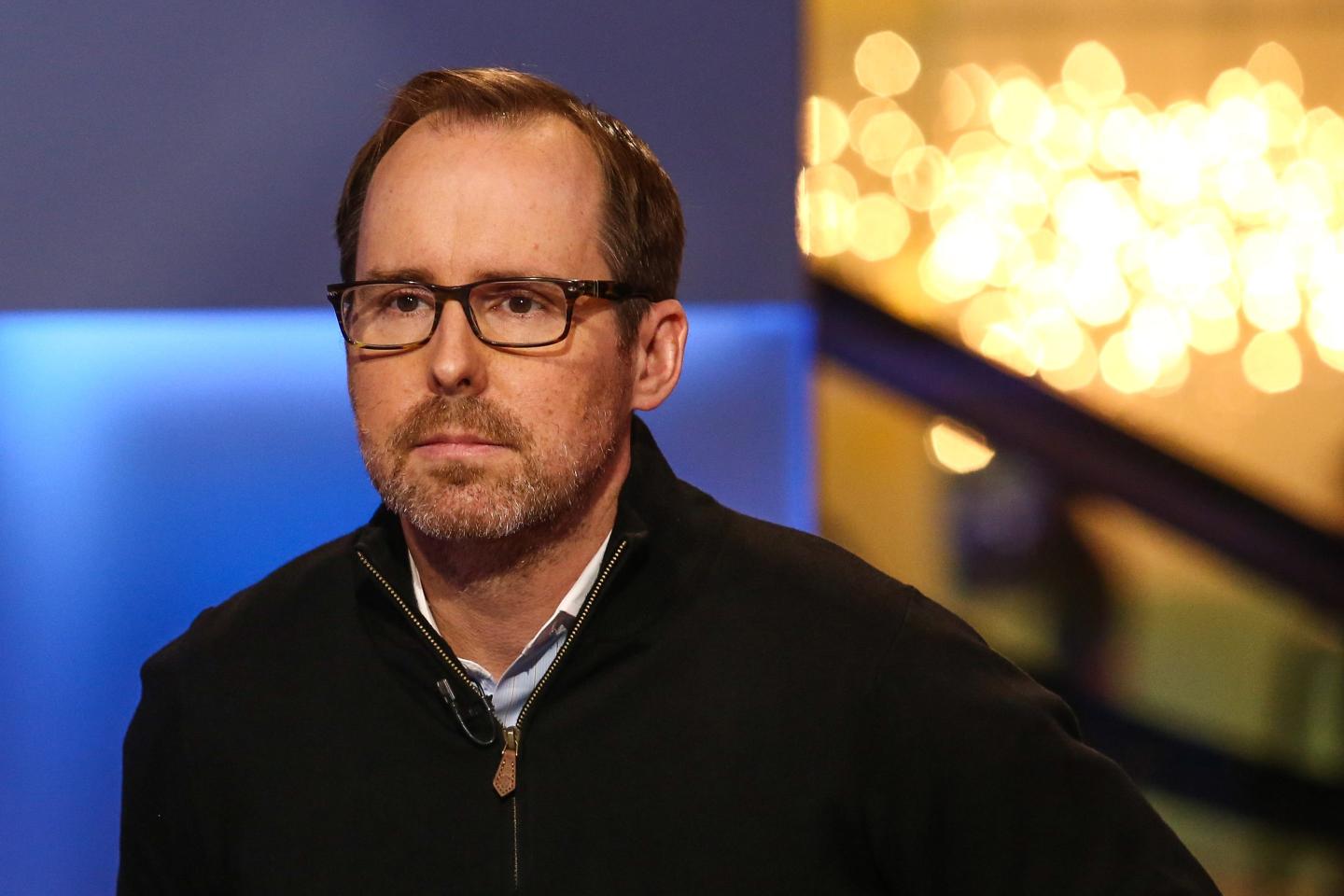
But for Mark Spitznagel, founder and CIO of the private hedge fund Universa Investments, all of these ideas are merely attempts to find a story to explain how “it’s different this time,” when the reality is that history tends to repeat itself, or at least rhyme.
“It’s not different this time, and anybody who says it is really isn’t paying attention,” Spitznagel said in an interview with Fortune, adding “the only difference is the magnitude of this bubble that’s popping is bigger than we’ve ever seen.”
Spitznagel has claimed for years now that the Federal Reserve helped blow up the “greatest credit bubble in human history” with years of loose monetary policy—and he’s warned that all bubbles eventually pop, giving him a reputation as a perma-bear that he’s tried hard to shake.
Even now, with most Wall Street experts turning bullish this year, the veteran hedge funder is worried about the economy. He believes the negative impacts of the Fed’s monetary tightening in a period with elevated levels of corporate, consumer, and government debt have simply been delayed.
Recent signs of a cooling economy and peaking stock market, including a rising unemployment rate, an increasingly wary consumer, and volatile market action, shouldn’t be ignored, according to Spitznagel, whose patented strategy, called tail-risk hedging, seeks to profit from sharp market downturns.
“This is a run-of-the-mill tightening process, peaking process, inversion process, moving into recession. I’d be surprised if we’re not in recession by the end of the year,” he said.
A “tinderbox” economy
Not long ago, many Wall Street forecasters were in Spitznagel’s bearish camp, warning of an impending recession. But most no longer see an imminent risk of an economic or market crash. After predicting impending pain for years, Bank of America is no longer forecasting a U.S. recession at all this year, while JPMorgan and Goldman Sachs put the odds of recession at just 35% and 25% over the next 12 months, respectively, not far above the 15% historical average.
Still, Spitznagel—who’s utilized Nassim Taleb, the statistician and academic who popularized the concept of the rare and unexpected event called a “black swan,” as a “distinguished scientific advisor”—brushed off the bullish views on Wall Street. He argues the current, relatively stable economy is “not inconsistent” with the lagged effects of the Fed’s tightening. “It takes time for the higher cost of debt to make its way into the system,” the hedge funder explained.
We’ve been stuck in a brief Goldilocks zone as higher borrowing costs work their way through the economy, but that will soon end.
Why? Spitznagel says the Fed built up a “tinderbox” economy by keeping interest rates near zero and juicing the economy with quantitative easing—a policy of buying mortgage-backed securities and U.S. Treasuries—for as long as it did. These policies created an environment where businesses and consumers borrowed heavily to invest and spend because it was cheap, he says, and that led to high levels of debt and kept unsustainable business models artificially afloat.
To his point, U.S. non-financial corporations currently had a record $13.7 trillion in debt in the first quarter of this year, according to Fed data. And total global debt hit a record $315 trillion in the first quarter as well, according to the Institute of International Finance. Much of that debt is government debt, but Spitznagel is worried about sustainability there too.
The U.S.’s national debt topped $35.1 trillion this summer, and the U.S. debt-to-GDP ratio is now expected to hit 116% by 2034, according to the Congressional Budget Office—that’s higher than what was seen during World War II. The situation looks similar abroad as well.
Rising government debts could make it more difficult for new large-scale, economy-juicing spending programs to become reality, slowing economic growth.
With the Fed keeping rates elevated for years now, Spitznagel fears the impact of the rising cost of debt for corporations, consumers, and governments worldwide will soon rear its head. “You can't tighten it to the greatest credit bubble of human history without feeling it,” he said, repeating something that’s become something akin to his mantra in recent years.
The key indicator to watch
The key indicator Spitznagel is watching for evidence of an imminent recession is the yield curve, which plots the interest rates of bonds, typically U.S. Treasuries, of equal credit quality but different maturities. When the yield curve inverts, meaning short-dated bonds offer more interest than long-dated bonds, it’s historically indicated that a recession is on the way.
Each of the last eight U.S. recessions dating back to the 1960s has come after the 10-year Treasury yield fell below the three-month Treasury yield, for example. And currently, the U.S. three-month yield has been higher than the 10-year yield for 22 months, the longest inversion in history.
However, the inversion of this yield curve isn’t the true recession indicator, according to Spitznagel; it’s the turn back to normal, or the disinversion. “It’s one of most significant [recession] indicators that there are, the disinversion of the yield curve—look at the historical data,” he said.
Historically, it’s taken nearly a year, on average, after the first inversion of the three-month/10-year yield curve for a recession to begin. But to Spitznagel's point, it has only taken an average of 66 days from when the yield curve disinverts for the economy to crack, Reuters first reported, citing data from Jim Bianco, president and macro strategist at Bianco Research.
For the outspoken hedge funder, the yield curve’s current disinversion trend is a sign that a recession is coming, and likely within the year. “Is the yield curve distance inversion going to be meaningless this time around? It's never been before,” Spitznagel said. “Is the turn on the employment front gonna be meaningless this time? It never was before.”
Doomed to a stagflationary future
Ultimately, after this bubble pops and a recession comes, Spitznagel fears, excessive debt in the global economy and "money printing" from the Fed will lead to a period of low growth and high inflation.
He argues the Fed will be forced to “do something heroic” to save the economy and markets when they crack, but that will only be a “pyrrhic victory.” Slashing rates, reviving quantitative easing, or even beginning new, untested stimulus efforts won’t be enough to prevent considerable pain for consumers and investors. And when the Fed's efforts do begin to take effect and help stabilize the economy, stagflation will become a problem.
"It will look like a recovery, but there’s just so much that [money] printing can do before it actually saps growth," Spitznagel said. "As Friedman wrote in the late ’60s, all money printing is ultimately stagflationary once the printing and inflation becomes expected."
"Money printing never has and never will create wealth. So expect gold and commodities to become a real trade once again in the aftermath of the next epic crash," he added.
However, while Spitznagel does fear that a recession is coming, the stock market bubble will soon crack, and stagflation is a long-term risk, he also offered a caveat to his bearish long-term outlook.
“I don't think we're headed for the Great Depression. I'm not a guy that's calling for the end of the world. I just don't think we're going to like the things that have to be done in order to save this artificial, massively manipulated bubble that we're all living in,” he said.
And finally, Spitznagel, who's been bullish since the end of 2022, warned that bubbles tend to end with euphoric highs, and he believes the last leg of our current bubble still has room to run. For investors, that means shorting the market is wrong idea.
"I just want to clear my conscience here," he said. "If your readers short the market, and they have to end up buying back 20% or whatever it is higher, it's not on me. I think a blowoff [to the peak] is coming. It's going to squeeze [bearish investors]."