• Home
  • Latest
  • Fortune 500
  • Finance
  • Tech
  • Leadership
  • Lifestyle
  • Rankings
  • Multimedia

Trendingnow

1

The millennial generation has split, new Fed research shows: Those over 35 are edging toward boomer-style wealth, while everyone else falls behind

2

Spain lifted the World Cup, but the IRS still gets a cut of its $50 million pay day as players, coaches and refs all face complex U.S. “jock taxes”

3

The $39 trillion U.S. national debt isn’t as high as Japan’s and Singapore’s relative to economy size—and yet it's still worse somehow

1

The millennial generation has split, new Fed research shows: Those over 35 are edging toward boomer-style wealth, while everyone else falls behind

2

Spain lifted the World Cup, but the IRS still gets a cut of its $50 million pay day as players, coaches and refs all face complex U.S. “jock taxes”

3

The $39 trillion U.S. national debt isn’t as high as Japan’s and Singapore’s relative to economy size—and yet it's still worse somehow
CommentaryHealth

Bird flu outbreak at Colorado farm as 5 workers reported positive: Experts warn of ‘turning point,’ call for urgent action

By
Carolyn Barber
Carolyn Barber
Down Arrow Button Icon
By
Carolyn Barber
Carolyn Barber
Down Arrow Button Icon
July 15, 2024, 6:01 AM ET
Farmworkers are considered to be on the front lines of risk because of their proximity to both chickens and dairy cattle, two species in which H5N1 has already been found in alarming numbers in the U.S.
Farmworkers are considered to be on the front lines of risk because of their proximity to both chickens and dairy cattle, two species in which H5N1 has already been found in alarming numbers in the U.S.Brandon Bell—Getty Images
Add Fortune on Google for similar content.

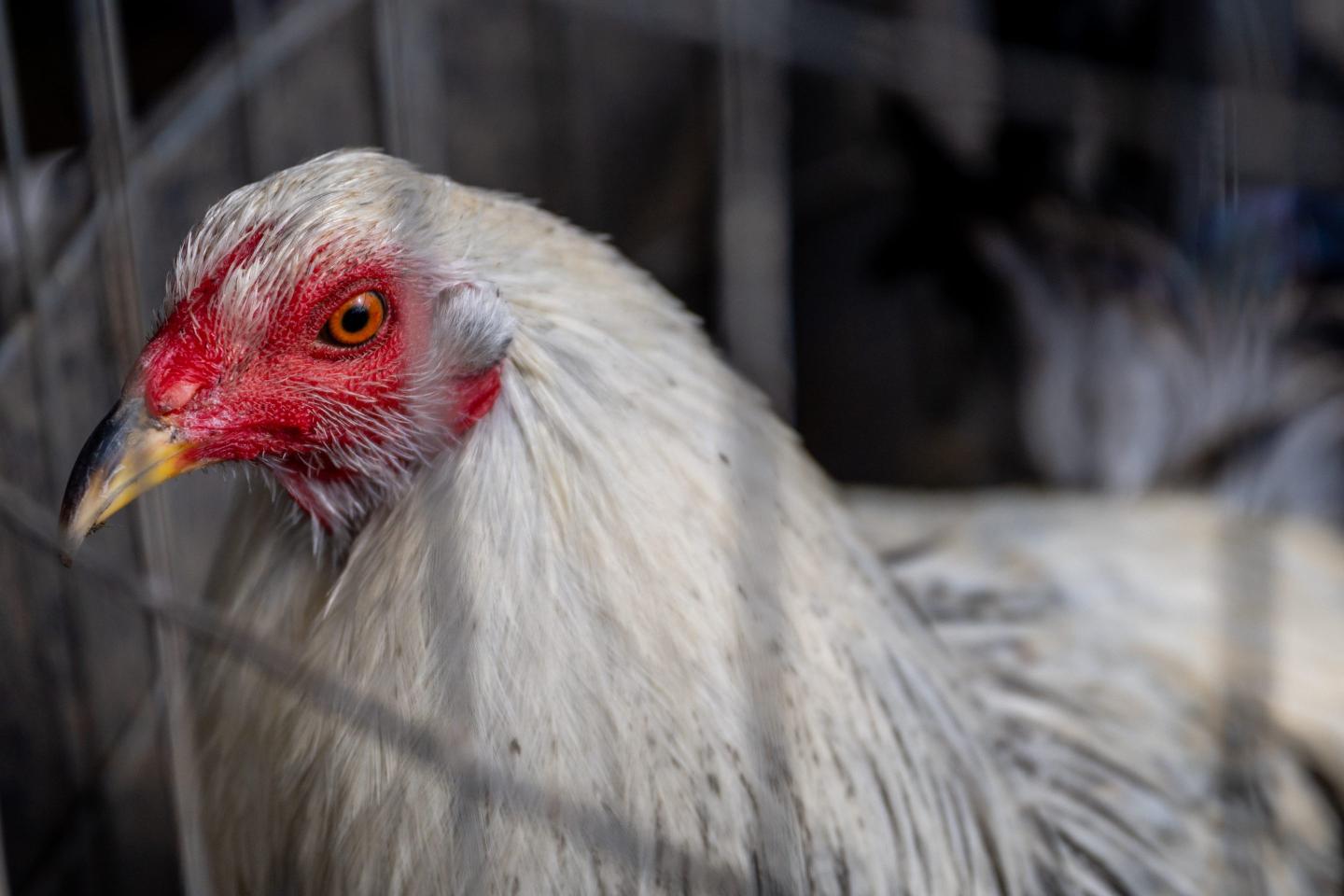
For months, fearing that the current version of bird flu had a much higher chance of spreading to humans than previous iterations, experts have pushed for a more aggressive response from U.S. health agencies to reduce human exposure and prevent a potential pandemic. The urgency of those requests is about to rise.

Late on Sunday, the Colorado Department of Public Health and Environment reported that five people have tested positive for bird flu among workers at an egg farm in Weld County, Colorado. Four of those cases have been confirmed by the federal Centers for Disease Control and Prevention(CDC), and one test is pending confirmation.

The cases emanated from a major flu outbreak at the farm, which affected nearly 1.8 million chickens. The workers were in the process of destroying those chickens, a process known as culling.

Colorado’s governor has declared a disaster emergency in response to the outbreak, and the announcement by state health officials of the positive cases represents a grim landmark. It denotes the first time a cluster of human infection has been reported on a single farm in the U.S., and it again raises the stakes on the seriousness of this virus.

A turning point

State health officials said the workers exhibited mild symptoms, including conjunctivitis (pink eye) and respiratory issues, and no one was hospitalized. But the incident marks the kind of turning point that experts have worried over for some time.

“I am extremely concerned that we are on the brink of this being really already in humans—and once it’s in humans, it is going to be a real problem to control,” says Seema Lakdawala, a microbiologist and immunologist at Emory University who specializes in influenza. “I will tell you that what has been driving me the past few months is trying to prevent H5 from becoming a pandemic…I have never felt that we were as close as we are now.”

In its own way, the CDC echoes that concern, referencing in general terms the “pandemic potential” of H5N1 and other novel flu viruses once humans are in the mix. But the agency added that it hasn’t yet seen genetic changes in the virus that would make human transmission more likely, and it continues to judge the risk to the general public as low.

Farmworkers on the front lines

This basic concern—a virus that already has shown the ability to adapt to multiple animal species, now jumping to humans—is what prompted experts and researchers to begin clamoring for more testing of both animals and workers on farms, including blood tests, as well as for vaccinations and antivirals at the ready. They also want farmworkers to be educated about the importance of wearing personal protective equipment–and for the CDC, USDA, and other health agencies, especially those at the state level, to step up the urgency.

Farmworkers are considered to be on the front lines of risk because of their proximity to both chickens and dairy cattle, two species in which H5N1 has already been found in alarming numbers in the U.S.—and that is with limited testing of both animals and those who work near them. The key, experts say, is to broaden testing practices now, not later. Waiting for more clusters of infection to appear, they say, is an open invitation to mass spread.

“I’d like to see them swabbing from not just the symptomatic people that they’ve talked about, but also asymptomatic people on the same farm in the family circle unit and in the community,” says immunologist Rick Bright, a former federal health official. “And I’d like to see them taking blood samples for serology testing.”

Serologic testing could help to identify people who have been infected and had either mild or asymptomatic H5N1 disease that investigators may be missing. If the testing came back positive for a family member of an infected worker, for example, it could be indicative of human-to-human transmission. “And, that’s really important to see,” says Bright.

The CDC’s release on the events included the news that the agency was sending a team to assist Colorado’s investigation “at the state’s request.” The wording was noteworthy. Despite the national implications of a virus spreading from animal to human, and potentially from human to human (there is no evidence of that yet), the CDC still has to be invited to participate in any single state’s investigation of the problem.

Individual farms cannot be forced by the federal agency to test either animals or workers. Such authority resides with state and sometimes county or local agencies, and researchers say past experience suggests that many farms will be reluctant to a testing process that could lead to their shutdown or loss of their workforce.

But there are other issues that cry out for quick resolution. One of them, experts say, is a horrible lag time in reporting the results of testing by the U.S. Department of Agriculture, or USDA.

“We have not seen increased transparency from the USDA,” says Bright. “Last week they dumped about 80 viruses into the database, and when you look at those 80 viruses, they were a bunch of viruses collected from birds. The samples were collected throughout 2023 and into early 2024. It’s ridiculous…By not being transparent and timely with their data, the USDA is really forcing a lot of guesswork.”

Bright wants to see the most recent few weeks of virus sequences from cows, cats, mice, and humans, in order to understand if the virus is changing in ways that may make it easier to spread or cause more severe disease in people. “And we need them to be uncloaked to be able to determine where and when the blood samples were collected,” the immunologist says.

Even given the problems of coordinating federal, state, and local agencies, the lack of testing on humans in the U.S. is glaring. According to the CDC, barely more than 60 people have been tested for the novel bird flu virus since farm outbreaks began this spring. This testing often involves eye, nose or throat swabs to look for active infection, but does not include blood draws which would be needed for serosurveillance.

“There are barriers for our public health agencies to achieve this, but it would certainly be valuable to have more widespread testing,” says Emory virologist and influenza expert Anice Lowen. Lowen counts farm, dairy, and poultry workers with potential exposure among those in need of testing.

“We really do not have a good idea how much spillover is happening,” the virologist says. “The handful of cases that have been documented are potentially the tip of the iceberg, but we just don’t know because there’s not enough testing going on.”

Bright is among those calling for the CDC to make vaccines available now to farmworkers and others at high risk of contracting bird flu, arguing that it is unethical to do anything less. Though it’s clear that the U.S. lacks the stockpile to effectively vaccinate the full population in the case of a mass outbreak, there is more than enough to begin with those on the front lines.

“There’s no such thing as just a little conjunctivitis. or just a little respiratory (issue) when you’re dealing with a deadly virus,” Bright says. The virus, he adds, has already demonstrated the ability to mutate “very easily, very quickly, and it can cause severe illness and death. So let’s stop it in its tracks, not wait and see and let it get worse.”

Whether the CDC will follow the experts’ suggestions remains an open question. The agency’s response so far has been muted, with no change in official recommendation.

For those who’ve been closely tracking this bird flu, though, the signs are ominous, and they warrant a proactive response-including vaccination of frontline farmworkers. “That’s why we have these stockpiles,” Seema Lackdawala says. “It’s surprising to me that they haven’t been leveraged…We always expected this at some point in time.”

More must-read commentary published by Fortune:

  • How U.S.-China competition is benefiting the world—and reshaping the global economy
  • ‘A head-in-the-sand approach’: The U.S. strategic drug stockpile is inadequate for a bird flu outbreak
  • Gen Z’s enthusiasm for all things touchable is resurrecting the analog economy—and costing parents
  • Fearless Fund counsel: The court ruling barring grants to Black women entrepreneurs should terrify CEOs

The opinions expressed in Fortune.com commentary pieces are solely the views of their authors and do not necessarily reflect the opinions and beliefs of Fortune.

About the Author
By Carolyn Barber
See full bioRight Arrow Button Icon
Add Fortune on Google for similar content.

Latest in Commentary

Finance
Lorem ipsum dolor sit amet, consectetur adipiscing elit, sed do eiusmod tempor incididunt ut labore et dolore magna aliqua. Ut enim ad minim veniam
By Fortune Editors
October 20, 2025
Finance
Lorem ipsum dolor sit amet, consectetur adipiscing elit, sed do eiusmod tempor incididunt ut labore et dolore magna aliqua. Ut enim ad minim veniam
By Fortune Editors
October 20, 2025
Finance
Lorem ipsum dolor sit amet, consectetur adipiscing elit, sed do eiusmod tempor incididunt ut labore et dolore magna aliqua. Ut enim ad minim veniam
By Fortune Editors
October 20, 2025
Finance
Lorem ipsum dolor sit amet, consectetur adipiscing elit, sed do eiusmod tempor incididunt ut labore et dolore magna aliqua. Ut enim ad minim veniam
By Fortune Editors
October 20, 2025
Finance
Lorem ipsum dolor sit amet, consectetur adipiscing elit, sed do eiusmod tempor incididunt ut labore et dolore magna aliqua. Ut enim ad minim veniam
By Fortune Editors
October 20, 2025
Finance
Lorem ipsum dolor sit amet, consectetur adipiscing elit, sed do eiusmod tempor incididunt ut labore et dolore magna aliqua. Ut enim ad minim veniam
By Fortune Editors
October 20, 2025

Most Popular

Finance
Lorem ipsum dolor sit amet, consectetur adipiscing elit, sed do eiusmod tempor incididunt ut labore et dolore magna aliqua. Ut enim ad minim veniam
By Fortune Editors
October 20, 2025
Finance
Lorem ipsum dolor sit amet, consectetur adipiscing elit, sed do eiusmod tempor incididunt ut labore et dolore magna aliqua. Ut enim ad minim veniam
By Fortune Editors
October 20, 2025
Finance
Lorem ipsum dolor sit amet, consectetur adipiscing elit, sed do eiusmod tempor incididunt ut labore et dolore magna aliqua. Ut enim ad minim veniam
By Fortune Editors
October 20, 2025
Finance
Lorem ipsum dolor sit amet, consectetur adipiscing elit, sed do eiusmod tempor incididunt ut labore et dolore magna aliqua. Ut enim ad minim veniam
By Fortune Editors
October 20, 2025
Finance
Lorem ipsum dolor sit amet, consectetur adipiscing elit, sed do eiusmod tempor incididunt ut labore et dolore magna aliqua. Ut enim ad minim veniam
By Fortune Editors
October 20, 2025
Finance
Lorem ipsum dolor sit amet, consectetur adipiscing elit, sed do eiusmod tempor incididunt ut labore et dolore magna aliqua. Ut enim ad minim veniam
By Fortune Editors
October 20, 2025
Fortune Secondary Logo
Rankings
  • 100 Best Companies
  • Fortune 500
  • Global 500
  • Fortune 500 Europe
  • Most Powerful Women
  • World's Most Admired Companies
  • See All Rankings
  • Lists Calendar
Sections
  • Finance
  • Fortune Crypto
  • Features
  • Leadership
  • Health
  • Commentary
  • Success
  • Retail
  • Mpw
  • Tech
  • Lifestyle
  • CEO Initiative
  • Asia
  • Politics
  • Conferences
  • Europe
  • Newsletters
  • Personal Finance
  • Environment
  • Magazine
  • Education
Customer Support
  • Frequently Asked Questions
  • Customer Service Portal
  • Privacy Policy
  • Terms Of Use
  • Single Issues For Purchase
  • International Print
Commercial Services
  • Advertising
  • Fortune Brand Studio
  • Fortune Analytics
  • Fortune Conferences
  • Business Development
  • Group Subscriptions
About Us
  • About Us
  • Press Center
  • Work At Fortune
  • Terms And Conditions
  • Site Map
  • About Us
  • Press Center
  • Work At Fortune
  • Terms And Conditions
  • Site Map
  • Facebook icon
  • Twitter icon
  • LinkedIn icon
  • Instagram icon
  • TikTok icon
  • YouTube icon
Carolyn Barber, M.D., is an internationally published science and medical writer and a 25-year emergency physician. She is the author of the book Runaway Medicine: What You Don’t Know May Kill You, and the co-founder of the California-based homeless work program Wheels of Change.

Latest in Commentary

Can Bangkok future-proof itself against the heat?
CommentaryThailand
Can Bangkok future-proof itself against the heat?
By Curtis S. Chin and Ella TanJuly 23, 2026
12 hours ago
mm
CommentaryLeadership
Michael Muthukrishna: The ‘lone genius’ myth is wrong and it’s holding back your business
By Michael MuthukrishnaJuly 23, 2026
21 hours ago
Paul Keary (L) and Mike Sutcliff (R).
CommentaryAI agents
Teneo & Thoughtworks CEOs: the AI race will be won with governance, not speed 
By Paul Keary and Mike SutcliffJuly 23, 2026
21 hours ago
marks
CommentaryNational Security
General James ‘Spider’ Marks: there’s a strategic risk hidden inside closed AI systems
By James MarksJuly 23, 2026
21 hours ago
glp
Commentaryobesity
The GLP-1 paradox: too expensive to cover, too effective to cut
By Bryan Sivak and Elina OnitskanskyJuly 23, 2026
21 hours ago
data
CommentaryData centers
The hidden cost of AI: Why your town is negotiating with Amazon and Microsoft
By Melody BirminghamJuly 23, 2026
22 hours ago

Most Popular

The millennial generation has split, new Fed research shows: Those over 35 are edging toward boomer-style wealth, while everyone else falls behind
Real Estate
The millennial generation has split, new Fed research shows: Those over 35 are edging toward boomer-style wealth, while everyone else falls behind
By Nick LichtenbergJuly 22, 2026
2 days ago
Spain lifted the World Cup, but the IRS still gets a cut of its $50 million pay day as players, coaches and refs all face complex U.S. “jock taxes”
Personal Finance
Spain lifted the World Cup, but the IRS still gets a cut of its $50 million pay day as players, coaches and refs all face complex U.S. “jock taxes”
By Joshua HongJuly 23, 2026
1 day ago
The $39 trillion U.S. national debt isn’t as high as Japan’s and Singapore’s relative to economy size—and yet it's still worse somehow
Economy
The $39 trillion U.S. national debt isn’t as high as Japan’s and Singapore’s relative to economy size—and yet it's still worse somehow
By Sasha RogelbergJuly 23, 2026
17 hours ago
Current price of oil as of July 23, 2026
Personal Finance
Current price of oil as of July 23, 2026
By Joseph HostetlerJuly 23, 2026
22 hours ago
Scott Bessent casually says the U.S. has more than $1 trillion in gold—and that it doesn’t matter for the dollar
Economy
Scott Bessent casually says the U.S. has more than $1 trillion in gold—and that it doesn’t matter for the dollar
By Sasha RogelbergJuly 22, 2026
2 days ago
Mark Cuban says he has the solution to growing income inequality, and it's to reward every employee—from CEO to janitor—with company stock
Success
Mark Cuban says he has the solution to growing income inequality, and it's to reward every employee—from CEO to janitor—with company stock
By Sasha RogelbergJuly 20, 2026
4 days ago

© 2026 Fortune Media IP Limited. All Rights Reserved. Use of this site constitutes acceptance of our Terms of Use and Privacy Policy | CA Notice at Collection and Privacy Notice | Do Not Sell/Share My Personal Information
FORTUNE is a trademark of Fortune Media IP Limited, registered in the U.S. and other countries. FORTUNE may receive compensation for some links to products and services on this website. Offers may be subject to change without notice.