• Home
  • Latest
  • Fortune 500
  • Finance
  • Tech
  • Leadership
  • Lifestyle
  • Rankings
  • Multimedia

Trendingnow

1

Social Security's 2032 deadline puts a 22% cut on the table — but Washington has way less room to negotiate than 1983

2

CEO of $20 billion AI firm Perplexity says the secret to success is ‘sleeping with that fear’ that your competitor will steal your idea

3

Boomers actually do hold most of the wealth and power. So why do they call it 'whiny' to point that out?

1

Social Security's 2032 deadline puts a 22% cut on the table — but Washington has way less room to negotiate than 1983

2

CEO of $20 billion AI firm Perplexity says the secret to success is ‘sleeping with that fear’ that your competitor will steal your idea

3

Boomers actually do hold most of the wealth and power. So why do they call it 'whiny' to point that out?
NewslettersThe Trust Factor

The 3-step method to building trust with employees during uncertain times

By
Nick Rockel
Nick Rockel
Down Arrow Button Icon
By
Nick Rockel
Nick Rockel
Down Arrow Button Icon
June 28, 2024, 3:10 PM ET
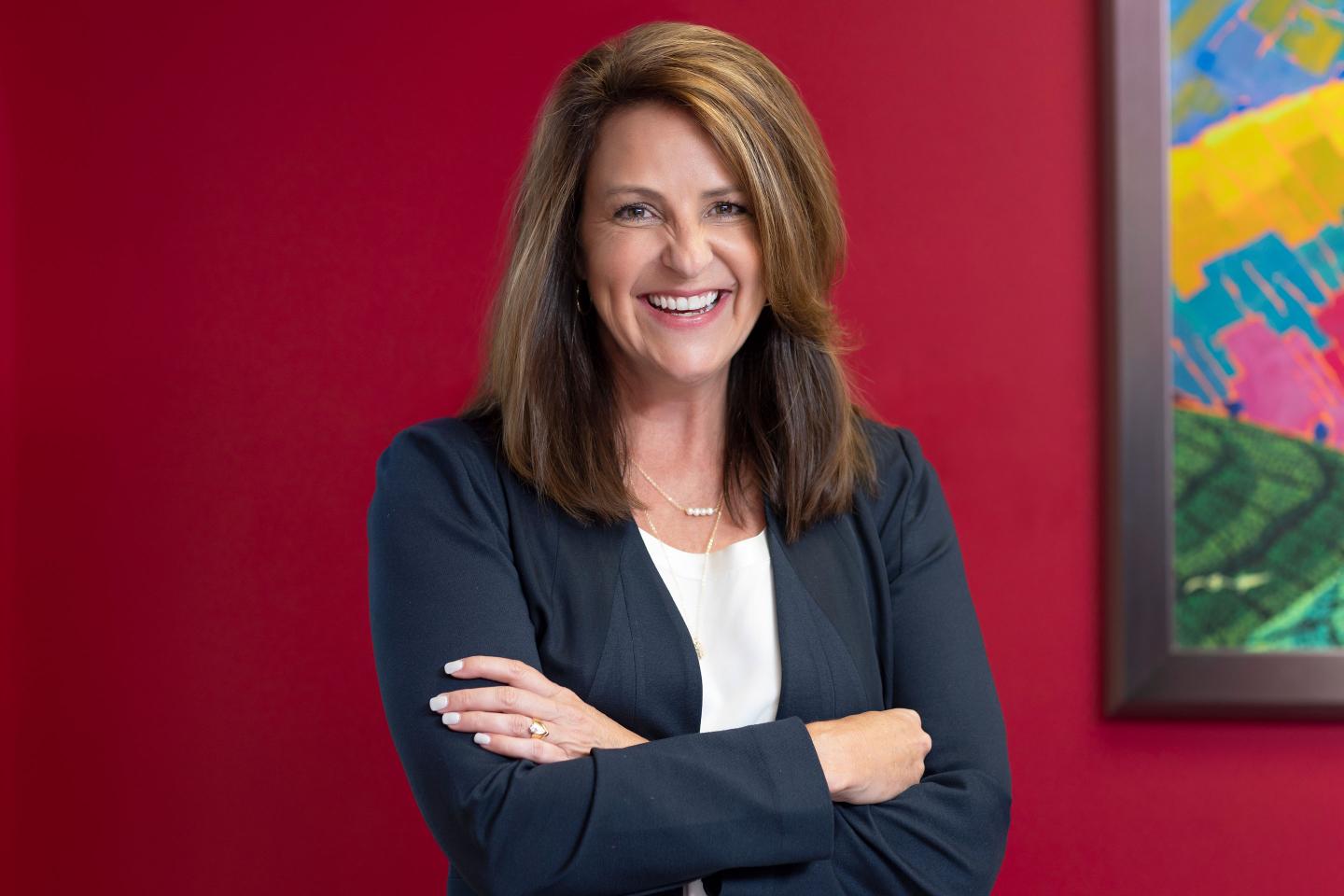
Marie Unger, CEO of employee engagement platform Emergenetics
Marie Unger, CEO of employee engagement platform EmergeneticsCourtesy of Emergenetics
Add Fortune on Google for similar content.

For the American worker, things could be a lot worse. They could also feel a lot better.

Recommended Video

Chances are a strong U.S. economy will avoid a recession in 2024, but high interest rates and lingering inflation keep weighing on consumers. The volatile global economic picture doesn’t help either. More than half of full-time American employees are increasingly worried about job security, a survey of 1,200 U.S. workers shows. And for the roughly 90% of U.S. workers who said they felt stressed last year, finances were the top cause.

Business leaders should get used to that uncertainty and build a culture of trust by supporting their people, reckons Marie Unger, CEO of Emergenetics International. The organizational development firm helps businesses, schools, nonprofits, and other clients understand and harness their cognitive diversity.

The pandemic ushered in an unpredictable era for the world, she tells me from Denver: “That’s just going to be the new global economy that we’re facing.”

Unger thinks companies can help employees deal by focusing on three things: communication, collaboration, and care. 

“By investing in the people, they can navigate all those headwinds,” she says. “Because they know they’ve got some psychological safety.”

Communication might sound obvious, given the wealth of options that leaders have at their disposal. But Unger has often seen them come up short. “When there’s challenges, the executive team, they go into a war room,” she says. “But what happens then is, the rest of the employees are out there filling in their own gaps.”

Transparency is especially important in volatile times, when leaders should overcommunicate, Unger maintains: “That spirit of transparency will give the employees a feeling of trust and confidence that they know what’s coming.”

Part of that is communicating more often, Unger says. For example, if you hold a quarterly town hall, make it monthly so people aren’t left wondering about the company’s health.

Which brings us to collaboration. Town halls give workers a chance to share their concerns and ideas with the business, says Unger, who also encourages chat channels. The goal is for them to “feel like they’re making a difference, and that they are empowered to be invested in getting the organization through whatever challenges that [it] may be facing.”

Care builds trust too. For companies, it means acknowledging that employees have a life outside of work, with its own stresses and strains—while also respecting that boundary.

Okay, but what if people are genuinely afraid their jobs are on the line?

Care also means investing in employees’ development, says Unger, a former school principal. In her view, upskilling and reskilling are vital amid economic volatility, to give people a sense of preparedness for whatever might be next.

“It’s one of the greatest things you can do to improve the loyalty and engagement of your employees,” Unger says, “to avoid burnout, to avoid absenteeism, the things that people face during those hard times.”

She also reminds companies and leaders navigating uncertainty to take time to understand each of those workers and their needs, “because our employees are our number one resource. They’re the ones who are going to help us get through it.”

For sure.

Nick Rockel
nick.rockel@consultant.fortune.com

IN OTHER NEWS

Unhappy returns
The IRS isn’t known for saying sorry, but it just blinked. Ken Griffin got a rare public apology from the agency, which failed to stop a now-jailed contractor from stealing the hedge fund manager’s tax return info and leaking it to the press. Jeff Bezos, Elon Musk, and Donald Trump were among the other billionaires exposed by Charles Littlejohn, whose misdeeds highlight the IRS’s sievelike security.

Getting to know you
It looks like workers have turned a corner when it comes to trusting AI. When PwC (a sponsor of this newsletter) polled some 56,000 employees for its Global Workforce Hopes and Fears Survey 2024, half said they think AI will boost their salaries and job security over the next year. Oh, and a mere 10% worried it would shrink their pay. The most bullish career-wise: those who use AI daily.

Manual gear
As cybercrime erodes trust in doing business online, car dealers are going the old-fashioned route. Attacks on industry software provider CDK Global prompted many North American dealerships to switch to manual customer service—including writing up orders by hand. The resulting paperwork must be a shock, but it beats handing over the keys to company and customer data. Still no word on whether closing that sale with a handshake is next.

Stream team
Netflix trusts its employees by keeping rules to a minimum. But if the streaming giant doesn’t have a vacation or expense policy, its “keeper test” might leave some staff feeling uneasy. Netflix urges managers to ask themselves if they’d fight to keep a worker who wanted to leave—or rehire someone, knowing what they know today. If not, let that person go. Hopefully, Netflix will start doing the same with its bloated series.

TRUST EXERCISE

“Artificial intelligence (AI) has been a hot topic lately—even though AI, machine learning, and large language models are nothing new. Many companies, ours included, have been developing, adapting, and adopting these technologies for decades.

What is new is the attention the topic has received in conversations since the game-changing rollout of ChatGPT. To be sure, the advent of generative AI has leveled the playing field and made artificial intelligence much more accessible. And it is accelerating AI’s adoption in fields where it previously would have been out of reach. Gen AI can produce initial drafts of documents, automate routine tasks, draw from vast amounts of data to improve decision-making, and free up people’s time for a better work-life balance.

Unfortunately, because there are not yet enough generally agreed-upon ethical guardrails around gen AI, there have been controversies surrounding its use. That includes the collection of personal and copyrighted data from online sources to build large language models (LLMs).”

We’ve been hearing a lot about the guardrails—or lack thereof—around generative AI. Steve Hasker, president and CEO of Thomson Reuters, makes the case that for any business using AI, winning public trust means taking a firm, ethical stand. His company has the right idea with its pledge to current and future customers that their data won’t be used to train a third-party LLM.

As Hasker sees it, the real problem here is human nature, not rogue AI. Because bad actors will seek to exploit any new technology, the rule of law and good public policy must create guardrails for responsible use, he argues. It’s also up to AI’s developers to self-govern—though in my opinion, that might be easier said than done.

Hasker reminds that as AI’s creators, we have the power to determine its future. It’s sometimes easy to forget that this tech was designed to serve humans. And for now, at least, AI can only treat people poorly if other people let it.

This is the web version of The Trust Factor, a former weekly newsletter that examined what leaders need to succeed.
About the Author
By Nick Rockel
See full bioRight Arrow Button Icon
Add Fortune on Google for similar content.

Latest in Newsletters

Finance
Lorem ipsum dolor sit amet, consectetur adipiscing elit, sed do eiusmod tempor incididunt ut labore et dolore magna aliqua. Ut enim ad minim veniam
By Fortune Editors
October 20, 2025
Finance
Lorem ipsum dolor sit amet, consectetur adipiscing elit, sed do eiusmod tempor incididunt ut labore et dolore magna aliqua. Ut enim ad minim veniam
By Fortune Editors
October 20, 2025
Finance
Lorem ipsum dolor sit amet, consectetur adipiscing elit, sed do eiusmod tempor incididunt ut labore et dolore magna aliqua. Ut enim ad minim veniam
By Fortune Editors
October 20, 2025
Finance
Lorem ipsum dolor sit amet, consectetur adipiscing elit, sed do eiusmod tempor incididunt ut labore et dolore magna aliqua. Ut enim ad minim veniam
By Fortune Editors
October 20, 2025
Finance
Lorem ipsum dolor sit amet, consectetur adipiscing elit, sed do eiusmod tempor incididunt ut labore et dolore magna aliqua. Ut enim ad minim veniam
By Fortune Editors
October 20, 2025
Finance
Lorem ipsum dolor sit amet, consectetur adipiscing elit, sed do eiusmod tempor incididunt ut labore et dolore magna aliqua. Ut enim ad minim veniam
By Fortune Editors
October 20, 2025

Most Popular

Finance
Lorem ipsum dolor sit amet, consectetur adipiscing elit, sed do eiusmod tempor incididunt ut labore et dolore magna aliqua. Ut enim ad minim veniam
By Fortune Editors
October 20, 2025
Finance
Lorem ipsum dolor sit amet, consectetur adipiscing elit, sed do eiusmod tempor incididunt ut labore et dolore magna aliqua. Ut enim ad minim veniam
By Fortune Editors
October 20, 2025
Finance
Lorem ipsum dolor sit amet, consectetur adipiscing elit, sed do eiusmod tempor incididunt ut labore et dolore magna aliqua. Ut enim ad minim veniam
By Fortune Editors
October 20, 2025
Finance
Lorem ipsum dolor sit amet, consectetur adipiscing elit, sed do eiusmod tempor incididunt ut labore et dolore magna aliqua. Ut enim ad minim veniam
By Fortune Editors
October 20, 2025
Finance
Lorem ipsum dolor sit amet, consectetur adipiscing elit, sed do eiusmod tempor incididunt ut labore et dolore magna aliqua. Ut enim ad minim veniam
By Fortune Editors
October 20, 2025
Finance
Lorem ipsum dolor sit amet, consectetur adipiscing elit, sed do eiusmod tempor incididunt ut labore et dolore magna aliqua. Ut enim ad minim veniam
By Fortune Editors
October 20, 2025
Fortune Secondary Logo
Rankings
  • 100 Best Companies
  • Fortune 500
  • Global 500
  • Fortune 500 Europe
  • Most Powerful Women
  • World's Most Admired Companies
  • See All Rankings
  • Lists Calendar
Sections
  • Finance
  • Fortune Crypto
  • Features
  • Leadership
  • Health
  • Commentary
  • Success
  • Retail
  • Mpw
  • Tech
  • Lifestyle
  • CEO Initiative
  • Asia
  • Politics
  • Conferences
  • Europe
  • Newsletters
  • Personal Finance
  • Environment
  • Magazine
  • Education
Customer Support
  • Frequently Asked Questions
  • Customer Service Portal
  • Privacy Policy
  • Terms Of Use
  • Single Issues For Purchase
  • International Print
Commercial Services
  • Advertising
  • Fortune Brand Studio
  • Fortune Analytics
  • Fortune Conferences
  • Business Development
  • Group Subscriptions
About Us
  • About Us
  • Press Center
  • Work At Fortune
  • Terms And Conditions
  • Site Map
  • About Us
  • Press Center
  • Work At Fortune
  • Terms And Conditions
  • Site Map
  • Facebook icon
  • Twitter icon
  • LinkedIn icon
  • Instagram icon
  • Pinterest icon

Latest in Newsletters

Twilio CFO on the turnaround that won back Wall Street
NewslettersCFO Daily
Twilio CFO on the turnaround that won back Wall Street
By Sheryl EstradaJune 15, 2026
1 hour ago
At Fortune Brainstorm Tech 2026, Chris Bedi, Chief Customer Officer and Enterprise AI Advisor, ServiceNow; China Widener, Vice Chair and US Technology, Media & Telecommunications Industry Leader, Deloitte; and Phil Wiser, Chief Technology Officer, Paramount, speak on a panel with Kristin Stoller, Fortune editorial director.
NewslettersFortune Workplace Innovation
This tech CEO fired 80% of his workforce over AI resistance. Here’s what he’s learned since then
By Kristin StollerJune 15, 2026
2 hours ago
The management lesson behind FedEx Freight’s break from FedEx
C-SuiteNext to Lead
The management lesson behind FedEx Freight’s break from FedEx
By Ruth UmohJune 15, 2026
3 hours ago
The SpaceX IPO marks a lopsided win for venture
NewslettersTerm Sheet
The SpaceX IPO marks a lopsided win for venture
By Allie GarfinkleJune 15, 2026
3 hours ago
SpaceX tokens are a bust on IPO day—but blame supply and demand, not crypto
NewslettersFortune Crypto
SpaceX tokens are a bust on IPO day—but blame supply and demand, not crypto
By Jeff John RobertsJune 15, 2026
3 hours ago
Anthropic CEO Dario Amodei testifies during a Senate hearing on July 25, 2023 in Washington, D.C. (Photo: Alex Wong/Getty Images)
NewslettersFortune Tech
Anthropic rushes to put out its latest fire in Washington
By Andrew NuscaJune 15, 2026
4 hours ago

Most Popular

Social Security's 2032 deadline puts a 22% cut on the table — but Washington has way less room to negotiate than 1983
Personal Finance
Social Security's 2032 deadline puts a 22% cut on the table — but Washington has way less room to negotiate than 1983
By John W. Diamond and The ConversationJune 12, 2026
3 days ago
CEO of $20 billion AI firm Perplexity says the secret to success is ‘sleeping with that fear’ that your competitor will steal your idea
Success
CEO of $20 billion AI firm Perplexity says the secret to success is ‘sleeping with that fear’ that your competitor will steal your idea
By Preston ForeJune 13, 2026
2 days ago
Boomers actually do hold most of the wealth and power. So why do they call it 'whiny' to point that out?
Economy
Boomers actually do hold most of the wealth and power. So why do they call it 'whiny' to point that out?
By Nick LichtenbergJune 14, 2026
1 day ago
Iran proved it can close the Strait of Hormuz, but the U.S. is advertising very loudly that the world's top superpower can at least punch open a hole
Energy
Iran proved it can close the Strait of Hormuz, but the U.S. is advertising very loudly that the world's top superpower can at least punch open a hole
By Jason MaJune 14, 2026
20 hours ago
SpaceX surge further boosts Saudi billionaire prince’s fortune
Investing
SpaceX surge further boosts Saudi billionaire prince’s fortune
By Adveith Nair and BloombergJune 14, 2026
23 hours ago
AI job disruption is here. The problem may be compounded because nearly 75% of people don't apply for unemployment benefits
AI
AI job disruption is here. The problem may be compounded because nearly 75% of people don't apply for unemployment benefits
By Jacqueline MunisJune 14, 2026
23 hours ago

© 2026 Fortune Media IP Limited. All Rights Reserved. Use of this site constitutes acceptance of our Terms of Use and Privacy Policy | CA Notice at Collection and Privacy Notice | Do Not Sell/Share My Personal Information
FORTUNE is a trademark of Fortune Media IP Limited, registered in the U.S. and other countries. FORTUNE may receive compensation for some links to products and services on this website. Offers may be subject to change without notice.