For the nearly 3,000 unlicensed cannabis dispensaries operating across New York City, it was fun while it lasted.
Since the city received the go-ahead from the state last month to crack down on illegal weed shops, hundreds have been shut down by law enforcement, while other sellers are seeing the writing on the wall and packing up voluntarily. And those thousands of departed stores could mean thousands of vacant retail properties across the city.
Real estate brokerage Meridian has received daily inquiries from landlords who formerly had been leasing to cannabis stores, according to Jordan Langer, an associate at the firm.
“There had been this demand across every sort of neighborhood,” Langer told Fortune. “It’s not specifically one neighborhood in Manhattan. Every single neighborhood has multiple shops on every block.”
‘Willing to pay anything’
One of those properties Meridian is now representing is 738 Broadway, a building near New York University and Washington Square Park that used to be the home of Roll Up Nation. According to Langer, who’s managing the listing, the smoke shop was paying $50,000 a month to rent the space, $15,000 more than Meridian is asking for now.
“They were willing to pay anything,” he said of the now-shuttered smoke shops. “The majority of these smoke shops are in some of the most prime locations in Manhattan. And they were comfortable paying well over ask.”
“They sell a high-margin product and don’t pay sales tax on it,” said Steven Soutendijk, a commercial broker at Cushman and Wakefield. That’s why, even despite hefty fines, many dispensaries were able to continue operating in Manhattan’s most expensive corridors. “And they were able to convince landlords that they were just smoke shops—that they weren’t selling marijuana or cannabis,” he added.
New York’s crackdown comes after years of fits and starts. The state legalized recreational marijuana in 2021, but it struggled with the rollout of licensed businesses, while a proliferation of smoke shops selling the product illegally abounded, leading the preeminent advocate of legalization to lament the “Wild West” the retail market had become.
In 2023, new state legislation gave the Office of Cannabis Management new latitude to conduct inspections and issue fines of illegal sellers, but it didn’t move the needle. For some shops, like the one at 738 Broadway, business was so profitable that “they were comfortably paying these fines so they could continue operating,” Langer said.
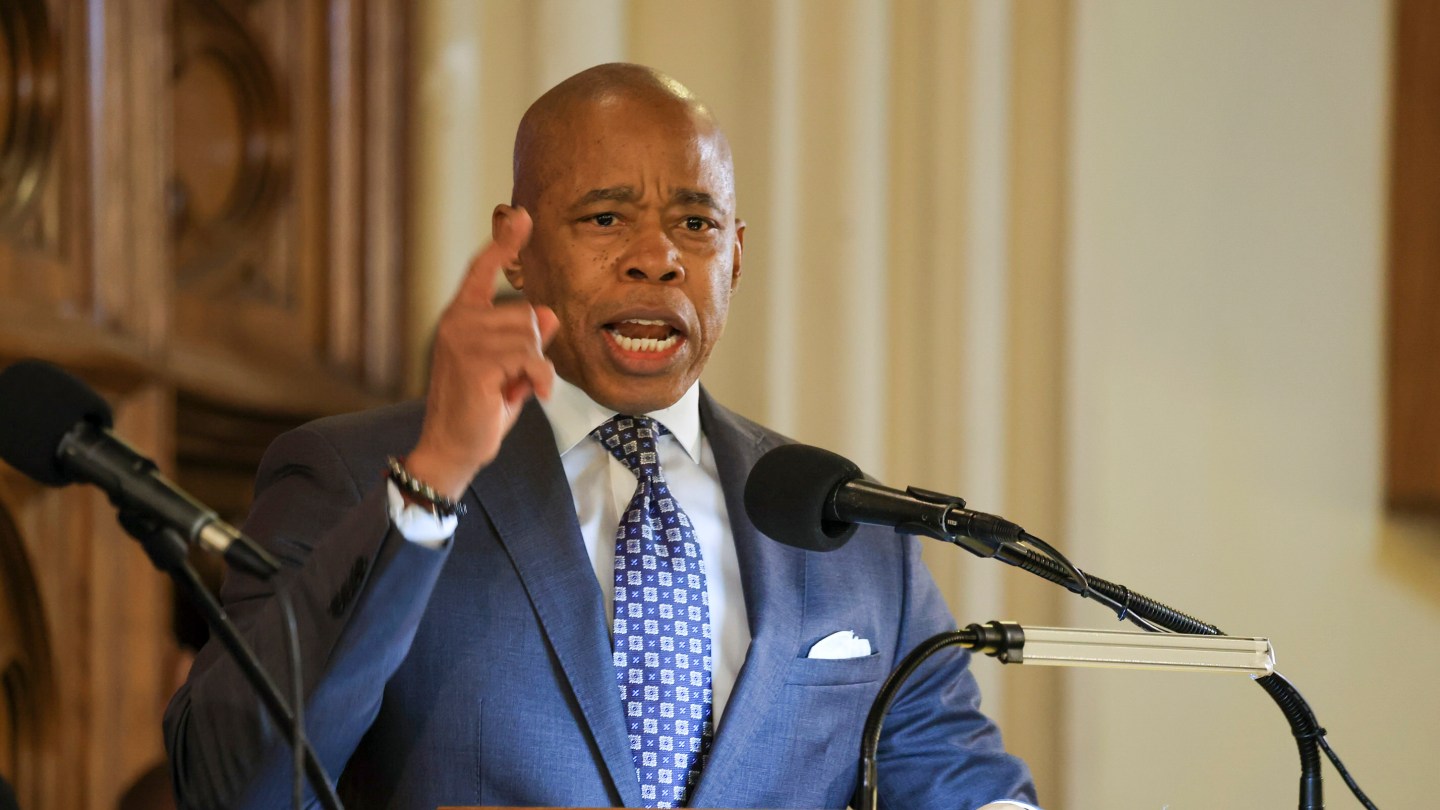
It wasn’t until April of this year that the state passed regulations enabling local officials to immediately padlock unlicensed weed sellers, leading mayor Eric Adams’ administration to kick off “Operation Padlock to Protect” at the start of May. Since then, more than 3,000 shops have been swept up, according to a recent article by the Commercial Observer.
Retail booms—and busts
Losing those high-paying unlicensed dispensary tenants was by no means “a win for landlords,” Langer said, but it wasn’t a loss, either. The flourishing of smoke shops over the past few years is just the latest swing in the eternal boom-bust cycle of retail. In the early 2010s, it was frozen yogurt. In the late 2010s poke bowls were all the rage, and more recently, Smashburger have taken over. Regardless, the boom-and-bust nature of the cycle always replaces the last craze with something new.
“The last trend happened to be illegal smoke shops, but there will be another one, and there’s going to be another tenant who’s going to be willing to pay top dollar in rent,” he said.
Retail space in New York City—and Manhattan in particular—is notoriously some of the most expensive in the world. The average cost of renting retail space in Manhattan is over $100 per square foot, according to PropertyShark, while the average cost in Boston is just $16. A report from Cushman and Wakefield listed upper Fifth Avenue as the most expensive retail area in the world, with asking prices around $2,000 per square foot—nearly $250 more than Milan’s luxury-shopping mecca Via Monte Napoeone, the runner-up.
Soutendijk agreed that the turnover from dispensaries wouldn’t upend the city’s retail market, although former smoke shops landlords might have to settle for slightly less in rent.
“I don’t think we’re talking about 50% of the rent,” he said. “I think we’re talking about 10% less rent, or 15% less rent, and that comes with the territory of being a landlord.”
Across the board, commercial real estate in the city has struggled post-pandemic, heightening concerns about an economic “doom loop” in which once-bustling downtowns stay empty as suburbanites work from home and starve the businesses that used to depend on their foot traffic. Offices in the city’s major business districts—Brooklyn, midtown, downtown, and midtown south–had vacancy rates between 22 and 24% in the fourth quarter of 2023, according to a report from Cushman and Wakefield. By comparison, Boston had a vacancy rate of 15.1%. New York Gov. Kathy Hochul cited the city’s commercial vacancy rate as proof of its unsteady recovery in her surprise decision to scrap the state’s congestion pricing plan last week.
Just over 11% of storefronts in New York City were vacant this year, according to data from the city’s finance department. While that’s slightly down compared to last year, it’s still nearly double the 6% vacancy rate in 2019.
But Soutendijk said that, as far as retail vacancies went, there was no cause for panic.
“Let’s say that it is 11%,” said Soutendijk, who estimated the true vacancy rate at between 10% and 12%. “Right now, 11% is a very healthy availability rate, and it represents an incredibly strong retail market.”
Mayor Adams had initially said the city would be able to close all of its unlicensed dispensaries within a month of getting the authority from the state, but has since walked back his timeline.
“It’s likely that’s going to take months, if not a year plus, and it’s going to happen in sort of a staggered way, and it’s going to happen across the five boroughs,” Soutendijk told Fortune. “They’re geographically dispersed all over New York. We’re not going to have this sudden rush of available retail space all at once.”
“I’m not even remotely concerned about this, as someone who relies on [real estate] for their livelihood,” Soutendijk said.
In addition to their ideal locations, he told Fortune that most of the spaces renting to smoke shops are small, meaning a greater variety of prospective tenants could take their place. And the exit of unlicensed dispensaries would give legally operating retailers an opportunity.
“This is going to cause a temporary, very small blip in retail availability rates, and I’m so confident that almost all these spaces are going to get backfilled pretty quickly,” he said. “And hopefully by some new creative, legal uses that take advantage of the fact that landlords are going to be feeling like, ‘Oh God, I’ve got to find a source of income for these spaces now.’”