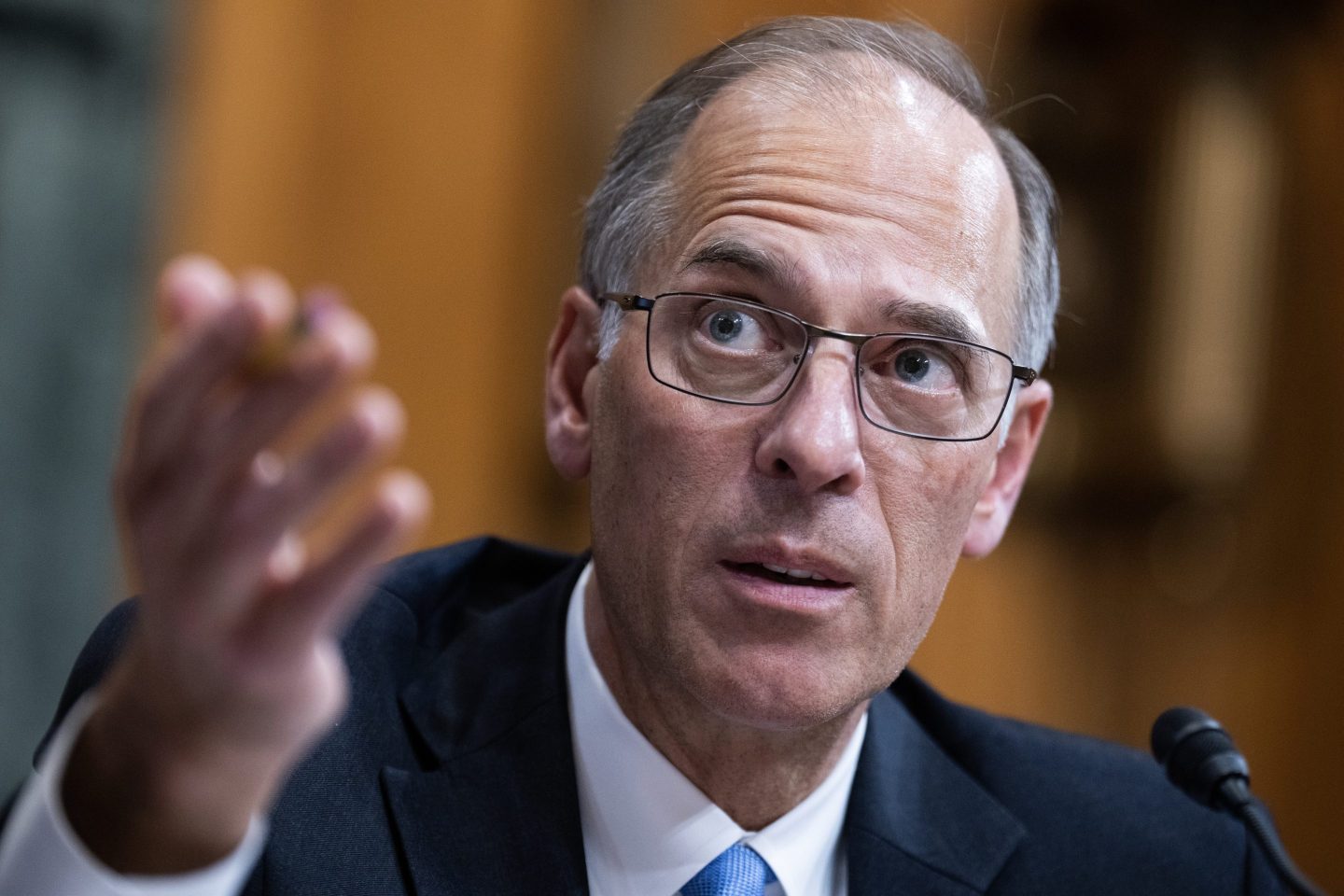

The CEO of JPMorgan Chase is the latest to signal the alarm about the booming private credit market. Jamie Dimon told a banking conference this week that problems could bubble up if weaker players in the sector lead customers to get caught up in an illiquid asset class they don’t understand. “Retail clients [will] circle the block and call their senators and congressmen and there could be help to pay,” Dimon said. (Curiously, JPMorgan Chase is looking to buy a private credit firm and tried to scoop up Monroe Capital but didn’t succeed, Bloomberg reported earlier this month.)
Despite Dimon’s misgivings, there’s no denying that private credit has become very big business on Wall Street as the IMF reported that assets topped $2.1 trillion globally last year with most of that in the U.S. BlackRock, meanwhile, expects the global private debt market to hit $3.5 trillion in AUM by the end of 2028.
But what exactly is private credit? And how exactly could this hot new asset class pose a danger to the financial system? Here’s a plain English overview.
What do people mean when they talk about private credit?
The term refers to a new class of private lenders that emerged after the great financial crisis when banks stepped back from making loans. Private credit firms, which are not banks, offer loans to businesses, typically small and medium-sized companies. These companies are usually too big or risky for banks and too small for public bond markets.
So how is that different from what banks do?
Banks and private credit lenders both provide loans to companies but the money comes from different places. Banks collect deposits from their customers and can use the funds to make loans. Credit funds, by comparison, raise money from investors that are usually large institutions like insurance companies, pension funds and endowments. They use this pooled capital to provide financing for companies.
There’s also the issue of withdrawal. With a bank, customers can pull out their money when they want. Investors in private credit funds, however, can’t just pull their funds out, according to David Wessel, director, Hutchins Center on Fiscal & Monetary Policy, at the Brookings Institution. “It’s usually locked up for a period of time,” Wessel told Fortune.
What happens if a private credit firm gets in trouble?
This is another big difference from banks. The latter are highly regulated while private credit funds generally are not. When Silicon Valley Bank failed last year, the FDIC protected the depositors but, as Wessel pointed out, private credit funds are not insured the same way.
Wessel added that investments in money market mutual funds aren’t insured either but “the government (the Fed and the treasury) have stepped in to protect those investments at times of crisis,” he said in an email.
So who exactly is offering all this private credit?
Mostly private equity firms. Several big PE shops have diversified into credit and now call themselves alternative asset managers. Some of the biggest credit lenders are Apollo Global Management, KKR, Blackstone, Ares Management, Blue Owl, Sixth Street, Oaktree Capital Management and BlackRock.
These firms also supply private credit to each other. It’s not uncommon for a PE firm to buy a company using debt provided by another buyout shop, Bloomberg has said.
So why are some people getting nervous about private credit?
Transparency is a big issue. Private credit funds are required to disclose less about their performance, loans, and investors (both to regulators and the public) than banks, according to a report from The Brookings Institution. This means that regulators will have a harder time reacting swiftly during times of financial stress. Banks that lend to companies also have lots of experience dealing with borrowers who run into trouble. But private lenders, some of whom may be new to the sector, often don’t have any experience dealing with the downturns.
There’s also a limited understanding of the private markets, which includes credit. Individual investors often don’t have the resources to perform the same level of due diligence as institutional investors, Moody’s Investors Service said in a report.
Are retail investors at risk from private credit?
Retail investors can invest in private credit through business development companies, or BDCs, that are publicly traded. BDCs issue loans to small and middle-market non-public businesses. Blackstone, KKR, Apollo and BlackRock each have BDCs, some public, some private.
Shareholders can’t redeem their shares directly with a BDC but have to sell their stock on the open market and take whatever price they get. People who invest in BDCs may not realize the the value of their shares may fall if other private credit funds face withdrawals and that triggers fire sale of underlying assets. “This can lead to a cascading problem that we’ve seen in banking for generations,” Wessel said.
How worried should we be about a private credit crack-up?
Private credit isn’t something that is expected to blow up today, tomorrow or next week, Wessel said. Like the subprime mortgage crisis of 2008, things that start out small and grow rapidly can become big problems, he said. “We want to be sure as private credit gets bigger that we’re paying attention to it,” Wessel said.
This story was corrected to include updated comments from Brookings’s David Wessel.