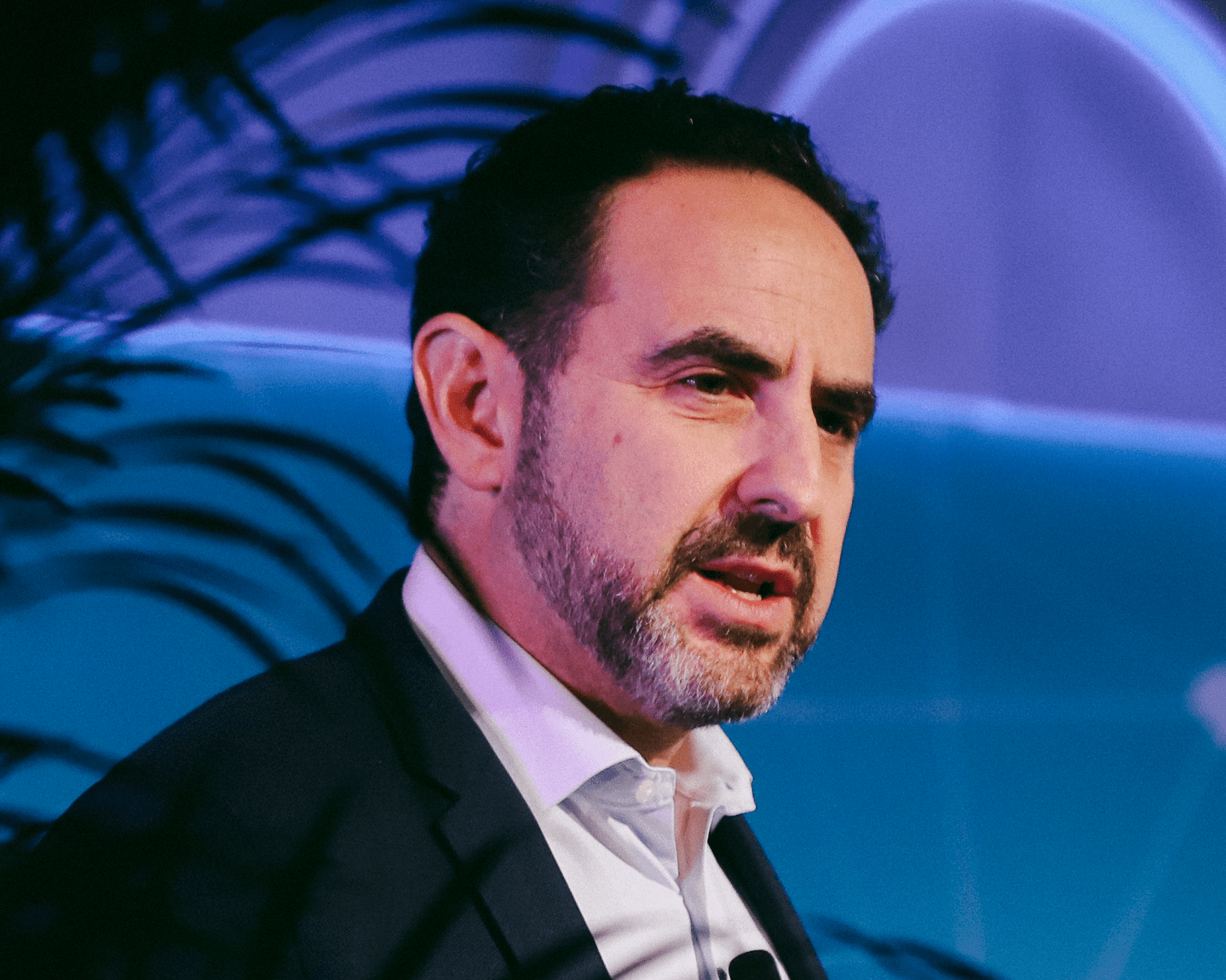
I grew up in Kenya’s Kibera slum, the largest urban slum in Africa, and experienced extreme poverty firsthand. I was a street child, constantly scraping by for food and water, and lacking basic services like education or health care.
To me, “charity” was a dirty word. I didn’t trust charity workers, who approach aid through single issues—like health promotion or clean water supply—when the reality is the challenges poor people face are complex and intersecting. Their projects never involved the community and left a vacuum in their wake. Acts of charity often had unintended consequences. I will never forget when a charity built a public toilet, only for a neighbor to move in and claim it as his home.
Every year, Africa receives billions of dollars of aid. Yet very little of it goes directly to local communities in need. In fact, less than 1% of global aid goes directly to local organizations. As for humanitarian assistance specifically, international organizations receive 400 times more funding than local organizations—$39 billion versus $98 million in 2022.
Top-down charity
Even as they take the lion’s share of funding, international NGOs are questioning their own relevance. In a study where Oxford researchers spoke with 50 CEOs of leading INGOs, many said they felt stuck, hamstrung by donor expectations, and too focused on internal issues. This is a powerful admission that INGOs are too far away from the communities they’re meant to be helping. It’s a bitter pill to swallow, knowing that they will continue to compete for dollars, at the expense of the world’s most vulnerable populations.
When outsiders impose solutions, it ignores the perspectives of local leaders and community members who know what’s needed to create sustainable change. It puts the focus on hitting metrics set by people who don’t understand the realities on the ground. It creates a relevance gap that shortchanges the world’s poorest people.
The solution is clear. Funding must shift away from top-down charity models. In its place, power must shift toward locally-led models of development. The sector as a whole must learn to trust and equip local leaders with funding and decision-making responsibility.
Community-based organizations hold the keys to lasting impact, going where others can’t, at far lower cost. I am an activist and organizer in my community. I have seen firsthand how locally-led organizations tap into the most valuable resources that communities have: cultural knowledge and social capital.
Local leaders look at problems holistically, the same way we look at our lives. We focus on long-term solutions with positive ripple effects. We promote dignity by involving trusted community members in shaping the agenda, instead of imposing one like outsiders do.
Power of community-based organizations
When humanitarian disasters strike, community-based organizations instantly become first responders. I’ve experienced this firsthand in recent weeks when extreme flooding in Kenya displaced 280,000 people. Hardest hit were urban slums, where people are densely packed into informal housing lacking proper infrastructure, drainage, adequate food, or clean water access. My organization, Shining Hope for Communities (SHOFCO), led 40 community-based organizations in emergency response and distribution efforts, relocating people to schools and emergency shelters, distributing essential aid packages of food and bedding, and providing access to clean water and purification tablets to prevent the outbreak of waterborne diseases.
We’re effective because we operate within the existing social fabric. We tapped trusted community members to mobilize volunteers for door-to-door rescue and distribution efforts. With minimal resources and light logistical support, we created coverage zones in hard-to-reach slums, which are difficult for outsiders to navigate, and even harder during flash floods. We provided effective distribution channels for larger humanitarian partners like the Red Cross and the government, creating an umbrella for others to plug into.
Community-based organizations can go where outside organizations can’t, and funding must be shifted to amplify their work to reach the world’s most vulnerable populations. When provided the proper resources and trust, locally-led organizations can deliver more effectively than international actors. This is true from a cost perspective, too. One study estimated that local organizations can deliver programming that is 32% more cost-efficient than international organizations, by stripping out expensive international salaries and overheads.
The challenge is creating the right funding channels, building the capacity of local organizations to tap into these channels, and putting the right safeguards in place. These are all solvable problems, worth investing in.
Grassroots organizations are constantly evolving to meet the needs on the ground. They deserve funding that is flexible and long-term to match that. Now it’s on funders to step up and evolve. The goal of development work is to improve people’s quality of life. To that end, our best bet is to let local communities get involved in shaping their own futures.
Read more:
- Humanitarian aid for Africa is drying up. It’s hard but I see an opportunity to build something better
- Healthy women help everyone rise—I’ve seen it in Kenya
The opinions expressed in Fortune.com commentary pieces are solely the views of their authors and do not necessarily reflect the opinions and beliefs of Fortune.