• Home
  • Latest
  • Fortune 500
  • Finance
  • Tech
  • Leadership
  • Lifestyle
  • Rankings
  • Multimedia
EnvironmentAI

AI’s massive appetite for energy will make or break climate-change goals

By
Dylan Sloan
Dylan Sloan
Down Arrow Button Icon
By
Dylan Sloan
Dylan Sloan
Down Arrow Button Icon
May 6, 2024, 2:19 PM ET
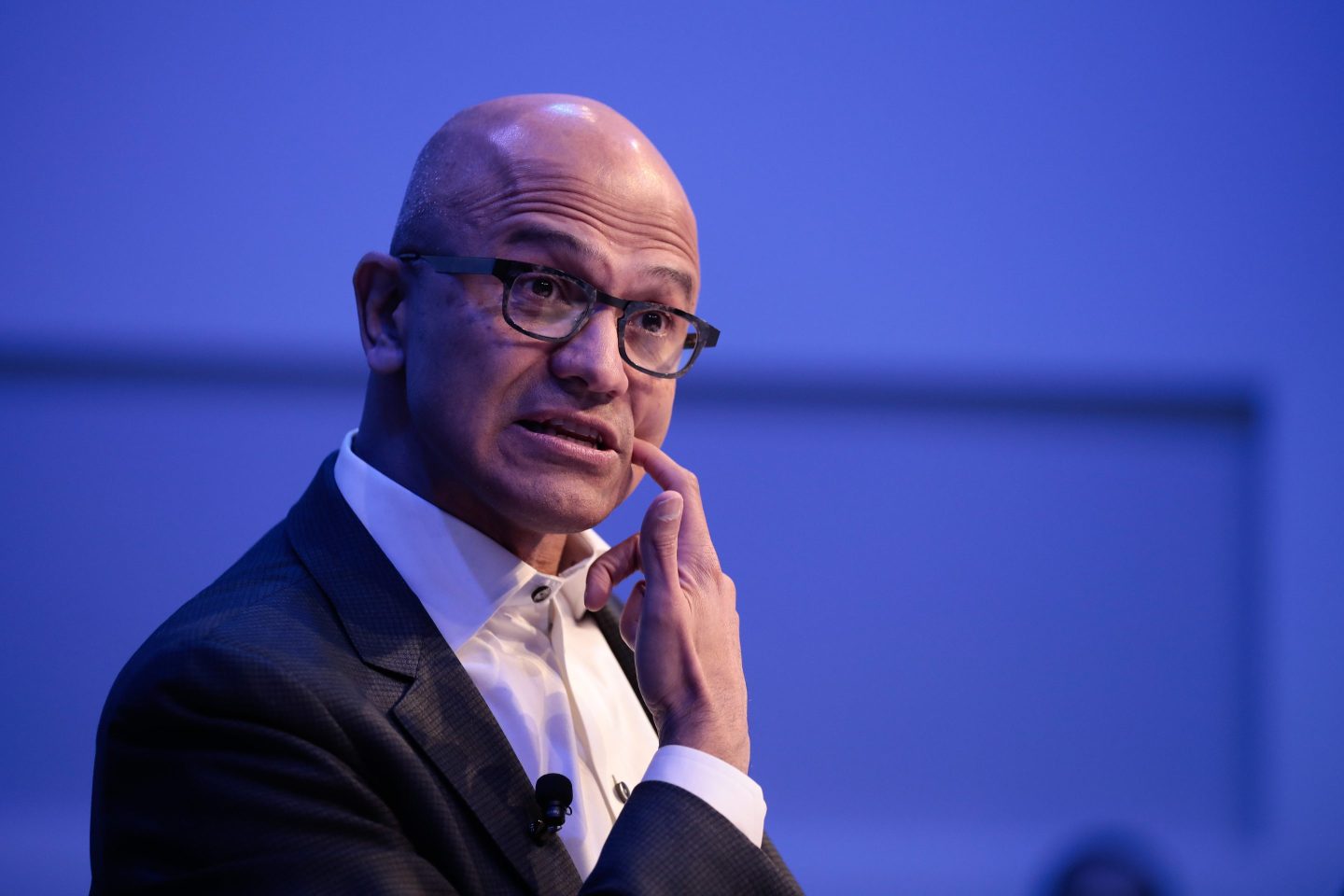
Microsoft CEO Satya Nadella speaking at a panel.
Microsoft CEO Satya Nadella recently greenlit an estimated $10 billion green-energy deal as his company seeks to meet its emissions commitments amid an explosion of power demand from AI. Experts are divided on whether AI will help or hurt the energy grid's green transition.Jason Alden—Bloomberg/Getty Images

To the energy industry, AI represents an uncertain sea change: an innovation that could either pave the way for a cleaner, greener grid or kneecap decades of environmental progress.

Recommended Video

“What the climate and energy sector is facing with AI is not unlike what we’re facing across the board with AI. It’s extremely complicated, and it’s just a question of, ‘Will the benefits outweigh the harms?’” Austin Whitman, CEO of nonprofit The Climate Change Project, told Fortune.

The key issue is AI’s massive appetite for energy. AI will command a huge scaleup in power-generation capacity, a transition that’s already begun. Microsoft, the very firm powering the AI revolution with its $10 billion investment in OpenAI, signed a colossal $10.5 billion deal with renewable energy provider Brookfield last week. Other AI leaders are investing in energy startups, pitching everything from thermal batteries to modular nuclear reactors. 

Read more: I sold a $1.4B big-data startup to IBM—then founded a nature sanctuary. Here are the dangers of AI energy consumption

After years of low-to-no growth, power utilities are facing skyrocketing increases in demand from data centers that host and train AI models—industry insiders have floated potential ninefold spikes in some regional markets. Aging energy infrastructure simply isn’t equipped to handle so much change so fast, raising questions as to whether it’s even possible to feed AI’s appetite for energy.

The demand surge means grid operators need solutions, fast—meaning climate goals sometimes have to take a backseat. After Meta announced it was opening a new data center in Kansas, the local power utility announced it would be pushing back the scheduled retirement date of one of its coal plants by five years, to 2028. Regulators have nixed data center operators’ repeated petitions to use diesel generators for backup power instead of green alternatives. 

“[AI innovation] is happening at a pace where even the even when the tech [companies] are telling the utilities what they would like in order to be able to meet [their emissions] requirements, utilities are pushing that aside in favor of what [they think they] can do at the fastest scale,” Sierra Club Senior Strategy Advisor Jeremy Fisher told Fortune. “If you’re not doing a lot of planning ahead of time, the turnkey solution for utilities that have operated in the space for many years are comfortable with is build new gas [plants,] or keep a coal plant around a couple years longer.”

But some experts say that when it comes to the energy grid, AI could actually be the perfect solution to the problems it’s creating. Power utilities focus on minimizing wasted energy and optimizing the grid to make it as efficient as possible—a task for which AI seems perfectly suited. Power companies are racing to implement generative AI’s massive potential to unlock efficiency gains in how power is stored, transmitted, and managed. 

“You’re talking about an industry that does not move very fast. And now, all of a sudden, they aren’t just kind of jumping on a bandwagon—they truly do see the applicability in a number of different dimensions for [AI],” Schneider Electric CTO Scott Harden told Fortune.

Making the grid, not breaking it

Optimistic observers frame AI as a tool that will be vital in making the energy grid greener and more efficient. A recent Department of Energy report highlighted AI’s use in forecasting electrical demand and future production from renewable sources such as wind and solar, which can fluctuate depending on the weather. 

It also pointed to potential generative AI applications in applying for federal permits, a painstaking process that’s a key roadblock for grid operators who want to scale up their operations fast: Equipment lead times and regulatory red tape have stopped many new energy projects in their tracks, with wait times to get new capacity onto the grid as long as multiple years. 

AI has underscored the need for reliable power. Because solar and wind generation is dependent on the weather, they generate electricity in bursts completely uncorrelated with when customers actually need it. That’s generated concerns that renewables are inherently less reliable than fossil fuels, making sources such as coal, petroleum or natural gas preferable for mitigating blackouts and outages. 

“The way grid planning decisions happen is, first and foremost, it’s about reliability…The worst case scenario is that power grids start to go down,” Whitman said.

But technological breakthroughs in energy storage mean that these concerns are mostly misplaced: Companies utilizing everything from heat batteries to hydropower dams are making it easier and cheaper to store excess renewable energy and release it when the wind’s not blowing or the sky is cloudy.

Operators hope that with the help of these storage tools, AI will be able to deal with discrepancies between supply and demand, minimizing waste and making the grid more efficient by monitoring it in real time and balancing generation and usage.

At a basic level, AI won’t be doing anything radically different from the processes that grid operators already have in place. Utilities have relied on algorithms and simple forms of AI for years, Harden said, and they already employ human experts to make predictions about future supply and demand. But Harden said AI’s promise lies in its ability to take in much larger data sets and work much faster than existing methods.

“AI is quite agile, and capable of aggregating and analyzing massive amounts of data and responding in real time. The ability to learn and execute far exceeds human capacity,” Schneider Electric Chief Public Policy Officer Jeannie Salo told Fortune. “We’re already seeing the outcomes of AI as it helps stakeholders better forecast electricity needs and flows and their operations.”

At an event hosted during San Francisco’s SF Climate Week last month, a Google grid researcher said that the company is already using AI to run grid simulations.

“We’re wondering if AI can make the grid instead of breaking the grid,” Page Crahan, the Google employee, said.

The need for more power

The potential efficiency gains of an AI-managed grid can’t hide the fact that the energy industry simply needs more capacity. Providers are racing to get new projects online, and experts are split on the question of whether a spree of investment will push climate goals forward or continue to lean on coal and other dirty sources.

As reliance on coal has diminished over the past 20 years, it’s in large part been replaced by natural gas. A recent Goldman Sachs report estimated that natural gas would supply more than half of AI-related energy demand. While natural gas emits fewer greenhouse gasses than coal or petroleum, it’s still a fossil fuel that’s far worse for the environment than fully renewable energy sources—Fisher said that natural gas contributes roughly half as much greenhouse gas emissions as coal.

“This rush to build as quickly as feasible is really swamping all of our other long-term considerations,” Fisher said. “All this infrastructure that’s going in right now, particularly the new natural gas [infrastructure], that’s 30-year infrastructure. So we have to be able to make good decisions right now about what the future of the electricity sector is going to look like.”

But recent declines in the price of wind and solar energy are giving some analysts optimism that energy utilities keeping an eye on the bottom line will naturally turn to green solutions.

“What gets built is typically, what’s cheapest to build,” Whitman said. “Renewables are, in many cases, cheapest to build. So I would expect that we continue to see a lot of really solid clean energy buildout…All signs are pointing in favor of a grid that’s really heavily, actually continuing to move in the direction that it’s been moving for about the last 15 years, which is toward clean energy.”


The Fortune 500 Innovation Forum will convene Fortune 500 executives, U.S. policy officials, top founders, and thought leaders to help define what’s next for the American economy, Nov. 16-17 in Detroit. Apply here.
About the Author
By Dylan Sloan
See full bioRight Arrow Button Icon

Latest in Environment

Finance
Lorem ipsum dolor sit amet, consectetur adipiscing elit, sed do eiusmod tempor incididunt ut labore et dolore magna aliqua. Ut enim ad minim veniam
By Fortune Editors
October 20, 2025
Finance
Lorem ipsum dolor sit amet, consectetur adipiscing elit, sed do eiusmod tempor incididunt ut labore et dolore magna aliqua. Ut enim ad minim veniam
By Fortune Editors
October 20, 2025
Finance
Lorem ipsum dolor sit amet, consectetur adipiscing elit, sed do eiusmod tempor incididunt ut labore et dolore magna aliqua. Ut enim ad minim veniam
By Fortune Editors
October 20, 2025
Finance
Lorem ipsum dolor sit amet, consectetur adipiscing elit, sed do eiusmod tempor incididunt ut labore et dolore magna aliqua. Ut enim ad minim veniam
By Fortune Editors
October 20, 2025
Finance
Lorem ipsum dolor sit amet, consectetur adipiscing elit, sed do eiusmod tempor incididunt ut labore et dolore magna aliqua. Ut enim ad minim veniam
By Fortune Editors
October 20, 2025
Finance
Lorem ipsum dolor sit amet, consectetur adipiscing elit, sed do eiusmod tempor incididunt ut labore et dolore magna aliqua. Ut enim ad minim veniam
By Fortune Editors
October 20, 2025

Most Popular

Finance
Lorem ipsum dolor sit amet, consectetur adipiscing elit, sed do eiusmod tempor incididunt ut labore et dolore magna aliqua. Ut enim ad minim veniam
By Fortune Editors
October 20, 2025
Finance
Lorem ipsum dolor sit amet, consectetur adipiscing elit, sed do eiusmod tempor incididunt ut labore et dolore magna aliqua. Ut enim ad minim veniam
By Fortune Editors
October 20, 2025
Finance
Lorem ipsum dolor sit amet, consectetur adipiscing elit, sed do eiusmod tempor incididunt ut labore et dolore magna aliqua. Ut enim ad minim veniam
By Fortune Editors
October 20, 2025
Finance
Lorem ipsum dolor sit amet, consectetur adipiscing elit, sed do eiusmod tempor incididunt ut labore et dolore magna aliqua. Ut enim ad minim veniam
By Fortune Editors
October 20, 2025
Finance
Lorem ipsum dolor sit amet, consectetur adipiscing elit, sed do eiusmod tempor incididunt ut labore et dolore magna aliqua. Ut enim ad minim veniam
By Fortune Editors
October 20, 2025
Finance
Lorem ipsum dolor sit amet, consectetur adipiscing elit, sed do eiusmod tempor incididunt ut labore et dolore magna aliqua. Ut enim ad minim veniam
By Fortune Editors
October 20, 2025
Fortune Secondary Logo
Rankings
  • 100 Best Companies
  • Fortune 500
  • Global 500
  • Fortune 500 Europe
  • Most Powerful Women
  • Future 50
  • World’s Most Admired Companies
  • See All Rankings
Sections
  • Finance
  • Fortune Crypto
  • Features
  • Leadership
  • Health
  • Commentary
  • Success
  • Retail
  • Mpw
  • Tech
  • Lifestyle
  • CEO Initiative
  • Asia
  • Politics
  • Conferences
  • Europe
  • Newsletters
  • Personal Finance
  • Environment
  • Magazine
  • Education
Customer Support
  • Frequently Asked Questions
  • Customer Service Portal
  • Privacy Policy
  • Terms Of Use
  • Single Issues For Purchase
  • International Print
Commercial Services
  • Advertising
  • Fortune Brand Studio
  • Fortune Analytics
  • Fortune Conferences
  • Business Development
  • Group Subscriptions
About Us
  • About Us
  • Editorial Calendar
  • Press Center
  • Work At Fortune
  • Diversity And Inclusion
  • Terms And Conditions
  • Site Map
  • About Us
  • Editorial Calendar
  • Press Center
  • Work At Fortune
  • Diversity And Inclusion
  • Terms And Conditions
  • Site Map
  • Facebook icon
  • Twitter icon
  • LinkedIn icon
  • Instagram icon
  • Pinterest icon

Latest in Environment

iran
EnergyFood and drink
A global food emergency: Why the closed Strait of Hormuz puts half the world’s calories at risk
By Aya S. Chacar and The ConversationApril 9, 2026
15 hours ago
xi jinping
EnergyChina
Deutsche Bank says China is energy ‘winner’ in age of war
By Ishika Mookerjee and BloombergApril 9, 2026
16 hours ago
sheinbaum
EnergyMexico
Claudia Sheinbaum wants Mexico to start fracking to get away from Trump’s natural gas. But she won’t call it that
By María Verza and The Associated PressApril 9, 2026
18 hours ago
data centers
EnergyData centers
Data centers are destroying states’ clean energy dreams
By Jessica Hill and The Associated PressApril 9, 2026
19 hours ago
heat
Environmentclimate change
U.S. just had its hottest March ever, in records dating back 132 years
By Seth Borenstein and The Associated PressApril 9, 2026
19 hours ago
The U.S. just had its hottest March in 132 years. Scientists say to buckle up for the rest of the year
EnvironmentWeather and forecasting
The U.S. just had its hottest March in 132 years. Scientists say to buckle up for the rest of the year
By Seth Borenstein and The Associated PressApril 8, 2026
2 days ago

Most Popular

The U.S. government is spending $88 billion a month in interest on national debt—equal to spending on defense and education combined
Economy
The U.S. government is spending $88 billion a month in interest on national debt—equal to spending on defense and education combined
By Fortune EditorsApril 9, 2026
21 hours ago
A Meta employee created a dashboard so coworkers can compete to be the company's No. 1 AI token user—and Zuckerberg doesn't even rank in the top 250
AI
A Meta employee created a dashboard so coworkers can compete to be the company's No. 1 AI token user—and Zuckerberg doesn't even rank in the top 250
By Fortune EditorsApril 9, 2026
23 hours ago
Gen Z doesn't want your full-time job. They want several part-time roles, and it's reshaping the entire workforce
Success
Gen Z doesn't want your full-time job. They want several part-time roles, and it's reshaping the entire workforce
By Fortune EditorsApril 9, 2026
1 day ago
White-collar workers are quietly rebelling against AI as 80% outright refuse adoption mandates
AI
White-collar workers are quietly rebelling against AI as 80% outright refuse adoption mandates
By Fortune EditorsApril 9, 2026
22 hours ago
Gen Z workers are so fearful AI will take their job they’re intentionally sabotaging their company’s AI rollout
AI
Gen Z workers are so fearful AI will take their job they’re intentionally sabotaging their company’s AI rollout
By Fortune EditorsApril 8, 2026
2 days ago
2 years ago, Saudi Arabia quietly canceled the ‘petrodollar’ deal with America that wired the world economy for 50 years. Then war broke out in Iran
Energy
2 years ago, Saudi Arabia quietly canceled the ‘petrodollar’ deal with America that wired the world economy for 50 years. Then war broke out in Iran
By Fortune EditorsApril 7, 2026
2 days ago

© 2026 Fortune Media IP Limited. All Rights Reserved. Use of this site constitutes acceptance of our Terms of Use and Privacy Policy | CA Notice at Collection and Privacy Notice | Do Not Sell/Share My Personal Information
FORTUNE is a trademark of Fortune Media IP Limited, registered in the U.S. and other countries. FORTUNE may receive compensation for some links to products and services on this website. Offers may be subject to change without notice.