
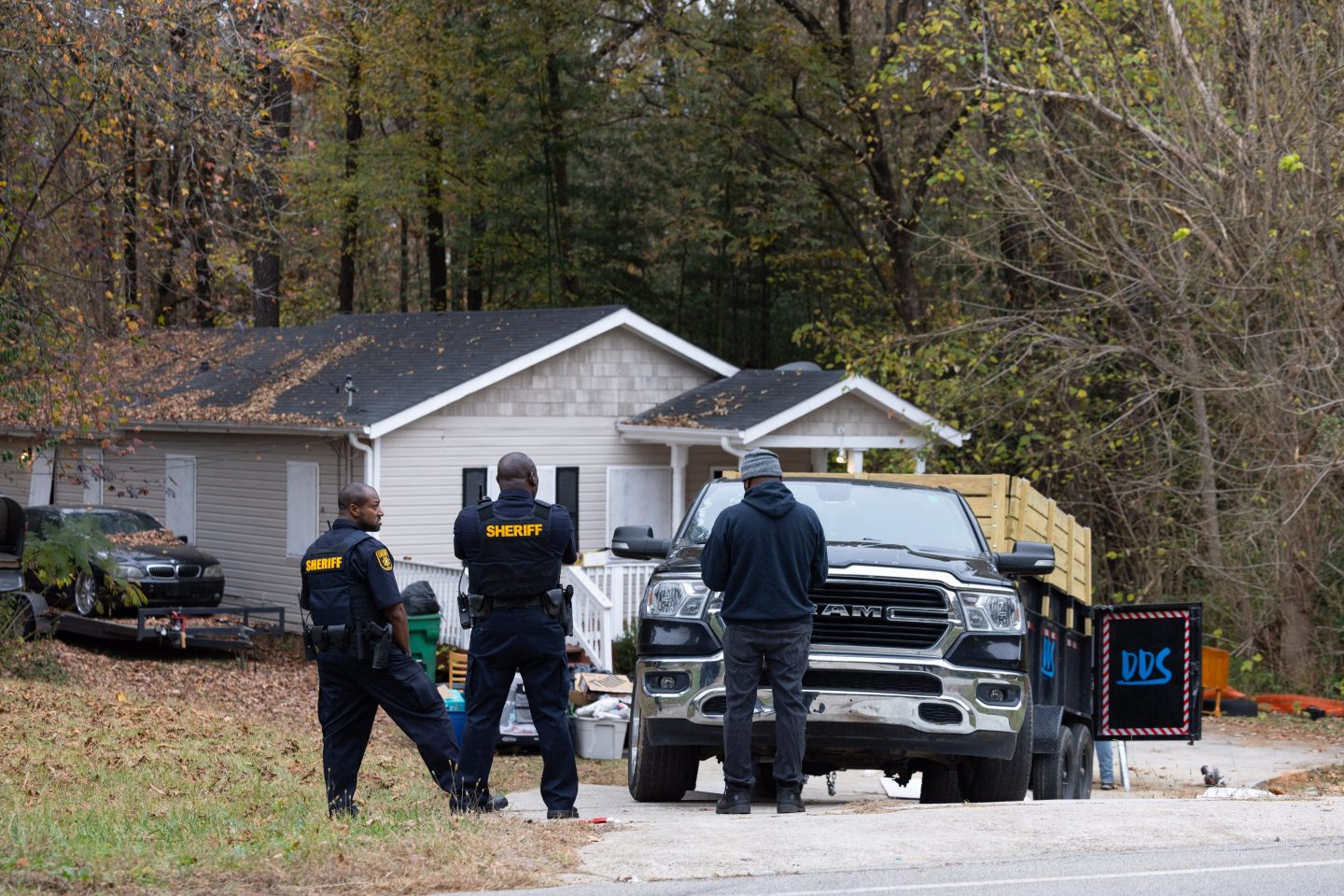
Adele Andaloro, a 47-year-old homeowner in Queens, New York, captured national attention last month when she was arrested on her own property for changing the locks after squatters had moved in. Andaloro inherited the home and was in the process of selling it when she learned about the illegal occupants. Her decision to take matters into her own hands, however, appeared to break state law.
“It’s not fair that I, as the homeowner, have to be going through this,” Andaloro told a news station that recorded an altercation between her and the squatters.
Her story is one of many squatting incidents that have gone viral in recent months, causing worry among homeowners and landlords that illegal occupancy is a growing trend nationwide. In one of the most notorious incidents, two suspected squatters were taken into custody in connection with the murder of a New York City woman last month.
Politicians, too, are taking notice. Already, bipartisan anti-squatting bills have been signed into law over the past few weeks in Florida, Georgia, and New York, where the incident in Queens sparked outrage. Other states have recently introduced similar legislation, while a proposed bill in Congress would make trespassing a deportable offense.
But even as squatting has been subject to a flurry of media and political attention, the extent of the problem—and the viability of new laws to solve it—aren’t well understood. Here’s what to know about the recent rise of stories about squatting.
What is squatting?
Squatting occurs when someone occupies a property without permission, often with the intent of becoming a long-term resident. It’s hardly new—squatting in the U.S. dates as far back as the Gold Rush, and even became a broader (though unpopular) political movement in the 1970s. The most important thing to note, though, is that unlike a tenant who has fallen behind on the rent, squatters don’t enjoy any legal right to be on a property.
While the term “squatter’s rights” is often thrown around, the reality is that it’s extremely difficult for an unauthorized occupant to acquire legal status; it typically takes many years of occupying the property and managing it like an owner (including paying property taxes, utilities, etc.) in most jurisdictions. Acquiring a legal right by means of so-called adverse possession requires 10 years of continuous occupancy in New York and can take up to 30 years in some other states.
“As a legal aid attorney for 16 years, I occasionally hear about … an abandoned property that people were living in,” says Eric Dunn, director of litigation at the National Housing Law Project. “But I don’t know that I ever had somebody come in with a squatting case.”
Even though incidents of successful adverse possession are rare and squatters enjoy no legal right to occupy a place, they are entitled to due process rights. If a squatter can prove they have been living in a place for a certain amount of time (in New York City, it’s 30 days), then the owner must go through a civil eviction process rather than have them immediately removed from the home by the police—a process that can be costly and time consuming. New York’s legislation, signed into law last week as part of its 2025 budget, explicitly excludes squatters from tenant protections, in hopes that it enables police to remove them more quickly.
Proponents of the laws say they are necessary because when there is a squatter in a residence, it can take overburdened courts far too long—sometimes years—to act to have them removed, at the expense (monetarily and mentally) of the homeowner and possibly to the detriment of the property.
“We are putting an end to the squatters scam in Florida,” Gov. Ron DeSantis said in a statement after signing the so-called property rights bill. “You are not going to be able to commandeer somebody’s private property and expect to get away with it. We are, in the state of Florida, ending the squatter scam once and for all.”
Recently, Flash Shelton, known as “the squatter hunter,” received national news attention for “turning the tables” on squatters in California. Shelton says he moves into residences that have been occupied by squatters, with the intent of forcing them to leave. While his methods have been celebrated by those he helps, his celebrity is also fueling media stories about squatting that can exaggerate its actual prevalence.
DeSantis and others have also sought to make political hay by tying squatting to the immigration crisis. A TikTok video recently went viral of a Venezuelan man encouraging people to claim “squatter rights” over properties. He was subsequently arrested by U.S. Immigration and Customs Enforcement, according to news reports. But his video has been used as proof by Republican politicians that there is a calculated campaign of immigrants coming to the country to lay claim to citizens’ homes.
“Biden has allowed millions of illegal immigrants to flood across the border,” Florida Attorney General Ashley Moody said in a statement. “After video evidence of their plan to take over homes emerged, we’re ensuring Floridians are protected from this egregious and brazen scheme.”
Despite the inflammatory rhetoric, squatting in the U.S. remains rare enough that there’s little reliable data on the subject, nor is it tracked in the FBI’s national crime database. “There’s no data that you can seriously trust on this issue,” says Juan Pablo Garnham, a researcher and communications manager at Princeton University’s Eviction Lab. “It’s an uncommon problem.”
Among the many housing affordability issues plaguing different areas across the country that politicians could address, trespassers illegally taking over residences and claiming “squatter’s rights” is not as prevalent as politicians make it out to be, says Boaz Abramson, assistant professor of finance at Columbia Business School. But the anti-squatting legislation is an easy, uncontroversial win in a tough election year.
“Everyone agrees that if somebody illegally enters a property, they shouldn’t have rights over that property,” says Abramson, whose research focuses on eviction and homelessness. He says the only data he’s found identifying squatting as a growing problem is that Google search trends for squatting have increased in recent weeks: “It’s so rare.”
New laws and unintended consequences
Despite the lack of data pointing to a widespread squatting problem, states are pushing ahead with laws to address it all the same. In the case of Florida, a new provision means property owners can request that a sheriff’s office immediately remove unauthorized persons from their home. New York’s law also speeds up the eviction process and redefines squatters as trespassers, as opposed to tenants, after 30 days.
“Some people will make the argument that this is a very rare occurrence. But I think if it happens once or twice, it’s unacceptable,“ New York Democratic State Sen. Jessica Scarcella-Spanton told Stateline. “It’s always good to have data when we’re trying to push legislation, but most importantly, I think that just seeing the cases that we’ve seen over the last couple of months in the news is reason enough to move forward with legislation.”
Abramson, though, worries that the legislation will have the unintended consequence of making it easier in some states to circumvent the established legal process for evicting legal tenants. Those people are not squatters, but landlords could try to classify them as such to more quickly remove them from homes.
This could create more misery at a time when there are more people than ever experiencing homelessness in the U.S. and housing prices have increased more than 50% in four years. It is far more likely for landlords and owners to illegally lock out tenants than it is for squatters to claim possession of someone’s property, housing advocates say.
“We all intuitively agree that if you illegally enter a property, you shouldn’t be given rights over it. The worry is that [the laws] might be interpreted more broadly, and used and applied to legal tenants who are just missing rent,” he says. “This could actually exacerbate housing insecurity.“