• Home
  • News
  • Fortune 500
  • Tech
  • Finance
  • Leadership
  • Lifestyle
  • Rankings
  • Multimedia
ConferencesAI

AI hallucinations will be solvable within a year, ex-Google AI researcher says—but that may not be a good thing: ‘We want them to propose things that are weird and novel’

Orianna Rosa Royle
By
Orianna Rosa Royle
Orianna Rosa Royle
Associate Editor, Success
Down Arrow Button Icon
Orianna Rosa Royle
By
Orianna Rosa Royle
Orianna Rosa Royle
Associate Editor, Success
Down Arrow Button Icon
April 16, 2024, 8:10 AM ET
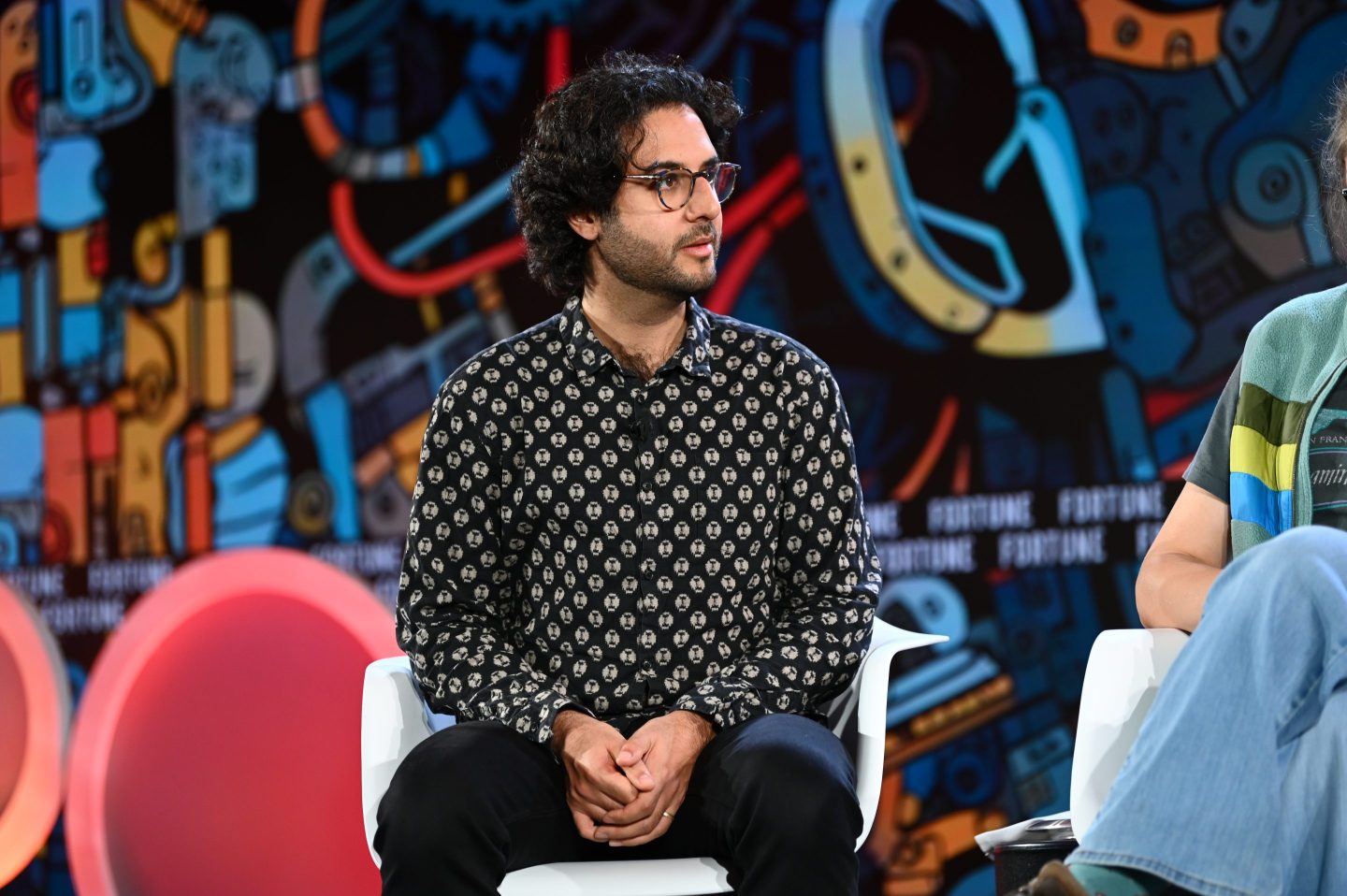
Raza Habib, cofounder and CEO, Humanloop, at Fortune Brainstorm AI London on April 16, 2024.
Raza Habib, cofounder and CEO, Humanloop, at Fortune Brainstorm AI London on April 16, 2024.Joe Maher—Fortune Brainstorm AI

If you’ve ever asked ChatGPT, Gemini, and other generative AI chatbots a question, you’ll have found that the answers they throw out can be fascinating at best—or completely made up, at worst.

Recommended Video

But you won’t need to worry about AI hallucinating for much longer. That’s because AI experts told Fortune that the phenomenon is “obviously solvable” and they’ve estimated that will happen soon.

“I’m optimistic that we can solve it,” Raza Habib, who went from Google AI research intern to founding Humanloop in less than six months, revealed on a panel at the Fortune Brainstorm AI conference in London.

“When you train a large language model, it goes through three stages—there’s pre-training, fine-tuning, and then reinforcement learning from human feedback as the last stage,” Habib explained. 

His London-based startup, which has raised $2.6 million, pioneered methods to make the training of large language models, such as those that underpin OpenAI’s ChatGPT, more efficient.

“If you look at the models before they are fine-tuned on human preferences, they’re surprisingly well calibrated. So if you ask the model for its confidence to an answer—that confidence correlates really well with whether or not the model is telling the truth—we then train them on human preferences and undo this. 

“So the knowledge is kind of there already,” Habib added. “The thing we need to figure out is how to preserve it once we make the models more steerable.

“But the fact that the models are learning calibration in the process already makes me very optimistic that it should be much easier to solve.”

A year, but…

When pressed for how long this will take, Habib responded: “Within a year.”

But he doesn’t think it needs to be solved because we are so used to clunky tech anyway.

“We’re used to designing user experiences that are fault-tolerant in some way,” the UCL graduate, who has a Ph.D. in machine learning, added. “You go to Google search, you get a ranked list of links, you don’t get an answer, and people who are in Perplexity get citations back now. 

“So I don’t think it has to be solved to make it useful.”

Plus, Habib thinks that a little bit of hallucination could be good—necessary even—if we want AI to help humanity think outside of the box. 

“If we want to have models that will one day be able to create new knowledge for us, then we need them to be able to act as conjecture machines; we want them to propose things that are weird and novel—and then be able to filter that in some way,” he explained. 

“So in some senses, [especially] if you’re doing creative tasks, having the models be able to sort of fabricate things that are going off the data domain is not necessarily a terrible thing.”

Last year, Habib was among around 20 software developers and startup CEOs to attend a closed-door meeting with Sam Altman. At the time, OpenAI’s recently reinstated cofounder and CEO told the collective his plans for the company, including how it’s coping with chip shortages—and Habib came under fire for leaking the entire conversation in a blog post. 

Air Canada chatbot mishap ‘completely avoidable’

The panel—made up of Habib, ServiceNow’s VP of AI product Jeremy Barnes, and Rebecca Gorman, cofounder and CEO of Aligned AI—also debated Air Canada’s chatbot mishap.

If you’re unfamiliar with the story: Jake Moffatt bought an Air Canada ticket to go to the funeral of his grandmother in 2022. The company’s AI chatbot convinced the customer to buy a full-price ticket on the premise that he’d retroactively be able to get a partial refund under its reduced bereavement fare policy.

So Moffatt bought full-price tickets from Vancouver to Toronto for about $590 and then a few days later paid $630 to return.

But when he requested some money back, Air Canada said the chatbot was wrong. Now, Canada’s main airline has been ordered to pay the customer compensation—but the entire situation was, in Habib’s eyes, “completely avoidable.”

“I just don’t think that they had done enough around testing,” he said, adding that the airline at least should have “had sufficient guardrails in place.”

“They gave the chatbot a much wider range than what it should have been able to say,” he added. “They more or less gave people almost raw access to ChatGPT with a little bit of rag attached and sure that’s a dangerous thing to do. But most people shouldn’t do that.”

Just because something “seems to work in a proof of concept, you probably don’t just want to put it straight into production, with real customers who have expectations and terms and conditions and things like that,” Barnes, a serial tech entrepreneur, echoed.

“The Chatbot involved in the incident did not use AI,” a spokesperson for Air Canada told Fortune. “The technology powering it predated Generative AI capabilities (like ChatGPT and other LLMs).”

Fortune Brainstorm AI returns to San Francisco Dec. 8–9 to convene the smartest people we know—technologists, entrepreneurs, Fortune Global 500 executives, investors, policymakers, and the brilliant minds in between—to explore and interrogate the most pressing questions about AI at another pivotal moment. Register here.
About the Author
Orianna Rosa Royle
By Orianna Rosa RoyleAssociate Editor, Success
Instagram iconLinkedIn iconTwitter icon

Orianna Rosa Royle is the Success associate editor at Fortune, overseeing careers, leadership, and company culture coverage. She was previously the senior reporter at Management Today, Britain's longest-running publication for CEOs. 

See full bioRight Arrow Button Icon

Latest from our Conferences

AsiaFortune Innovation Forum
Syfe CEO: Fintech founders need to focus on trust if the sector is to reach its full potential
By Dhruv AroraNovember 24, 2025
8 days ago
EnergyFortune Innovation Forum
Going green doesn’t always mean going big: ‘Pay attention to the small- and medium-size players as well’
By Angelica AngNovember 24, 2025
9 days ago
AsiaFortune Innovation Forum
A World Bank expert thinks countries should leverage ‘small AI’—and avoid competing with the biggest tech giants
By Nicholas GordonNovember 24, 2025
9 days ago
AsiaFortune Innovation Forum
Are doctors at risk of AI automation? ‘Those who don’t use it will be replaced by those who do’
By Angelica AngNovember 21, 2025
12 days ago
AsiaFortune Innovation Forum
Southeast Asia needs to ‘think bigger’ if it wants to compete at the same level as the world’s biggest companies
By Jonathan GanNovember 21, 2025
12 days ago
AsiaFortune Innovation Forum
Jefferies’ Chris Wood called Japan’s crash and the U.S. housing bubble. He’s now warning of an ‘AI capex arms race’
By David AustinNovember 20, 2025
12 days ago

Most Popular

placeholder alt text
Economy
Ford workers told their CEO 'none of the young people want to work here.' So Jim Farley took a page out of the founder's playbook
By Sasha RogelbergNovember 28, 2025
5 days ago
placeholder alt text
Success
Warren Buffett used to give his family $10,000 each at Christmas—but when he saw how fast they were spending it, he started buying them shares instead
By Eleanor PringleDecember 2, 2025
21 hours ago
placeholder alt text
Economy
Elon Musk says he warned Trump against tariffs, which U.S. manufacturers blame for a turn to more offshoring and diminishing American factory jobs
By Sasha RogelbergDecember 2, 2025
15 hours ago
placeholder alt text
C-Suite
MacKenzie Scott's $19 billion donations have turned philanthropy on its head—why her style of giving actually works
By Sydney LakeDecember 2, 2025
22 hours ago
placeholder alt text
North America
Jeff Bezos and Lauren Sánchez Bezos commit $102.5 million to organizations combating homelessness across the U.S.: ‘This is just the beginning’
By Sydney LakeDecember 2, 2025
17 hours ago
placeholder alt text
AI
More than 1,000 Amazon employees sign open letter warning the company's AI 'will do staggering damage to democracy, our jobs, and the earth’
By Nino PaoliDecember 2, 2025
23 hours ago
Rankings
  • 100 Best Companies
  • Fortune 500
  • Global 500
  • Fortune 500 Europe
  • Most Powerful Women
  • Future 50
  • World’s Most Admired Companies
  • See All Rankings
Sections
  • Finance
  • Leadership
  • Success
  • Tech
  • Asia
  • Europe
  • Environment
  • Fortune Crypto
  • Health
  • Retail
  • Lifestyle
  • Politics
  • Newsletters
  • Magazine
  • Features
  • Commentary
  • Mpw
  • CEO Initiative
  • Conferences
  • Personal Finance
  • Education
Customer Support
  • Frequently Asked Questions
  • Customer Service Portal
  • Privacy Policy
  • Terms Of Use
  • Single Issues For Purchase
  • International Print
Commercial Services
  • Advertising
  • Fortune Brand Studio
  • Fortune Analytics
  • Fortune Conferences
  • Business Development
About Us
  • About Us
  • Editorial Calendar
  • Press Center
  • Work At Fortune
  • Diversity And Inclusion
  • Terms And Conditions
  • Site Map

© 2025 Fortune Media IP Limited. All Rights Reserved. Use of this site constitutes acceptance of our Terms of Use and Privacy Policy | CA Notice at Collection and Privacy Notice | Do Not Sell/Share My Personal Information
FORTUNE is a trademark of Fortune Media IP Limited, registered in the U.S. and other countries. FORTUNE may receive compensation for some links to products and services on this website. Offers may be subject to change without notice.