• Home
  • Latest
  • Fortune 500
  • Finance
  • Tech
  • Leadership
  • Lifestyle
  • Rankings
  • Multimedia
FinanceEconomy

U.S. GDP growth isn’t cooling off after all—expect more jobs, more inflation, and fewer rate cuts, Wells Fargo says

Will Daniel
By
Will Daniel
Will Daniel
Down Arrow Button Icon
Will Daniel
By
Will Daniel
Will Daniel
Down Arrow Button Icon
April 15, 2024, 2:19 PM ET
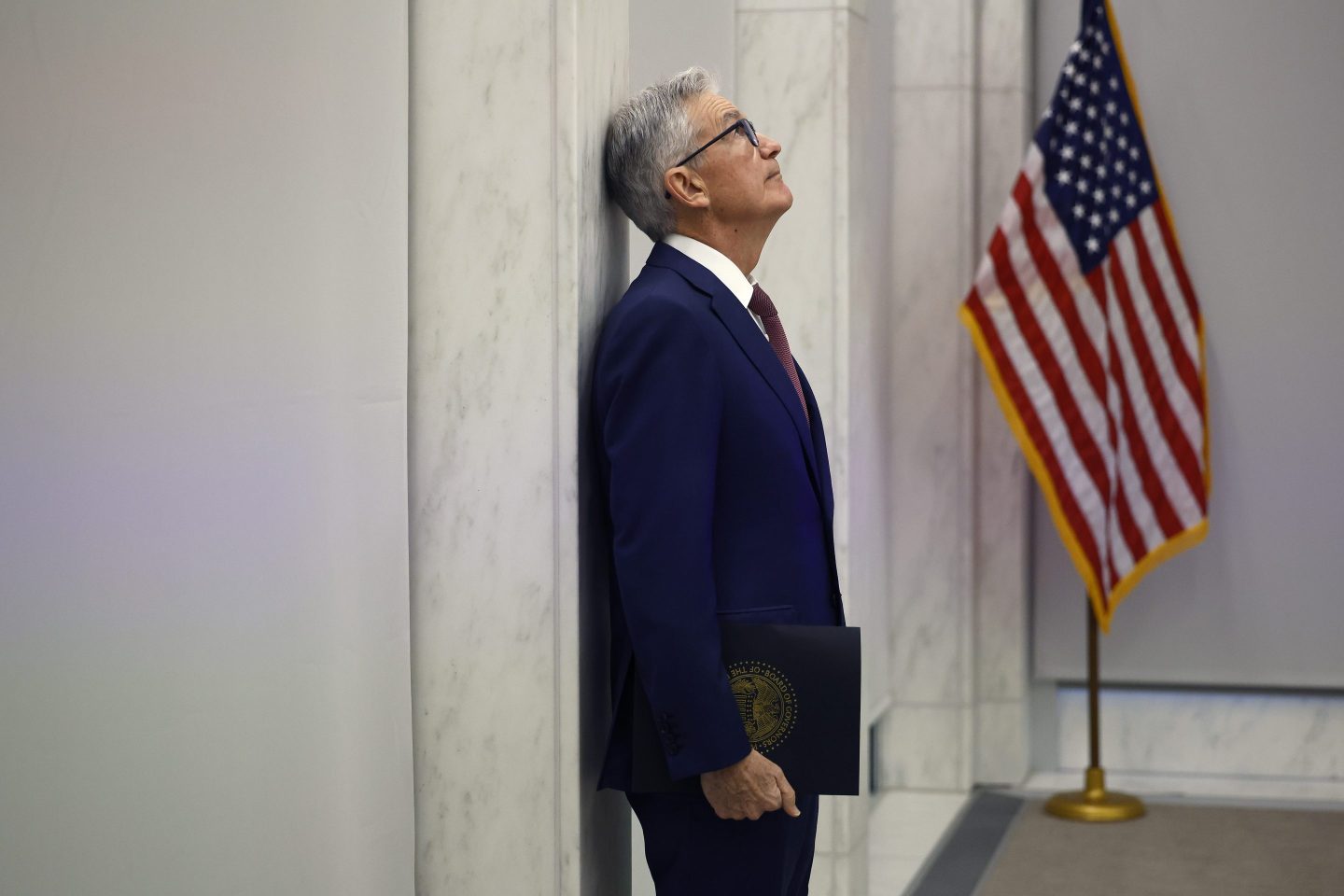
Fed Chairman Jerome Powell prepares to deliver remarks to the Federal Reserve’s Division of Research and Statistics Centennial Conference, on Nov. 8, 2023, in Washington, D.C.
Fed Chairman Jerome Powell prepares to deliver remarks to the Federal Reserve’s Division of Research and Statistics Centennial Conference, on Nov. 8, 2023, in Washington, D.C.Chip Somodevilla—Getty Images

Not long ago, most economists and Wall Street analysts had a recession penciled into their economic forecasts for the U.S.: Stubborn inflation, rising interest rates, and foreign wars were sure to weigh on the economy until it cracked, they said. But throughout last year, a new narrative developed in the world of finance. With consumers proving their resilience to higher interest rates, and inflation cooling, most experts began to see a “soft landing”—where growth slows but the economy avoids a recession—as the most likely outcome. 

Recommended Video

Now, three hot inflation reports to start the year and continued signs of robust consumer demand have thrown cold water on the soft landing narrative, and something new is taking over: the “no landing” scenario.

Nearly half of all investors polled by Deutsche Bank in March said they expect a “no landing” scenario, where the economy continues to grow and unemployment stays low, but inflation remains an issue despite the Federal Reserve’s interest rate hikes. 

The Wells Fargo Investment Institute piled on to that narrative in a note Monday upgrading its outlook for the U.S. economy. While the bank didn’t specifically predict a “no landing” outcome, researchers lifted their gross domestic product growth forecast from just 1.3% for 2024 to 2.5%—the same as last year’s rate of 2.5%.

Wells also said the U.S. unemployment rate will sit at 4.1% instead of 4.7% by the end of 2024. The tradeoff will be slightly higher inflation. The bank now sees U.S. CPI inflation of 3%, instead of its previous 2.8% estimate.

Several factors have been named to account for the unexpected strength of the U.S. economy over the past few years, including record fiscal spending, particularly on infrastructure and semiconductors; the housing market’s resilience to higher rates owing to post–Global Financial Crisis policy changes and supply issues; and even “greedflation.”

But Wells Fargo said the economy has outperformed expectations because financial conditions—a measure of the availability and cost of borrowing, as well as risk and leverage in financial markets—are actually accommodative, despite the Fed’s rate-hiking campaign.

To that point, the Chicago Federal Reserve’s National Financial Conditions Index has been in accommodative territory throughout the Fed’s hiking cycle, and decreased to –0.53 in the week ended April 5—its lowest level since February 2022.

More growth and more employed Americans are typically good news for markets, and that’s what Wells Fargo sees in 2024. The bank’s economists and researchers upgraded their S&P 500 target from a range between 4,800 and 5,000 to a range between 5,100 and 5,300. Still, they don’t expect a banner year, and that’s largely because of Fed policy.

Last year, most economists were forecasting three market-juicing interest rate cuts in 2024, with some predicting as many as six. But with inflation proving more difficult to tame than anticipated, and the economy still running strong, that forecast is shifting. Wells Fargo is now expecting just two interest rate cuts in 2024, starting this summer, followed by one more cut in 2025. That would leave the Fed funds rate in a range between 4.75% and 5% at the end of this year, and 4.5% to 4.75% at the end of 2025.

Wells Fargo’s outlook might even prove optimistic after Monday’s retail sales report served as yet another piece of evidence that the economy is still running hot. Retail sales jumped 0.7% month over month in March, the Census Bureau reported, compared with economists’ consensus expectations for a 0.4% rise.

Sam Millette, senior investment strategist for Commonwealth Financial Network, noted that bond yields rose after the report, “due to rising concerns of a potential no-landing, no-rate-cut scenario.”

“While the strong sales growth is a good sign for economic growth in the quarter, the surge in consumer spending could contribute to high consumer prices and cause additional inflation,” he told Fortune via email.

But Wells Fargo’s economists argued Monday that the economy’s “pivot” into a faster growth mode is “likely to be modest.”

“On balance, we believe the economy is still slowing, which should cool inflation and allow for a modest easing of interest rates and credit conditions into 2025,” they wrote.

Overall, Wells’ team said they expect a strong dollar, rising commodity prices, robust earnings, and relatively accommodative financial conditions in 2024 and 2025. And with the threat of geopolitical tensions and foreign wars, they argued, investors should expect volatility.

Join us at the Fortune Workplace Innovation Summit May 19–20, 2026, in Atlanta. The next era of workplace innovation is here—and the old playbook is being rewritten. At this exclusive, high-energy event, the world’s most innovative leaders will convene to explore how AI, humanity, and strategy converge to redefine, again, the future of work. Register now.
About the Author
Will Daniel
By Will Daniel
LinkedIn iconTwitter icon
See full bioRight Arrow Button Icon

Latest in Finance

Real EstateGen Z
Gen Z is defiantly ‘giving up’ on ever owning a home and is spending more than saving, working less, and making risky investments, study shows
By Sydney LakeDecember 12, 2025
24 minutes ago
C-SuiteFortune 500 Power Moves
Fortune 500 Power Moves: Which executives gained and lost power this week
By Fortune EditorsDecember 12, 2025
46 minutes ago
Apple CEO Tim Cook
SuccessBillionaires
Apple CEO Tim Cook out-earns the average American’s salary in just 7 hours—to put that into context, he could buy a new $439,000 home in just 2 days
By Emma BurleighDecember 12, 2025
48 minutes ago
broker
BankingData centers
AI data center boom sparks fears of glut amid lending frenzy
By Neil Callanan, Paula Seligson and BloombergDecember 12, 2025
2 hours ago
Donald Trump
AIElections
AI is powering Trump’s economy, but American voters are getting worried
By Mark Niquette, Nancy Cook and BloombergDecember 12, 2025
2 hours ago
Steve Jobs, Steve Wozniak, and Ronald Wayne's signatures on the bottom of Apple's founding contract.
SuccessWealth
Apple cofounder Ronald Wayne sold his 10% stake for $800 in 1976—today it’d be worth up to $400 billion
By Preston ForeDecember 12, 2025
2 hours ago

Most Popular

placeholder alt text
Success
At 18, doctors gave him three hours to live. He played video games from his hospital bed—and now, he’s built a $10 million-a-year video game studio
By Preston ForeDecember 10, 2025
2 days ago
placeholder alt text
Success
Palantir cofounder calls elite college undergrads a ‘loser generation’ as data reveals rise in students seeking support for disabilities, like ADHD
By Preston ForeDecember 11, 2025
1 day ago
placeholder alt text
Investing
Baby boomers have now 'gobbled up' nearly one-third of America's wealth share, and they're leaving Gen Z and millennials behind
By Sasha RogelbergDecember 8, 2025
4 days ago
placeholder alt text
Economy
‘We have not seen this rosy picture’: ADP’s chief economist warns the real economy is pretty different from Wall Street’s bullish outlook
By Eleanor PringleDecember 11, 2025
1 day ago
placeholder alt text
Economy
Tariffs are taxes and they were used to finance the federal government until the 1913 income tax. A top economist breaks it down
By Kent JonesDecember 12, 2025
6 hours ago
placeholder alt text
Uncategorized
Transforming customer support through intelligent AI operations
By Lauren ChomiukNovember 26, 2025
16 days ago
Rankings
  • 100 Best Companies
  • Fortune 500
  • Global 500
  • Fortune 500 Europe
  • Most Powerful Women
  • Future 50
  • World’s Most Admired Companies
  • See All Rankings
Sections
  • Finance
  • Leadership
  • Success
  • Tech
  • Asia
  • Europe
  • Environment
  • Fortune Crypto
  • Health
  • Retail
  • Lifestyle
  • Politics
  • Newsletters
  • Magazine
  • Features
  • Commentary
  • Mpw
  • CEO Initiative
  • Conferences
  • Personal Finance
  • Education
Customer Support
  • Frequently Asked Questions
  • Customer Service Portal
  • Privacy Policy
  • Terms Of Use
  • Single Issues For Purchase
  • International Print
Commercial Services
  • Advertising
  • Fortune Brand Studio
  • Fortune Analytics
  • Fortune Conferences
  • Business Development
About Us
  • About Us
  • Editorial Calendar
  • Press Center
  • Work At Fortune
  • Diversity And Inclusion
  • Terms And Conditions
  • Site Map

© 2025 Fortune Media IP Limited. All Rights Reserved. Use of this site constitutes acceptance of our Terms of Use and Privacy Policy | CA Notice at Collection and Privacy Notice | Do Not Sell/Share My Personal Information
FORTUNE is a trademark of Fortune Media IP Limited, registered in the U.S. and other countries. FORTUNE may receive compensation for some links to products and services on this website. Offers may be subject to change without notice.