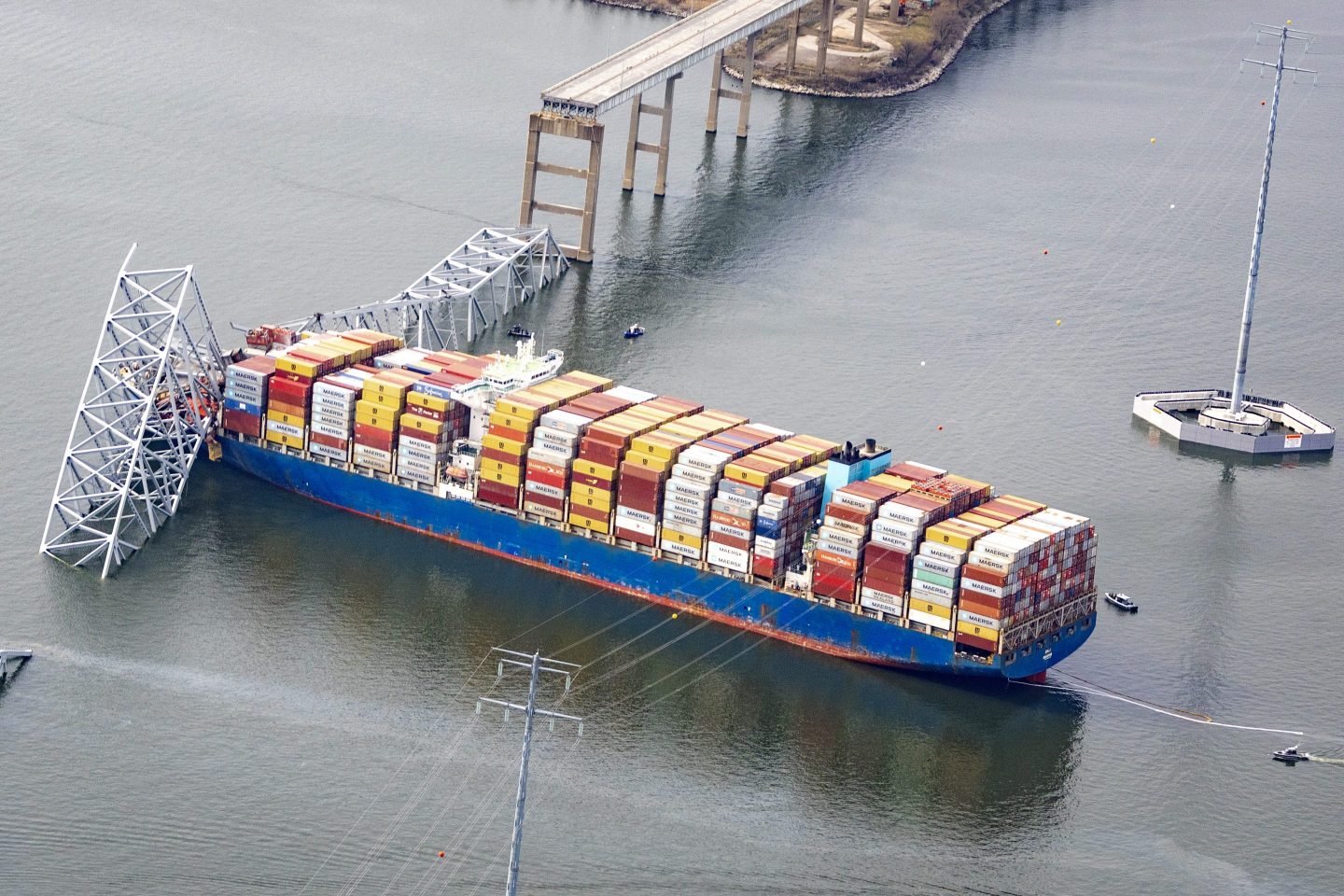
Baltimore’s Francis Scott Key Bridge crumpled at the impact of the Dali shipping container a gross tonnage of 95,000 on Tuesday morning. The bridge, constructed in 1977, didn’t stand a chance, experts say, but the 985-foot long cargo ship—moving at 8 knots, about 9 miles per hour—had no time to avoid hitting the bridge’s pillar, either.
The ship collision and subsequent collapse of the 1.6 mile bridge was not the result of any one entity, but rather a confluence of variables that resulted in a tragedy with rippling impacts on Baltimore, including the presumed death of six construction workers and repair job that will likely take years and hundreds of millions of dollars. Its original construction more than four decades past took five years and cost $316 million.
The Key Bridge tragedy is the latest example of a decades-long catalog of shipping-related incidents: Over the past 10 years, there have been 27,477 reported shipping incidents, with 3,098 involving a collision, according to Allianz Global Corporate & Specialty’s 2023 Safety and Shipping Review. From 1960 to 2015, there have been 35 major bridge collapses as a result of a barge or ship collision, per a 2018 report from the World Association for Waterborne Transport. About half of those collisions were in the U.S.
The scope of the incidents on port and commuter activity highlights the fundamental challenges in both U.S. infrastructure and in cargo shipping safety protocols, experts say. Port infrastructure and the growth of the cargo-shipping sector go hand-in-hand, Captain Rahul Khanna, global head of marine risk consulting at Allianz, told Fortune. But fixing the factors that led to the tragedy is easier said than done.
“It’s hard to point fingers,” Khanna said. “These are macroeconomic issues.”
Ships are getting bigger—and harder to control
Khanna called the Baltimore bridge collapse “one of the worst nightmares for a captain of a ship.”
The Dali ship stays on its appropriate track approaching the Port of Baltimore around 1:30 a.m. on Tuesday until it loses power while approaching the bridge, Sal Mercogliano, an associate professor of history at Campbell University in North Carolina, explains in a YouTube video.
“The ship goes completely dark,” he says. “Just to be clear: the worst feeling ever on a ship is to lose power.”
According to the Maritime and Port Authority of Singapore, the Dali vessel had a “momentary loss of propulsion” and Mercogliano notes in his video that smoke begins to “belch” out from the ship and its trajectory veers to its right, colliding with the bridge’s pillar.
This wasn’t the first issue for this vessel. The same Dali ship hit a quay in Antwerp, Belgium in 2016, Reuters reported, and it sustained “hull damage impairing seaworthiness,” per public records available on Equasis. Synergy Marine Group, Dali’s ship management, did not respond to Fortune’s request for comment.
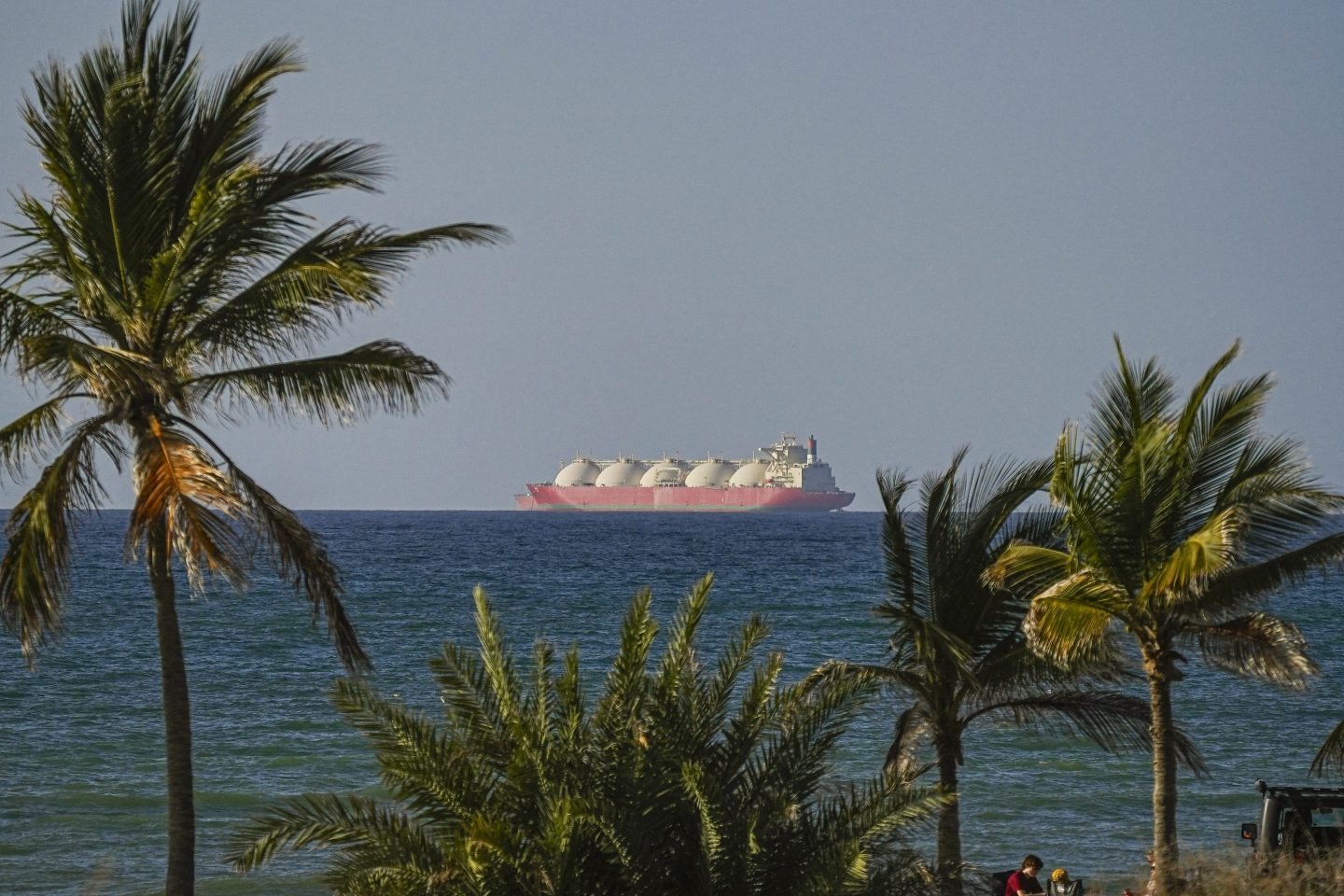
Khanna argued that one of the predominant reasons for difficulties in managing cargo shipping accidents is the sheer size of the vessels, which have increased about 1,500% since the ballooning of the industry 50 years ago, according to Allianz Global Corporate & Specialty.
Bigger cargo ships mean that navigating safety incidents is “complicated,” Khanna said. Salvage and rescue after an incident take longer with larger ships, and if there’s a fire, it could spread faster because the ship carries more fuel and flammables. While ships have gotten bigger, personnel have stayed the same or gotten smaller, making it harder for staff to put out fires or send emergency responses. The sheer size of a vessel can be an obstacle, as illustrated by the Ever Given, one of the world’s largest shipping containers, which became stuck in the Suez Canal for six days in 2021. The Suez Canal Authority demanded $550 million for its salvage.
These containers are unlikely to get much bigger, however, because of the physical limitations of port infrastructure, which because of smaller cranes and bridges, cannot accommodate large ships. There’s also funding differences: Companies can fund bigger boats if demand for goods are high, but infrastructure can largely depend on government funding.
“It’s easier to build a larger ship,” Khanna said. “Building a new port or building a new bridge is a much bigger and complex task.”
Foundational cracks in American infrastructure
The Key Bridge is one of the longest steel continuous truss bridges in the world, a type of bridge that is resource-efficient, but not built for today’s cargo industry.
Craig Stodart, bridge design director at P. Joseph Lehman Consulting Engineers, told Fortune that the design of the bridge, with few protections around its piers, or pillars, makes it susceptible to severe damage if collided with.
“This one in particular is what we call ‘fracture critical’, meaning if something happens with one piece of it, the whole bridge could collapse, which is what happened here,” he said.
Steel truss bridges have been disappearing for years because of safety issues, Steve Hutchins, Tennessee Department of Transportation’s Region 2 chief bridge inspector at the time, said in a 2017 News Channel 9 ABC interview. Many were designed before the ubiquitous use of concrete, an important stabilizer in modern bridge-building.
“For the time and the period, they were very cost effective,” Hutchins said. “The technology of concrete hadn’t really gotten to where it is today.”
The structural integrity of the Key Bridge did not appear compromised—it was in “fair condition” according to inspection reports from May 2023—highlighting the inherent weakness of the steel truss bridge design in ports today.
But while integrity wasn’t an apparent problem for the Key Bridge, the same can’t be said for many other U.S. bridges, Ilgin Guler, professor of civil and environmental engineering at Penn State University, told Fortune.
“There is a known problem with bridges in the United States,” she said. “And there are many people traveling over structurally deficient bridges every day.”
Over 7% of U.S. bridges are considered structurally deficient, with over 178 million trips taken across compromised bridges every day, according to Infrastructure Report Card’s 2021 report. Almost half of the country’s 617,000 bridges are more than 50 years old. President Joe Biden’s administration has worked to address the U.S.’s lag in infrastructure: Road and bridges are the biggest line item in the Infrastructure Investment and Jobs Act, with a $110 billion piece of the $1.2 trillion pie.
A moment of reckoning
The consequences of infrastructure disasters on local and national economies are apparent by the fallout of the Baltimore tragedy: Key Bridge was a fundamental part of the city’s traffic route, with 12 million vehicles crossing the bridge annually. The Port of Baltimore is one of the U.S.’s largest ports for cars and trucks given its proximity to the midwest. It handled 850,000 vehicles, as well as 52.3 million tons of foreign cargo worth $80 billion in 2024, Maryland Governor Wes Moore reported. The national and Maryland Departments of Transportation did not respond to Fortune’s request for comment.
Incidents like this can be a moment of reckoning and propel a reprioritization, Guler said: “Hopefully [it] will bring to the spotlight the importance of the infrastructure and making sure everything can be done to maintain and keep these structures in good condition.”
But port industry stakeholders will have to take these incidents seriously, Khanna said, as the onus on fixing collision-causing snags don’t just fall on the shipping industry. A few years ago, Khanna would say that the growing size of cargo containers would compromise the safety of cargo shipping. But today, he said, industry professionals are working to make changes. For example, global shipping companies are researching how fire spreads on containers in an effort to improve response times.
Lost vessel incidents, where a ship is presumed missing or wrecked, have dropped by 36% over the last year, and safety incidents including collisions have plateaued to about 3,000 annually, according to Allianz’s safety report. The seriousness with which the industry is addressing concerns should put extra pressure on the port industry to do the same, Khanna argued.
“The stakeholders outside the industry—for example the ports and the terminals—they also need to step in and participate equally and pick up their share of responsibility.”