• Home
  • Latest
  • Fortune 500
  • Finance
  • Tech
  • Leadership
  • Lifestyle
  • Rankings
  • Multimedia
FinanceCash

The U.S. spent $179 million in 2023 minting pennies and nickels, and $100 bills are going out of style. Why do we still need cash?

By
María Soledad Davila Calero
Down Arrow Button Icon
By
María Soledad Davila Calero
Down Arrow Button Icon
March 13, 2024, 6:30 AM ET
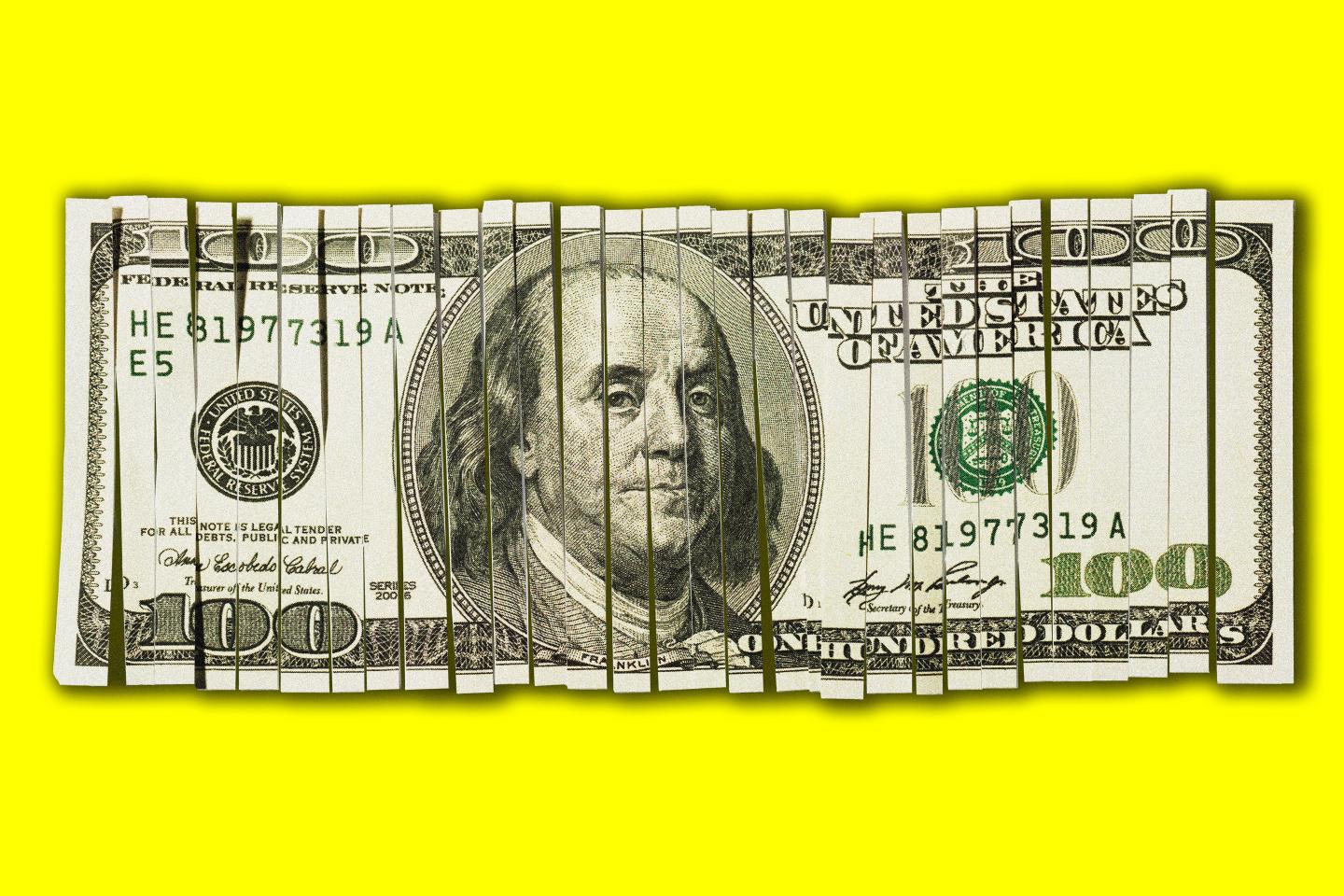
Shredded hundred dollar bill on yellow background.
What's the future of cash?Photo Illustration by Alexandra Scimecca/Fortune; Original Photos: Getty Images

For the 19th consecutive year, a penny cost more to produce than it’s worth.

Recommended Video

There have been other times pennies have cost more than 1¢, but this is its longest losing streak. They now cost 3¢, while nickels cost 11.5¢. Producing these two coins last year cost the U.S. Mint $179 million. Meanwhile, $100 bills are increasingly awkward to use—many economists favor eliminating them entirely—and in 2021, consumers used credit cards for 57% of purchases, according to the Federal Reserve.

So, at both ends of the financial spectrum, American currency arguably has never been less useful and, for some, more onerous. But for others, it remains crucial.

‘Basic banking is very expensive’

Beyond emotional or cultural aspects, cash remains important for lower-income individuals, especially the unbanked.

“As the world becomes increasingly cashless, people who are already at a disadvantage may become increasingly disadvantaged,” said Christopher Bechler, a professor at Notre Dame’s Mendoza College of Business.

Bechler’s warning falls in line with a December 2023 report by the Atlanta Federal Reserve that warns a “significant” portion of the population, even some with bank accounts, don’t have credit or even debit cards. Some of that’s due to minimum balance requirements or individuals having smaller, or less consistent, deposit flows, while there are other factors such as lacking proper ID or a better understanding of financial or digital tech.

Aaron Klein, an economist at the Brookings Institute, noted the irony of finding ourselves in a “reverse Robinhood” system where poorer people prone to using cash often must pay fees to use traditional banking services while those with higher incomes get free access—and meanwhile are racking up credit card points.

“Debit cards or credit cards, or access to a lot of electronic money, is free—if you have money,” Klein said. “But the less money you have, the more money it costs you to access your money digitally. If you always have a thousand bucks in your bank account, chances are your bank account doesn’t charge you a monthly fee, and you don’t overdraft. But if you’re living paycheck to paycheck, basic banking is very expensive.”

‘Facilitate commerce’

While Congress has spent more than 30 years entertaining legislation to eliminate the penny—as have countries including Canada, which eliminated its penny in 2013, and Sweden, which was ahead of the curve by removing the 1 öre coin in 1972—professor Robert Whaples of Wake Forest University said he’s not optimistic of a meaningful change any time soon.

One reason the Mint keeps making pennies, Whaples explained, is because so many pennies end up in jars on dressers and scattered on coffee tables. People don’t use them, and the government wants hard currency to be circulated.

“You want your money to make transactions more efficient. You want your money to facilitate commerce,” he added.

The Mint, however, can reduce production. For example, in 2019, 60% of all coins minted were pennies, but by 2023 that figure fell to 39%—the steepest reduction among all U.S. coins.

The Mint makes money by selling gold and silver bullion to the public along with specialty coins it also sells to other governments. U.S. currency is sold to the Federal Reserve at face value, and because dimes and quarters cost less to make than their face value, in 2023 this created $430 million in seigniorage—or surplus, the opposite of producing the pennies and nickels.

Taxpayers don’t directly bear the cost of producing coins that fewer and fewer people use. Since the 1996 creation of the Public Enterprise Fund, the Mint has been self-funded, and any surplus in operating expenses is donated to the Treasury to help pay off the national debt. (In 2023, the Mint didn’t make any such transfers.)

‘An anachronism’

Since 2018, the $100 bill has been the most widely circulated denomination of the U.S. dollar—but most of this circulation has occurred elsewhere. A report by the Chicago Fed found that almost 80% of all $100 bills are overseas, largely because the bills are the go-to denomination for criminals.

Many economists have argued that central governments should stop printing large bills, including the $100 note. In a 2016 Harvard paper, then research fellow Peter Sand proposed eliminating large denominations like $100 or 500 euros because they “play a very limited role in the legitimate economy.” It’s simply much easier to move $1 million in a single suitcase full of $100 bills than with multiple suitcases full of $20 bills, the paper argues.

“High-denomination notes are arguably an anachronism in a modern economy given the availability and effectiveness of electronic payment alternatives,” Sand adds.

Even when it comes to smaller-denomination bills, approximately 60% of those remain overseas. And Americans do seem to be moving away from cash, with only 18% of 2021 transactions being in cash.

But a fully cashless economy? That remains a tough sell. According to Whaples, unlike countries like China and Sweden that have more readily embraced digital payments, Americans place a higher value on having more options.

Cash also serves as a safety net. Sand’s paper recognized that it may be needed for places suffering banking crises or natural disasters, or even in war zones. For example, in 2017, when Hurricane Maria devastated Puerto Rico and completely collapsed both the telecom and the electrical grids, for about a week there was no way to process electronic payments.

There’s also the emotional component, Bechler noted in a recent paper. During his research he found that people prefer to buy certain things with cash—more “difficult” purchases that they’d prefer to forget —instead of with cards, and that using cards more could lead to overspending.

“As the world becomes increasingly cashless, it may also be more difficult for merchants to match consumer payment preferences, specifically in contexts where consumers are making small or hard-to-justify purchases,” Bechler told Fortune. “As we consider the future of money, I think it’s really important that we keep these two aspects in mind.”

Join us at the Fortune Workplace Innovation Summit May 19–20, 2026, in Atlanta. The next era of workplace innovation is here—and the old playbook is being rewritten. At this exclusive, high-energy event, the world’s most innovative leaders will convene to explore how AI, humanity, and strategy converge to redefine, again, the future of work. Register now.
About the Author
By María Soledad Davila Calero
See full bioRight Arrow Button Icon

Latest in Finance

Finance
Lorem ipsum dolor sit amet, consectetur adipiscing elit, sed do eiusmod tempor incididunt ut labore et dolore magna aliqua. Ut enim ad minim veniam
By Fortune Editors
October 20, 2025
Finance
Lorem ipsum dolor sit amet, consectetur adipiscing elit, sed do eiusmod tempor incididunt ut labore et dolore magna aliqua. Ut enim ad minim veniam
By Fortune Editors
October 20, 2025
Finance
Lorem ipsum dolor sit amet, consectetur adipiscing elit, sed do eiusmod tempor incididunt ut labore et dolore magna aliqua. Ut enim ad minim veniam
By Fortune Editors
October 20, 2025
Finance
Lorem ipsum dolor sit amet, consectetur adipiscing elit, sed do eiusmod tempor incididunt ut labore et dolore magna aliqua. Ut enim ad minim veniam
By Fortune Editors
October 20, 2025
Finance
Lorem ipsum dolor sit amet, consectetur adipiscing elit, sed do eiusmod tempor incididunt ut labore et dolore magna aliqua. Ut enim ad minim veniam
By Fortune Editors
October 20, 2025
Finance
Lorem ipsum dolor sit amet, consectetur adipiscing elit, sed do eiusmod tempor incididunt ut labore et dolore magna aliqua. Ut enim ad minim veniam
By Fortune Editors
October 20, 2025

Most Popular

Finance
Lorem ipsum dolor sit amet, consectetur adipiscing elit, sed do eiusmod tempor incididunt ut labore et dolore magna aliqua. Ut enim ad minim veniam
By Fortune Editors
October 20, 2025
Finance
Lorem ipsum dolor sit amet, consectetur adipiscing elit, sed do eiusmod tempor incididunt ut labore et dolore magna aliqua. Ut enim ad minim veniam
By Fortune Editors
October 20, 2025
Finance
Lorem ipsum dolor sit amet, consectetur adipiscing elit, sed do eiusmod tempor incididunt ut labore et dolore magna aliqua. Ut enim ad minim veniam
By Fortune Editors
October 20, 2025
Finance
Lorem ipsum dolor sit amet, consectetur adipiscing elit, sed do eiusmod tempor incididunt ut labore et dolore magna aliqua. Ut enim ad minim veniam
By Fortune Editors
October 20, 2025
Finance
Lorem ipsum dolor sit amet, consectetur adipiscing elit, sed do eiusmod tempor incididunt ut labore et dolore magna aliqua. Ut enim ad minim veniam
By Fortune Editors
October 20, 2025
Finance
Lorem ipsum dolor sit amet, consectetur adipiscing elit, sed do eiusmod tempor incididunt ut labore et dolore magna aliqua. Ut enim ad minim veniam
By Fortune Editors
October 20, 2025
Fortune Secondary Logo
Rankings
  • 100 Best Companies
  • Fortune 500
  • Global 500
  • Fortune 500 Europe
  • Most Powerful Women
  • World's Most Admired Companies
  • See All Rankings
  • Lists Calendar
Sections
  • Finance
  • Fortune Crypto
  • Features
  • Leadership
  • Health
  • Commentary
  • Success
  • Retail
  • Mpw
  • Tech
  • Lifestyle
  • CEO Initiative
  • Asia
  • Politics
  • Conferences
  • Europe
  • Newsletters
  • Personal Finance
  • Environment
  • Magazine
  • Education
Customer Support
  • Frequently Asked Questions
  • Customer Service Portal
  • Privacy Policy
  • Terms Of Use
  • Single Issues For Purchase
  • International Print
Commercial Services
  • Advertising
  • Fortune Brand Studio
  • Fortune Analytics
  • Fortune Conferences
  • Business Development
  • Group Subscriptions
About Us
  • About Us
  • Press Center
  • Work At Fortune
  • Terms And Conditions
  • Site Map
  • About Us
  • Press Center
  • Work At Fortune
  • Terms And Conditions
  • Site Map
  • Facebook icon
  • Twitter icon
  • LinkedIn icon
  • Instagram icon
  • Pinterest icon

Latest in Finance

trump
Economynational debt
‘The national debt is now larger than the economy’: Watchdog marks 100% of GDP milestone for $39 trillion burden
By Nick LichtenbergApril 30, 2026
18 minutes ago
Elon Musk arrives at the courthouse during his trial against OpenAI
CryptoElon Musk
Elon Musk likes Bitcoin—but he just told a jury most crypto coins are scams
By Jack KubinecApril 30, 2026
29 minutes ago
zohran
PoliticsNew York City
Days after trolling billionaire Ken Griffin, Mamdani suggests King Charles should return a crown jewel to India
By Nick LichtenbergApril 30, 2026
35 minutes ago
Jamie Dimon, chief executive officer of JPMorgan Chase & Co., at the Norges Bank Investment Management annual investment conference in Oslo, Norway, on Tuesday, April 28, 2026.
EconomyJamie Dimon
For years, the risk Jamie Dimon was most concerned about was geopolitics. His answer has shifted
By Eleanor PringleApril 30, 2026
1 hour ago
inflation
EconomyInflation
The biggest jump in 3 years: gas’ effect on core inflation in March revealed
By Christopher Rugaber and The Associated PressApril 30, 2026
2 hours ago
inflation
EconomyGDP
U.S. GDP rebounds from lackluster end to 2025, grows at 2% rate in first quarter
By Paul Wiseman and The Associated PressApril 30, 2026
2 hours ago

Most Popular

Apple cofounder Ronald Wayne—whose stake would be worth up to $400 billion had he not sold it in 1976—says that at 91, he has no regrets
Success
Apple cofounder Ronald Wayne—whose stake would be worth up to $400 billion had he not sold it in 1976—says that at 91, he has no regrets
By Preston ForeApril 27, 2026
3 days ago
Jamie Dimon gets candid about national debt: ‘There will be a bond crisis, and then we’ll have to deal with it’
Economy
Jamie Dimon gets candid about national debt: ‘There will be a bond crisis, and then we’ll have to deal with it’
By Eleanor PringleApril 29, 2026
1 day ago
‘They left me no choice’: Powell isn’t going anywhere—blocking Trump from another Fed appointee
Banking
‘They left me no choice’: Powell isn’t going anywhere—blocking Trump from another Fed appointee
By Eva RoytburgApril 29, 2026
21 hours ago
‘The cost of compute is far beyond the costs of the employees’: Nvidia executive says right now AI is more expensive than paying human workers
AI
‘The cost of compute is far beyond the costs of the employees’: Nvidia executive says right now AI is more expensive than paying human workers
By Sasha RogelbergApril 28, 2026
2 days ago
Google Cloud revenue is now 18% of Alphabet's business. Is this the beginning of the end of Google's search identity?
Big Tech
Google Cloud revenue is now 18% of Alphabet's business. Is this the beginning of the end of Google's search identity?
By Alexei OreskovicApril 29, 2026
14 hours ago
‘Take the money and run’: Johns Hopkins economist Steve Hanke on why the UAE quit OPEC
Energy
‘Take the money and run’: Johns Hopkins economist Steve Hanke on why the UAE quit OPEC
By Shawn TullyApril 29, 2026
1 day ago

© 2026 Fortune Media IP Limited. All Rights Reserved. Use of this site constitutes acceptance of our Terms of Use and Privacy Policy | CA Notice at Collection and Privacy Notice | Do Not Sell/Share My Personal Information
FORTUNE is a trademark of Fortune Media IP Limited, registered in the U.S. and other countries. FORTUNE may receive compensation for some links to products and services on this website. Offers may be subject to change without notice.