
Flower Labs, a startup whose open-source software lets an AI model be trained without the need for data to be pooled in single location, has been valued at $100 million following a new investment round.
The $20 million funding is being led by Silicon Valley venture capital firm Felicis Ventures.
Flower’s technology makes it easier for people to use an AI training method called “federated learning,” which allows an AI model to be trained without having all the training data transferred to a central server. This can help preserve the privacy and security of data and for this reason federated learning has been of growing interest to companies in industries such as healthcare, financial services, and defense.
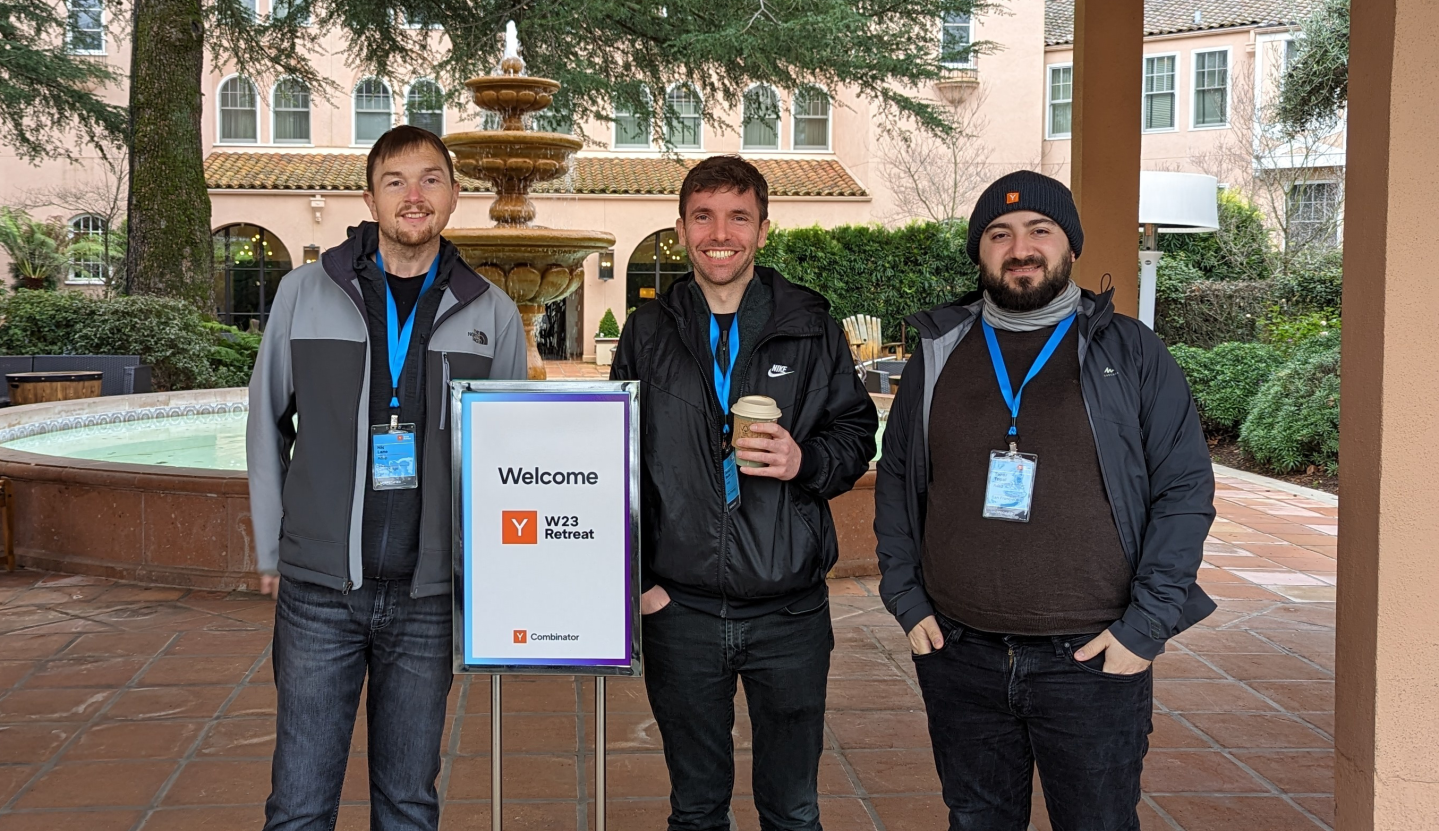
Co-founders Daniel Beutel, Taner Topal, and Nicholas Lane met at the University of Cambridge. Lane is a professor of machine learning and a former director of Samsung’s AI lab in Cambridge; Beutel was doing a PhD.; and Topal, who had been working in industry, was a visiting researcher. Together they co-created the Flower framework for federated learning as a research project in 2020 and for two years they maintained it as an open-source academic project.
But as the framework gained adherents among big businesses and government agencies, the trio decided to set up a company in March 2023, Flower Labs, dedicated to maintaining the platform and building and selling developer tools that would make it easier for people to deploy Flower for federated learning.
The Flower framework has been used for more than 1,100 projects that the Flower Labs team is aware of. There are 3,100 developers on a Slack channel the startup has set up for those interested in discussing how to build federated learning projects using the framework. Among the companies that have used Flower are consulting giant Accenture, telecom company Orange, and the healthcare division of industrial titan Siemens.
Beutel said Flower plans to use the new venture funding to expand awareness of federated learning, grow the number of developers using Flower, and add staff. The startup currently employs a team of just 13 people who are distributed around Europe, with some in Cambridge, some in Germany, and some elsewhere on the Continent.
Currently, Beutel said the company is just focused on expanding the number of developers using Flower and isn’t focused on making money from its user base. But, like many open source software companies, Flower Labs plans to build tools and interfaces that sit on top of the free framework and which it can charge customers to use.
Rather than taking the data to an AI model, federated learning works by taking the model to where the data resides. A copy of the model is shared with each end device housing the training data. After training locally, only the local model’s weights and biases—the variables that allow a neural network to learn—are sent back to a central server, where they are used to adjust the weights and biases of a single, master model.
Federated learning inherently boosts privacy and security since the data itself never leaves its original home. And while there are some methods attackers with access to the central model can still use to reveal the training data, it is also possible to apply other techniques on top of federated learning that make the training data truly non-discoverable. These include differential privacy, where statistical noise is added to the model updates before they are shared with the central model.
The obvious use cases have been in healthcare and financial services. For instance, multiple hospitals might have a shared interest in working together to create a better AI model to predict which patients are at risk of developing sepsis, but they may be prohibited by law from sharing patient data between them. Federated learning allows them to train an effective model while abiding by the regulations. The same applies to a group of banks that want to build a shared fraud detection model.
While academic research has shown that federated learning often results in a model that performs slightly worse than one trained centrally, Beutel pointed out that this is only true when the comparison involves equal amounts of training data. He said that in real world use cases, the whole point is that federated learning unlocks much more data to train from and that as a result a federated learning model trained on far more data almost always outperforms a centrally trained one that had to train on less data due to data privacy, security, or legal restrictions.
One drawback of federated learning is that it works best with smaller models, since the whole model can be sent to the edge device easily and stored there. Very large models, such as those that power OpenAI’s ChatGPT, are too big to fit on an edge device like a mobile phone. The only way to do federated learning with these models is to break the model up into segments and only send part of them to the edge. While this can be done, it adds further complexity to the process.
Beutel said he has even seen cases of a single large company that had European customer data on one server in Europe and American customer data on another server in the U.S. but could not transfer the raw data between the two locations because of concerns about the legal ramifications if the EU-US Data Privacy Framework were to be overturned.
“So far regulation has been a huge tailwind for federated learning,” Beutel said.
Giant AI models that require massive amounts of data to train have primarily been trained from publicly available datasets or data scraped, often without permission, from the internet. Increasingly though, companies are erecting digital barriers that prevent such scraping.
Even without these barriers, the biggest AI models are already pushing up against the limits of public data. Once you’ve trained on the entirety of the internet, what more is there? At the same time, there is also a dearth of public data on which to train AI for niche commercial use cases, such as providing very tailored tax advice.
A single business might have private data, but the dataset it owns might be too small to train a very good AI model, which can require hundreds of millions or even billions of examples to achieve top performance.
“Most of the data in the world today can’t be used for AI training ,” Beutel said. “There is much more data in the world that is private and distributed and this data is generally not used for AI training.” Flower, he said, offers a route to unlocking this data.
This ability to tap this otherwise untappable data is one of the reasons Felicis decided to invest in Flower Labs, Aydin Senkut, Felicis’s founder and managing partner said.
Beutel said he is particularly excited about the idea of people using Flower to potentially train very large AI models using the processing power on people’s mobile phones, rather than having to rely on hundreds of thousands of top-of-the-line graphics processing units (GPUs), the type of computer chip used for AI training, housed in a central datacenter.
Niki Pezeshki, a Felicis partner who helped lead the firm’s investment in Flower Labs, said that Felicis is convinced that while today most AI applications are both trained and run in the cloud, in the future more and more AI computing will take place “on the edge”—on people’s individual phones, laptops, and tablets, or in their cars.
Most smartphones now have small machine learning processors that can handle distributed training. He points out that the AI startup Inflection has boasted of having a cluster of 22,000 Nvidia H100 GPUs, which Beutel said was about 2.9 exaflops of computing power. (An exaflop is a measure of computer power based on how many mathematical operations per second a computer can perform.) But the computing power available on all the Samsung smartphone equipped with a Qualcomm Snapdragon 8 processor equated to 69.9 exaflops.
Using federated learning to tap that distributed computing power could help overcome two of the biggest issues with AI training right now: There aren’t enough GPUs available for every company that wants to use them, and they are very costly in terms of both money and energy to use.
Pezeshki said that while currently Flower’s federated learning framework is only used for AI training, not running the model once it is trained, it is possible that a similar framework could be used in the future for what is called “inference”—which refers to actually running an AI model after it has been trained. This would open up the idea that people with spare computing capacity on their phone or laptop might be able to share that, perhaps for a fee, with someone who needed that computing power at that moment to run an AI model.