• Home
  • Latest
  • Fortune 500
  • Finance
  • Tech
  • Leadership
  • Lifestyle
  • Rankings
  • Multimedia
TechCybersecurity

Microsoft says Iran, North Korea, Russia and China are beginning to use generative AI in offensive cyberattacks

By
Frank Bajak
Frank Bajak
and
The Associated Press
Down Arrow Button Icon
By
Frank Bajak
Frank Bajak
and
The Associated Press
Down Arrow Button Icon
February 14, 2024, 7:49 AM ET
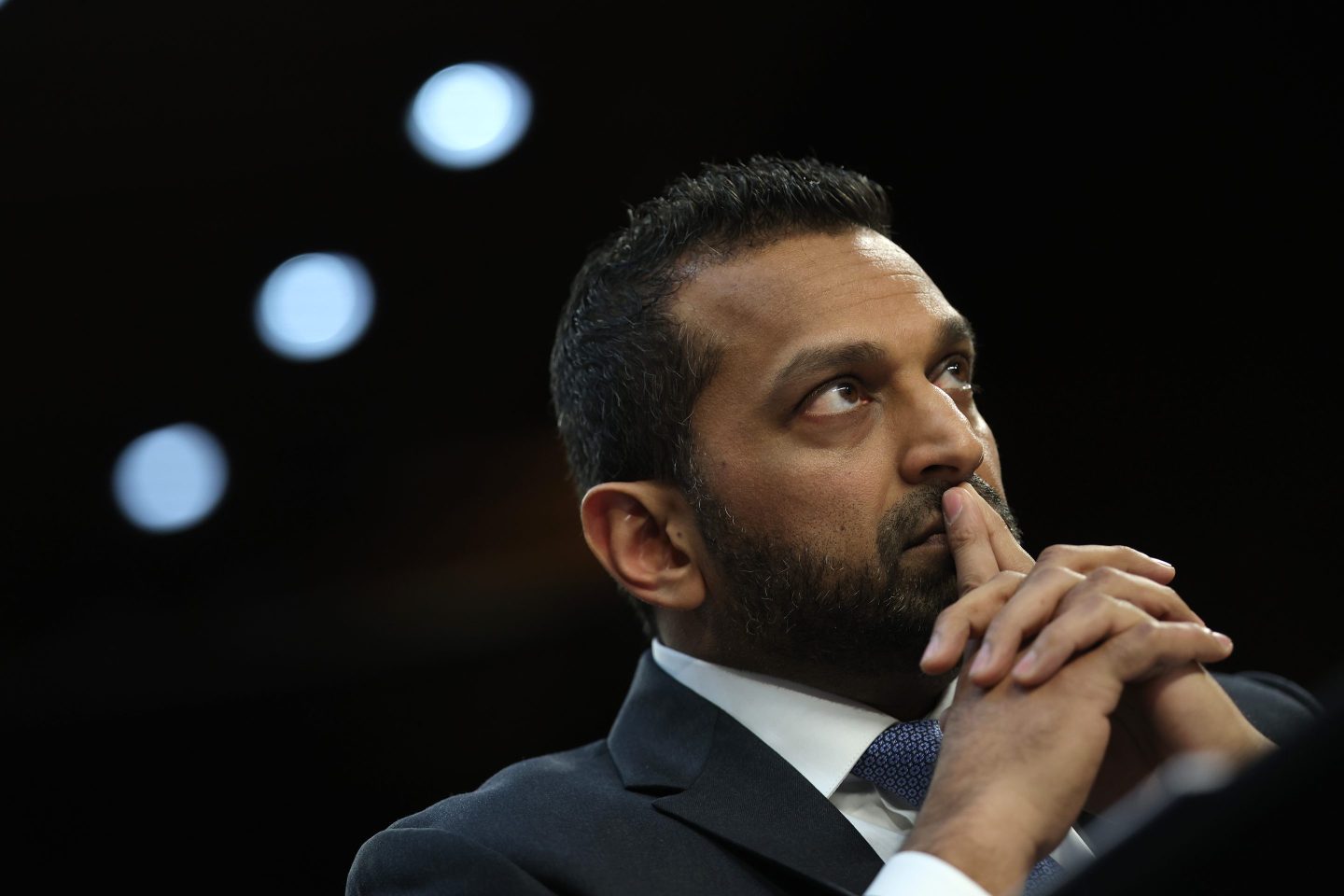
“Of course bad actors are using large-language models — that decision was made when Pandora’s Box was opened," said Amit Yoran, CEO of the cybersecurity firm Tenable.
“Of course bad actors are using large-language models — that decision was made when Pandora’s Box was opened," said Amit Yoran, CEO of the cybersecurity firm Tenable.Getty Images

Microsoft said Wednesday it had detected and disrupted instances of U.S. adversaries — chiefly Iran and North Korea and to a lesser extent Russia and China — using or attempting to exploit generative artificial intelligence developed by the company and its business partner to mount or research offensive cyber operations.

Recommended Video

The techniques Microsoft observed, in collaboration with its partner OpenAI, represent an emerging threat and were neither “particularly novel or unique,” the Redmond, Washington, company said in a blog post.

But the blog does offer insight into how U.S. geopolitical rivals have been using large-language models to expand their ability to more effectively breach networks and conduct influence operations.

Microsoft said the “attacks” detected all involved large-language models the partners own and said it was important to expose them publicly even if they were “early-stage, incremental moves.”

Cybersecurity firms have long used machine-learning on defense, principally to detect anomalous behavior in networks. But criminals and offensive hackers use it as well, and the introduction of large-language models led by OpenAI’s ChatGPT upped that game of cat-and-mouse.

Microsoft has invested billions of dollars in OpenAI, and Wednesday’s announcement coincided with its release of a report noting that generative AI is expected to enhance malicious social engineering, leading to more sophisticated deepfakes and voice cloning . A threat to democracy in a year where over 50 countries will conduct elections, magnifying disinformation and already occurring,

Here are some examples Microsoft provided. In each case it said all generative AI accounts and assets of the named groups were disabled:

— The North Korean cyberespionage group known as Kimsuky has used the models to research foreign think tanks that study the country, and to generate content likely to be used in spear-phishing hacking campaigns.

— Iran’s Revolutionary Guard has used large-language models to assist in social engineering, in troubleshooting software errors, and even in studying how intruders might evade detection in a compromised network. That includes generating phishing emails “including one pretending to come from an international development agency and another attempting to lure prominent feminists to an attacker-built website on feminism.” The AI helps accelerate and boost the email production.

— The Russian GRU military intelligence unit known as Fancy Bear has used the models to research satellite and radar technologies that may relate to the war in Ukraine.

— The Chinese cyberespionage group known as Aquatic Panda — which targets a broad range of industries, higher education and governments from France to Malaysia — has interacted with the models “in ways that suggest a limited exploration of how LLMs can augment their technical operations.”

— The Chinese group Maverick Panda, which has targeted U.S. defense contractors among other sectors for more than a decade, had interactions with large-language models suggesting it was evaluating their effectiveness as a source of information “on potentially sensitive topics, high profile individuals, regional geopolitics, US influence, and internal affairs.”

In a separate blog published Wednesday, OpenAI said the techniques discovered were consistent with previous assessments that found its current GPT-4 model chatbot offers “only limited, incremental capabilities for malicious cybersecurity tasks beyond what is already achievable with publicly available, non-AI powered tools.”

Last April, the director of the U.S. Cybersecurity and Infrastructure Security Agency, Jen Easterly, told Congress that “there are two epoch-defining threats and challenges. One is China, and the other is artificial intelligence.”

Easterly said at the time that the U.S. needs to ensure AI is built with security in mind.

Critics of the public release of ChatGPT in November 2022 — and subsequent releases by competitors including Google and Meta — contend it was irresponsibly hasty, considering security was largely an afterthought in their development.

“Of course bad actors are using large-language models — that decision was made when Pandora’s Box was opened,” said Amit Yoran, CEO of the cybersecurity firm Tenable.

Some cybersecurity professionals complain about Microsoft’s creation and hawking of tools to address vulnerabilities in large-language models when it might more responsibly focus on making them more secure.

“Why not create more secure black-box LLM foundation models instead of selling defensive tools for a problem they are helping to create?” asked Gary McGraw, a computer security veteran and co-founder of the Berryville Institute of Machine Learning.

NYU professor and former AT&T Chief Security Officer Edward Amoroso said that while the use of AI and large-language models may not pose an immediately obvious threat, they “will eventually become one of the most powerful weapons in every nation-state military’s offense.”


Join us at the Fortune Workplace Innovation Summit May 19–20, 2026, in Atlanta. The next era of workplace innovation is here—and the old playbook is being rewritten. At this exclusive, high-energy event, the world’s most innovative leaders will convene to explore how AI, humanity, and strategy converge to redefine, again, the future of work. Register now.
About the Authors
By Frank Bajak
See full bioRight Arrow Button Icon
By The Associated Press
See full bioRight Arrow Button Icon

Latest in Tech

robots
InnovationRobots
‘The question is really just how long it will take’: Over 2,000 gather at Humanoids Summit to meet the robots who may take their jobs someday
By Matt O'Brien and The Associated PressDecember 12, 2025
6 hours ago
Man about to go into police vehicle
CryptoCryptocurrency
Judge tells notorious crypto scammer ‘you have been bitten by the crypto bug’ in handing down 15 year sentence 
By Carlos GarciaDecember 12, 2025
7 hours ago
three men in suits, one gesturing
AIBrainstorm AI
The fastest athletes in the world can botch a baton pass if trust isn’t there—and the same is true of AI, Blackbaud exec says
By Amanda GerutDecember 12, 2025
7 hours ago
Brainstorm AI panel
AIBrainstorm AI
Creative workers won’t be replaced by AI—but their roles will change to become ‘directors’ managing AI agents, executives say
By Beatrice NolanDecember 12, 2025
7 hours ago
Fei-Fei Li, the "Godmother of AI," says she values AI skills more than college degrees when hiring software engineers for her tech startup.
AITech
‘Godmother of AI’ says degrees are less important in hiring than how quickly you can ‘superpower yourself’ with new tools
By Nino PaoliDecember 12, 2025
10 hours ago
C-SuiteFortune 500 Power Moves
Fortune 500 Power Moves: Which executives gained and lost power this week
By Fortune EditorsDecember 12, 2025
10 hours ago

Most Popular

placeholder alt text
Economy
Tariffs are taxes and they were used to finance the federal government until the 1913 income tax. A top economist breaks it down
By Kent JonesDecember 12, 2025
16 hours ago
placeholder alt text
Success
At 18, doctors gave him three hours to live. He played video games from his hospital bed—and now, he’s built a $10 million-a-year video game studio
By Preston ForeDecember 10, 2025
3 days ago
placeholder alt text
Success
Palantir cofounder calls elite college undergrads a ‘loser generation’ as data reveals rise in students seeking support for disabilities, like ADHD
By Preston ForeDecember 11, 2025
1 day ago
placeholder alt text
Arts & Entertainment
'We're not just going to want to be fed AI slop for 16 hours a day': Analyst sees Disney/OpenAI deal as a dividing line in entertainment history
By Nick LichtenbergDecember 11, 2025
1 day ago
placeholder alt text
Success
40% of Stanford undergrads receive disability accommodations—but it’s become a college-wide phenomenon as Gen Z try to succeed in the current climate
By Preston ForeDecember 12, 2025
11 hours ago
placeholder alt text
Success
Apple cofounder Ronald Wayne sold his 10% stake for $800 in 1976—today it’d be worth up to $400 billion
By Preston ForeDecember 12, 2025
12 hours ago
Rankings
  • 100 Best Companies
  • Fortune 500
  • Global 500
  • Fortune 500 Europe
  • Most Powerful Women
  • Future 50
  • World’s Most Admired Companies
  • See All Rankings
Sections
  • Finance
  • Leadership
  • Success
  • Tech
  • Asia
  • Europe
  • Environment
  • Fortune Crypto
  • Health
  • Retail
  • Lifestyle
  • Politics
  • Newsletters
  • Magazine
  • Features
  • Commentary
  • Mpw
  • CEO Initiative
  • Conferences
  • Personal Finance
  • Education
Customer Support
  • Frequently Asked Questions
  • Customer Service Portal
  • Privacy Policy
  • Terms Of Use
  • Single Issues For Purchase
  • International Print
Commercial Services
  • Advertising
  • Fortune Brand Studio
  • Fortune Analytics
  • Fortune Conferences
  • Business Development
About Us
  • About Us
  • Editorial Calendar
  • Press Center
  • Work At Fortune
  • Diversity And Inclusion
  • Terms And Conditions
  • Site Map

© 2025 Fortune Media IP Limited. All Rights Reserved. Use of this site constitutes acceptance of our Terms of Use and Privacy Policy | CA Notice at Collection and Privacy Notice | Do Not Sell/Share My Personal Information
FORTUNE is a trademark of Fortune Media IP Limited, registered in the U.S. and other countries. FORTUNE may receive compensation for some links to products and services on this website. Offers may be subject to change without notice.