
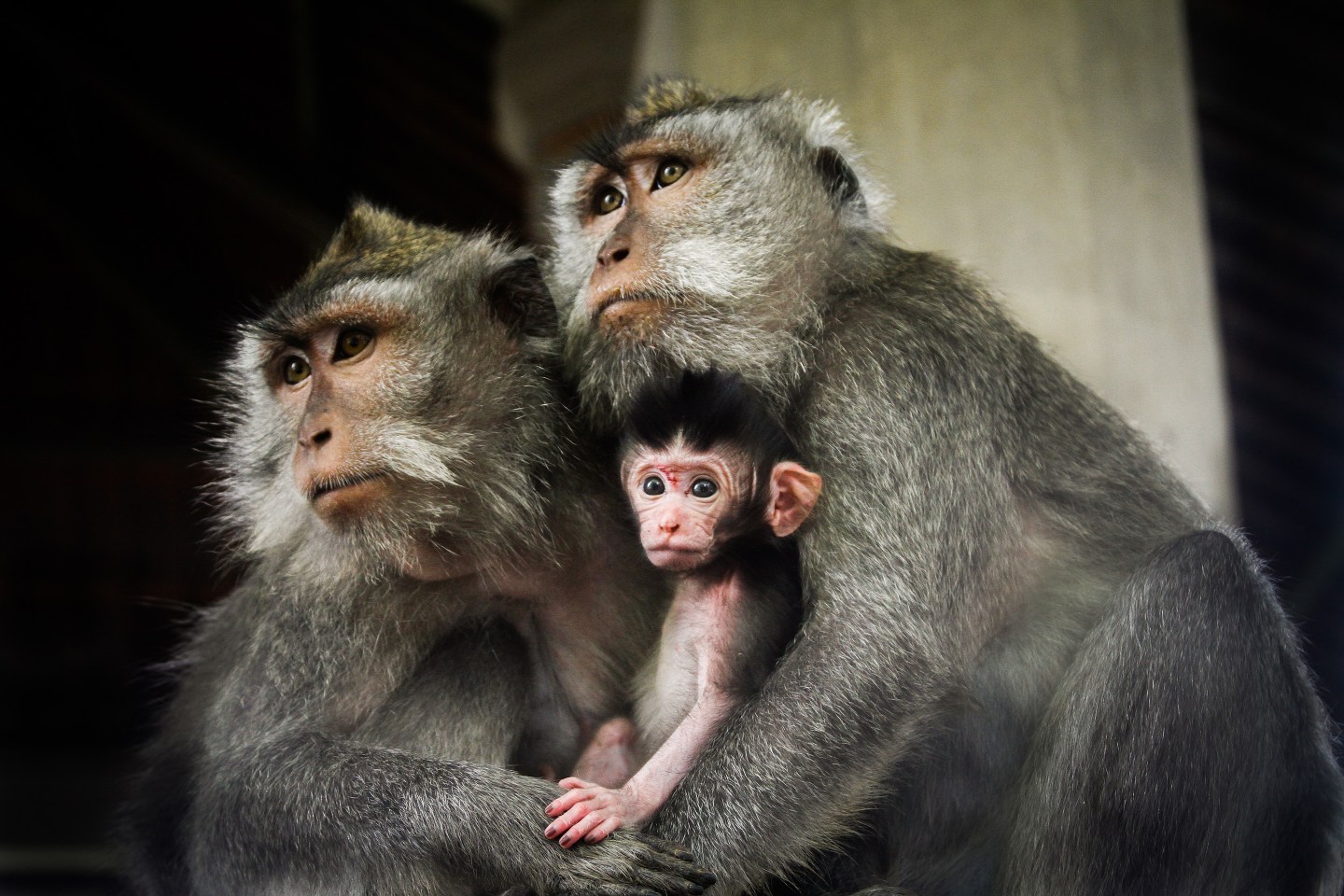
Can an animal species that appears to be abundant also be endangered?
That’s one of the riddles in the heated debate over whether the long-tailed macaque—the lab monkey most commonly used in drug development—should be further protected as a species facing the risk of extinction.
If governments or global wildlife regulators ban or highly restrict the species’ trade, that could end the use of long-tailed macaques in research altogether—an alarming possibility for the $586 billion U.S. biopharmaceutical industry that depends on these monkeys to test their drugs and gather data needed for FDA approvals. It could slow much-needed medical innovation, and hamper the race to cure countless diseases, industry representatives warn.
Such actions, which some in the conservation community are advocating for, remain, for now, a distant possibility, but they’ve become the subject of a bitter dispute playing out on the pages of scientific journals and the bureaucratic processes of international wildlife organizations: Is the long-tailed macaque at risk of extinction—its populations in Southeast Asia threatened by human development and the biotech industry’s plunder? Or is the animal a common vermin, damaging livelihoods and overrunning tourist sites?
Native to Southeast Asia, the long-tailed macaque (known in the biomedical industry as the cynomolgus monkey, or “cyno”) emerged as the preferred species for pharmaceutical testing decades ago, in part because of its abundance.
But in a shock to the drug development industry that relies upon the species to test at least 20% of new drugs, including the fast-growing class of biologics, an influential wildlife organization classified the long-tailed macaque as endangered in 2022. In its explanation, the International Union of Conservation of Nature (IUCN) cited decades of habitat loss and increasing human persecution of the species, and it pointed to illegal trade fueled by science’s enormous use of lab animals, declaring: “The demand for non-human primates in research is threatening the species.”
The IUCN is a respected, global organization; its data-driven assessments on natural populations are advisory in nature, but they carry considerable weight and factor into decisions around the world about whether a species warrants protection in national policy or in international wildlife trade. In other words, such a listing could be the basis for governments or multilateral organizations to ban or highly restrict trade in a species.
That prospect is another headache for an industry already dealing with a complex, multi-phase monkey supply chain crisis that has caused the price of macaques raised for lab use to soar, from around $2,000 per animal in 2019 to more than $55,000 in some cases last year. The latest twist in that tale involved the 2022 arrest in the United States of a Cambodian wildlife official accused of smuggling wild-caught macaques into the highly regulated supply pipeline of “captive-bred” or “purpose-bred” lab animals. (Read my Fortune feature on that arrest and its aftermath here.)
A cognitive disconnect
The IUCN’s classification surprised some because the long-tailed macaque doesn’t seem endangered.
It’s a monkey that adapts well, thrives in proximity to humans, and tends to make its presence known. In countries like Indonesia, Thailand, and Cambodia, long-tailed macaques often congregate at temples and tourist sites, where they get fed, reproduce a lot, and become spectacles. The highly intelligent animal is also known to wreak havoc—raiding crops and pilfering goods from stores and homes. At times the outcomes of such incidents are disturbing, like a 2010 incident in which a long-tailed macaque in Malaysia stole a four-day-old infant from her crib and killed her. Human-macaque conflict is an issue that governments must manage, which they tend to do through sterilization and in some cases, culling.
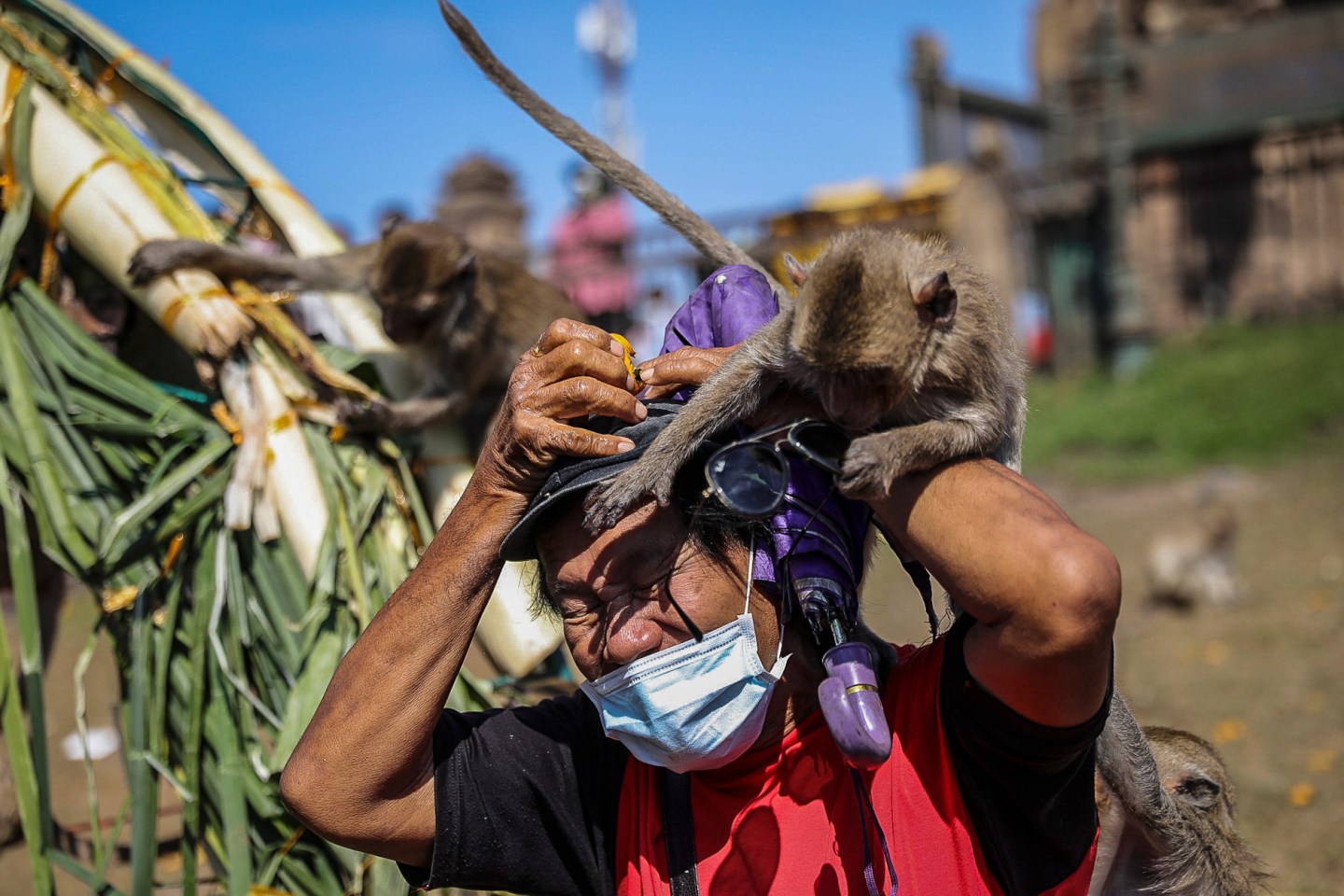
In other places, such as the East African island of Mauritius, where the species was introduced by Dutch and Portuguese sailors in the 1600s, long-tailed macaques are considered invasive and ecologically destructive—raiding the nests of rare birds and feeding on endangered orchids. (The animal even once made the IUCN’s list of the 100 “worst invasive alien species.”)
But the 2022 IUCN report warned that the perception of an animal’s abundance can be misleading, and a threat to the species in itself: “In many places, we are seeing an indiscriminate removal of these monkeys with the assumption that they are impervious to decline.” The report suggested the long-tailed macaque was at risk of becoming a modern-day passenger pigeon; that is, a species that appeared abundant even as humans hunted it to extinction. Passenger pigeons were once famous for flying in enormous, sky-darkening flocks, but now they are no more.
Indeed, the long-tailed macaque is now extinct in Bangladesh and fast disappearing from other locations, the report noted. Complicating matters is a lack of solid population data, as large-scale surveys of such a geographically dispersed species are difficult and expensive to carry out. Acknowledging those limitations, the assessment team estimated that long-tailed macaques suffered a decline of at least 40% in the past 40 years and will face at least a 50% decline in the coming 40.
Certainly, human persecution of long-tailed macaques is a real problem. News reports from Thailand document numerous gruesome busts in recent years, with Thai police intercepting traffickers as they haul dozens of long-tailed macaques—stuffed into boxes or mesh bags—to the country’s borders. China, too, has caught traffickers with long-tailed macaques in recent years.

Such animals may be enroute to monkey farms that feed the biomedical industry, say local sources, or into another channel of their illegal trade, like the TikTok-fueled pet macaque market. (A disturbing investigation by the BBC earlier this year also revealed the existence of macaque torture video industry.)
Skepticism in the labs
The industry of monkey breeding farms in Southeast Asia were supposed to reduce pressure on natural populations—producing a sustainable supply of animals for the biomedical trade so they don’t have to be taken from the wild. But experts say captive-breeding operations often become fronts for illegal trade.
“Demand can exceed supply, and people are making [up] the shortfall through wild-taken animals,” says John Scanlon, the former Secretary-General of CITES, or the Convention of International Trade in Endangered Species of Wild Flora and Fauna, the multilateral treaty and body that regulates global trade of wildlife. For that reason, regulators take into account IUCN assessments on wild populations when weighing trade of purpose-bred animals too.
With its pipeline of lab monkeys at stake, the industry has been quick to dispute the IUCN’s assessment, which it characterizes as off base and unscientific. Some have decried the assessment as biased, suggesting that it was influenced by animal rights advocates who want to put a stop to primate testing on moral grounds.
And it’s true that activist groups that focus on animal cruelty, such as People for the Ethical Treatment of Animals (PETA), also have lobbied for endangered classifications for the drug development industry’s favorite lab monkey. A petition to the U.S. Fish and Wildlife Service that argues for listing long-tailed macaques as “endangered” or “threatened” under the U.S.’s Endangered Species Act was spearheaded by primatologist Lisa Jones-Engel, an advisor to PETA and a coauthor of the 2022 IUCN assessment. The primatologist and anthropologist Jane Goodall and numerous conservation and animal rights organizations also signed the petition, filed last April, which makes the case that the long-tailed macaque “is being pushed to the brink of extinction,” and that demand from U.S. laboratories is partly to blame.
If their effort is successful, “it’s game over” for long-tailed macaques being used as lab monkeys, says Jones-Engel—and that is her goal. Matthew Bailey, president of the National Association of Biomedical Research, agrees such a designation would make it almost impossible for his members to use the creature in their studies. “I think the net effect is that preclinical research for this species in the United States is over.” There’s precedent for this: In 2015, the National Institutes of Health announced it would no longer support biomedical research on chimpanzees several months after the U.S. listed the great ape under the Endangered Species Act. (Read more about why Big Pharma can’t seem to quit animal research here.)
That prospect has made the biomedical research industry very nervous. “The labs in the U.S. freaked out,” says Agustin Fuentes, a Princeton professor and primatologist who coauthored the IUCN report. “A challenge in getting sufficient monkeys for their research is very damaging.” (For his part, Fuentes says he is not categorically opposed to animal research, though he believes the importation of long-tailed macaques for science should be paused given the current circumstances and threats to the species.)
It’s no surprise that the pharmaceutical industry balked at the red-listing of long-tailed macaque, but the classification is also a fraught subject in the conservation community. Few primatologists Fortune reached were willing to speak on the record: All acknowledged the species faces troubling threats in the region, but some expressed discomfort with its new endangered status, given the lack of good data and potential for undermining broader conservation efforts.
“Other primate species are in worse condition,” one Asian primatologist told me. “As a scientist, I want to save every animal, every plant. I want to remove humans from this planet if possible. But let’s face it: As a scientist, you have to be objective.”
In September, the National Association of Biomedical Research, an industry group that represents research institutions as well as pharmaceutical companies, filed a petition challenging the IUCN designation, arguing long-tailed macaques are actually “highly abundant” and “invasive.” The organization hired consultants who have published their own analysis of the data, and who assert “no primate species may be less likely to go extinct.” (The IUCN’s assessment is now under review.)
Nearly everyone agrees better data is needed. In the meantime, in the heat of the battle, industry representatives rarely seem to seriously consider the possibility that the long-tailed macaque is endangered. But of course, if the species is disappearing from the environment in unsustainable numbers, that will one day be problem for the industry too.
See more coverage of Big Pharma's Great Lab Monkey Shortage.