Like many professionals working outside of tech, Edward Fu was skeptical when he first heard about venture-backed startups focused on a quite mundane business: scooter rentals. But when one of them, a company called Bird, offered him a job interview at its headquarters in Santa Monica, a city Fu had never visited, he was curious enough to go see what the fuss was about.
“I decided on my way to the interview that I ought to ride one of these things,” Fu, a former corporate attorney with a computer science degree, told Fortune. “When you’re in Santa Monica on a nice summer day, that’s an amazing experience. It’s transformational.”
He was sold.
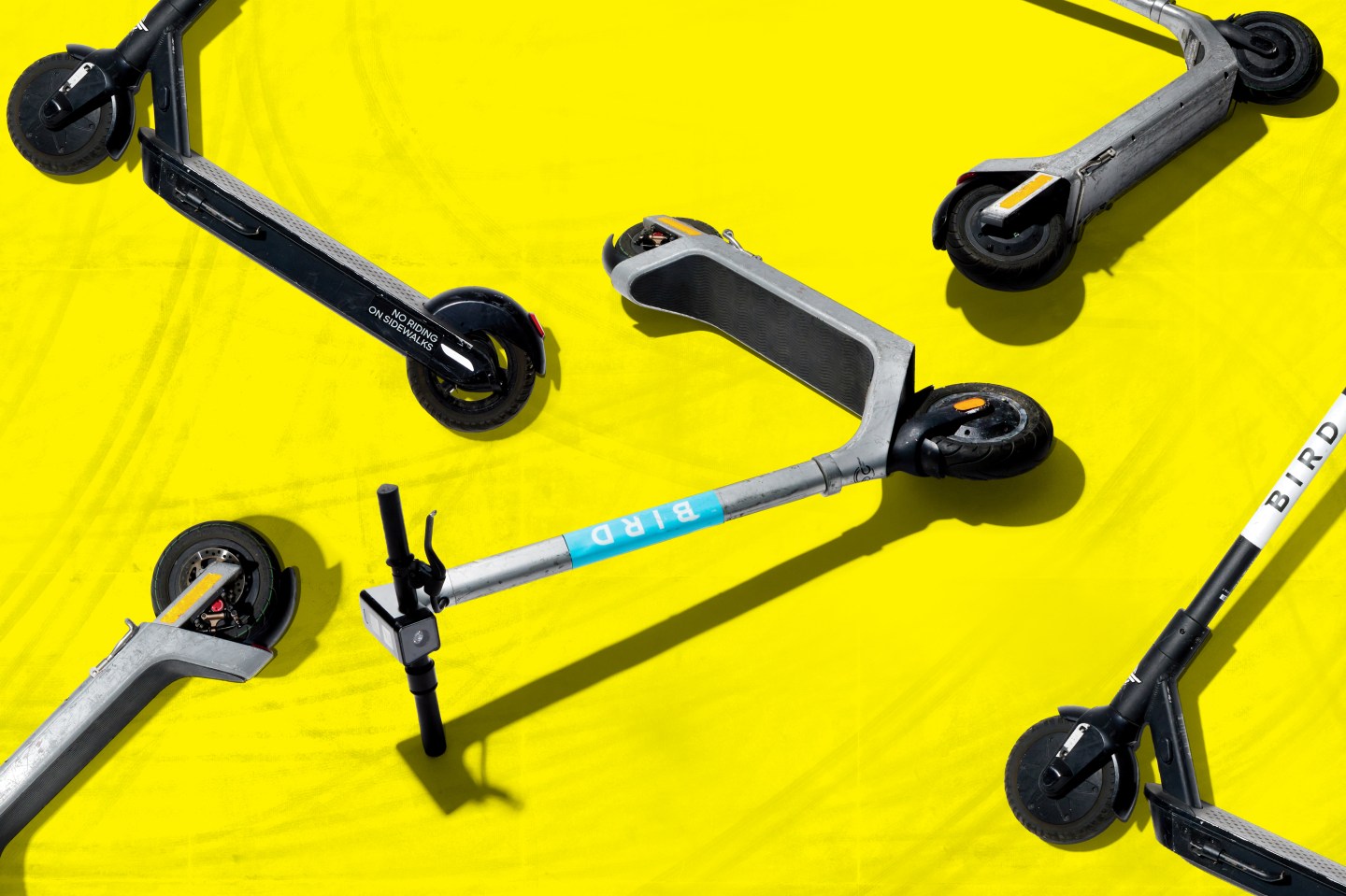
Fu wasn’t alone. Back in 2018, fascinated city dwellers and tourists from Santa Monica to Dallas were flocking to a new phenomenon of “dockless” electric scooters. Months earlier, a former Uber and Lyft executive named Travis VanderZanden had launched the Bird scooter company, with 10 consumer-grade vehicles available along the balmy Pacific coast. Competitors popped up across the world.
Customers were dazzled by the ability to instantly locate a two-wheeled ride with a phone’s GPS, start up the scooter with an app, and ditch it anywhere afterward. Bird’s pitch of less-traffic-congested streets and more environmentally friendly transportation was another plus. Maybe most important, the scooters were just darn fun.
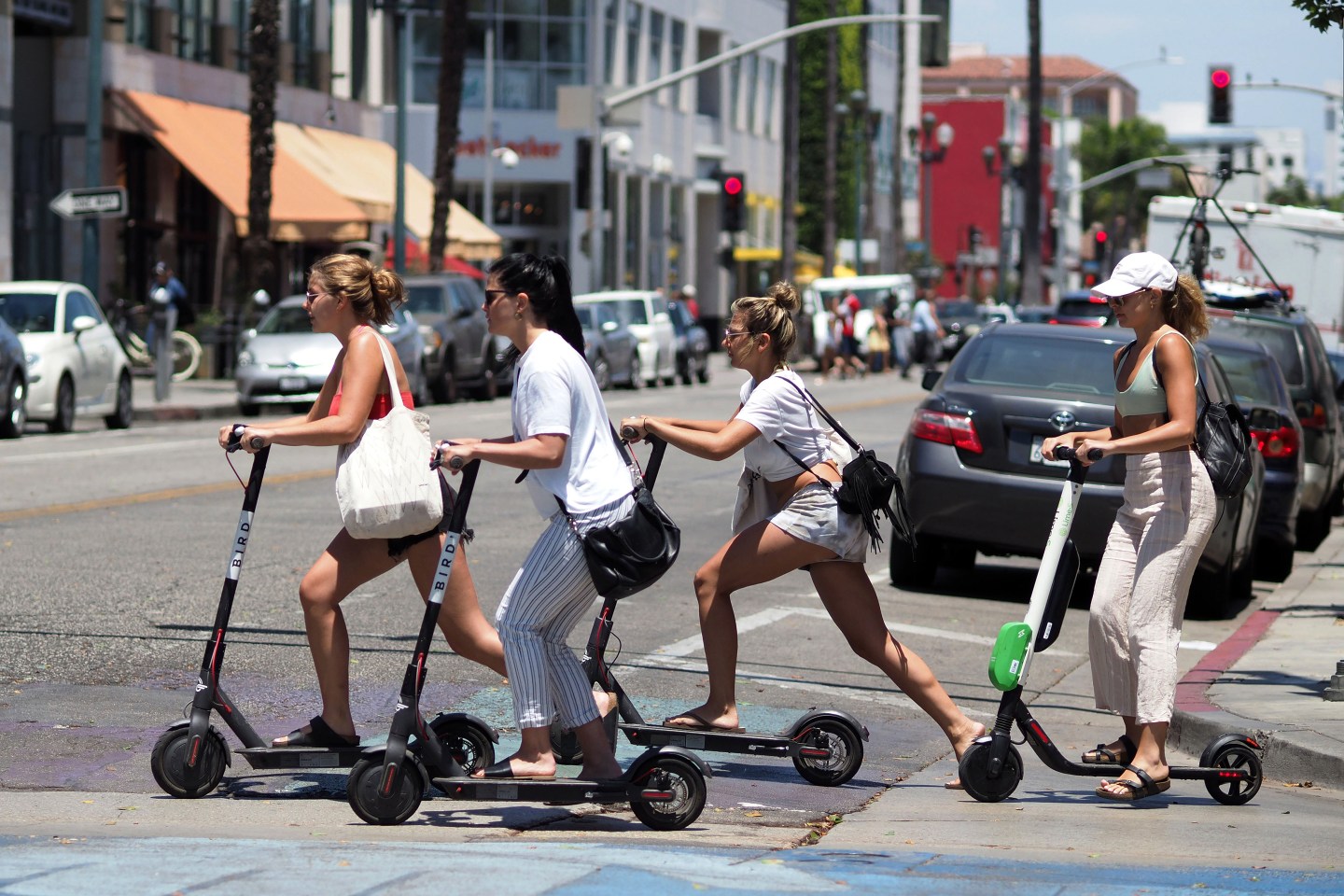
Within eight months of Bird’s launch, the startup boasted of surpassing 1 million rides, often in cities where government officials hadn’t expressly approved its arrival. No matter. A couple of months later, venture capital investors valued Bird at $1 billion, marking the fastest valuation ascent for any company at that time. Uber for scooters was a unicorn.
By 2019, it had raised hundreds of millions of dollars at valuations that nearly hit $3 billion. With a fleet of scooters that would eventually surpass 100,000 in more than 300 cities, the Bird hype was real.
Unfortunately, so too would be the fall from grace.
Less than two years after its November 2021 debut on the New York Stock Exchange via a special-purpose acquisition company, Bird’s stock was delisted as its share price and business crumbled. Instead of changing the world’s transportation and generating oodles of wealth, the scooter startup had racked up $1.6 billion in accumulated losses as of September. In December, Bird filed for Chapter 11 bankruptcy protection as it seeks a buyer. The end for Bird isn’t yet here, but it could be near.
How did the tech world’s next big thing end up on life support?
As in any business postmortem (or near postmortem), different parties with different perspectives can point to events that played a part in Bird’s trajectory—with lessons for startup founders, employees, investors, and even local government officials.
But the rise and fall of Bird also says something important about Silicon Valley’s revered and oft-imitated playbook. It’s a reminder that the celebrated sharing-economy business models that propelled new industry titans like Uber and Airbnb to blockbuster success also seduced countless startups with similar dreams but different complexities, leading to sharply diverging outcomes.
From the outset, Bird had all the markings of being the next sharing-economy sensation. Not only did Travis VanderZanden have the Uber pedigree, he even had the same first name as Uber’s famous cofounder, Travis Kalanick.
“Having grown up riding a public bus driven by his mother in Appleton, Wisconsin … VanderZanden was inspired to solve the ‘first- and last-mile’ challenge for millions of public transit riders,” Bird would say in its prospectus to go public.
And while it took Uber a couple of years (and a switch from limos to more affordable shared cars) to take off, Bird’s scooters were a hit with consumers straight out of the gate. For investors, it was almost impossible to resist.
“I would stare out of my 6th floor office while on phone calls and literally watch 5 Birds pass our office every 2–3 minutes,” the prominent Santa Monica–based venture capitalist Mark Suster wrote in a 2018 blog post. Finally, Suster wrote, he scootered straight to Bird’s office “and pleaded with Travis to take money from us.”
Silicon Valley heavyweights Sequoia Capital and David Sacks’ investment firm Craft Ventures signed on alongside other eager investors too, pumping in a staggering $700 million in total VC funding in Bird’s first two years. (Through a spokesperson, Sacks declined to comment, as did Sequoia. VanderZanden did not respond to interview requests for this story. A Bird spokesperson declined an interview request for the company’s interim CEO, citing the bankruptcy proceedings.)
Bird initially followed the aggressive growth strategy pioneered by Uber, Airbnb, and other sharing-economy stars, asking for forgiveness from irked local officials only after having established a presence. “Where there’s no laws, that’s where we go in,” VanderZanden said in 2018.
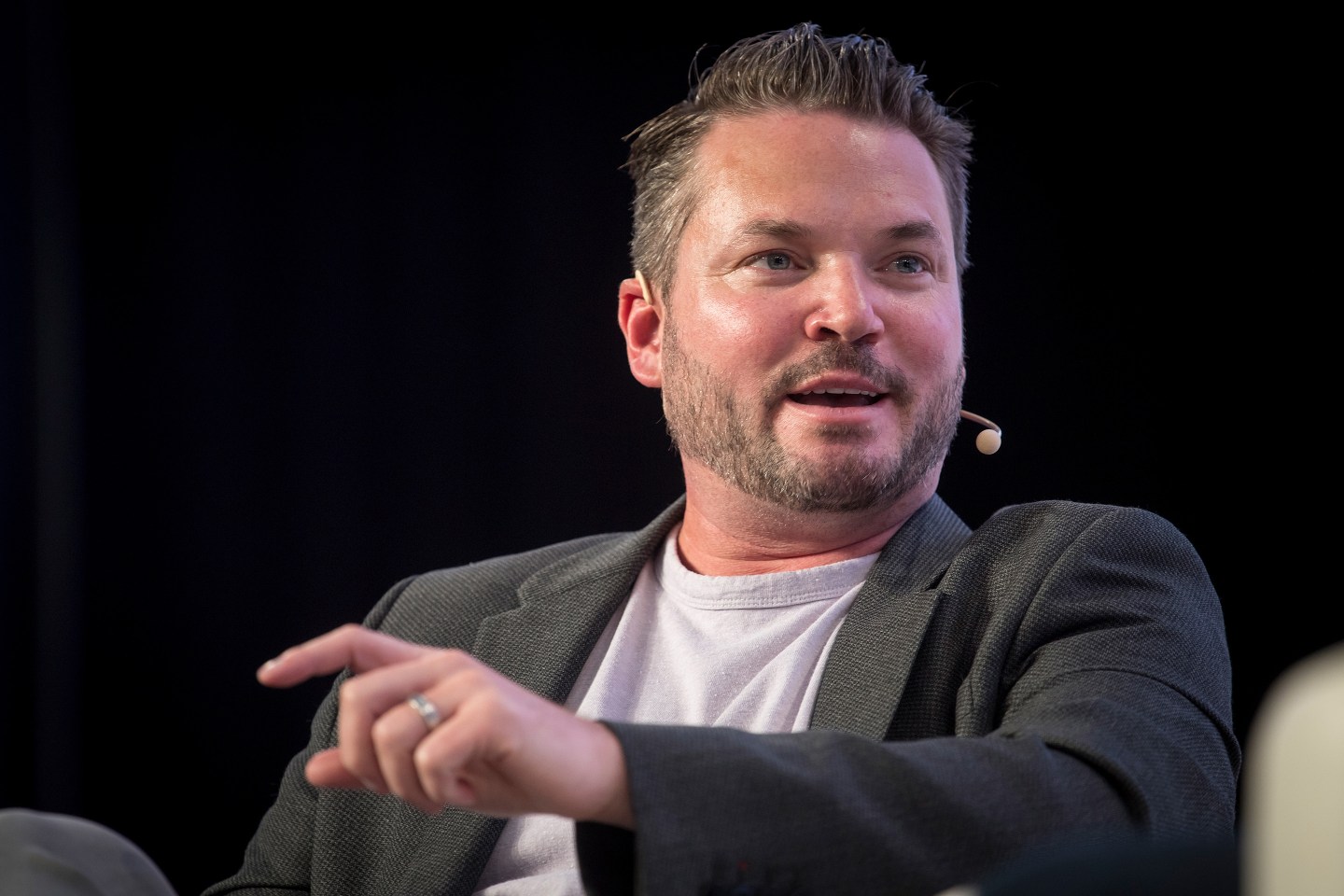
But cities had been through the Uber experience; they were prepared. And unlike with Uber’s car-based service, it was easy to impound scores of scooters if officials deemed them illegal. Accidents and deaths involving scooter riders also had local government officials wary. Bird’s “big miscalculation,” according to Ali Griswold, author of the Substack newsletter Oversharing, was thinking that it could mobilize its users against city restrictions as Uber successfully did. Bird would eventually reverse course and take a more collaborative approach with local and state officials, but the company sometimes struggled to reconcile being a good citizen with its hardwired growth imperatives.
In Washington, D.C., for example, the company programmed its scooters to travel up to 12 or 13 mph even though the local government had implemented a 10-mph maximum, which, according to a former employee, company officials deemed a poor rider experience. In a move aimed at inching toward profitability, the startup also occasionally unloaded more scooters onto a city’s streets than its agreement permitted.
“Cities would get upset, threaten to pull our permit, and then the pendulum would swing back and [Bird executives] literally would be like, Do whatever we need to continue to operate,” a former Bird employee told Fortune. “And then you make all of these promises, then they get worried about profitability, and it starts again. It was just this really nasty cycle that happened a couple times a year.”
For all the exuberance about Bird’s potential to be another Uber, the business differed from its role model in one important way: While Uber was mainly a software business that relied on using other people’s cars, Bird was mainly a hardware business that had to spend heavily on its own fleet of vehicles.
The electric scooters Bird sprinkled throughout cities had to be purchased, charged, and repaired (according to one analysis, the early scooters that Bird purchased lasted less than 30 days on average). Bird began to design and manufacture its own scooters, hiring an in-house R&D team with aerospace and automotive experience. VanderZanden was “obsessed” about vehicle design and creating a green ride “better suited for short-term transportation than Tesla cars,” Suster, the Bird investor, told Fortune, though the move would drive up operating expenses.
To keep its first-mover advantage, Bird spent enormous sums shipping scooters around the globe and into the U.S. “The amount of money we spent on airfreighting in 2018 was mind-blowing,” a former Bird executive said.
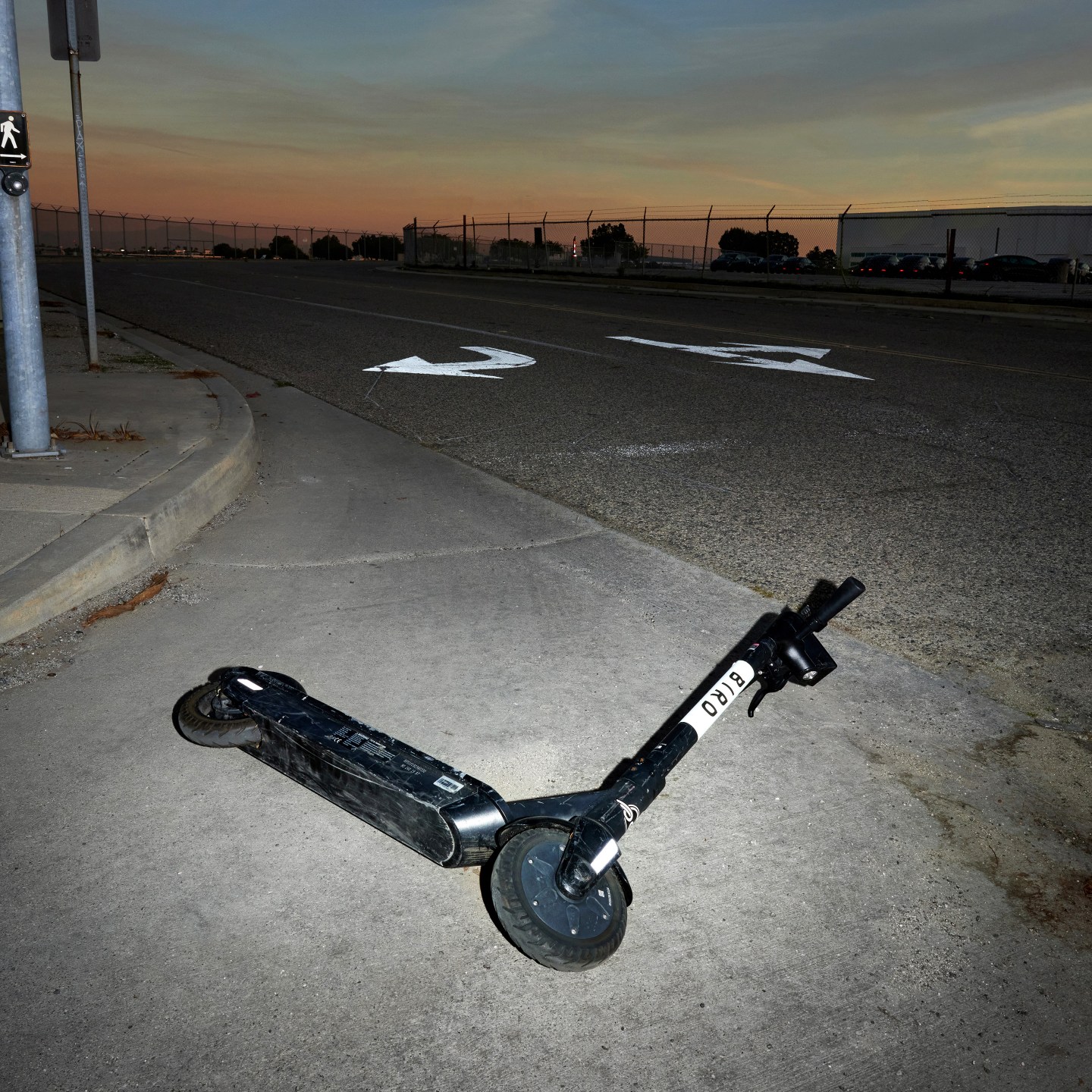
The economies of scale Bird hoped to reap by producing its own scooters may have been at least partially offset by questionable design choices. Unlike many of its rivals, Bird resisted adopting swappable scooter batteries. When a Bird scooter ran out of juice, a worker had to retrieve the vehicle and replace it with a fully charged scooter. While a Bird executive argued in a 2020 blog post that swappable batteries could be dangerous and less sustainable, former Bird sustainability chief Melinda Hanson told Fortune the company’s resistance “made no sense.”
As a result of needing to pull dead Bird scooters off the road each day, the company was essentially “buying two scooters to get one ride,” a former senior company official said.
After initially hiring contract workers to maintain its scooters, Bird outsourced the job to “fleet managers,” a franchise-type model that came with major tradeoffs. Bird could recommend that fleet managers do things like put more scooters in one city location, but it couldn’t compel them to do so. Bird was lowering its fixed costs but ceding control of crucial facets of its operations.
By 2022, Bird’s economics were still putrid, with growth coming mainly from producing more scooters to put in new markets. The company had recovered somewhat from the pandemic, which caused rides to plummet and Bird to lay off hundreds of employees. But Bird was still averaging only about one customer ride per scooter per day, compared with roughly three per day before the pandemic. The company’s net loss had swelled 67% from $215 million in 2021 to $359 million in 2022, while revenue grew just 28%.
A few years earlier, Bird might have been able to convince investors that the market opportunity was still so great as to be worth the risk. But with rising interest rates and inflation, a money-sucking, complicated business was no longer an attractive investment—especially one that had gone public via the SPAC process, a red flag that many investors associated with low-quality or defective businesses. Bird was in “a public-company death spiral,” said Suster: As the stock price plummets, it becomes difficult to find flexible financing options and to retain employees who no longer see upside in their stock.
In January 2023, a few months after warning investors that it had substantial doubts about its ability to continue as a going concern, Bird secured a capital infusion of $30 million from Bird Canada, a separate e-scooter company that had licensed Bird’s name and technology years earlier. Bird Canada took control of the board and installed its own leadership team, which saw Bird’s founder VanderZanden, who by then had stepped down as CEO but was still the chairman of the company’s board, exit his company altogether. Less than a year later, Bird was delisted from the New York Stock Exchange, and its U.S. business filed for bankruptcy.
“This is a great cautionary tale of what went wrong in venture in the last couple of years.”
Bradley Tusk, an early Bird investor
In hindsight, it’s easy to wonder what could have been in a world without a pandemic taking the road out from under Bird’s wheels so early in its journey, or in a world where cities truly valued and supported alternatives to cars.
“Most cities in the U.S. did very little to try and make it work in terms of building infrastructure or otherwise putting skin in the game,” said Hanson, Bird’s former head of sustainability. “In some cases, the company actually paid money to the city, which felt like a requirement to win permits but was never gonna be financially workable.” In some cities, fierce competition led to unprofitable operations for everyone. In others, tight restrictions on scooter numbers led to low density and thus high prices, turning the services mostly into tourist attractions rather than the commuter option Bird needed for long-term success.
For Bradley Tusk, a political strategist who advised both Uber and Bird on regulatory issues as well as an early Bird investor who contributed $1 million to the Series A round, the pressure that some investors put on Bird to expand was too much: “This is a great cautionary tale of what went wrong in venture in the last couple of years.”
Some of Bird’s scooter competitors are still rolling: Lime, Bird’s top U.S. rival, recently teased a future IPO, though it has done so before. In Europe, where Bird still operates through a subsidiary not part of the bankruptcy, two large players announced plans to merge and form the continent’s largest e-scooter company.
Many others have collapsed or been swallowed up in fire-sale acquisitions. Even if Bird ends up as a loser, those involved in the startup’s saga still hold out hope that a clean, short-distance city transportation option eventually catches on.
“We didn’t get there,” said the investor Suster, “but I hope someone does.”
This article appears in the February/March 2024 issue of Fortune with the headline, “Road Kill.”
Also in Fortune’s February/March 2024 issue:
From unicorns to unicorpses: Why billion-dollar startups and even VC firms keep imploding
Lessons from a startup founder at the crossroads of failure
Do you have insights or a tip to share? Contact Jason Del Rey at jason.delrey@fortune.com, jasondelrey@protonmail.com, or through secure messaging app Signal at 917-655-4267. You can also message him on LinkedIn or at @delrey on X.