
• Home
  • News
  • Fortune 500
  • Tech
  • Finance
  • Leadership
  • Lifestyle
  • Rankings
  • Multimedia
LeadershipWealth

The world’s 5 richest people, from Elon Musk to Jeff Bezos to Warren Buffett, doubled their wealth to $869 billion since 2020, report finds

Paolo Confino
By
Paolo Confino
Paolo Confino
Reporter
Down Arrow Button Icon
Paolo Confino
By
Paolo Confino
Paolo Confino
Reporter
Down Arrow Button Icon
January 16, 2024, 3:25 PM ET
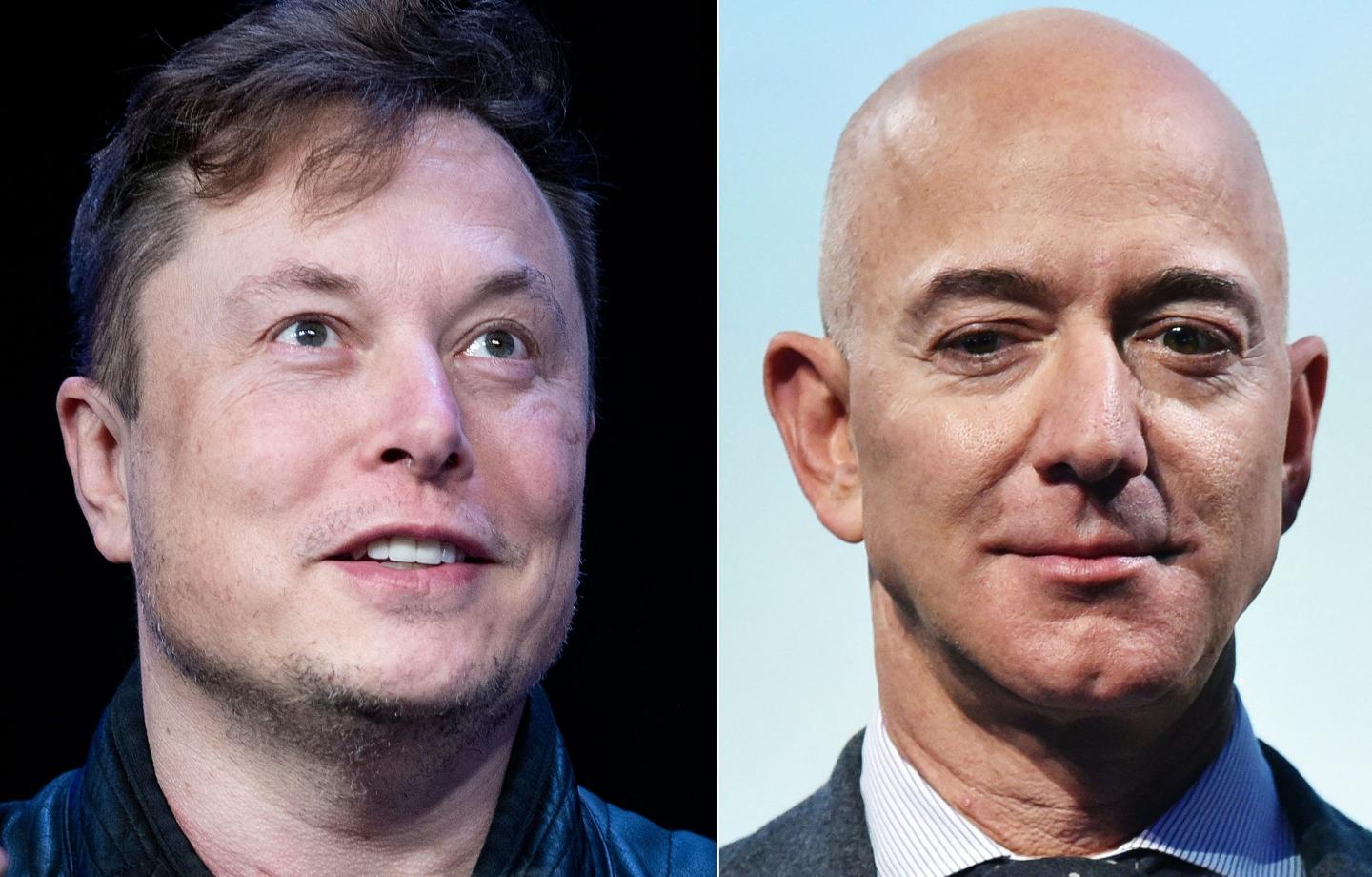
Amazon founder Jeff Bezos and Tesla CEO Elon Musk
Amazon founder Jeff Bezos and Tesla CEO Elon Musk are two of the richest men in the world. BRENDAN SMIALOWSKI

The rich keep getting richer—and drastically so. 

Recommended Video

The five richest people in the world doubled their combined net worth from $405 billion to $869 billion in just over three years, a new Oxfam International report shows. Elon Musk, Jeff Bezos, Larry Ellison, Warren Buffett, and Bernard Arnault (including his family) all topped the list of the world’s richest people whose net worth skyrocketed from March 2020 to November 2023.  

During the same time period, the collective wealth of the poorest 60% of the world’s population—approximately 4.8 billion people—fell 0.2%, which, while a small percentage, illustrates the divergent trends for the rich and the poor. Things get drastically better for those with money and marginally worse for this without it.  

If the fortunes of the wealthiest individuals continue to grow at their current pace, the world could see its first trillionaire in the next 10 years, the report projects. But Oxfam predicts it would take 229 years for global poverty to be eliminated, defined as reducing the number of people earning $6.85 a day to less than 1% globally.

Oxfam’s report comes as the world’s wealthiest people, highest powered executives, and ranking politicians meet in Davos, Switzerland, at the World Economic Forum.

“These extremes cannot be accepted as the new norm, the world can’t afford another decade of division,” Oxfam interim CEO Aleema Shivji said in a statement accompanying the report. 

The timing of the report draws a stark contrast between the trajectories of the world’s wealthiest and the world’s poorest—highlighting the continued problem of wealth inequality, which gained new urgency following the Occupy Wall Street movement in 2011. The movement popularized the term “the 1%,” making it a catchall term for the world’s richest people. 

The race to become the first trillionaire

To be in the top 1% of U.S. earners, a household would need to earn about $652,000 a year. Certainly a large amount of money, and one that can virtually guarantee a comfortable life, but hardly the level of wealth enjoyed by the billionaires Oxfam cites. Musk, Bezos, and company each surpassed that threshold long ago. All five also founded companies which they either run as CEO or control as the largest shareholders.  

Much of the wealth generated by large companies comes off the backs of workers who aren’t always properly compensated for their roles, Oxfam argues. The current state of the business world “generated unprecedented profits for major companies, fantastic pay for an elite class of executives and tremendous wealth for shareholders,” Oxfam’s report says. 

An S&P 500 CEO earns 272 times more than the average worker, according to a separate report from labor union AFL-CIO. 

The U.S. appears to be making some headway in improving workers’ wages. In the third quarter of 2023, weekly wages rose 4.5% compared to the same time the year before, while inflation only rose 3.5%, according to the Bureau of Labor Statistics’ latest available data. 

The number of millionaires fell in 2022, according to a report from Swiss investment bank UBS, but that was more an aberration due to inflation and unfavorable foreign exchange rates around the globe, rather than the evening out of financial assets. The report also predicted that by 2027, the number of millionaires would increase 44%, while the number of ultra-high-net-worth individuals, defined as households with over $50 million in assets, was projected to increase 53%. 

For many, though, the hope of improving their financial position appears to be slipping further away, with 4.8 billion people poorer than they were in 2019 before the pandemic, according to Oxfam. 

The global strife of the COVID-19 pandemic became another flashpoint for debate about income inequality. During that time period, many were stuck at home or faced unemployment as a result of the ensuing economic downturn, but others were enriching themselves at previously unprecedented levels. As the economy faltered, with businesses shuttering and unemployment soaring, the stock market boomed. As the major shareholders of the companies they founded, those like Musk and Bezos got richer despite a lagging economy. 

Between March 2020 and April 2021 the world minted a new billionaire every 17 hours, as 493 people joined the ranks of those with nine-figure net worths. In October 2021, about a year and a half into the pandemic, the 400 richest people in the U.S. grew their net worth by 40%, accumulating an additional $4.5 trillion. At the same time unemployment levels were recovering from the surge of layoffs that accompanied the outset of the pandemic, but still saw 7.4 million Americans out of work, according to the Bureau of Labor Statistics. 

Despite the pandemic being mostly in the rearview mirror, Shivji, Oxfam’s interim CEO called on governments to not overlook the economic realities it brought to the fore. 

“A fairer economy is possible, one that works for us all,” she said.

Fortune Brainstorm AI returns to San Francisco Dec. 8–9 to convene the smartest people we know—technologists, entrepreneurs, Fortune Global 500 executives, investors, policymakers, and the brilliant minds in between—to explore and interrogate the most pressing questions about AI at another pivotal moment. Register here.
About the Author
Paolo Confino
By Paolo ConfinoReporter

Paolo Confino is a former reporter on Fortune’s global news desk where he covers each day’s most important stories.

See full bioRight Arrow Button Icon

Latest in Leadership

Workplace CultureBrainstorm Design
How two leaders used design thinking and a focus on outcomes to transform two Fortune 500 giants
By Christina PantinDecember 4, 2025
3 hours ago
Rich woman lounging on boat
SuccessWealth
The wealthy 1% are turning to new status symbols that can’t be bought—and it’s hurting Dior, Versace, and Burberry
By Emma BurleighDecember 3, 2025
13 hours ago
Mark Zuckerberg, chief executive officer of Meta Platforms Inc., during the Meta Connect event in Menlo Park, California, US, on Wednesday, Sept. 25, 2024.
AIMeta
Inside Silicon Valley’s ‘soup wars’: Why Mark Zuckerberg and OpenAI are hand-delivering soup to poach talent
By Eva RoytburgDecember 3, 2025
14 hours ago
Alex Karp smiles on stage
Big TechPalantir Technologies
Alex Karp credits his dyslexia for Palantir’s $415 billion success: ‘There is no playbook a dyslexic can master … therefore we learn to think freely’
By Lily Mae LazarusDecember 3, 2025
15 hours ago
Isaacman
PoliticsNASA
Billionaire spacewalker pleads his case to lead NASA, again, in Senate hearing
By Marcia Dunn and The Associated PressDecember 3, 2025
15 hours ago
UPS
LawUPS
Lawyer blasts UPS for favoring profits over safety after fiery, deadly crash in Kentucky
By Jeffrey Collins and The Associated PressDecember 3, 2025
15 hours ago

Most Popular

placeholder alt text
North America
Jeff Bezos and Lauren Sánchez Bezos commit $102.5 million to organizations combating homelessness across the U.S.: ‘This is just the beginning’
By Sydney LakeDecember 2, 2025
2 days ago
placeholder alt text
Economy
Ford workers told their CEO 'none of the young people want to work here.' So Jim Farley took a page out of the founder's playbook
By Sasha RogelbergNovember 28, 2025
6 days ago
placeholder alt text
North America
Anonymous $50 million donation helps cover the next 50 years of tuition for medical lab science students at University of Washington
By The Associated PressDecember 2, 2025
2 days ago
placeholder alt text
C-Suite
MacKenzie Scott's $19 billion donations have turned philanthropy on its head—why her style of giving actually works
By Sydney LakeDecember 2, 2025
2 days ago
placeholder alt text
Innovation
Google CEO Sundar Pichai says we’re just a decade away from a new normal of extraterrestrial data centers
By Sasha RogelbergDecember 1, 2025
3 days ago
placeholder alt text
Economy
Scott Bessent calls the Giving Pledge well-intentioned but ‘very amorphous,’ growing from ‘a panic among the billionaire class’
By Nick LichtenbergDecember 3, 2025
16 hours ago
Rankings
  • 100 Best Companies
  • Fortune 500
  • Global 500
  • Fortune 500 Europe
  • Most Powerful Women
  • Future 50
  • World’s Most Admired Companies
  • See All Rankings
Sections
  • Finance
  • Leadership
  • Success
  • Tech
  • Asia
  • Europe
  • Environment
  • Fortune Crypto
  • Health
  • Retail
  • Lifestyle
  • Politics
  • Newsletters
  • Magazine
  • Features
  • Commentary
  • Mpw
  • CEO Initiative
  • Conferences
  • Personal Finance
  • Education
Customer Support
  • Frequently Asked Questions
  • Customer Service Portal
  • Privacy Policy
  • Terms Of Use
  • Single Issues For Purchase
  • International Print
Commercial Services
  • Advertising
  • Fortune Brand Studio
  • Fortune Analytics
  • Fortune Conferences
  • Business Development
About Us
  • About Us
  • Editorial Calendar
  • Press Center
  • Work At Fortune
  • Diversity And Inclusion
  • Terms And Conditions
  • Site Map

© 2025 Fortune Media IP Limited. All Rights Reserved. Use of this site constitutes acceptance of our Terms of Use and Privacy Policy | CA Notice at Collection and Privacy Notice | Do Not Sell/Share My Personal Information
FORTUNE is a trademark of Fortune Media IP Limited, registered in the U.S. and other countries. FORTUNE may receive compensation for some links to products and services on this website. Offers may be subject to change without notice.