• Home
  • Latest
  • Fortune 500
  • Finance
  • Tech
  • Leadership
  • Lifestyle
  • Rankings
  • Multimedia

Trendingnow

1

MacKenzie Scott alone accounted for one-third of America's $19.2 billion in megagifts last year

2

Philanthropy leader at Warren Buffett and Bill Gates’ Giving Pledge says children of billionaires are pushing them to give their wealth away faster

3

Elon Musk on MacKenzie Scott giving away $26 billion of her fortune: 'Sadly,' it makes the world a worse place

1

MacKenzie Scott alone accounted for one-third of America's $19.2 billion in megagifts last year

2

Philanthropy leader at Warren Buffett and Bill Gates’ Giving Pledge says children of billionaires are pushing them to give their wealth away faster

3

Elon Musk on MacKenzie Scott giving away $26 billion of her fortune: 'Sadly,' it makes the world a worse place
CommentaryRetail

Merriam-Webster’s word of the year 2023 is ‘authentic.’ Here’s how corporate America hacked the consumer cult of authenticity

By
Michael Serazio
Michael Serazio
Down Arrow Button Icon
By
Michael Serazio
Michael Serazio
Down Arrow Button Icon
December 25, 2023, 11:16 AM ET
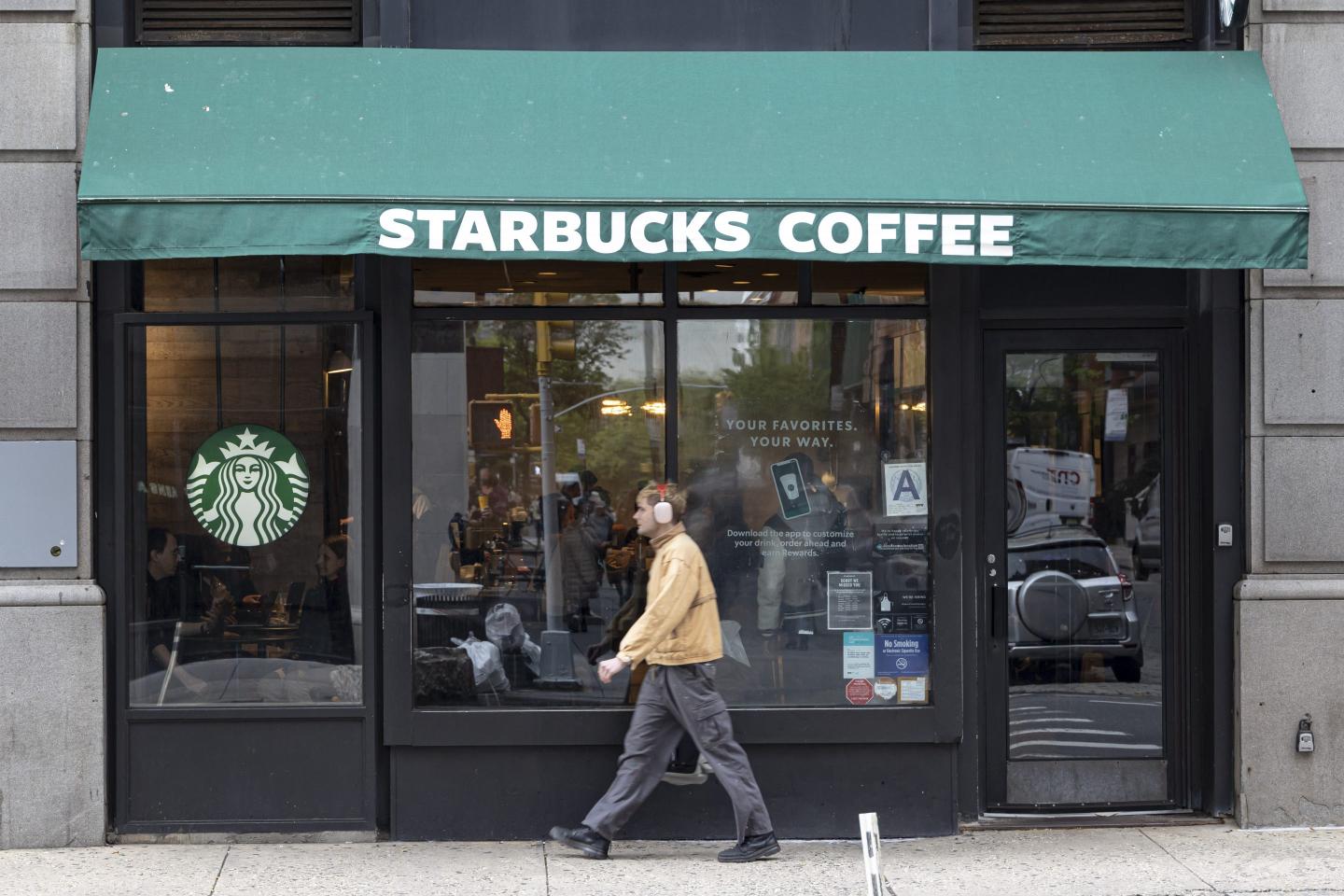
Global brands such as Starbucks and Benn & Jerry's have found success by scaling authenticity.
Global brands such as Starbucks and Benn & Jerry's have found success by scaling authenticity.Nicolas Economou - NurPhoto - Getty Images
Add Fortune on Google for similar content.

“Mass advertising can help build brands,” longtime Starbucks CEO Howard Schultz once prophesized, “but authenticity is what makes them last.” As corporate cheerleading goes, this is an enduring fable. Authenticity has become a central moral framework in society–the subtle yet pervasive value that animates and adjudicates our media, culture, and politics. Merriam-Webster recently announced that “authentic” was its 2023 word of the year, thanks to a surge in online search queries.

Consumers have long sought authenticity, as it gets stamped on a range of goods and experiences made attractive largely because they appear to lack marketplace motives. The mom-and-pop diner; the vinyl record shop–the local and uncommercialized. Think dive bars, farmers markets, and indie cinemas.

Studies find that consumers rate independent, family-run outposts more authentic than chains–and even shrug off hygiene code violations if a hole-in-the-wall seems sufficiently off the beaten path. Authenticity also beckons tourists, pointing toward paths less traveled such as Cuba, Bhutan, or Burning Man.

A quest for the unique

Scholarly articles about authenticity more than doubled in the 2010s and leading pollster John Zogby found that it topped the list of Americans’ cultural yearnings.

“You have aspirational positioning from every brand out there to want to make their offering feel bespoke and handcrafted and unique,” one marketing COO quips. “The fact of the matter is that there’s tens of thousands of others of that [product] pumping out every single week.”

That quest for authenticity is, in short, a quest for uniqueness amidst homogenous mass production. Today’s consumers seek what one philosopher-critic called “aura”–a singular product relative to the readily replicable. Social theorist Andreas Reckwitz diagnoses consumers as in thrall to “singularities”–distinctive objects, spaces, and experiences that fulfill cultural desires rather than functional needs that assembly lines once simply satisfied.

Franchising, in particular, embodies McWorld alienation as corporations implement formulaic operations that erode local character: nondescript office parks, suburban tract homes, and casual dining chains. Most can’t preserve nuance at the massive scale that profit demands.

The more sameness is offered, the more consumers go searching for something real to grab onto and discover themselves within. Call this the identity politics of the shopping cart.

A manufactured ideal

As a concept, authenticity hatched in response to 18th– and 19th-century industrialization. Humanity’s relationship with machines became disenchanted, not just at work–where efficiency, automation, and quantity dominated values–but also with this logic spilling into consumer experiences.

Although authenticity cannot be found in Victorian-era vocabulary about merchandise, by 1908 Coca-Cola was already pitching itself as “genuine”–part of manufacturers’ efforts to persuade that their brand was more natural and traditional than fellow factory-line products filling home shelves. This rhetoric intensified in recent years.

Take Starbucks, which has long tried to reproduce the “aura” of that cute, little indie coffee shop in your neighborhood–some 55,000 times over. Its brand guidebook reportedly mandates five ideals that had to apply to every design choice: handcrafted; artistic; sophisticated; human; and enduring. These seek to convince you that this Starbucks is truly unique and special, unlike the (same) one a block away.

Hence, the interiors’ aesthetic accentuation–earth hues, wicker baskets, curvy motifs, stained woods, unfinished metals–all to contrast the prepackaged synthetics that envelop fast food. Hence, too, the customer’s name read aloud rather than an automated receipt number–simulating rituals of familiarity and tradition.

Starbucks doesn’t become globally ubiquitous if it can’t fake authenticity in this fashion, even if being globally ubiquitous inherently invalidates that.

The authenticity ideal is artisanal craft, romantically conjuring premodern labor untainted by massive machinery. Goods that are “handmade” in “small-batch” as opposed to cash-grab; shelves that are curated, not commercialized.

Origin stories also authenticate, seeking to make a company genealogically trustworthy by emphasizing a point or person of provenance. Think Ben & Jerry’s here, or the naïve moral authenticity of any amateur startup tinkering in a garage for love rather than money.

Research suggests that a company’s founding intent matters a great deal to consumers: If seen as “self-transcendent” (i.e., for society or community) rather than for “self-enhancement” (wealth or status), the brand scans authentic. Greed, for lack of a better word, isn’t good at conveying that.

Authenticity also explains a recent swing toward vintage aesthetics–campaigns, slogans, and logos from yesteryear dusted off and trotted out, from Pizza Hut’s red roof icon to Miller Lite’s throwback font: “Brands want to say, ‘We’re still that same company with humble roots,’” one brand strategist explained. “So [they] reverse-engineer that value to an audience that may not be privy to a backstory.”

This, then, is the ultimate contrivance: For a century,  corporations have tried to sell us they have a “soul.” As one advertising creative director rhapsodizes, “Brands have to have a voice; they have to have character; they have to have morals.”

To that end, Dunkin’ Donuts shortened the name on its (11,000-plus) outlets to just “Dunkin’” to “highlight how the brand was now on a first-name basis with fans,” even giving away “handmade friendship bracelets” to commemorate the copyright registry.

To be sure, there is something understandable, yet lamentable, in that notion. You can’t be friends with an LLC, yet anthropomorphism remains the central delusion of branding. Authenticity is, after all, a nostalgic reflex. We yearn for it most in times of rapid change. Much as industrialization generated a longing for agrarian simplicity a century ago, today’s high-tech landscape–one of AI chatbots and digital deepfakes–generates much the same wistfulness for a world being lost.

Michael Serazio is an associate professor of communication at Boston College and the author of, most recently, The Authenticity Industries: Keeping it ‘Real’ in Media, Culture & Politics.

More must-read commentary published by Fortune:

  • Economic pessimists’ bet on a 2023 recession failed. Why are they doubling down in 2024?
  • COVID-19 v. Flu: A ‘much more serious threat,’ new study into long-term risks concludes
  • Access to modern stoves could be a game-changer for Africa’s economic development–and help cut the equivalent of the carbon dioxide emitted by the world’s planes and ships
  • The U.S.-led digital trade world order is under attack–by the U.S.

The opinions expressed in Fortune.com commentary pieces are solely the views of their authors and do not necessarily reflect the opinions and beliefs of Fortune.

About the Author
By Michael Serazio
See full bioRight Arrow Button Icon
Add Fortune on Google for similar content.

Latest in Commentary

Finance
Lorem ipsum dolor sit amet, consectetur adipiscing elit, sed do eiusmod tempor incididunt ut labore et dolore magna aliqua. Ut enim ad minim veniam
By Fortune Editors
October 20, 2025
Finance
Lorem ipsum dolor sit amet, consectetur adipiscing elit, sed do eiusmod tempor incididunt ut labore et dolore magna aliqua. Ut enim ad minim veniam
By Fortune Editors
October 20, 2025
Finance
Lorem ipsum dolor sit amet, consectetur adipiscing elit, sed do eiusmod tempor incididunt ut labore et dolore magna aliqua. Ut enim ad minim veniam
By Fortune Editors
October 20, 2025
Finance
Lorem ipsum dolor sit amet, consectetur adipiscing elit, sed do eiusmod tempor incididunt ut labore et dolore magna aliqua. Ut enim ad minim veniam
By Fortune Editors
October 20, 2025
Finance
Lorem ipsum dolor sit amet, consectetur adipiscing elit, sed do eiusmod tempor incididunt ut labore et dolore magna aliqua. Ut enim ad minim veniam
By Fortune Editors
October 20, 2025
Finance
Lorem ipsum dolor sit amet, consectetur adipiscing elit, sed do eiusmod tempor incididunt ut labore et dolore magna aliqua. Ut enim ad minim veniam
By Fortune Editors
October 20, 2025

Most Popular

Finance
Lorem ipsum dolor sit amet, consectetur adipiscing elit, sed do eiusmod tempor incididunt ut labore et dolore magna aliqua. Ut enim ad minim veniam
By Fortune Editors
October 20, 2025
Finance
Lorem ipsum dolor sit amet, consectetur adipiscing elit, sed do eiusmod tempor incididunt ut labore et dolore magna aliqua. Ut enim ad minim veniam
By Fortune Editors
October 20, 2025
Finance
Lorem ipsum dolor sit amet, consectetur adipiscing elit, sed do eiusmod tempor incididunt ut labore et dolore magna aliqua. Ut enim ad minim veniam
By Fortune Editors
October 20, 2025
Finance
Lorem ipsum dolor sit amet, consectetur adipiscing elit, sed do eiusmod tempor incididunt ut labore et dolore magna aliqua. Ut enim ad minim veniam
By Fortune Editors
October 20, 2025
Finance
Lorem ipsum dolor sit amet, consectetur adipiscing elit, sed do eiusmod tempor incididunt ut labore et dolore magna aliqua. Ut enim ad minim veniam
By Fortune Editors
October 20, 2025
Finance
Lorem ipsum dolor sit amet, consectetur adipiscing elit, sed do eiusmod tempor incididunt ut labore et dolore magna aliqua. Ut enim ad minim veniam
By Fortune Editors
October 20, 2025
Fortune Secondary Logo
Rankings
  • 100 Best Companies
  • Fortune 500
  • Global 500
  • Fortune 500 Europe
  • Most Powerful Women
  • World's Most Admired Companies
  • See All Rankings
  • Lists Calendar
Sections
  • Finance
  • Fortune Crypto
  • Features
  • Leadership
  • Health
  • Commentary
  • Success
  • Retail
  • Mpw
  • Tech
  • Lifestyle
  • CEO Initiative
  • Asia
  • Politics
  • Conferences
  • Europe
  • Newsletters
  • Personal Finance
  • Environment
  • Magazine
  • Education
Customer Support
  • Frequently Asked Questions
  • Customer Service Portal
  • Privacy Policy
  • Terms Of Use
  • Single Issues For Purchase
  • International Print
Commercial Services
  • Advertising
  • Fortune Brand Studio
  • Fortune Analytics
  • Fortune Conferences
  • Business Development
  • Group Subscriptions
About Us
  • About Us
  • Press Center
  • Work At Fortune
  • Terms And Conditions
  • Site Map
  • About Us
  • Press Center
  • Work At Fortune
  • Terms And Conditions
  • Site Map
  • Facebook icon
  • Twitter icon
  • LinkedIn icon
  • Instagram icon
  • Pinterest icon

Latest in Commentary

senate
CommentaryCongress
One rare bipartisan AI bill is moving through Congress. Here’s why it deserves to pass
By Neil Björkman and Betsy BrewerJuly 1, 2026
2 hours ago
I know how Gen Z can survive the ‘jobpocalypse’ because I built an AI company — in 2015
CommentaryCareers
I know how Gen Z can survive the ‘jobpocalypse’ because I built an AI company — in 2015
By Jeremy FainJuly 1, 2026
2 hours ago
mr
Commentary250 Years of Innovation
America needs 3.8 million manufacturing workers. This CEO has a blueprint to find them
By Mark RayfieldJuly 1, 2026
2 hours ago
usa
Commentary250 Years of Innovation
America at 250: why the Constitution was built to restrain government, not celebrate majority rule
By Steve H. HankeJuly 1, 2026
2 hours ago
t
CommentaryMedia
Netflix could turn NBC into its biggest bet yet — and this time, the math actually works
By Jeffrey Sonnenfeld and Steven TianJune 30, 2026
21 hours ago
wb
CommentaryLeadership
I grew BDO from $600 million to $3.4 billion. Here’s the 3-part formula that made it possible
By Wayne BersonJune 30, 2026
1 day ago

Most Popular

MacKenzie Scott alone accounted for one-third of America's $19.2 billion in megagifts last year
Success
MacKenzie Scott alone accounted for one-third of America's $19.2 billion in megagifts last year
By Sydney LakeJune 25, 2026
6 days ago
Philanthropy leader at Warren Buffett and Bill Gates’ Giving Pledge says children of billionaires are pushing them to give their wealth away faster
Success
Philanthropy leader at Warren Buffett and Bill Gates’ Giving Pledge says children of billionaires are pushing them to give their wealth away faster
By Preston ForeJune 27, 2026
4 days ago
Elon Musk on MacKenzie Scott giving away $26 billion of her fortune: 'Sadly,' it makes the world a worse place
Success
Elon Musk on MacKenzie Scott giving away $26 billion of her fortune: 'Sadly,' it makes the world a worse place
By Sydney LakeJune 29, 2026
2 days ago
'Humanity has chosen to become idiots': This Brown professor switched to take-home exams after a mass shooting and discovered mass cheating
AI
'Humanity has chosen to become idiots': This Brown professor switched to take-home exams after a mass shooting and discovered mass cheating
By Catherina GioinoJune 29, 2026
2 days ago
The U.S. Army is opening military bases to private billions — here's why that changes everything for the next 250 years
Commentary
The U.S. Army is opening military bases to private billions — here's why that changes everything for the next 250 years
By Marc AndersenJune 30, 2026
1 day ago
The retired college professor fighting a $313 trespassing ticket in Wisconsin thinks he's part of a national struggle
Environment
The retired college professor fighting a $313 trespassing ticket in Wisconsin thinks he's part of a national struggle
By Catherina GioinoJune 28, 2026
3 days ago

© 2026 Fortune Media IP Limited. All Rights Reserved. Use of this site constitutes acceptance of our Terms of Use and Privacy Policy | CA Notice at Collection and Privacy Notice | Do Not Sell/Share My Personal Information
FORTUNE is a trademark of Fortune Media IP Limited, registered in the U.S. and other countries. FORTUNE may receive compensation for some links to products and services on this website. Offers may be subject to change without notice.