• Home
  • Latest
  • Fortune 500
  • Finance
  • Tech
  • Leadership
  • Lifestyle
  • Rankings
  • Multimedia
CommentaryBrainstorm Health

Developing new medicines for everyone, everywhere, equally

By
Giovanni Caforio, MD
Down Arrow Button Icon
By
Giovanni Caforio, MD
Down Arrow Button Icon
November 13, 2023, 2:00 PM ET
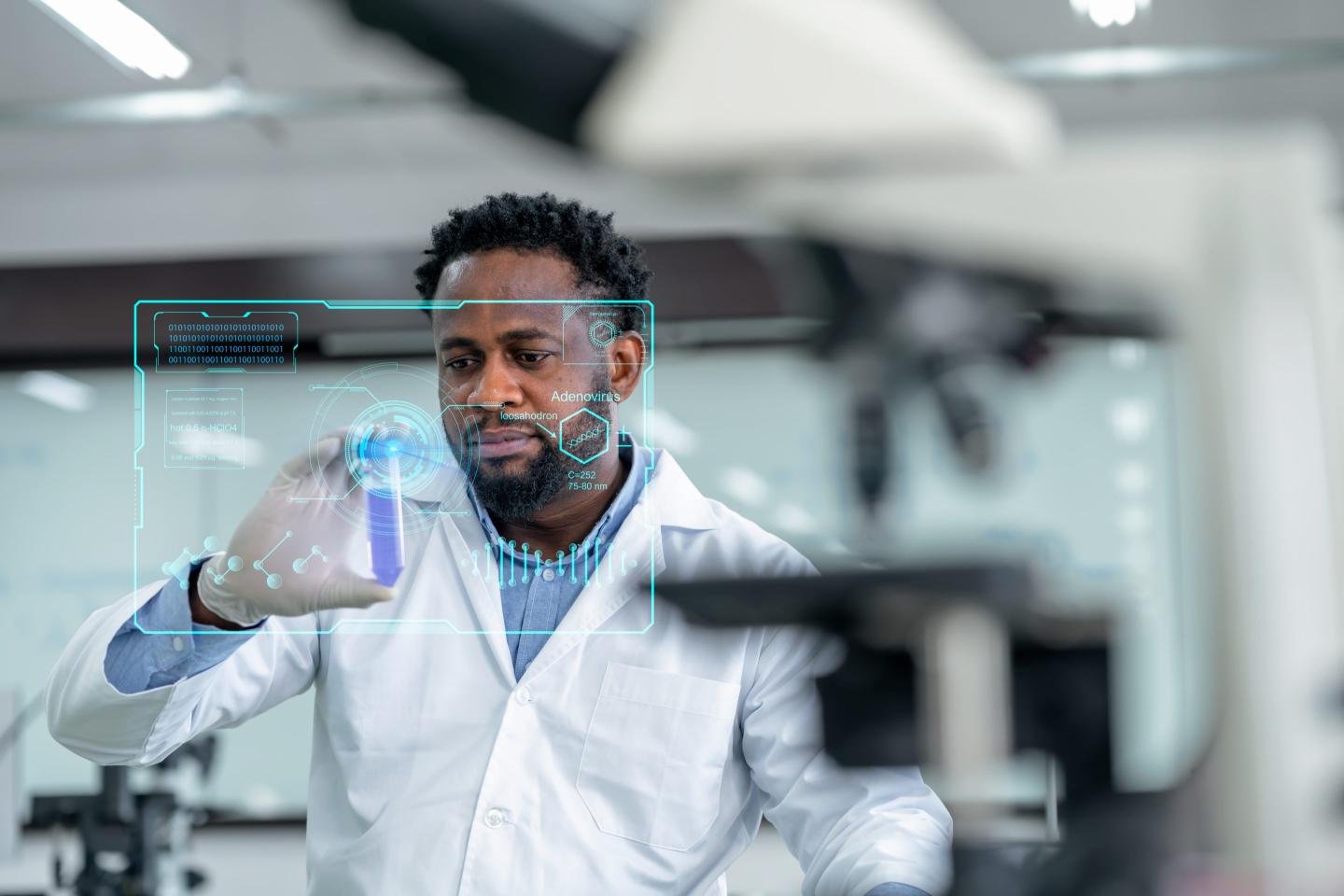
Digital technology is helping make clinical trials more equitable on a national and global basis.
Digital technology is helping make clinical trials more equitable on a national and global basis.Getty Images

The development of new medicines is a major reason medical science added 20 years to global life expectancy in the past century. But the pharmaceutical industry’s role as healer is sorely diminished if we don’t develop medicines fairly for everyone who needs them, regardless of income, gender, race, geography, or ability.

Recommended Video

Unless we bring medical innovations to everyone, everywhere, equally, we fail in a mission where failure is not an option.

Equity and diversity in clinical trials—the gateways to new medicines—benefit both patients and our business. We do the most good and generate better scientific insights by studying our medicines in populations representative of the people suffering from that disease. Accessing the totality of the patient pool lets us move medicines from trials to delivery faster.

The U.S. Food and Drug Administration has taken note. The FDA has published draft guidance, and recent legislation has been signed into law on improving diversity in clinical trials. As such, pharmaceutical companies will be required to submit diversity plans for late-stage trials to improve enrollment for underrepresented groups and enhance health equity.

Making clinical trials representative of actual patients

In 2020, Bristol Myers Squibb announced a five-year, $150 million program to address health disparities and improve clinical trial equity. We are seeing promising results.

Traditionally, most U.S. clinical trials take place in large teaching hospitals. To increase diversity, we used U.S. Census data to locate our research sites in highly diverse areas (places with highly diverse U.S. communities greater than 25%). Thanks to multiple efforts not limited to the work of community groups, local hospitals, and technology companies dedicated to health equity, as of October 2023, 62% of our active research sites are located in highly diverse communities.

Black men are 50% more likely than white men to develop prostate cancer, and twice as likely to die from it. Yet clinical trials for prostate cancer treatments historically enroll just 9% Black men.

Working with Black Health Matters to design trials and create appropriate educational and recruitment materials, BMS has doubled the number of Black men enrolled in BMS prostate cancer trials.

In partnership with Disability Solutions, BMS is understanding the challenges that traditionally underrepresented people with intellectual, developmental, and physical disabilities are facing when participating in a clinical trial. BMS is also working to understand the needs of the LGBTQI+ by allowing adult patients in the U.S. to self-identify their sexual orientation, gender identity, and intersex status.

Crucial to our mission has been our work to build trust in communities that have historically been resistant to signing up for trials.

To foster and sustain that trust, the Bristol Myers Squibb Foundation, a separate entity from BMS, has pledged $100 million to cosponsor the Robert A. Winn Diversity in Clinical Trials Award Program to train, develop, and mentor nearly 600 diverse and community-oriented clinical trialists and medical students by 2027.

Technology + humanity = equity

The desire for parity is the starting point, but it’s advances in technology that are helping make equity real.

When the COVID pandemic kept patients from clinical trial sites, we learned how to remotely analyze electronic health records and other data to keep trials going. We realized the technology also allowed us to enroll a patient population that looked more like the real world.

On the near horizon are clinical trial “digital twins”—virtual representations of patients built on historical data and analyzed by artificial intelligence. Digital twins will allow us to simulate the biological processes and outcomes of human patients, expanding our capability to recruit widely diverse populations for trials.

Digital technology is helping make clinical trials more equitable on a national and global basis.

In the U.S., we’re connecting underserved and understaffed community hospitals virtually with medical specialists who not only conduct and evaluate trials but help treat current patients.

Globally, we’re working with technology companies to design inclusive trials and recruit diverse participants in both developed and low- and middle-income nations around the world.

We’ve made encouraging progress, but more work remains. Clinical trial participants industrywide are 75% white, 11% Hispanic, 8% Black, and 6% Asian. Our industry can and must do better.

‘Who are you working for?’

One consistent mantra at BMS is the question, “Who are you working for?” It’s a deeply personal way to connect each of us to our core mission: delivering medicines to help patients prevail over disease.

Every one of our 34,000 colleagues has a family member or a friend urgently waiting for necessary medicine.

In a larger sense, the answer to “Who are you working for?” is the unknown patient anywhere in the world suffering from illness and looking to medical science for relief.

For me, there’s an additional layer. One reason I devoted my term as BMS CEO to equity and diversity is the unique responsibility of my job.

Being a CEO isn’t necessarily 10 times as hard or 10 times as demanding as previous roles I had. The main difference is the sense of accountability that comes with the office. When I was CEO, I had responsibility in some ways for what happens to 34,000 families. And, of course, the millions of patients depending on us to help them triumph over illness and disease.

Giovanni Caforio, MD, is executive chairman of Bristol Myers Squibb. Bristol Myers Squibb is a partner of Fortune’s Brainstorm Health and CEO Initiative.

Join us at the Fortune Workplace Innovation Summit May 19–20, 2026, in Atlanta. The next era of workplace innovation is here—and the old playbook is being rewritten. At this exclusive, high-energy event, the world’s most innovative leaders will convene to explore how AI, humanity, and strategy converge to redefine, again, the future of work. Register now.
About the Author
By Giovanni Caforio, MD
See full bioRight Arrow Button Icon

Latest in Commentary

Finance
Lorem ipsum dolor sit amet, consectetur adipiscing elit, sed do eiusmod tempor incididunt ut labore et dolore magna aliqua. Ut enim ad minim veniam
By Fortune Editors
October 20, 2025
Finance
Lorem ipsum dolor sit amet, consectetur adipiscing elit, sed do eiusmod tempor incididunt ut labore et dolore magna aliqua. Ut enim ad minim veniam
By Fortune Editors
October 20, 2025
Finance
Lorem ipsum dolor sit amet, consectetur adipiscing elit, sed do eiusmod tempor incididunt ut labore et dolore magna aliqua. Ut enim ad minim veniam
By Fortune Editors
October 20, 2025
Finance
Lorem ipsum dolor sit amet, consectetur adipiscing elit, sed do eiusmod tempor incididunt ut labore et dolore magna aliqua. Ut enim ad minim veniam
By Fortune Editors
October 20, 2025
Finance
Lorem ipsum dolor sit amet, consectetur adipiscing elit, sed do eiusmod tempor incididunt ut labore et dolore magna aliqua. Ut enim ad minim veniam
By Fortune Editors
October 20, 2025
Finance
Lorem ipsum dolor sit amet, consectetur adipiscing elit, sed do eiusmod tempor incididunt ut labore et dolore magna aliqua. Ut enim ad minim veniam
By Fortune Editors
October 20, 2025

Most Popular

Finance
Lorem ipsum dolor sit amet, consectetur adipiscing elit, sed do eiusmod tempor incididunt ut labore et dolore magna aliqua. Ut enim ad minim veniam
By Fortune Editors
October 20, 2025
Finance
Lorem ipsum dolor sit amet, consectetur adipiscing elit, sed do eiusmod tempor incididunt ut labore et dolore magna aliqua. Ut enim ad minim veniam
By Fortune Editors
October 20, 2025
Finance
Lorem ipsum dolor sit amet, consectetur adipiscing elit, sed do eiusmod tempor incididunt ut labore et dolore magna aliqua. Ut enim ad minim veniam
By Fortune Editors
October 20, 2025
Finance
Lorem ipsum dolor sit amet, consectetur adipiscing elit, sed do eiusmod tempor incididunt ut labore et dolore magna aliqua. Ut enim ad minim veniam
By Fortune Editors
October 20, 2025
Finance
Lorem ipsum dolor sit amet, consectetur adipiscing elit, sed do eiusmod tempor incididunt ut labore et dolore magna aliqua. Ut enim ad minim veniam
By Fortune Editors
October 20, 2025
Finance
Lorem ipsum dolor sit amet, consectetur adipiscing elit, sed do eiusmod tempor incididunt ut labore et dolore magna aliqua. Ut enim ad minim veniam
By Fortune Editors
October 20, 2025
Rankings
  • 100 Best Companies
  • Fortune 500
  • Global 500
  • Fortune 500 Europe
  • Most Powerful Women
  • Future 50
  • World’s Most Admired Companies
  • See All Rankings
Sections
  • Finance
  • Leadership
  • Success
  • Tech
  • Asia
  • Europe
  • Environment
  • Fortune Crypto
  • Health
  • Retail
  • Lifestyle
  • Politics
  • Newsletters
  • Magazine
  • Features
  • Commentary
  • Mpw
  • CEO Initiative
  • Conferences
  • Personal Finance
  • Education
Customer Support
  • Frequently Asked Questions
  • Customer Service Portal
  • Privacy Policy
  • Terms Of Use
  • Single Issues For Purchase
  • International Print
Commercial Services
  • Advertising
  • Fortune Brand Studio
  • Fortune Analytics
  • Fortune Conferences
  • Business Development
About Us
  • About Us
  • Editorial Calendar
  • Press Center
  • Work At Fortune
  • Diversity And Inclusion
  • Terms And Conditions
  • Site Map
  • Facebook icon
  • Twitter icon
  • LinkedIn icon
  • Instagram icon
  • Pinterest icon

Most Popular

placeholder alt text
Economy
An unusual Fed ‘rate check’ triggered a free fall in the U.S. dollar and investors are fleeing into gold
By Jim EdwardsJanuary 26, 2026
24 hours ago
placeholder alt text
Success
Despite running $75 billion automaker General Motors, CEO Mary Barra still responds to ‘every single letter’ she gets by hand
By Preston ForeJanuary 26, 2026
19 hours ago
placeholder alt text
Success
'The Bermuda Triangle of Talent': 27-year-old Oxford grad turned down McKinsey and Morgan Stanley to find out why Gen Z’s smartest keep selling out
By Eva RoytburgJanuary 25, 2026
2 days ago
placeholder alt text
Commentary
Yes, you're getting a bigger tax refund. Your kids won't thank you for the $3 trillion it's adding to the deficit
By Daniel BunnJanuary 26, 2026
22 hours ago
placeholder alt text
North America
Gates Foundation plans to give away $9 billion in 2026 to prepare for the 2045 closure while slashing hundreds of jobs
By Sydney LakeJanuary 23, 2026
4 days ago
placeholder alt text
Personal Finance
Sweden abolished its wealth tax 20 years ago. Then it became a 'paradise for the super-rich'
By Miranda Sheild Johansson and The ConversationJanuary 22, 2026
5 days ago

© 2026 Fortune Media IP Limited. All Rights Reserved. Use of this site constitutes acceptance of our Terms of Use and Privacy Policy | CA Notice at Collection and Privacy Notice | Do Not Sell/Share My Personal Information
FORTUNE is a trademark of Fortune Media IP Limited, registered in the U.S. and other countries. FORTUNE may receive compensation for some links to products and services on this website. Offers may be subject to change without notice.


Latest in Commentary

taxes
CommentaryTaxes
Yes, you’re getting a bigger tax refund. Your kids won’t thank you for the $3 trillion it’s adding to the deficit
By Daniel BunnJanuary 26, 2026
22 hours ago
dewar
CommentaryLeadership
When companies take off like a rocket, how can founders steer the ship?
By Carolyn DewarJanuary 24, 2026
3 days ago
shubham
CommentaryConsulting
When AI meets healthcare, how should payers react? 
By Shubham SinghalJanuary 23, 2026
4 days ago
sternfels
CommentaryConsulting
AI makes human intelligence more important, not less 
By Bob Sternfels and Lucy PerezJanuary 22, 2026
5 days ago
wendy
CommentarySmall Business
Built to last: governance for multigenerational family businesses 
By Wendy StewartJanuary 22, 2026
5 days ago
acunto
CommentaryLeadership
I’m the Napster CEO and I agree with Pinterest: the Napster phase of AI needs to end
By John AcuntoJanuary 22, 2026
5 days ago