• Home
  • Latest
  • Fortune 500
  • Finance
  • Tech
  • Leadership
  • Lifestyle
  • Rankings
  • Multimedia
FinanceTaxes
Europe

Minimum 15% global corporate tax has so many loopholes it will only generate half the revenue expected, report warns

By
Paul Wiseman
Paul Wiseman
and
The Associated Press
Down Arrow Button Icon
By
Paul Wiseman
Paul Wiseman
and
The Associated Press
Down Arrow Button Icon
October 23, 2023, 4:54 AM ET
An agreement to weed out global tax havens and force multinational corporations, among them Apple and Nike, to pay a minimum tax has been weakened by loopholes and will raise only a fraction of the revenue that was envisioned, a tax watchdog backed by the European Union has warned.
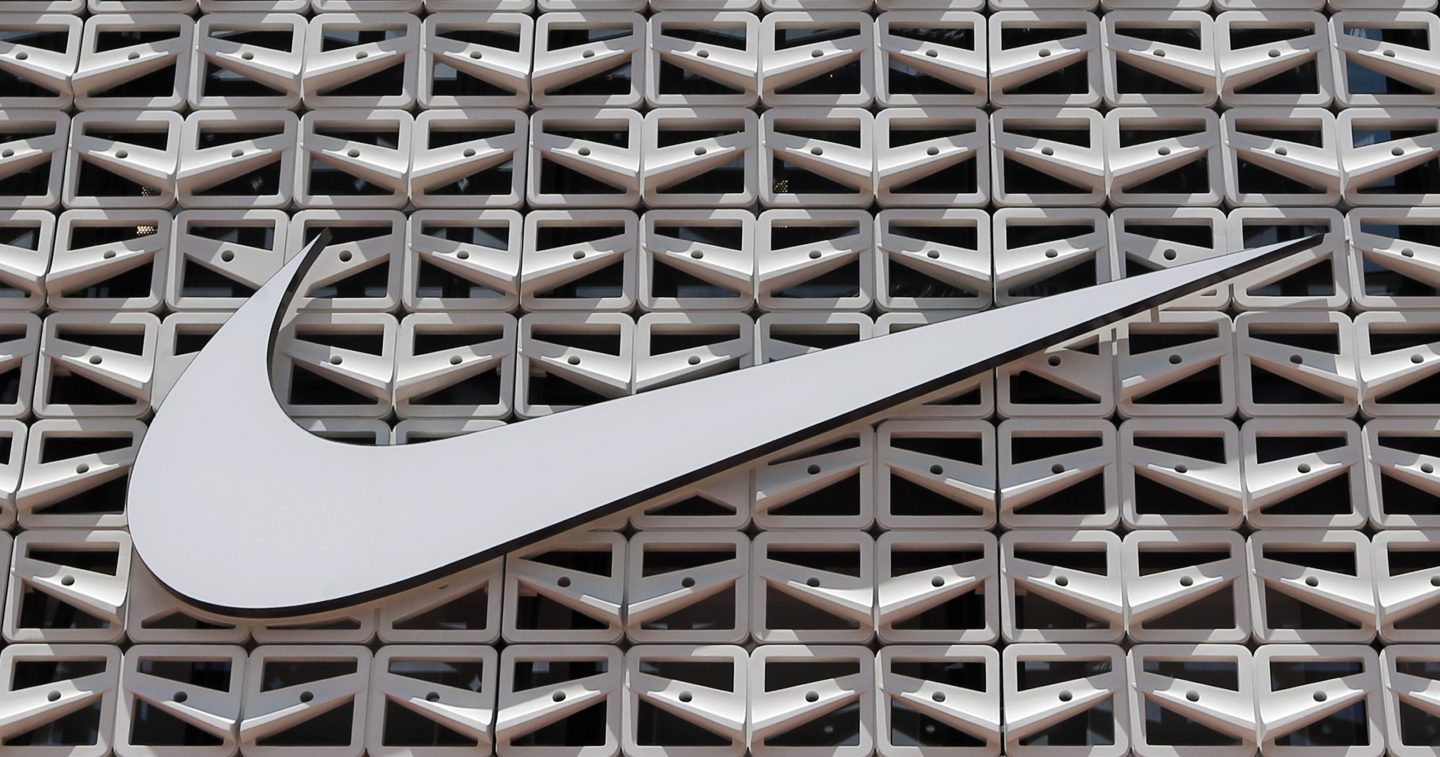
An agreement to weed out global tax havens and force multinational corporations, among them Apple and Nike, to pay a minimum tax has been weakened by loopholes and will raise only a fraction of the revenue that was envisioned, a tax watchdog backed by the European Union has warned.Alan Diaz—AP

An ambitious 2021 agreement by more than 140 countries and territories to weed out tax havens and force multinational corporations to pay a minimum tax has been weakened by loopholes and will raise only a fraction of the revenue that was envisioned, a tax watchdog backed by the European Union has warned.

Recommended Video

The landmark agreement, brokered by the Organization for Economic Cooperation and Development, set a minimum global corporate tax of 15%. The idea was to stop multinational corporations, among them Apple and Nike, from using accounting and legal maneuvers to shift earnings to low- or no-tax havens.

Those havens are typically places like Bermuda and the Cayman Islands where the companies actually do little or no business. The companies’ maneuvers result in lost tax revenue of $100 billion to $240 billion a year, the OECD has said.

According to the report, being released Monday by the EU Tax Observatory, the agreement was expected to raise an amount equal to nearly 10% of global corporate tax revenue. Instead, because the plan has been weakened, it says the minimum tax will generate only half that — less than 5% of corporate tax revenue.

Much of the hoped-for revenue has been drained away by loopholes, some of them introduced as the OECD has been refining details of the agreement, which has yet to take effect. The watchdog group estimates that a 15% minimum tax could have raised roughly $270 billion in 2023. With the loopholes, it says, that figure drops to about $136 billion.

Over the summer, the OECD agreed to delay for at least a year — until 2026 — a provision that would have let foreign countries impose additional taxes on U.S. multinational companies that failed to pay at least a 15% rate on their overseas earnings.

The EU Tax Observatory noted that even under the rules of the 2021 agreement, companies would maintain some ability to evade taxes. Companies that have tangible businesses — factories, warehouses, stores and offices — operating in a particular country, for example, could continue to pay a tax rate below 15%. That carveout, the EU Tax Observatory warned, could “give firms incentives to move production to countries with tax rates below 15%.”

“This risks exacerbating the race-to-the-bottom with corporate income tax rates,” it said.

Another loophole lets countries offer tax credits, for such things as conducting research and investing in local factories, that can reduce companies’ tax rates below the 15% mark and still comply with the 2021 agreement.

The Tax Observatory also expressed concern that the race by governments to grant tax breaks for green technologies to fight climate change “raises some of the same issues as standard tax competition. It depletes government revenues.”

It also “risks increasing inequality by boosting the after-tax profits of shareholders, who tend to be towards the top of the income distribution,” it said.

The EU Tax Observatory isn’t calling for an outright ban on green-technology subsidies. But it is urging governments to consider other policies to offset the financial gains to the wealthy from such tax breaks.

The group said that multinational corporations shifted $1 trillion — 35% of the profits they earned outside their home countries — to tax havens. American companies account for about 40% of such global profit shifting.

Last week, U.S. Treasury Secretary Janet Yellen said the minimum-tax agreement wouldn’t be finalized until 2024.

“There are some matters that are important to the United States and other countries that remain unresolved — open issues that still must be resolved before the treaty can be signed,″ she said after meeting with European finance ministers.

The EU Tax Observatory is run by Gabriel Zucman, a leading economist and tax-and-inequality researcher of the Paris School of Economics and the University of California, Berkeley. Its report is based on the work of more than 100 researchers around the world who often work with government tax agencies. It draws upon new sources of data on multinational corporate finances and offshore wealth held by corporations.

Despite its criticisms of what has happened to the minimum tax, the EU Tax Observatory praised a separate effort to stop the wealthy from dodging taxes. In 2017, tax authorities around the world began exchanging taxpayer information from financial institutions to better enforce tax laws. The results, essentially ending bank secrecy, have been dramatic, the Tax Observatory found.

Until the “automatic information exchange,’’ was introduced, it said, virtually all wealth that the world’s rich held offshore went untaxed. Now, only 25% escapes taxes.

Still, the group says, “the effective tax rates of billionaires appear significantly lower than those of all other groups of the population’’ because the richest use tax-avoidance schemes. In the United States, it says, billionaires pay an effective average tax rate of 23%, including all taxes at all levels of government. The poorest 10% of Americans pay more – 25.6%.

The EU Tax Observatory is calling for a 2% global tax on billionaires’ wealth, a proposal it says would raise $250 billion annually from fewer than 3,000 people.


Join us at the Fortune Workplace Innovation Summit May 19–20, 2026, in Atlanta. The next era of workplace innovation is here—and the old playbook is being rewritten. At this exclusive, high-energy event, the world’s most innovative leaders will convene to explore how AI, humanity, and strategy converge to redefine, again, the future of work. Register now.
About the Authors
By Paul Wiseman
See full bioRight Arrow Button Icon
By The Associated Press
See full bioRight Arrow Button Icon

Latest in Finance

InvestingStock
There have been head fakes before, but this time may be different as the latest stock rotation out of AI is just getting started, analysts say
By Jason MaDecember 13, 2025
45 minutes ago
Politicsdavid sacks
Can there be competency without conflict in Washington?
By Alyson ShontellDecember 13, 2025
1 hour ago
Investingspace
SpaceX sets $800 billion valuation, confirms 2026 IPO plans
By Loren Grush, Edward Ludlow and BloombergDecember 13, 2025
2 hours ago
PoliticsAffordable Care Act (ACA)
With just days to go before ACA subsidies expire, Congress is about to wrap up its work with no consensus solution in sight
By Kevin Freking, Lisa Mascaro and The Associated PressDecember 13, 2025
2 hours ago
InnovationRobots
Even in Silicon Valley, skepticism looms over robots, while ‘China has certainly a lot more momentum on humanoids’
By Matt O'Brien and The Associated PressDecember 13, 2025
3 hours ago
HealthAffordable Care Act (ACA)
A Wisconsin couple was paying $2 a month for an ACA health plan. But as subsidies expire, it’s soaring to $1,600, forcing them to downgrade
By Ali Swenson and The Associated PressDecember 13, 2025
3 hours ago

Most Popular

placeholder alt text
Economy
Tariffs are taxes and they were used to finance the federal government until the 1913 income tax. A top economist breaks it down
By Kent JonesDecember 12, 2025
1 day ago
placeholder alt text
Success
Apple cofounder Ronald Wayne sold his 10% stake for $800 in 1976—today it’d be worth up to $400 billion
By Preston ForeDecember 12, 2025
1 day ago
placeholder alt text
Success
40% of Stanford undergrads receive disability accommodations—but it’s become a college-wide phenomenon as Gen Z try to succeed in the current climate
By Preston ForeDecember 12, 2025
1 day ago
placeholder alt text
Economy
The Fed just ‘Trump-proofed’ itself with a unanimous move to preempt a potential leadership shake-up
By Jason MaDecember 12, 2025
21 hours ago
placeholder alt text
Economy
For the first time since Trump’s tariff rollout, import tax revenue has fallen, threatening his lofty plans to slash the $38 trillion national debt
By Sasha RogelbergDecember 12, 2025
23 hours ago
placeholder alt text
Success
At 18, doctors gave him three hours to live. He played video games from his hospital bed—and now, he’s built a $10 million-a-year video game studio
By Preston ForeDecember 10, 2025
3 days ago
Rankings
  • 100 Best Companies
  • Fortune 500
  • Global 500
  • Fortune 500 Europe
  • Most Powerful Women
  • Future 50
  • World’s Most Admired Companies
  • See All Rankings
Sections
  • Finance
  • Leadership
  • Success
  • Tech
  • Asia
  • Europe
  • Environment
  • Fortune Crypto
  • Health
  • Retail
  • Lifestyle
  • Politics
  • Newsletters
  • Magazine
  • Features
  • Commentary
  • Mpw
  • CEO Initiative
  • Conferences
  • Personal Finance
  • Education
Customer Support
  • Frequently Asked Questions
  • Customer Service Portal
  • Privacy Policy
  • Terms Of Use
  • Single Issues For Purchase
  • International Print
Commercial Services
  • Advertising
  • Fortune Brand Studio
  • Fortune Analytics
  • Fortune Conferences
  • Business Development
About Us
  • About Us
  • Editorial Calendar
  • Press Center
  • Work At Fortune
  • Diversity And Inclusion
  • Terms And Conditions
  • Site Map

© 2025 Fortune Media IP Limited. All Rights Reserved. Use of this site constitutes acceptance of our Terms of Use and Privacy Policy | CA Notice at Collection and Privacy Notice | Do Not Sell/Share My Personal Information
FORTUNE is a trademark of Fortune Media IP Limited, registered in the U.S. and other countries. FORTUNE may receive compensation for some links to products and services on this website. Offers may be subject to change without notice.