Saudi Arabia and Israel had seemingly been edging closer to a landmark deal to normalize their diplomatic relations – and then the Hamas attack on Oct. 7, 2023, happened.
Since then, thousands have died in Gaza and in Israel. And fears of the conflict spreading across the region form the backdrop to frenzied diplomacy across the region, including a visit to Israel by U.S. President Joe Biden on Oct. 18.
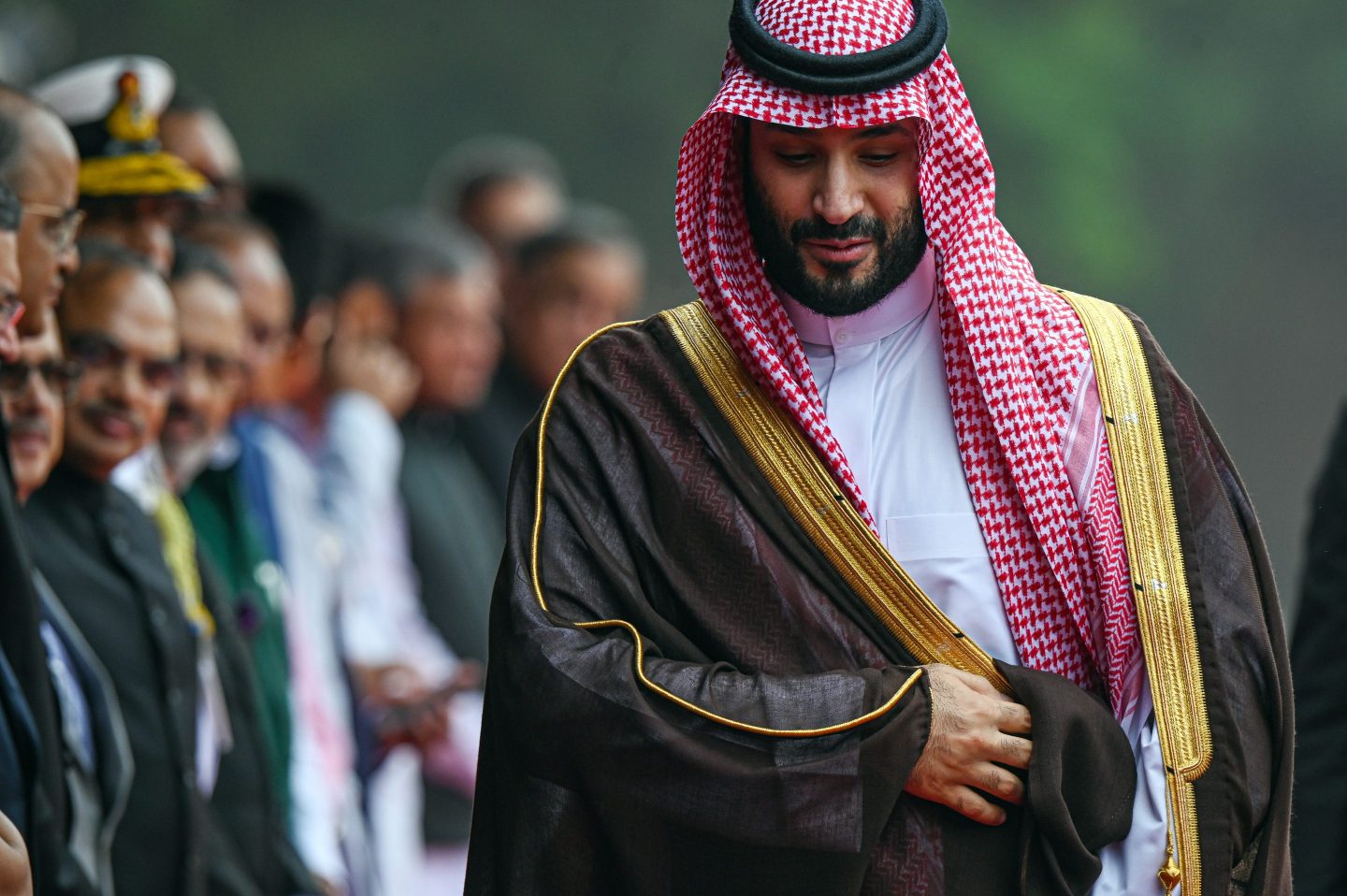
It also threatens to undermine a key pillar of Saudi Arabia’s foreign and domestic agenda: the “de-risking” of the region. With Saudi Crown Prince Mohammed bin Salman set on implementing “Vision 2030” – an ambitious economic, social and cultural program – and developing the kingdom as a destination for tourism and investment, a renewal of regional instability is the last thing the crown prince needs.
De-escalating tensions
Certainly, the escalating violence in the Middle East presents a challenge to the shift toward de-escalation of tensions across much of the broader region in recent years.
This has included the signing of the Abraham Accords in 2020, which established diplomatic relations between Israel and the United Arab Emirates, Bahrain and Morocco. But it goes further, including multiple-state treaties that have healed rifts across the Gulf, culminating in the signing of a deal in March 2023 to restore Saudi-Iranian relations.
These diplomatic breakthroughs opened up a space for greater regional cooperation through initiatives such as the India-Middle East-Europe Economic Corridor unveiled at the G20 meeting in India in September 2023.
The hope of officials across the region was that economic development could integrate the region and move discussion away from the failure to make progress on resolving the Israeli-Palestinian issue.
The Palestinian question
Violence in Israel and Gaza threatens to knock Gulf states off a delicate balancing act of supporting the Palestinian cause in front of their largely Muslim populations while also making overtures to Israel and the U.S.
Qatar, for example, has long hosted the political leaders of Hamas while remaining on friendly terms with the U.S.. It will now likely face significant Israeli and U.S. pressure to expel Hamas leadership.
The UAE and Bahrain both normalized relations with Israel in 2020, along with Morocco. But public support for the Abraham Accords across the region was always lukewarm at best and may now dwindle away.
Meanwhile, Dubai, the UAE’s largest city, is gearing up to host COP28, the international climate change conference, starting Nov. 30. The UAE will not want the event overshadowed or put at risk by a new regional war.
Reaching out to Israel
But nowhere is the tightrope more delicate than in Saudi Arabia. This is by virtue of the kingdom’s religious standing in the Islamic world – it is custodian of the faith’s two most holy sites, Mecca and Medina – and the ambitious raft of economic reforms the kingdom has rolled out as part of Vision 2030.
The campaign for Palestinian statehood has long been a cause célèbre in the Muslim world, and the current king of Saudi Arabia, Salman bin Abdulaziz Al Saud, has been a staunch supporter of Palestine all his life.
But his son and heir, the crown prince, has increasingly shown an interest in dialogue with Israel. This has culminated in the talks to “normalize” relations between the two countries – something that would represent a historic breakthrough in Israel’s acceptance within the Arab and Islamic world. As recently as Sept. 20, Crown Prince Mohammed told Fox News that “every day, we get closer” to a deal.
Indeed, a series of leaks to U.S. media in the days and weeks prior to the Hamas attack suggested that the outlines of an agreement were taking shape, driven by the Biden administration.
Public shows, private diplomacy
But the Hamas attack and Israel’s response have punctured this momentum. Saudi sources briefed the media on Oct. 13 that talks on normalization had been paused – but not abandoned.
Such messaging is in line with Saudi attempts to balance domestic and external interests. An initial Saudi Foreign Ministry statement on Oct. 7 appealed to both the “Palestinian factions” and “Israeli occupation forces” to de-escalate. But at the first Friday prayer at the Grand Mosque in Mecca after the attacks, Saudi authorities were more forthcoming in taking sides, with the state-appointed cleric urging support for “our brothers in Palestine.”
Behind the public shows of support for Palestinians, there is evidence that Saudis are trying to spearhead diplomatic efforts to prevent the war between Israel ad Hamas from developing into a wider conflagration that might bring in Lebanon, Iran and others.
On Oct. 12, Crown Prince Mohammed discussed the unfolding developments in Israel and Gaza with Iranian President Ebrahim Raisi – their first conversation since ties between the two countries were restored in March.
Three days later, the crown prince received U.S. Secretary of State Antony Blinken in Riyadh amid media reports of differences between the Saudi and U.S. positions on the conflict and the need for de-escalation.
Oil and foreign investment
Such diplomatic moves fall in line with the crown prince’s desire to “de-risk” the region. He is eager to see that nothing jeopardizes a series of “giga-projects” – such as Neom, the futuristic new city on the Red Sea coastline – that have become synonymous with Vision 2030.
The Saudi fear is that a prolonged or regional conflict will deter foreign investment in Vision 2030.
Foreign investment was seen as key to the project’s success. But levels of foreign investment plunged after the detention by the Saudi authorities of dozens of senior Saudi business figures at the Ritz-Carlton hotel in 2017 over allegations of corruption. Investors took fright at the prospect that their business partners might suddenly disappear or be shaken down.
As a result, the Saudis are having to shoulder a greater proportion of the costs of Vision 2030 themselves. This explains why Saudi officials have cooperated with their Russian counterparts in OPEC+ meetings to keep the price of oil at a level high enough to generate enough revenues to fund the projects.
Vision 2030 has become so bound up with Crown Prince Mohammed’s pledge to transform Saudi Arabia that he cannot afford for it to fail – hence his determination to reduce sources of regional tension, including with Iran.
Saudi officials also recently revised their plans to attract 100 million visitors a year by 2030 upward to 150 million and launched a bid to host the 2034 FIFA World Cup.
Underlying these initiatives is the Saudis’ desire to diversify the kingdom’s economy away from an overdependence on oil, turning the kingdom into a destination for capital and people alike. These ambitions would be endangered by another regional war in the Middle East – especially if it drew in Iran.
Playing the ‘normalization’ card
So where does the “normalization” of Saudi-Israeli relations go from here?
Putting the process on ice – for now – fits Crown Prince Mohammed’s careful balancing act. Proceeding at full speed would have risked blowback from other Arab and Middle Eastern states, undermining the process of “de-risking” of the region.
It also may provide Saudi Arabia with greater leverage – Israel and the U.S. will be keen that the current violence does not derail the process entirely.
So pausing the process, I argue, now makes tactical sense for Saudi Arabia, given the outpouring of anger in the Islamic world at developments in Gaza – and it provides the Saudi leadership with an opportunity to control the next phase of what remains an extremely delicate endeavour.
Kristian Coates Ulrichsen is Fellow for the Middle East at the Baker Institute, Rice University.
This article is republished from The Conversation under a Creative Commons license. Read the original article.