• Home
  • Latest
  • Fortune 500
  • Finance
  • Tech
  • Leadership
  • Lifestyle
  • Rankings
  • Multimedia

Trendingnow

1

'The demographic dividend of the last 40 years is ending': J.P. Morgan says the world is running out of the two things that kept interest rates down

2

Jensen Huang made his $172 billion fortune on AI chips. His family's $75 million gift to Vanderbilt argues art decides what technology is for

3

Current price of oil as of July 24, 2026

1

'The demographic dividend of the last 40 years is ending': J.P. Morgan says the world is running out of the two things that kept interest rates down

2

Jensen Huang made his $172 billion fortune on AI chips. His family's $75 million gift to Vanderbilt argues art decides what technology is for

3

Current price of oil as of July 24, 2026
TechAI

The robot that NASA sent to Mars shows the solution for the AI ‘replacement myth’ and ‘ghost work,’ says an author who embedded with the Rover team

By
Janet Vertesi
Janet Vertesi
and
The Conversation
The Conversation
Down Arrow Button Icon
By
Janet Vertesi
Janet Vertesi
and
The Conversation
The Conversation
Down Arrow Button Icon
September 24, 2023, 8:30 AM ET
NASA Mars Rover
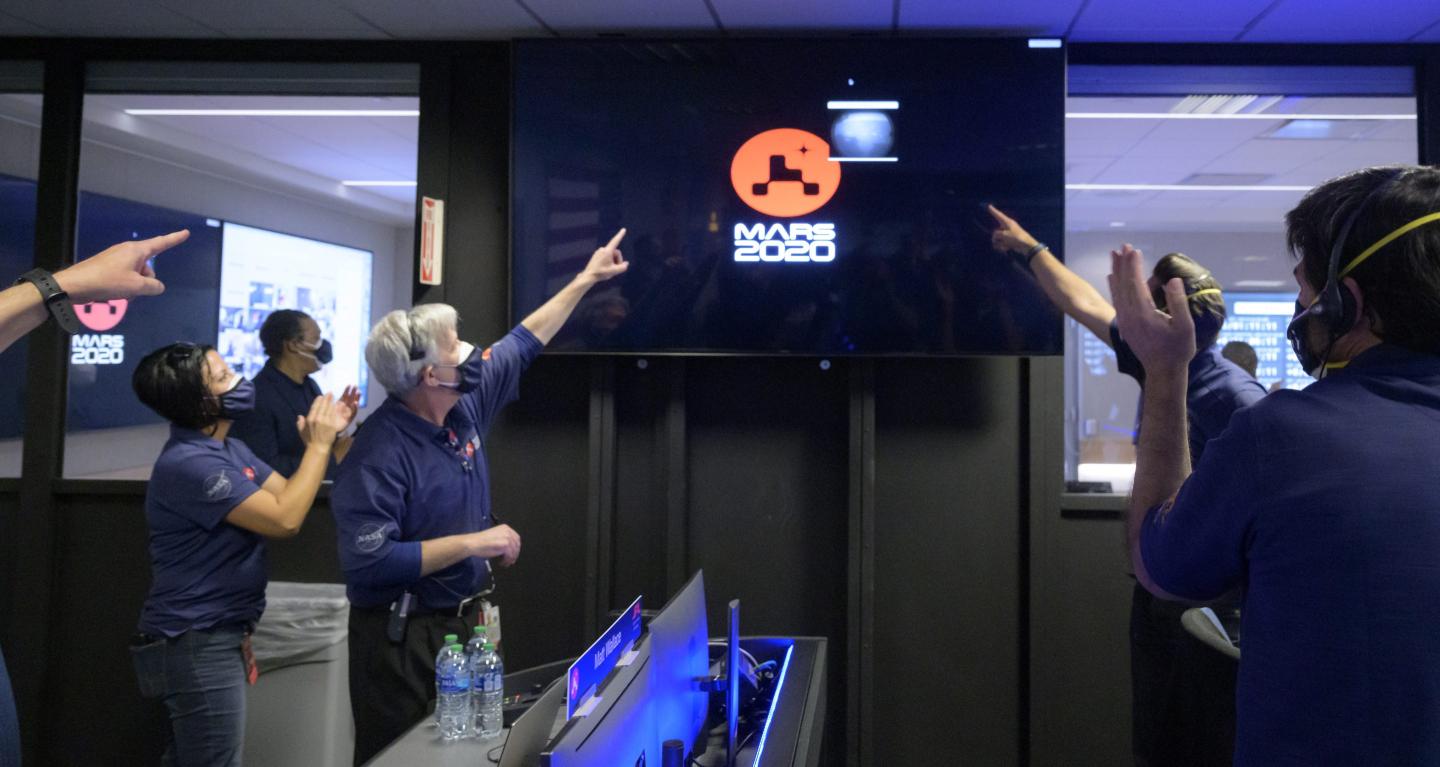
In this handout image provided by NASA, members of NASA's Perseverance rover team react as the first images arrive moments after the spacecraft successfully touched down on Mars, February 18, 2021 at NASA's Jet Propulsion Laboratory in Pasadena, California. Bill Ingalls/NASA via Getty Images
Add Fortune on Google for similar content.

Since ChatGPT’s release in late 2022, many news outlets have reported on the ethical threats posed by artificial intelligence. Tech pundits have issued warnings of killer robots bent on human extinction, while the World Economic Forum predicted that machines will take away jobs.

Recommended Video

The tech sector is slashing its workforce even as it invests in AI-enhanced productivity tools. Writers and actors in Hollywood are on strike to protect their jobs and their likenesses. And scholars continue to show how these systems heighten existing biases or create meaningless jobs – amid myriad other problems.

There is a better way to bring artificial intelligence into workplaces. I know, because I’ve seen it, as a sociologist who works with NASA’s robotic spacecraft teams.

The scientists and engineers I study are busy exploring the surface of Mars with the help of AI-equipped rovers. But their job is no science fiction fantasy. It’s an example of the power of weaving machine and human intelligence together, in service of a common goal.

Instead of replacing humans, these robots partner with us to extend and complement human qualities. Along the way, they avoid common ethical pitfalls and chart a humane path for working with AI.

The replacement myth in AI

Stories of killer robots and job losses illustrate how a “replacement myth” dominates the way people think about AI. In this view, humans can and will be replaced by automated machines.

Amid the existential threat is the promise of business boons like greater efficiency, improved profit margins and more leisure time.

Empirical evidence shows that automation does not cut costs. Instead, it increases inequality by cutting out low-status workers and increasing the salary cost for high-status workers who remain. Meanwhile, today’s productivity tools inspire employees to work more for their employers, not less.

Alternatives to straight-out replacement are “mixed autonomy” systems, where people and robots work together. For example, self-driving cars must be programmed to operate in traffic alongside human drivers. Autonomy is “mixed” because both humans and robots operate in the same system, and their actions influence each other.

However, mixed autonomy is often seen as a step along the way to replacement. And it can lead to systems where humans merely feed, curate or teach AI tools. This saddles humans with “ghost work” – mindless, piecemeal tasks that programmers hope machine learning will soon render obsolete.

Replacement raises red flags for AI ethics. Work like tagging content to train AI or scrubbing Facebook posts typically features traumatic tasks and a poorly paid workforce spread across the Global South. And legions of autonomous vehicle designers are obsessed with “the trolley problem” – determining when or whether it is ethical to run over pedestrians.

But my research with robotic spacecraft teams at NASA shows that when companies reject the replacement myth and opt for building human-robot teams instead, many of the ethical issues with AI vanish.

Extending rather than replacing

Strong human-robot teams work best when they extend and augment human capabilities instead of replacing them. Engineers craft machines that can do work that humans cannot. Then, they weave machine and human labor together intelligently, working toward a shared goal.

Often, this teamwork means sending robots to do jobs that are physically dangerous for humans. Minesweeping, search-and-rescue, spacewalks and deep-sea robots are all real-world examples.

Teamwork also means leveraging the combined strengths of both robotic and human senses or intelligences. After all, there are many capabilities that robots have that humans do not – and vice versa.

For instance, human eyes on Mars can only see dimly lit, dusty red terrain stretching to the horizon. So engineers outfit Mars rovers with camera filters to “see” wavelengths of light that humans can’t see in the infrared, returning pictures in brilliant false colors.

Meanwhile, the rovers’ onboard AI cannot generate scientific findings. It is only by combining colorful sensor results with expert discussion that scientists can use these robotic eyes to uncover new truths about Mars.

Respectful data

Another ethical challenge to AI is how data is harvested and used. Generative AI is trained on artists’ and writers’ work without their consent, commercial datasets are rife with bias, and ChatGPT “hallucinates” answers to questions.

The real-world consequences of this data use in AI range from lawsuits to racial profiling.

Robots on Mars also rely on data, processing power and machine learning techniques to do their jobs. But the data they need is visual and distance information to generate driveable pathways or suggest cool new images.

By focusing on the world around them instead of our social worlds, these robotic systems avoid the questions around surveillance, bias and exploitation that plague today’s AI.

The ethics of care

Robots can unite the groups that work with them by eliciting human emotions when integrated seamlessly. For example, seasoned soldiers mourn broken drones on the battlefield, and families give names and personalities to their Roombas.

I saw NASA engineers break down in anxious tears when the rovers Spirit and Opportunity were threatened by Martian dust storms.

Unlike anthropomorphism – projecting human characteristics onto a machine – this feeling is born from a sense of care for the machine. It is developed through daily interactions, mutual accomplishments and shared responsibility.

When machines inspire a sense of care, they can underline – not undermine – the qualities that make people human.

A better AI is possible

In industries where AI could be used to replace workers, technology experts might consider how clever human-machine partnerships could enhance human capabilities instead of detracting from them.

Script-writing teams may appreciate an artificial agent that can look up dialog or cross-reference on the fly. Artists could write or curate their own algorithms to fuel creativity and retain credit for their work. Bots to support software teams might improve meeting communication and find errors that emerge from compiling code.

Of course, rejecting replacement does not eliminate all ethical concerns with AI. But many problems associated with human livelihood, agency and bias shift when replacement is no longer the goal.

The replacement fantasy is just one of many possible futures for AI and society. After all, no one would watch “Star Wars” if the ‘droids replaced all the protagonists. For a more ethical vision of humans’ future with AI, you can look to the human-machine teams that are already alive and well, in space and on Earth.

Janet Vertesi is Associate Professor of Sociology, Princeton University.

This article is republished from The Conversation under a Creative Commons license. Read the original article.

About the Authors
By Janet Vertesi
See full bioRight Arrow Button Icon
By The Conversation
See full bioRight Arrow Button Icon
Add Fortune on Google for similar content.

Latest in Tech

Finance
Lorem ipsum dolor sit amet, consectetur adipiscing elit, sed do eiusmod tempor incididunt ut labore et dolore magna aliqua. Ut enim ad minim veniam
By Fortune Editors
October 20, 2025
Finance
Lorem ipsum dolor sit amet, consectetur adipiscing elit, sed do eiusmod tempor incididunt ut labore et dolore magna aliqua. Ut enim ad minim veniam
By Fortune Editors
October 20, 2025
Finance
Lorem ipsum dolor sit amet, consectetur adipiscing elit, sed do eiusmod tempor incididunt ut labore et dolore magna aliqua. Ut enim ad minim veniam
By Fortune Editors
October 20, 2025
Finance
Lorem ipsum dolor sit amet, consectetur adipiscing elit, sed do eiusmod tempor incididunt ut labore et dolore magna aliqua. Ut enim ad minim veniam
By Fortune Editors
October 20, 2025
Finance
Lorem ipsum dolor sit amet, consectetur adipiscing elit, sed do eiusmod tempor incididunt ut labore et dolore magna aliqua. Ut enim ad minim veniam
By Fortune Editors
October 20, 2025
Finance
Lorem ipsum dolor sit amet, consectetur adipiscing elit, sed do eiusmod tempor incididunt ut labore et dolore magna aliqua. Ut enim ad minim veniam
By Fortune Editors
October 20, 2025

Most Popular

Finance
Lorem ipsum dolor sit amet, consectetur adipiscing elit, sed do eiusmod tempor incididunt ut labore et dolore magna aliqua. Ut enim ad minim veniam
By Fortune Editors
October 20, 2025
Finance
Lorem ipsum dolor sit amet, consectetur adipiscing elit, sed do eiusmod tempor incididunt ut labore et dolore magna aliqua. Ut enim ad minim veniam
By Fortune Editors
October 20, 2025
Finance
Lorem ipsum dolor sit amet, consectetur adipiscing elit, sed do eiusmod tempor incididunt ut labore et dolore magna aliqua. Ut enim ad minim veniam
By Fortune Editors
October 20, 2025
Finance
Lorem ipsum dolor sit amet, consectetur adipiscing elit, sed do eiusmod tempor incididunt ut labore et dolore magna aliqua. Ut enim ad minim veniam
By Fortune Editors
October 20, 2025
Finance
Lorem ipsum dolor sit amet, consectetur adipiscing elit, sed do eiusmod tempor incididunt ut labore et dolore magna aliqua. Ut enim ad minim veniam
By Fortune Editors
October 20, 2025
Finance
Lorem ipsum dolor sit amet, consectetur adipiscing elit, sed do eiusmod tempor incididunt ut labore et dolore magna aliqua. Ut enim ad minim veniam
By Fortune Editors
October 20, 2025
Fortune Secondary Logo
Rankings
  • 100 Best Companies
  • Fortune 500
  • Global 500
  • Fortune 500 Europe
  • Most Powerful Women
  • World's Most Admired Companies
  • See All Rankings
  • Lists Calendar
Sections
  • Finance
  • Fortune Crypto
  • Features
  • Leadership
  • Health
  • Commentary
  • Success
  • Retail
  • Mpw
  • Tech
  • Lifestyle
  • CEO Initiative
  • Asia
  • Politics
  • Conferences
  • Europe
  • Newsletters
  • Personal Finance
  • Environment
  • Magazine
  • Education
Customer Support
  • Frequently Asked Questions
  • Customer Service Portal
  • Privacy Policy
  • Terms Of Use
  • Single Issues For Purchase
  • International Print
Commercial Services
  • Advertising
  • Fortune Brand Studio
  • Fortune Analytics
  • Fortune Conferences
  • Business Development
  • Group Subscriptions
About Us
  • About Us
  • Press Center
  • Work At Fortune
  • Terms And Conditions
  • Site Map
  • About Us
  • Press Center
  • Work At Fortune
  • Terms And Conditions
  • Site Map
  • Facebook icon
  • Twitter icon
  • LinkedIn icon
  • Instagram icon
  • TikTok icon
  • YouTube icon

Latest in Tech

Roderick Wong, MD is Managing Partner and Chief Investment Officer of RTW Investments
Commentary250 Years of Innovation
When 10,000 doctors stood up and cheered for a cancer drug — America’s innovation machine made it possible
By Roderick WongJuly 25, 2026
2 hours ago
m
Commentarydisruption
The Messi Test and how the Spaniards messed with it: what the World Cup final taught me about the Jobs AI can’t touch
By Bhaskar ChakravortiJuly 25, 2026
2 hours ago
What it’s like to be a founder of the most high-stakes startup ever, OpenAI
AIOpenAI
What it’s like to be a founder of the most high-stakes startup ever, OpenAI
By Alyson ShontellJuly 25, 2026
4 hours ago
SpaceX may have missed its window to buy Tesla
Big TechTech Companies
SpaceX may have missed its window to buy Tesla
By Shawn TullyJuly 25, 2026
5 hours ago
alex
CommentaryEntrepreneurship
I sold my startup for millions without a single dollar in revenue. Here’s why that’s the point
By Alexander Kardos-NyheimJuly 25, 2026
6 hours ago
Google logo is displayed on a smartphone in front of the EU Flag.
CybersecurityGoogle
EU strikes Google with $1 billion fine in major crackdown on antitrust regulations even as Trump threatens retaliation
By The Associated Press and Sam McNeilJuly 24, 2026
17 hours ago

Most Popular

'The demographic dividend of the last 40 years is ending': J.P. Morgan says the world is running out of the two things that kept interest rates down
Economy
'The demographic dividend of the last 40 years is ending': J.P. Morgan says the world is running out of the two things that kept interest rates down
By Eleanor PringleJuly 24, 2026
1 day ago
Jensen Huang made his $172 billion fortune on AI chips. His family's $75 million gift to Vanderbilt argues art decides what technology is for
Big Tech
Jensen Huang made his $172 billion fortune on AI chips. His family's $75 million gift to Vanderbilt argues art decides what technology is for
By Sydney LakeJuly 23, 2026
2 days ago
Current price of oil as of July 24, 2026
Personal Finance
Current price of oil as of July 24, 2026
By Joseph HostetlerJuly 24, 2026
1 day ago
The $39 trillion U.S. national debt isn’t as high as Japan’s and Singapore’s relative to economy size—and yet it's still worse somehow
Economy
The $39 trillion U.S. national debt isn’t as high as Japan’s and Singapore’s relative to economy size—and yet it's still worse somehow
By Sasha RogelbergJuly 23, 2026
2 days ago
Current price of silver as of Friday, July 24, 2025
Personal Finance
Current price of silver as of Friday, July 24, 2025
By Joseph HostetlerJuly 24, 2026
1 day ago
The millennial generation has split, new Fed research shows: Those over 35 are edging toward boomer-style wealth, while everyone else falls behind
Real Estate
The millennial generation has split, new Fed research shows: Those over 35 are edging toward boomer-style wealth, while everyone else falls behind
By Nick LichtenbergJuly 22, 2026
3 days ago

© 2026 Fortune Media IP Limited. All Rights Reserved. Use of this site constitutes acceptance of our Terms of Use and Privacy Policy | CA Notice at Collection and Privacy Notice | Do Not Sell/Share My Personal Information
FORTUNE is a trademark of Fortune Media IP Limited, registered in the U.S. and other countries. FORTUNE may receive compensation for some links to products and services on this website. Offers may be subject to change without notice.