
• Home
  • Latest
  • Fortune 500
  • Finance
  • Tech
  • Leadership
  • Lifestyle
  • Rankings
  • Multimedia

Trendingnow

1

As Big Tech showers employees with perks to win the talent war, Nvidia built a nearly $5 trillion company by making people pay for their own lunch

2

MacKenzie Scott alone accounted for one-third of America's $19.2 billion in megagifts last year

3

Current price of oil as of July 1, 2026

1

As Big Tech showers employees with perks to win the talent war, Nvidia built a nearly $5 trillion company by making people pay for their own lunch

2

MacKenzie Scott alone accounted for one-third of America's $19.2 billion in megagifts last year

3

Current price of oil as of July 1, 2026
TechAI

AI’s existential threat is a ‘completely bonkers distraction’ because there are ‘like 101 more practical issues’ to talk about, top founder in the field says

Paolo Confino
By
Paolo Confino
Paolo Confino
Reporter
Down Arrow Button Icon
Paolo Confino
By
Paolo Confino
Paolo Confino
Reporter
Down Arrow Button Icon
September 19, 2023, 2:36 PM ET
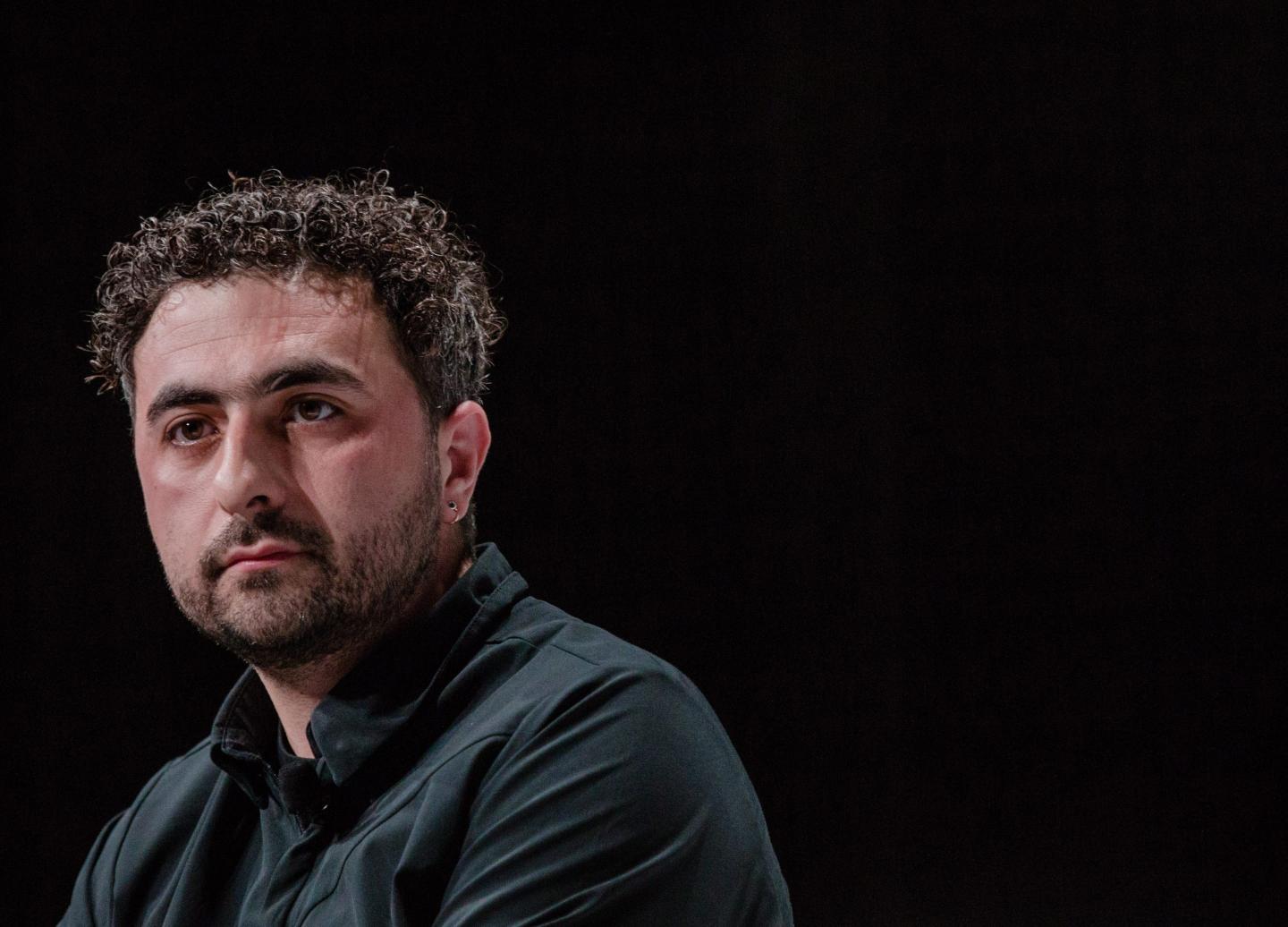
DeepMind cofounder Mustafa Suleyman
DeepMind cofounder Mustafa SuleymanBloomberg
Add Fortune on Google for similar content.

Elon Musk has repeatedly referred to AI as a “civilizational risk.” Geoffrey Hinton, one of the founding fathers of AI research, changed his tune recently, calling AI an “existential threat.” And then there’s Mustafa Suleyman, cofounder of DeepMind, a firm formerly backed by Musk that has been on the scene for over a decade, and coauthor of the newly released “The Coming Wave: Technology, Power, and the Twenty-first Century’s Greatest Dilemma.” One of the most prominent and longest-tenured experts in the field, he thinks such far-reaching concerns aren’t as pressing as others make them out to be, and in fact, the challenge from here on out is pretty straightforward.

Recommended Video

The risks posed by AI have been front and center in public debates throughout 2023 since the technology vaulted into the public consciousness, becoming the subject of fascination in the press. “I just think that the existential-risk stuff has been a completely bonkers distraction,” Mustafa told MIT Technology Review last week. “There’s like 101 more practical issues that we should all be talking about, from privacy to bias to facial recognition to online moderation.”

The most pressing issue, in particular, should be regulation, he says. Suleyman is bullish on government’s across the world being able to effectively regulate AI. “I think everybody is having a complete panic that we’re not going to be able to regulate this,” Suleyman said. “It’s just nonsense. We’re totally going to be able to regulate it. We’ll apply the same frameworks that have been successful previously.”

His conviction is in part borne of the successful regulation of past technologies that were once considered cutting edge such as aviation and the internet. He argues: Without proper safety protocols for commercial flights, passengers would have never trusted airlines, which would have hurt business. On the internet, consumers can visit a myriad of sites but activities like selling drugs or promoting terrorism are banned—although not eliminated entirely. 

On the other hand, as the Review‘s Will Douglas Heaven noted to Suleyman, some observers argue that current internet regulations are flawed and don’t sufficiently hold big tech companies accountable. In particular, Section 230 of the Communications Decency Act, one of the cornerstones of current internet legislation, which offers platforms safe harbor for content posted by third party users. It’s the foundation on which some of the biggest social media companies are built, shielding them from any liability for what gets shared on their websites. In February, the Supreme Court heard two cases that could alter the legislative landscape of the internet.

To bring AI regulation to fruition, Suleyman wants a combination of broad, international regulation to create new oversight institutions and smaller, more granular policies at the “micro level.” A first step that all aspiring AI regulators and developers can take is to limit “recursive self improvement” or AI’s ability to improve itself. Limiting this specific capability of artificial intelligence would be a critical first step to ensure that none of its future developments were made entirely without human oversight. 

“You wouldn’t want to let your little AI go off and update its own code without you having oversight,” Suleyman said. “Maybe that should even be a licensed activity—you know, just like for handling anthrax or nuclear materials.”

Without governing some of the minutiae of AI, inducing at times the “actual code” used, legislators will have a hard time ensuring their laws are enforceable. “It’s about setting boundaries, limits that an AI can’t cross,” Suleyman says. 

To make sure that happens, governments should be able to get “direct access” to AI developers to ensure they don’t cross whatever boundaries are eventually established. Some of those boundaries should be clearly marked, such as prohibiting chatbots to answer certain questions, or privacy protections for personal data.  

Governments worldwide are working on AI regulations

During a speech at the UN Tuesday, President Joe Biden sounded a similar tune, calling for world leaders to work together to mitigate AI’s “enormous peril” while making sure it is still used “for good.”

And domestically, Senate majority leader Chuck Schumer (D-N.Y.) has urged lawmakers to move swiftly in regulating AI, given the rapid pace of change in the technology’s development. Last week, Schumer invited executives from the biggest tech companies including Tesla CEO Elon Eon Musk, Microsoft CEO Satya Nadella, and Alphabet CEO Sundar Pichai to Washington for a meeting to discuss prospective AI regulation. Some lawmakers were skeptical of the decision to invite executives from Silicon Valley to discuss the policies that would seek to regulate their companies. 

One of the earliest governmental bodies to regulate AI was the European Union, which in June passed draft legislation requiring developers to share what data is used to train their models and severely restricting the use of facial recognition software—something Suleyman also said should be limited.  A Time report found that OpenAI, which makes ChatGPT, lobbied EU officials to weaken some portions of their proposed legislation. 

China has also been one of the earliest movers on sweeping AI legislation. In July, the Cyberspace Administration of China released interim measures for governing AI, including explicit requirements to adhere to existing copyright laws and establishing which types of developments would need government approval. 

Suleyman for his part is convinced governments have a critical role to play in the future of AI regulations. “I love the nation-state,” he said. “I believe in the power of regulation. And what I’m calling for is action on the part of the nation-state to sort its shit out. Given what’s at stake, now is the time to get moving.”

About the Author
Paolo Confino
By Paolo ConfinoReporter

Paolo Confino is a former reporter on Fortune’s global news desk where he covers each day’s most important stories.

See full bioRight Arrow Button Icon
Add Fortune on Google for similar content.

Latest in Tech

Finance
Lorem ipsum dolor sit amet, consectetur adipiscing elit, sed do eiusmod tempor incididunt ut labore et dolore magna aliqua. Ut enim ad minim veniam
By Fortune Editors
October 20, 2025
Finance
Lorem ipsum dolor sit amet, consectetur adipiscing elit, sed do eiusmod tempor incididunt ut labore et dolore magna aliqua. Ut enim ad minim veniam
By Fortune Editors
October 20, 2025
Finance
Lorem ipsum dolor sit amet, consectetur adipiscing elit, sed do eiusmod tempor incididunt ut labore et dolore magna aliqua. Ut enim ad minim veniam
By Fortune Editors
October 20, 2025
Finance
Lorem ipsum dolor sit amet, consectetur adipiscing elit, sed do eiusmod tempor incididunt ut labore et dolore magna aliqua. Ut enim ad minim veniam
By Fortune Editors
October 20, 2025
Finance
Lorem ipsum dolor sit amet, consectetur adipiscing elit, sed do eiusmod tempor incididunt ut labore et dolore magna aliqua. Ut enim ad minim veniam
By Fortune Editors
October 20, 2025
Finance
Lorem ipsum dolor sit amet, consectetur adipiscing elit, sed do eiusmod tempor incididunt ut labore et dolore magna aliqua. Ut enim ad minim veniam
By Fortune Editors
October 20, 2025

Most Popular

Finance
Lorem ipsum dolor sit amet, consectetur adipiscing elit, sed do eiusmod tempor incididunt ut labore et dolore magna aliqua. Ut enim ad minim veniam
By Fortune Editors
October 20, 2025
Finance
Lorem ipsum dolor sit amet, consectetur adipiscing elit, sed do eiusmod tempor incididunt ut labore et dolore magna aliqua. Ut enim ad minim veniam
By Fortune Editors
October 20, 2025
Finance
Lorem ipsum dolor sit amet, consectetur adipiscing elit, sed do eiusmod tempor incididunt ut labore et dolore magna aliqua. Ut enim ad minim veniam
By Fortune Editors
October 20, 2025
Finance
Lorem ipsum dolor sit amet, consectetur adipiscing elit, sed do eiusmod tempor incididunt ut labore et dolore magna aliqua. Ut enim ad minim veniam
By Fortune Editors
October 20, 2025
Finance
Lorem ipsum dolor sit amet, consectetur adipiscing elit, sed do eiusmod tempor incididunt ut labore et dolore magna aliqua. Ut enim ad minim veniam
By Fortune Editors
October 20, 2025
Finance
Lorem ipsum dolor sit amet, consectetur adipiscing elit, sed do eiusmod tempor incididunt ut labore et dolore magna aliqua. Ut enim ad minim veniam
By Fortune Editors
October 20, 2025
Fortune Secondary Logo
Rankings
  • 100 Best Companies
  • Fortune 500
  • Global 500
  • Fortune 500 Europe
  • Most Powerful Women
  • World's Most Admired Companies
  • See All Rankings
  • Lists Calendar
Sections
  • Finance
  • Fortune Crypto
  • Features
  • Leadership
  • Health
  • Commentary
  • Success
  • Retail
  • Mpw
  • Tech
  • Lifestyle
  • CEO Initiative
  • Asia
  • Politics
  • Conferences
  • Europe
  • Newsletters
  • Personal Finance
  • Environment
  • Magazine
  • Education
Customer Support
  • Frequently Asked Questions
  • Customer Service Portal
  • Privacy Policy
  • Terms Of Use
  • Single Issues For Purchase
  • International Print
Commercial Services
  • Advertising
  • Fortune Brand Studio
  • Fortune Analytics
  • Fortune Conferences
  • Business Development
  • Group Subscriptions
About Us
  • About Us
  • Press Center
  • Work At Fortune
  • Terms And Conditions
  • Site Map
  • About Us
  • Press Center
  • Work At Fortune
  • Terms And Conditions
  • Site Map
  • Facebook icon
  • Twitter icon
  • LinkedIn icon
  • Instagram icon
  • Pinterest icon

Latest in Tech

ai
North AmericaImmigration
Trump’s $46 billion ‘smart wall’ with Mexico bets on AI and scale
By Rebecca Santana and The Associated PressJuly 2, 2026
1 hour ago
sk
AISouth Korea
AI “grief videos” turn mourning into a $390 service in South Korea
By Hyung-Jin Kim and The Associated PressJuly 2, 2026
1 hour ago
Securitize CEO Carlos Domingo looks to the far right during a conference.
CryptoBlockchain
Securitize is latest crypto company to go public as BlackRock-backed firm sees stock jump 3% on debut
By Camila Grigera NaónJuly 2, 2026
2 hours ago
Mark Zuckerberg, wearing a white shirt, smiles. He is standing in front of a crowd.
SuccessMark Zuckerberg
Mark Zuckerberg feeds his cows macadamia nuts and beer to create the ‘highest-quality beef in the world’ on his $300 million estate in Hawaii
By Sasha RogelbergJuly 2, 2026
2 hours ago
Chris Hulatt co-founder of Octopus Group
SuccessHow I made my first million
A 2-year taste of the office was enough to make 3 grads quit. Now they run a $13.2 billion investment firm: ‘We didn’t want a traditional job again’
By Orianna Rosa RoyleJuly 2, 2026
2 hours ago
Jason Lemkin
Successwork-life balance
This investor won’t back startups unless staff are in the office 6 days a week: ‘Not because I don’t have empathy, because they’re going to fail’
By Preston ForeJuly 2, 2026
4 hours ago

Most Popular

As Big Tech showers employees with perks to win the talent war, Nvidia built a nearly $5 trillion company by making people pay for their own lunch
Big Tech
As Big Tech showers employees with perks to win the talent war, Nvidia built a nearly $5 trillion company by making people pay for their own lunch
By Marco Quiroz-GutierrezJuly 1, 2026
1 day ago
MacKenzie Scott alone accounted for one-third of America's $19.2 billion in megagifts last year
Success
MacKenzie Scott alone accounted for one-third of America's $19.2 billion in megagifts last year
By Sydney LakeJune 25, 2026
7 days ago
Current price of oil as of July 1, 2026
Personal Finance
Current price of oil as of July 1, 2026
By Joseph HostetlerJuly 1, 2026
1 day ago
Trump got a $78K pension from the Screen Actors Guild in 2025 because he appeared in Home Alone 2 in 1992
Politics
Trump got a $78K pension from the Screen Actors Guild in 2025 because he appeared in Home Alone 2 in 1992
By Sasha RogelbergJuly 1, 2026
1 day ago
CEO of $248 billion cybersecurity company says workers are about to face a ‘Darwinian moment’ thanks to AI: Evolve or get cut
Success
CEO of $248 billion cybersecurity company says workers are about to face a ‘Darwinian moment’ thanks to AI: Evolve or get cut
By Emma BurleighJuly 1, 2026
1 day ago
Philanthropy leader at Warren Buffett and Bill Gates’ Giving Pledge says children of billionaires are pushing them to give their wealth away faster
Success
Philanthropy leader at Warren Buffett and Bill Gates’ Giving Pledge says children of billionaires are pushing them to give their wealth away faster
By Preston ForeJune 27, 2026
5 days ago

© 2026 Fortune Media IP Limited. All Rights Reserved. Use of this site constitutes acceptance of our Terms of Use and Privacy Policy | CA Notice at Collection and Privacy Notice | Do Not Sell/Share My Personal Information
FORTUNE is a trademark of Fortune Media IP Limited, registered in the U.S. and other countries. FORTUNE may receive compensation for some links to products and services on this website. Offers may be subject to change without notice.