Good morning,
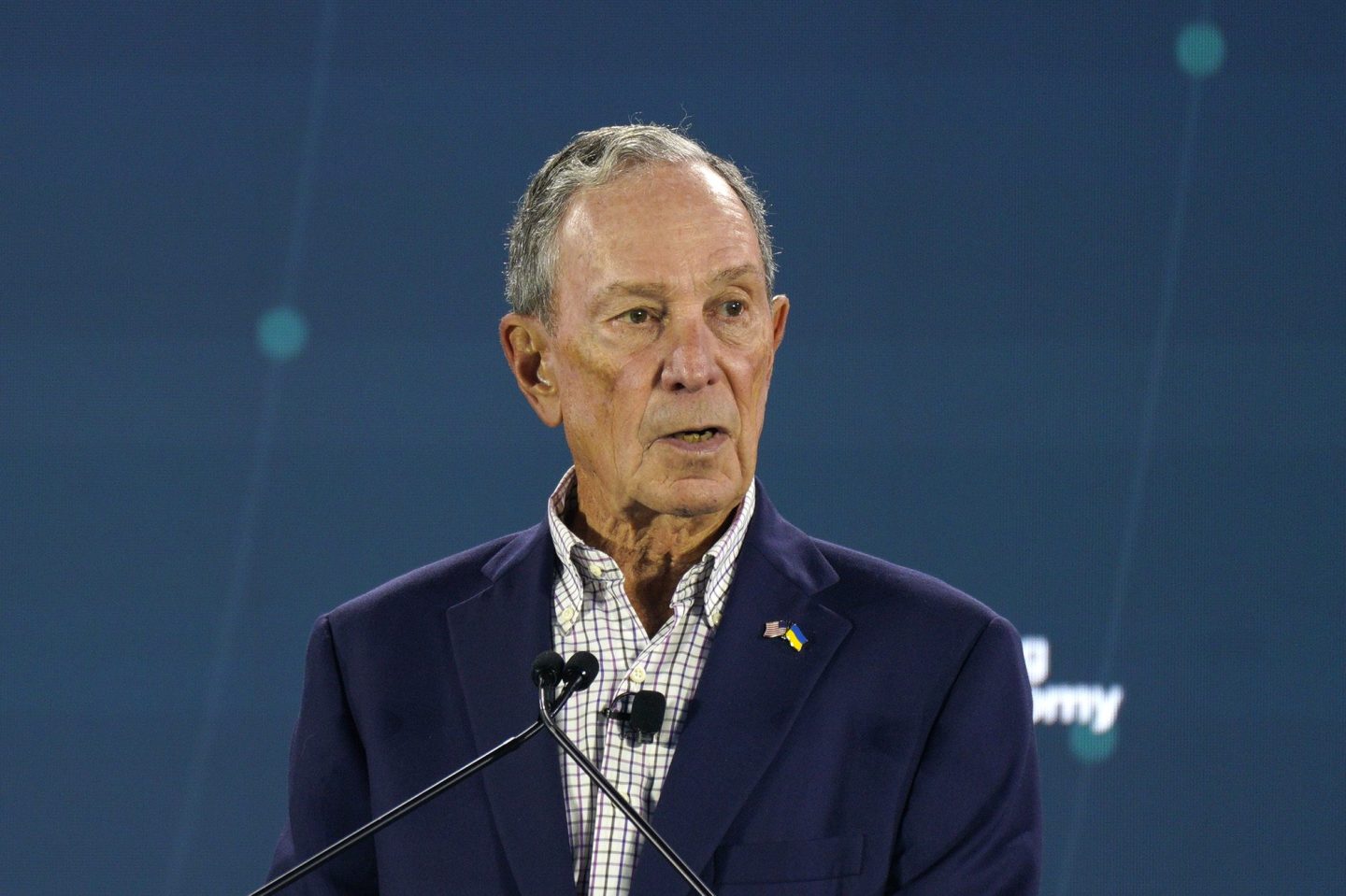
Michael Bloomberg wasn’t known for board refreshments until last week—when he fired every single director.
News of the move came in a memo to staff in which the 81-year-old founder and majority owner of Bloomberg, the global financial data and media giant, also announced a new CEO and a new president at the firm. Vlad Kliatchko, Bloomberg’s chief product officer, and Jean-Paul Zammitt, the company’s chief commercial officer, were promoted to the top two jobs respectively. Neither man is replacing anyone, since the company didn’t have a sitting CEO or president. The founder, who holds no title but is reportedly very much in charge of his eponymous firm, also made his own position clear, writing: “I’m not going anywhere.”
Bloomberg’s new board of directors will be headed by Mark Carney, the former governor of the Bank of England, but no other incoming members were mentioned. In the memo, he thanked his directors for their decades of service, but mentioned it was “time to build on what they did and get the next generation into place.”
Corporate governance experts say Bloomberg’s move to ax the entire board is nearly unprecedented. Sure, Elon Musk fired the entire Twitter board when he purchased the social media platform (he became the sole director), but he was taking the firm private at the time. And while it’s possible that CEOs or founders of small private companies might take dramatic measures to rebuild a board, staggered refreshments are more common, especially at a company the size of Bloomberg, a titan of the finance industry with revenues of $12 billion a year, according to the Financial Times.
Heidi Roizen, partner at the venture capital firm Threshold Ventures, calls Bloomberg’s extreme board refreshment a “bold maneuver” and adds that it’s risky. It can be challenging to onboard even a few directors at once, she says. “Boards have their own cultures. They have their own institutional knowledge. Imagine on a sports team, if you suddenly changed out half your players, you lose a lot of that connective tissue,” Roizen says.
In Bloomberg’s case, media reporters and insiders have suggested that the leadership reshuffling is linked to the founder’s plan to eventually exit the company and turn it over to a philanthropic trust. In such a situation, forming a high-profile board is a smart idea, says Shawn Panson, U.S. private company services leader for PwC. “The next family generation or the next leader may not have that same sort of brand or presence [as the founder],” he says, and a high-powered board would influence how the company is seen “and who wants to do business with them.”
Succession aside, both Panson and Roizen say that such a sudden boardroom change would also allow a company to catch up on a few key trends in current private board practices—the tendency to favor shorter tenures (most of Bloomberg’s directors had tenures of 20 years or more), and the chance to recruit directors with a greater diversity of in-demand expertise, including IT and cybersecurity, talent management and human resources, M&A, and sustainability. The all-in-one-go method also means that no one board member is singled out when they’re let go, Roizen notes. “It could be an easier conversation to have,” she says. Bloomberg did not respond to Fortune’s queries about the new board.
Ted Bililies, a partner and managing director at AlixPartners who works with boards and CEOs, also points out that letting go of a full board means a company can “reset with a fresh, clean slate, a clean history,” which “can give the founder quite a great deal of power.”
However, he cautions that any CEO who wants to try this needs to think about building a new governance scaffolding with explicit rules: “You have to make sure that your governance procedures and even your role descriptions—what does it mean to be a board member—those requirements are very explicitly stated, because so much has been done over the decades implicitly.”
Lila MacLellan
lila.maclellan@fortune.com
@lilamaclellan
Noted
“You can’t make a decision based on a series of newspaper stories, but a series of newspaper stories puts you on notice that something may be wrong.”
—Charles Elson, director at the University of Delaware’s John L. Weinberg Center for Corporate Governance, speaking to the Financial Times about how corporate directors at Goldman Sachs should respond to media accounts in New York magazine and the New York Times about CEO David Solomon’s managerial style.
On the Agenda
👓: After the “great resignation” and “quiet quitting” comes a new corporate trend called “quiet cutting.” That’s when companies find indirect strategies for reducing their labor costs, according to the Wall Street Journal.
🎦: David Risher, the new CEO of Lyft, shared an outline of his typical day as part of a new TikTok series for Fortune. His schedule is busy but surprisingly human and includes about seven hours of sleep.
📖: Healthier people are more likely to be named CEO, and the role doesn’t impact their health—at least for executives in Sweden, says a new study by a team of European researchers. However, poor health in a CEO is tied to increased turnover.
In Brief
—Governments and insurance companies need to stop looking to the past to predict the effects of a warmer future, Bloomberg columnist Alex Webb argues in this video. Corporate boards may want to heed the same lesson and avoid “risk blindness.”
—With the media suggesting that deepfake video calls from your boss may be the next big phishing trick, it’s no wonder that some attorneys at the law firm Kutak Rock called cybersecurity “the silent ‘C’ in ESG.”
—The CEO of water treatment company Ecolab doesn’t think the ESG pushback will impact corporate sustainability efforts, but he also doesn’t think fossil fuels are going to go away any time soon. In fact, he says, we may soon require more oil and gas than we use today.
—Corporate directors at U.S. airlines must be reeling from—and hopefully investigating—a new report that says about 5,000 pilots hid health issues from the FAA, including 600 pilots for passenger airlines.
The Long Read
The famous “PayPal Mafia,” a network of the digital payment company’s founders who have started other startups and remain powerful in tech, pales in comparison to an even larger Silicon Valley influence group.
More than 300 current tech leaders once worked for the Stanford Review, a college paper launched in 1987 by the PayPal cofounder and famously libertarian investor Peter Thiel, according to a new feature by Fortune’s Jessica Mathews. Thiel and more than 10 other Review staffers spoke to Mathews about the newspaper’s history of publishing controversial stories, and how Thiel has cultivated ongoing relationships between past and present Review writers and editors. “In the end, Thiel says, the Stanford Review has not been very effective in changing Stanford’s campus, one he describes as too conformist, with little room for heterodox thought,” Mathews writes. “But he contends the Review was ‘very formative’ in making people more independent in their thinking—something, he notes, in some context, would help people succeed in Silicon Valley—if not change it.”
This is the web version of The Modern Board, a newsletter focusing on mastering the new rules of corporate leadership. Sign up to get it delivered free to your inbox.