• Home
  • Latest
  • Fortune 500
  • Finance
  • Tech
  • Leadership
  • Lifestyle
  • Rankings
  • Multimedia
FinanceEconomy

Inflation could get even harder to manage thanks to trade barriers, aging populations, and the green transition 

By
Christopher Rugaber
Christopher Rugaber
and
The Associated Press
Down Arrow Button Icon
By
Christopher Rugaber
Christopher Rugaber
and
The Associated Press
Down Arrow Button Icon
August 27, 2023, 12:09 PM ET
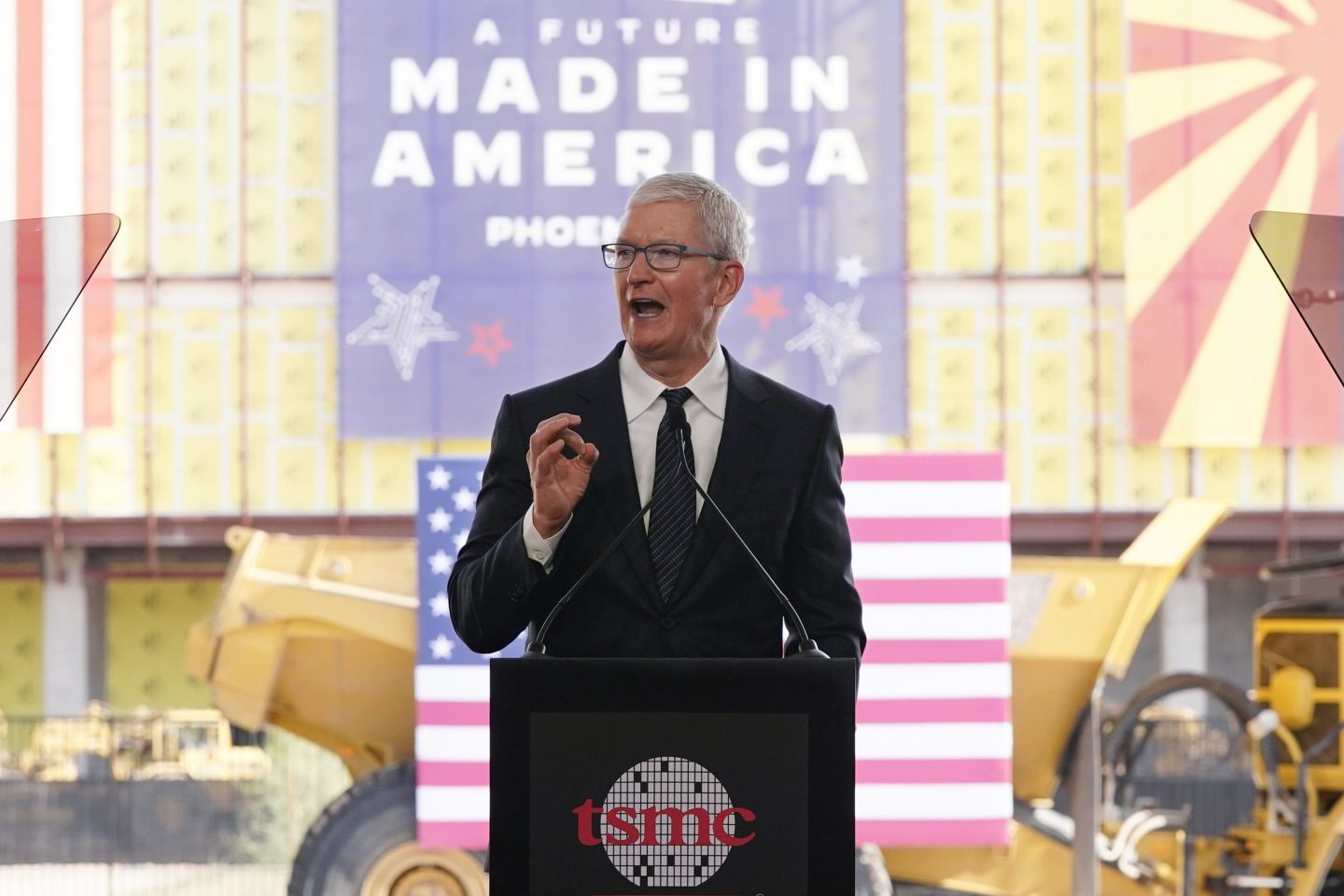
Apple CEO Tim Cook speaks at the Taiwan Semiconductor Manufacturing Company facility under construction in Phoenix last December. Multinational corporations are seeking to produce more items in the U.S. Apple will use chips made at the facility.
Apple CEO Tim Cook speaks at the Taiwan Semiconductor Manufacturing Company facility under construction in Phoenix last December. Multinational corporations are seeking to produce more items in the U.S. Apple will use chips made at the facility.Ross D. Franklin—AP Images

Rising trade barriers. Aging populations. A broad transition from carbon-spewing fossil fuels to renewable energy.

The prevalence of such trends across the world could intensify global inflation pressures in the coming years and make it harder for the Federal Reserve and other central banks to meet their inflation targets.

That concern was a theme sounded in several high-profile speeches and economic studies presented Friday and Saturday at the Fed’s annual conference of central bankers in Jackson Hole, Wyoming.

For decades, the global economy had been moving toward greater integration, with goods flowing more freely between the United States and its trading partners. Lower-wage production overseas allowed Americans to enjoy inexpensive goods and kept inflation low, though at the expense of many U.S. manufacturing jobs.

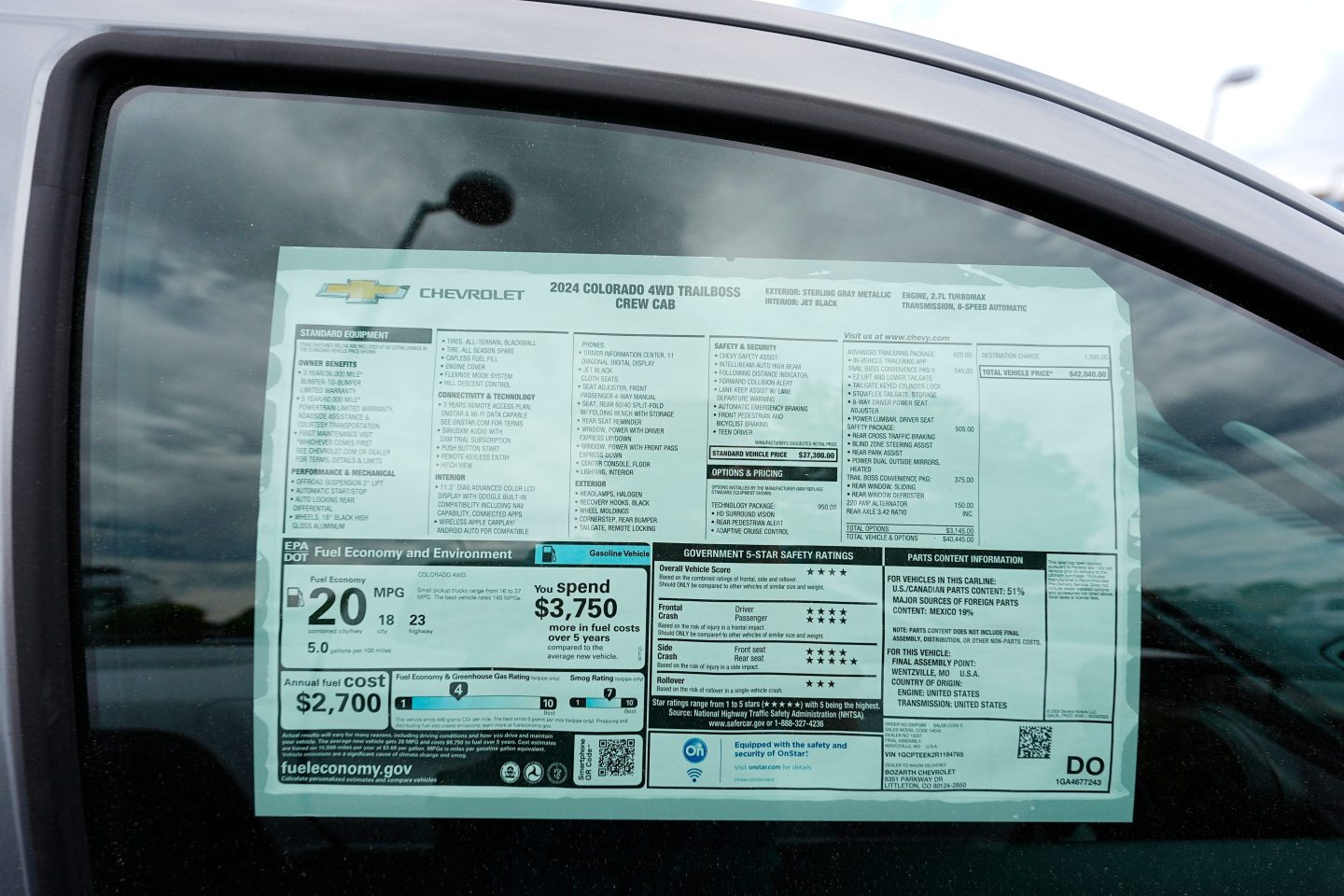
Since the pandemic, though, that trend has shown signs of reversing. Multinational corporations have been shifting their supply chains away from China. They are seeking instead to produce more items — particularly semiconductors, crucial for the production of autos and electronic goods — in the United States, with the encouragement of massive subsidies by the Biden administration.

At the same time, large-scale investments in renewable energies could prove disruptive, at least temporarily, by increasing government borrowing and demand for raw materials, thereby heightening inflation. Much of the world’s population is aging, and older people are less likely to keep working. Those trends could act as supply shocks, similar to the shortages of goods and labor that accelerated inflation during the rebound from the pandemic recession.

“The new environment sets the stage for larger relative price shocks than we saw before the pandemic,” Christine Lagarde, president of the European Central Bank, said in a speech Friday. “If we face both higher investment needs and greater supply constraints, we are likely to see stronger price pressures in markets like commodities — especially for the metals and minerals that are crucial for green technologies.”

This would complicate the work of the ECB, the Fed and other central banks whose mandates are to keep price increases in check. Nearly all central banks are still struggling to curb the high inflation that intensified starting in early 2021 and has only partly subsided.

“We are living in this world in which we could expect to have more and maybe bigger supply shocks,” Pierre-Olivier Gourinchas, chief economist at the International Monetary Fund, said in an interview. “All of these things tend to make it harder to produce stuff and make it more costly. And that is definitely the configuration that central banks dislike the most.”

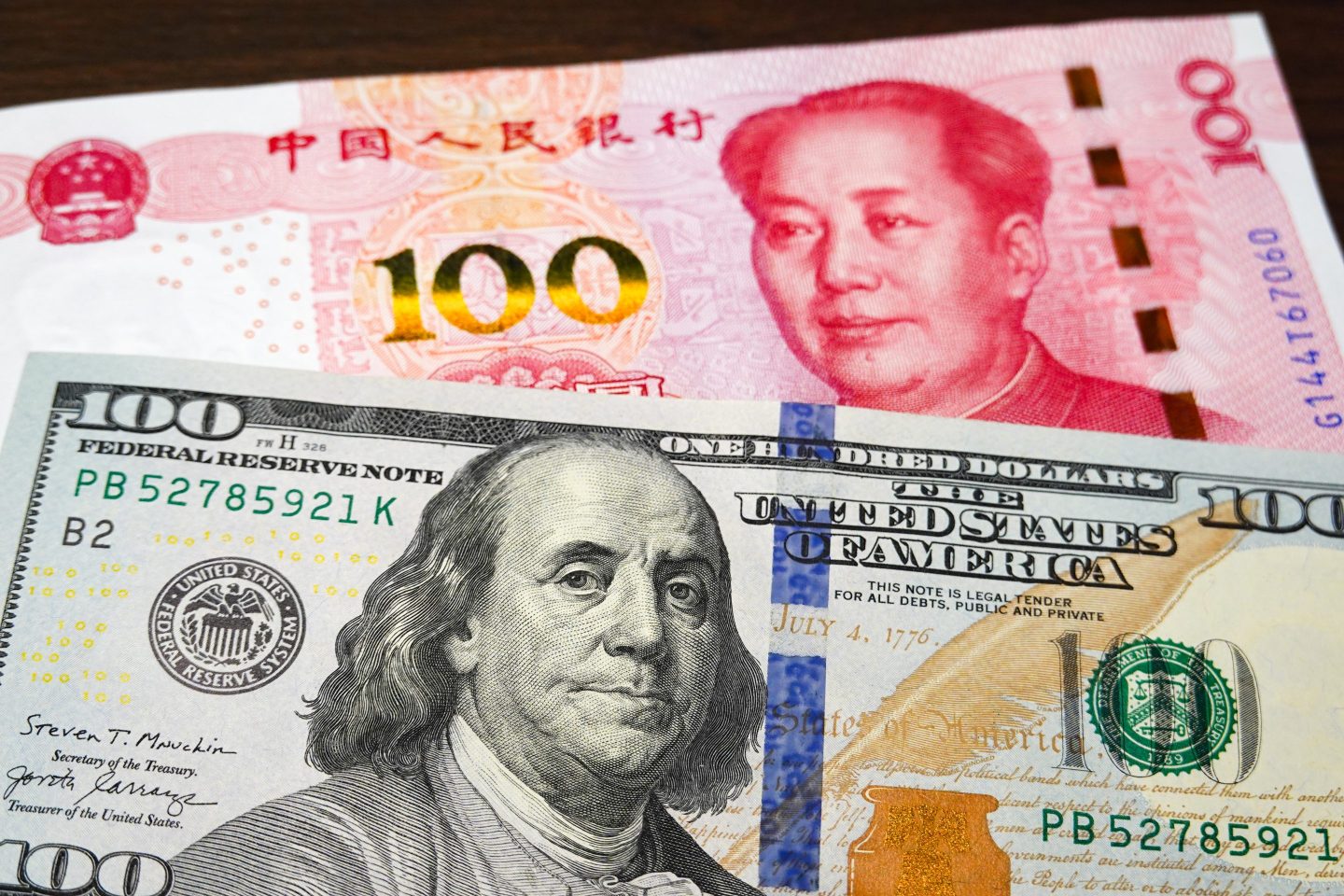
The shifting patterns in global trade patterns sparked the most attention during Saturday’s discussions at the Jackson Hole conference. A paper presented by Laura Alfaro, an economist at Harvard Business School, found that after decades of growth, China’s share of U.S. imports fell 5% from 2017 to 2022. Her research attributed the decline to tariffs imposed by the United States and the efforts of large U.S. companies to find other sources of goods and parts after China’s pandemic shutdowns disrupted its output.

Those imports came largely from such other countries as Vietnam, Mexico and Taiwan, which have better relations with the United States than does China — a trend known as “friendshoring.”

Despite all the changes, U.S. imports reached an all-time high in 2022, suggesting that overall trade has remained high.

“We are not deglobalizing yet,” Alfaro said. “We are seeing a looming ‘Great Reallocation’ ” as trade patterns shift.

She noted that there are also tentative signs of “reshoring” — the return of some production to the United States. Alfaro said the United States is importing more parts and unfinished goods than it did before the pandemic, evidence that more final assembly is occurring domestically. And the decline of U.S. manufacturing jobs, she said, appears to have bottomed out.

Yet Alfaro cautioned that these changes bring downsides as well: In the past five years, the cost of goods from Vietnam has increased about 10% and from Mexico about 3%, adding to inflationary pressures.

In addition, she said, China has boosted its investment in factories in Vietnam and Mexico. Moreover, other countries that ship goods to the United States also import parts from China. Those developments suggest that the United States hasn’t necessarily reduced its economic ties with China.

At the same time, some global trends could work in the other direction and cool inflation in the coming years. One such factor is weakening growth in China, the world’s second-largest economy after the United States. With its economy struggling, China will buy less oil, minerals and other commodities, a trend that should put downward pressure on the global costs of those goods.

Kazuo Ueda, governor of the Bank of Japan, said during a discussion Saturday that while China’s sputtering growth is “disappointing,” it stems mainly from rising defaults in its bloated property sector, rather than changes to trade patterns.

Ueda also criticized the increased use of subsidies to support domestic manufacturing, as the United States had done in the past two years.

“The widespread use of industrial policy globally could just lead to inefficient factories,” Ueda said, because they wouldn’t necessarily be located in the most cost-effective sites.

And Ngozi Okonjo-Iweala, director-general of the World Trade Organization, defended globalization and also denounced rising subsidies and trade barriers. Global trade, she asserted, often restrains inflation and has helped significantly reduce poverty.

“Predictable trade,” she said, “is a source of disinflationary pressure, reduced market volatility and increased economic activity. …Economic fragmentation would be painful.”


Join us at the Fortune Workplace Innovation Summit May 19–20, 2026, in Atlanta. The next era of workplace innovation is here—and the old playbook is being rewritten. At this exclusive, high-energy event, the world’s most innovative leaders will convene to explore how AI, humanity, and strategy converge to redefine, again, the future of work. Register now.
About the Authors
By Christopher Rugaber
See full bioRight Arrow Button Icon
By The Associated Press
See full bioRight Arrow Button Icon

Latest in Finance

Finance
Lorem ipsum dolor sit amet, consectetur adipiscing elit, sed do eiusmod tempor incididunt ut labore et dolore magna aliqua. Ut enim ad minim veniam
By Fortune Editors
October 20, 2025
Finance
Lorem ipsum dolor sit amet, consectetur adipiscing elit, sed do eiusmod tempor incididunt ut labore et dolore magna aliqua. Ut enim ad minim veniam
By Fortune Editors
October 20, 2025
Finance
Lorem ipsum dolor sit amet, consectetur adipiscing elit, sed do eiusmod tempor incididunt ut labore et dolore magna aliqua. Ut enim ad minim veniam
By Fortune Editors
October 20, 2025
Finance
Lorem ipsum dolor sit amet, consectetur adipiscing elit, sed do eiusmod tempor incididunt ut labore et dolore magna aliqua. Ut enim ad minim veniam
By Fortune Editors
October 20, 2025
Finance
Lorem ipsum dolor sit amet, consectetur adipiscing elit, sed do eiusmod tempor incididunt ut labore et dolore magna aliqua. Ut enim ad minim veniam
By Fortune Editors
October 20, 2025
Finance
Lorem ipsum dolor sit amet, consectetur adipiscing elit, sed do eiusmod tempor incididunt ut labore et dolore magna aliqua. Ut enim ad minim veniam
By Fortune Editors
October 20, 2025

Most Popular

Finance
Lorem ipsum dolor sit amet, consectetur adipiscing elit, sed do eiusmod tempor incididunt ut labore et dolore magna aliqua. Ut enim ad minim veniam
By Fortune Editors
October 20, 2025
Finance
Lorem ipsum dolor sit amet, consectetur adipiscing elit, sed do eiusmod tempor incididunt ut labore et dolore magna aliqua. Ut enim ad minim veniam
By Fortune Editors
October 20, 2025
Finance
Lorem ipsum dolor sit amet, consectetur adipiscing elit, sed do eiusmod tempor incididunt ut labore et dolore magna aliqua. Ut enim ad minim veniam
By Fortune Editors
October 20, 2025
Finance
Lorem ipsum dolor sit amet, consectetur adipiscing elit, sed do eiusmod tempor incididunt ut labore et dolore magna aliqua. Ut enim ad minim veniam
By Fortune Editors
October 20, 2025
Finance
Lorem ipsum dolor sit amet, consectetur adipiscing elit, sed do eiusmod tempor incididunt ut labore et dolore magna aliqua. Ut enim ad minim veniam
By Fortune Editors
October 20, 2025
Finance
Lorem ipsum dolor sit amet, consectetur adipiscing elit, sed do eiusmod tempor incididunt ut labore et dolore magna aliqua. Ut enim ad minim veniam
By Fortune Editors
October 20, 2025
Rankings
  • 100 Best Companies
  • Fortune 500
  • Global 500
  • Fortune 500 Europe
  • Most Powerful Women
  • Future 50
  • World’s Most Admired Companies
  • See All Rankings
Sections
  • Finance
  • Leadership
  • Success
  • Tech
  • Asia
  • Europe
  • Environment
  • Fortune Crypto
  • Health
  • Retail
  • Lifestyle
  • Politics
  • Newsletters
  • Magazine
  • Features
  • Commentary
  • Mpw
  • CEO Initiative
  • Conferences
  • Personal Finance
  • Education
Customer Support
  • Frequently Asked Questions
  • Customer Service Portal
  • Privacy Policy
  • Terms Of Use
  • Single Issues For Purchase
  • International Print
Commercial Services
  • Advertising
  • Fortune Brand Studio
  • Fortune Analytics
  • Fortune Conferences
  • Business Development
About Us
  • About Us
  • Editorial Calendar
  • Press Center
  • Work At Fortune
  • Diversity And Inclusion
  • Terms And Conditions
  • Site Map

Latest in Finance

shoplift
EconomyGen Z
Gen Z is rebelling against the economy with ‘disillusionomics,’ tackling near 6-figure debt by turning life into a giant list of income streams
By Jacqueline MunisJanuary 10, 2026
9 hours ago
BankingCredit cards
Trump calls for one-year cap on credit card rates at 10%
By Romy Varghese and BloombergJanuary 10, 2026
15 hours ago
InvestingFintech
Asian households still save as much as half their wealth in cash. Fintech platforms like Syfe want to change that
By Angelica AngJanuary 9, 2026
16 hours ago
EconomyVenezuela
Facing a 682% inflation rate, Venezuelans work three or more jobs and still can barely afford any food. ‘Everything is so expensive’
By Regina Garcia Cano, Matt Sedensky and The Associated PressJanuary 9, 2026
20 hours ago
Secretary of State Marco Rubio looks on as US President Donald Trump speaks to the press following US military actions in Venezuela, at his Mar-a-Lago residence in Palm Beach, Florida.
EnergyDonald Trump
Trump pushes for $100 billion in oil investments in Venezuela while Exxon and others say it’s currently ‘uninvestable’ without major reforms
By Jordan BlumJanuary 9, 2026
20 hours ago
bessent
BankingMinnesota
Bessent’s visit to Minnesota comes with more vows to crack down on fraud as tensions flare with state, Somalia government
By Fatima Hussein and The Associated PressJanuary 9, 2026
21 hours ago

Most Popular

placeholder alt text
Health
Bill Gates warns the world is going 'backwards' and gives 5-year deadline before we enter a new Dark Age
By Eleanor PringleJanuary 9, 2026
1 day ago
placeholder alt text
Success
Diary of a CEO founder says he hired someone with 'zero' work experience because she 'thanked the security guard by name' before the interview
By Emma BurleighJanuary 8, 2026
2 days ago
placeholder alt text
Politics
White House says it's 'reviewing protocols' after Trump seemingly violated federal policy by disclosing jobs data early
By Eva RoytburgJanuary 9, 2026
1 day ago
placeholder alt text
C-Suite
Silicon Valley billionaire flies coach out of solidarity: 'If I'm going to ask my employees to do it, I need to do it, too'
By Nick LichtenbergJanuary 9, 2026
1 day ago
placeholder alt text
Success
Walmart’s CEO Doug McMillon out-earns the average American’s salary in less than 20 hours—during a typical 30-minute commute, he’s already made $1,563
By Emma BurleighJanuary 9, 2026
1 day ago
placeholder alt text
Workplace Culture
Amazon demands proof of productivity from employees, asking for list of accomplishments
By Jake AngeloJanuary 8, 2026
2 days ago

© 2025 Fortune Media IP Limited. All Rights Reserved. Use of this site constitutes acceptance of our Terms of Use and Privacy Policy | CA Notice at Collection and Privacy Notice | Do Not Sell/Share My Personal Information
FORTUNE is a trademark of Fortune Media IP Limited, registered in the U.S. and other countries. FORTUNE may receive compensation for some links to products and services on this website. Offers may be subject to change without notice.