• Home
  • Latest
  • Fortune 500
  • Finance
  • Tech
  • Leadership
  • Lifestyle
  • Rankings
  • Multimedia

Trendingnow

1

When SpaceX starts trading, some 'shareholders' will discover they own nothing at all

2

Corporate America has been draining the world's water. Matt Damon's new campaign calls on Gap, Starbucks, and Amazon to help give it back

3

Current price of oil as of June 12, 2026

1

When SpaceX starts trading, some 'shareholders' will discover they own nothing at all

2

Corporate America has been draining the world's water. Matt Damon's new campaign calls on Gap, Starbucks, and Amazon to help give it back

3

Current price of oil as of June 12, 2026
FinanceFed

The U.S. economy has powered ahead despite Fed hikes. So will Jerome Powell be forced to keep interest rates higher for longer to tame inflation?

By
Christopher Rugaber
Christopher Rugaber
and
The Associated Press
Down Arrow Button Icon
By
Christopher Rugaber
Christopher Rugaber
and
The Associated Press
Down Arrow Button Icon
August 23, 2023, 5:52 AM ET
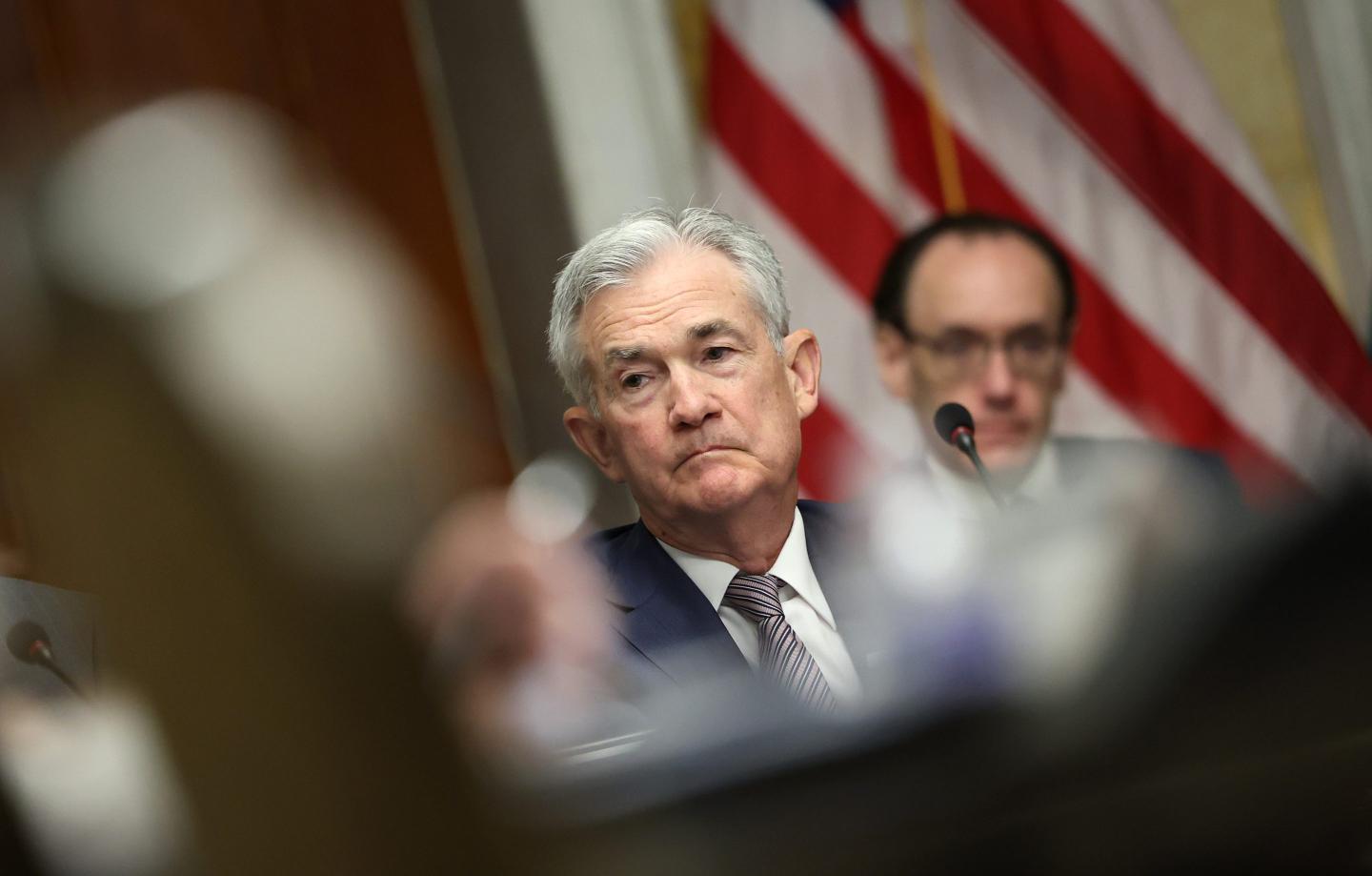
Federal Reserve Chairman Jerome Powell participates in a meeting of the Financial Stability Oversight Council
s Powell returns to Jackson Hole this week, the U.S. economy's resilience has raised the prospect that the Fed will need to keep its key rate higher for longer than had been expected. Kevin Dietsch/Getty Images

A year ago, Chair Jerome Powell delivered a stark warning: To fight persistently high inflation, the Federal Reserve would continue to sharply raise interest rates, bringing “some pain” in the form of job losses and weaker economic growth.

Recommended Video

Since Powell spoke at last summer’s annual conference of central bankers in Jackson Hole, Wyoming, the Fed has followed through, raising its benchmark rate to 5.4%, its highest level in 22 years. Substantially higher loan rates have followed, making it harder for Americans to afford a home or a car or for businesses to finance expansions.

Yet so far, broadly speaking, not much pain has arrived.

Instead, the economy has powered ahead. Hiring has remained healthy, confounding legions of economists who had forecast that the spike in rates would cause widespread layoffs and a recession. The unemployment rate is near a half-century low. Consumer spending keeps growing at a healthy rate.

As Powell and other central bankers return to Jackson Hole this week, the economy’s resilience has thrust a new set of questions at the Fed: Is its key rate high enough to slow growth and cool inflation? And will it need to keep its rate elevated for longer than expected to slow growth and tame inflation?

“The economy seems to be humming along well, inflation is coming down,” said David Beckworth, a longtime Fed-watcher who is a senior fellow at the Mercatus Center at George Mason University, a think tank. “It seems more and more likely that we’ll have higher growth and higher interest rates going forward.”

One after another, economists have postponed or reversed their earlier forecasts for a U.S. recession. Optimism that the Fed will pull off a difficult “soft landing” — in which it would manage to reduce inflation to its 2% target without causing a steep recession — has risen. Nearly seven in 10 economists polled by the National Association for Business Economics say they’re at least somewhat confident that the Fed will achieve a soft landing, according to the NABE’s latest survey.

On Friday, Powell’s keynote speech at this year’s Jackson Hole conference will be scrutinized for any hints that the Fed intends to keep borrowing rates high for a prolonged period. Wall Street traders, who earlier this year had predicted that the Fed would begin cutting rates by year’s end, now don’t envision any rate cuts until well into 2024.

In the meantime, optimism is rising in financial markets not only for a soft landing but for an acceleration of growth. Last week, the Fed’s Atlanta branch estimated that the economy is growing at a blistering 5.8% annual rate in the current July-September quarter — more than double its pace last quarter. That estimate is likely too high, but it still suggests the economy is likely accelerating from last quarter’s 2.4% rate.

Such expectations have helped fuel a surge in bond yields, notably for the 10-year Treasury note, which heavily influences long-term mortgage rates. The 10-year yield, which was around 3.75% in mid-July, has soared to 4.3%, its highest level in 15 years.

Accordingly, the average fixed rate on a 30-year mortgage has topped 7%, the highest level in 22 years. Auto loans and credit card rates have also shot higher and will likely weaken borrowing and consumer spending, the lifeblood of the eeconomy.

Some economists say those higher long-term rates might lessen the need for further Fed hikes because by slowing growth, they should help cool inflation pressures. Indeed, many economists say they think the Fed’s July rate increase will prove to be its last.

Even if the Fed imposes no further hikes, it may feel compelled to keep its benchmark rate elevated well into future to try to contain inflation. This would introduce a new threat: Keeping interest rates at high levels indefinitely would risk weakening the economy so much as to trigger a downturn.

It could also endanger many banks by reducing the value of bonds they own, a dynamic that helped cause the collapse of Silicon Valley Bank and two other large lenders last spring.

“We’re not totally out of the woods yet, for banks or the economy,” said Raghuram Rajan, an economist at the University of Chicago and former head of India’s central bank.

The jump in Treasury yields has likely been driven, in part, by the government’s ramped-up sale of bonds to finance gaping budget deficits. At the same time, the Fed is no longer buying bonds as it did during and after the pandemic recession to drive down borrowing rates. Many central banks overseas have also stopped or reduced their bond purchases. Banks and some investors are wary, too, given the potential for rates to rise further and reduce the value of their existing bonds.

“Where is the demand for these bonds going to come from?” Rajan asked. Weak demand could force bond yields even higher to try to attract buyers.

Other threats also loom. Some analysts say they think the Fed’s 11 rate hikes have yet to exert their full effect on the economy.

Oscar Munoz, chief U.S. macro strategist at TD Securities, said the Fed’s initial rate increases were merely the equivalent of lifting its foot off the accelerator. By Munoz’s calculations, only since the start of 2023 has the Fed’s benchmark rate been high enough to slow growth. He thinks it could take up to another year for the full impact of the rate increases to be felt.

One reason why economists say the rate hikes haven’t caused more pain is that consumers stockpiled savings after the pandemic struck in 2020, thanks to federal stimulus checks and other aid.

But those savings are dwindling. The Fed’s San Francisco branch estimated last week that pandemic-era household savings have shrunk to just $190 billion — from a peak of $2.1 trillion — and will likely run out entirely by next month.

Though year-over-year inflation has slowed to 3.2% from a peak of 9.1% in June 2022, gas and grocery prices are still elevated compared with two years ago. And items like rent, restaurant meals and other services are still growing more expensive.

“We should be somewhat worried that between exhausting their savings and the purchasing power of their money being eroded by inflation, many people are facing tighter budgets,” said Karen Dynan, a Harvard economist and former chief economist at the Treasury Department.

Still, the longer the economy chugs ahead, the more it suggests that growth is sustainable. It also raises the tantalizing possibility that the post-pandemic economy has shifted to a higher gear and can expand even with elevated borrowing costs. If higher rates were to become deeply rooted in the U.S. economy, it would mark a fundamental change after the many years of ultra-low borrowing costs that preceded the pandemic.

“There is a good chance that when things settle down, we’ll be back to a more normal equilibrium, where you have higher interest rates, inflation centered more around 2% instead of below it, wage growth is a bit stronger,” said Kristin Forbes, an economist at MIT and former official at the Bank of England. “Workers have more bargaining power, so we could end up in just a healthier environment all around.”

About the Authors
By Christopher Rugaber
See full bioRight Arrow Button Icon
By The Associated Press
See full bioRight Arrow Button Icon

Latest in Finance

Finance
Lorem ipsum dolor sit amet, consectetur adipiscing elit, sed do eiusmod tempor incididunt ut labore et dolore magna aliqua. Ut enim ad minim veniam
By Fortune Editors
October 20, 2025
Finance
Lorem ipsum dolor sit amet, consectetur adipiscing elit, sed do eiusmod tempor incididunt ut labore et dolore magna aliqua. Ut enim ad minim veniam
By Fortune Editors
October 20, 2025
Finance
Lorem ipsum dolor sit amet, consectetur adipiscing elit, sed do eiusmod tempor incididunt ut labore et dolore magna aliqua. Ut enim ad minim veniam
By Fortune Editors
October 20, 2025
Finance
Lorem ipsum dolor sit amet, consectetur adipiscing elit, sed do eiusmod tempor incididunt ut labore et dolore magna aliqua. Ut enim ad minim veniam
By Fortune Editors
October 20, 2025
Finance
Lorem ipsum dolor sit amet, consectetur adipiscing elit, sed do eiusmod tempor incididunt ut labore et dolore magna aliqua. Ut enim ad minim veniam
By Fortune Editors
October 20, 2025
Finance
Lorem ipsum dolor sit amet, consectetur adipiscing elit, sed do eiusmod tempor incididunt ut labore et dolore magna aliqua. Ut enim ad minim veniam
By Fortune Editors
October 20, 2025

Most Popular

Finance
Lorem ipsum dolor sit amet, consectetur adipiscing elit, sed do eiusmod tempor incididunt ut labore et dolore magna aliqua. Ut enim ad minim veniam
By Fortune Editors
October 20, 2025
Finance
Lorem ipsum dolor sit amet, consectetur adipiscing elit, sed do eiusmod tempor incididunt ut labore et dolore magna aliqua. Ut enim ad minim veniam
By Fortune Editors
October 20, 2025
Finance
Lorem ipsum dolor sit amet, consectetur adipiscing elit, sed do eiusmod tempor incididunt ut labore et dolore magna aliqua. Ut enim ad minim veniam
By Fortune Editors
October 20, 2025
Finance
Lorem ipsum dolor sit amet, consectetur adipiscing elit, sed do eiusmod tempor incididunt ut labore et dolore magna aliqua. Ut enim ad minim veniam
By Fortune Editors
October 20, 2025
Finance
Lorem ipsum dolor sit amet, consectetur adipiscing elit, sed do eiusmod tempor incididunt ut labore et dolore magna aliqua. Ut enim ad minim veniam
By Fortune Editors
October 20, 2025
Finance
Lorem ipsum dolor sit amet, consectetur adipiscing elit, sed do eiusmod tempor incididunt ut labore et dolore magna aliqua. Ut enim ad minim veniam
By Fortune Editors
October 20, 2025
Fortune Secondary Logo
Rankings
  • 100 Best Companies
  • Fortune 500
  • Global 500
  • Fortune 500 Europe
  • Most Powerful Women
  • World's Most Admired Companies
  • See All Rankings
  • Lists Calendar
Sections
  • Finance
  • Fortune Crypto
  • Features
  • Leadership
  • Health
  • Commentary
  • Success
  • Retail
  • Mpw
  • Tech
  • Lifestyle
  • CEO Initiative
  • Asia
  • Politics
  • Conferences
  • Europe
  • Newsletters
  • Personal Finance
  • Environment
  • Magazine
  • Education
Customer Support
  • Frequently Asked Questions
  • Customer Service Portal
  • Privacy Policy
  • Terms Of Use
  • Single Issues For Purchase
  • International Print
Commercial Services
  • Advertising
  • Fortune Brand Studio
  • Fortune Analytics
  • Fortune Conferences
  • Business Development
  • Group Subscriptions
About Us
  • About Us
  • Press Center
  • Work At Fortune
  • Terms And Conditions
  • Site Map
  • About Us
  • Press Center
  • Work At Fortune
  • Terms And Conditions
  • Site Map
  • Facebook icon
  • Twitter icon
  • LinkedIn icon
  • Instagram icon
  • Pinterest icon

Latest in Finance

herrin
CommentaryInfrastructure
America just committed $1.2 trillion to fix its infrastructure. We’re still flying blind
By Gregg HerrinJune 13, 2026
11 minutes ago
Jamie Dimon says remote work breeds ‘rope-a-dope politics’ and stunts young workers’ growth
Successchief executive officer (CEO)
Jamie Dimon says remote work breeds ‘rope-a-dope politics’ and stunts young workers’ growth
By Marco Quiroz-GutierrezJune 13, 2026
53 minutes ago
Gen Z fled San Francisco for Texas and Florida. Now they’re turning ‘welcomer cities’ into the next big tech towns
Real EstateGen Z
Gen Z fled San Francisco for Texas and Florida. Now they’re turning ‘welcomer cities’ into the next big tech towns
By Sydney LakeJune 13, 2026
1 hour ago
Inside the race to rebuild America’s fuel supply chain for a ‘second nuclear age’
EnergyNuclear
Inside the race to rebuild America’s fuel supply chain for a ‘second nuclear age’
By Jordan BlumJune 13, 2026
4 hours ago
Elon Musk stands behind the Nasdaq opening bell and in front of a "SpaceX" background.
Startups & VentureSpaceX
Founders Fund, Andreessen Horowitz, Valor, and the biggest VC winners from SpaceX’s IPO
By Allie GarfinkleJune 12, 2026
14 hours ago
Liability Car Insurance Explained: What It Covers and How Much You Need
Personal FinanceInsurance
Liability Car Insurance Explained: What It Covers and How Much You Need
By Joseph HostetlerJune 12, 2026
14 hours ago

Most Popular

When SpaceX starts trading, some 'shareholders' will discover they own nothing at all
Investing
When SpaceX starts trading, some 'shareholders' will discover they own nothing at all
By Jim EdwardsJune 12, 2026
1 day ago
Corporate America has been draining the world's water. Matt Damon's new campaign calls on Gap, Starbucks, and Amazon to help give it back
Environment
Corporate America has been draining the world's water. Matt Damon's new campaign calls on Gap, Starbucks, and Amazon to help give it back
By Catherina GioinoJune 9, 2026
4 days ago
Current price of oil as of June 12, 2026
Personal Finance
Current price of oil as of June 12, 2026
By Joseph HostetlerJune 12, 2026
22 hours ago
American taxpayers have spent $33 billion on sports stadiums. They got fewer seats—and higher prices
Success
American taxpayers have spent $33 billion on sports stadiums. They got fewer seats—and higher prices
By Catherina GioinoJune 11, 2026
2 days ago
Analysts expected oil to surge above $200 but China has quietly kept prices half of that—and can’t for much longer
Energy
Analysts expected oil to surge above $200 but China has quietly kept prices half of that—and can’t for much longer
By Sasha RogelbergJune 10, 2026
3 days ago
Meet the SpaceX employees who are set to become multimillionaires thanks to its IPO: from execs to even welders
Success
Meet the SpaceX employees who are set to become multimillionaires thanks to its IPO: from execs to even welders
By Preston ForeJune 11, 2026
2 days ago

© 2026 Fortune Media IP Limited. All Rights Reserved. Use of this site constitutes acceptance of our Terms of Use and Privacy Policy | CA Notice at Collection and Privacy Notice | Do Not Sell/Share My Personal Information
FORTUNE is a trademark of Fortune Media IP Limited, registered in the U.S. and other countries. FORTUNE may receive compensation for some links to products and services on this website. Offers may be subject to change without notice.