Even President Joe Biden has some regrets about the name of the Inflation Reduction Act: As the giant law turns 1 on Wednesday, it’s increasingly clear that immediately curbing prices wasn’t the point.
While price increases have cooled over the past year — the inflation rate has dropped from 9% to 3.2% — most economists say little to none of the drop came from the law.
“I can’t think of any mechanism by which it would have brought down inflation to date,” said Harvard University economist Jason Furman, who added that the law could eventually help to lower electricity bills.
Alex Arnon, an economic and budget analyst for the University of Pennsylvania’s Penn Wharton Budget Model, offers a similar assessment.
“We can say with pretty strong confidence that it was mostly other factors that have brought inflation down,’’ he said. “The IRA has just not been a significant factor.’’
That shouldn’t come as a surprise.
When the Inflation Reduction Act was proposed, the Congressional Budget Office said its impact on inflation would be “negligible.”
So why the name? It may ultimately help to hold down prices in the future — and it fit the politics of the moment.
The law was proposed shortly after the American public learned that consumer prices were climbing upward at the fastest pace in four decades. Democratic Sen. Joe Manchin of West Virginia and Senate Majority Leader Chuck Schumer of New York had been holding private talks about Biden’s agenda and put forth the name Inflation Reduction Act once they had a deal. Biden pledged at the time that it would “reduce inflationary pressures.”
The law is now at the core of Biden’s pitch to voters going into the 2024 presidential campaign. But with inflation less of a pressing concern, the president is putting more emphasis on its provisions aimed at combating climate change, creating jobs and lowering people’s health care bills.
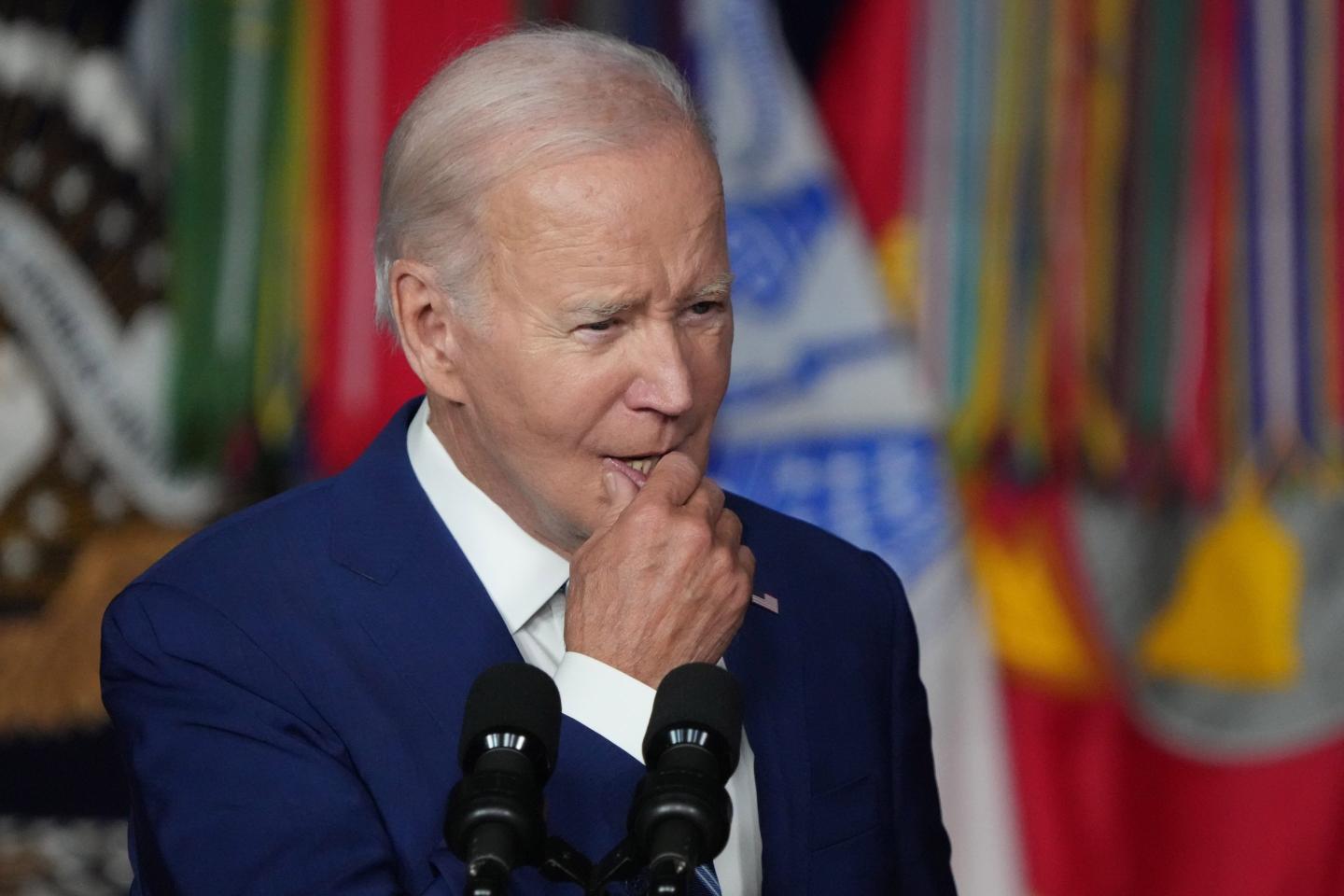
“I wish I hadn’t called it that because it has less to do with reducing inflation than it has to do with providing alternatives that generate economic growth,” Biden said Thursday at a fundraiser in Utah, adding that he still believes that with the law “we’re literally reducing the cost of people being able to meet their basic needs.”
While the law may not have crimped inflation over the past year, it could well do more in that regard going forward, since it just now is starting to be implemented. Along with the CHIPS Act, there are also signs that the Inflation Reduction Act helped to stimulate roughly $500 billion in corporate announcements to invest in new factories. This has potentially helped to strengthen the job market despite efforts to bring down the inflation that many economists believed would pull the United States into a recession. That recession — as Biden predicted — has not materialized.
Even though the law did not immediately reduce inflation, it appears to have done little to cause prices to explode upward as Republicans had claimed it would. House Speaker Kevin McCarthy, R-Calif., said last August that Biden’s agenda would push inflation upward, only to have the rate fall over the past year.
“They’ll raise inflation higher,” McCarthy told Fox News in an interview. “They’ll spend more money, which brought us into this problem. “
Biden, on his three-state western swing this past week, emphasized to donors and voters how the law addresses climate change and promotes the creation of jobs as the economy moves toward renewable energy.
“It has nothing to do with inflation,” Biden said at a New Mexico fundraiser. “It has to do with the $368 billion, the single-largest investment in climate change anywhere in the world, anywhere. No one has ever, ever spent that. And it’s beginning to take hold.”
If it wasn’t the IRA that deserves the credit, what did cause inflation to tumble?
Economists are listing three big reasons:
—Oil and gasoline prices fell from last year’s peak. Gas prices had spiked 60% in June 2022 from a year earlier, caused in large part by Russia’s invasion of Ukraine. But gas prices steadily fell until this January, when they began to climb without having returned to their earlier peak.
—The Fed aggressively raised its benchmark interest rate, which made it more expensive to borrow and slowed demand that had been pushing up prices. The Fed’s rapid hikes have nearly doubled average mortgage rates, pushing down existing home sales. Home prices have also declined slightly in the past year, which can put downward pressure on rental costs. Other interest-rate sensitive industries, particularly autos, have also seen prices fall after sharp increases during the pandemic.
—The supply chain kinks that caused shortages coming out of the pandemic got unsnarled. A measure of supply chain difficulties constructed by the Federal Reserve Bank of New York has fallen below even pre-pandemic levels as shipping costs have declined.
Republican lawmakers and some economists blamed last year’s high inflation on the administration’s $1.9 trillion pandemic relief as being excessive, yet any impact of that on inflation also appears to have now waned.
“The big moves in inflation are primarily global shocks,” said Kristin Forbes, an economist at MIT and a former member of the Bank of England’s interest-rate setting committee. “Those are the primary drivers, but not the only ones. What the Fed has done has also contributed, without a doubt.”
Biden administration officials have said that their actions contributed to lower inflation. By releasing oil from the U.S. strategic reserve, they say, they reduced the financial pain at the gas pump. The administration also created a task force to improve U.S. port activity and supply chains. The White House also stayed quiet on Fed rate hikes, giving the central bank the independence to work without political pressure.
Biden has been careful not to declare an outright victory against inflation, as it’s still higher than the Fed’s 2% target. But the White House says the cost savings from the Inflation Reduction Act are coming as the law is getting enacted.
Tax credits will reduce the cost of installing rooftop solar panels by 30%, which will in turn lower monthly electricity bills. Tax credits also make it more affordable to install a heat pump to control a home’s central air, possibly trimming energy bills by $1,000 annually. There are other tax credits for energy efficient doors and windows as well as new insulation.
Electric utilities using the tax credits for renewable energy will pass roughly $8.2 billion in savings to their customers. People can defray the costs of buying a new electric vehicle with a $7,500 tax credit.
The law also has measures related to health care. Biden has often said in speeches that Medicare recipients will have the monthly cost of their insulin capped at $35. Starting in 2025, there will be a $2,000 limit on out-of-pocket prescription drugs that will save 19 million people on Medicare an average of $400 annually. The CBO estimated that people enrolled in Medicare Part D, which involves prescription drugs, will have their personal costs lowered by $25 billion in 2031.
Taken together, the law could help protect the U.S. economy against the rising oil costs and broken supply chains that triggered the most recent bout of high inflation.
“The IRA will be a big plus for the economy in the long-run as it reduces the economy’s reliance on fossil fuels,” said Mark Zandi, chief economist at Moody’s Analytics. “It will make the economy less vulnerable to spiking oil prices, which have contributed to nearly every recession since World War II.’’
___
Associated Press writers Christopher Rugaber and Fatima Hussein contributed to this report.