• Home
  • Latest
  • Fortune 500
  • Finance
  • Tech
  • Leadership
  • Lifestyle
  • Rankings
  • Multimedia
SuccessWealth

How wealthy Chinese moving to America have left Chinatowns behind for a whole new neighborhood—meet the ‘ethnoburb’

By
Wei Li
Wei Li
,
Yining Tan
Yining Tan
, and
The Conversation
The Conversation
Down Arrow Button Icon
By
Wei Li
Wei Li
,
Yining Tan
Yining Tan
, and
The Conversation
The Conversation
Down Arrow Button Icon
August 1, 2023, 2:15 PM ET
Chinese boy in Monterey Park
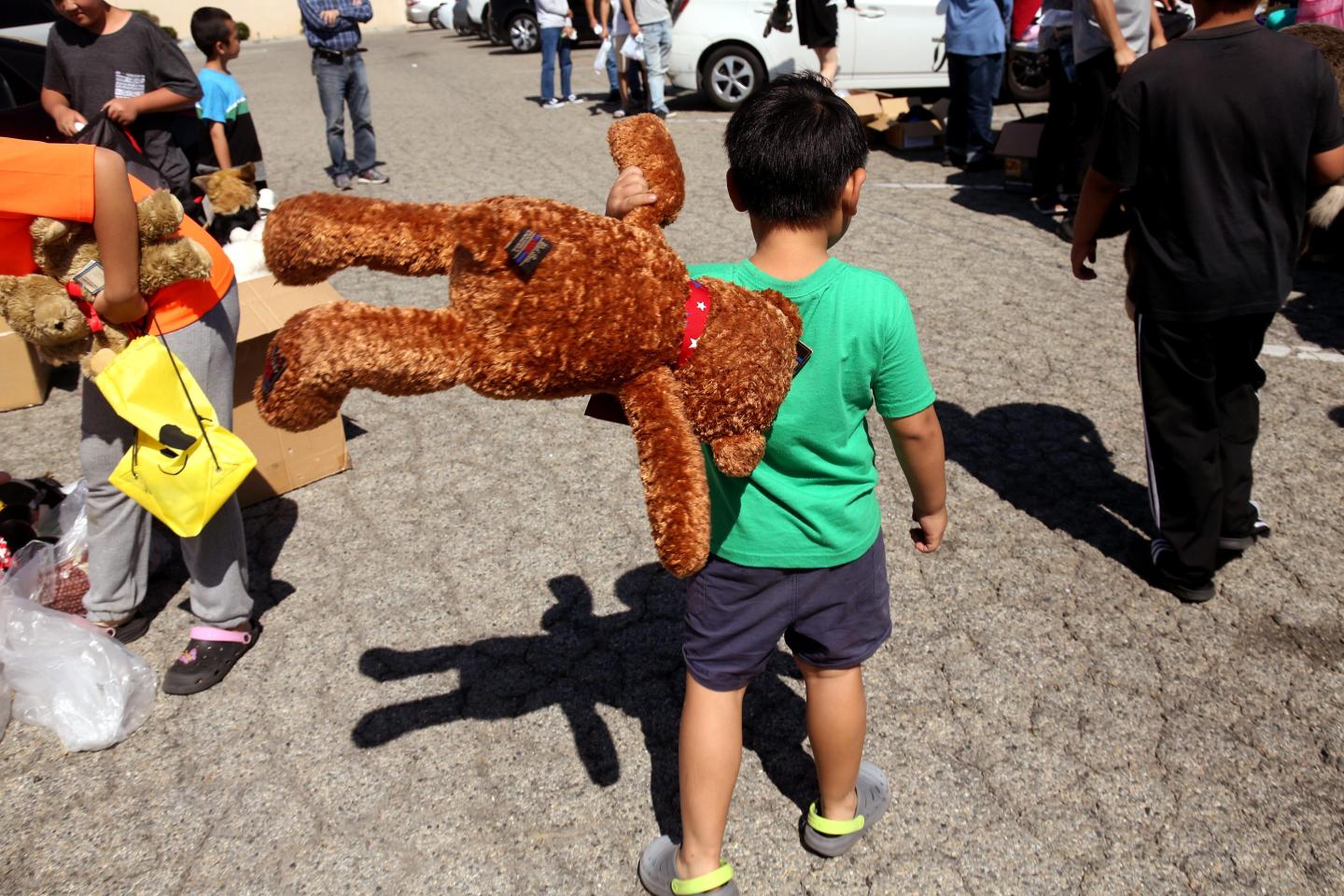
A Chinese migrant child walks with a new stuffed animal he received at a free distribution of clothing, books and toys in a parking lot in Monterey Park on June 25, 2023. Genaro Molina / Los Angeles Times via Getty Images

The origins, demographics and settlement patterns of the approximately 60 million people worldwide who make up the Chinese diaspora, including immigrants and their descendants, are becoming increasingly diverse. Illustrating this diversity are two mass shootings during the 2023 Lunar New Year in California’s Monterey Park and Half Moon Bay, communities that include Chinese immigrants ranging from middle- to upper-middle-class residents to farmworkers.

Recommended Video

We are researchers who study international migration. One of us coined the term “ethnoburb” to describe suburban communities that have mixed racial and socioeconomic groups.

Ethnoburbs defy the traditional assumption that Chinese immigrants arrive poor and have to settle in urban Chinatowns before earning enough money to move to the suburbs. Instead, educated and wealthy Chinese immigrants arriving in the past few decades have settled in upper- to upper-middle-class neighborhoods. Meanwhile, Chinese immigrants working low-wage jobs have increasingly settled in rural areas and cities that aren’t considered gateways to the U.S. And Chinese restaurateurs are scattered across urban and rural areas in many countries.

The evolution of these communities involves a two-way integration process, with newer and older generations of immigrants, as well as long-term non-Chinese residents, adjusting to one another. Shifting Chinese immigrant settlement patterns reflect the changing profile of Chinese immigrants and the effects of globalization and geopolitics.

Changing Chinatowns

Large-scale emigration out of China’s Guangdong province started in the 19th century, propelled by poverty and oppression at home and promising opportunities abroad, such as the gold rush in Australia, New Zealand and the U.S., and railroad construction in North America.

Chinatowns – inner-city, compact Chinese residential and commercial quarters – represent the prototypical ethnic enclave, a geographic area with high concentrations of a particular ethnic group. The first Chinatown in the U.S. emerged in San Francisco in 1848 as a gateway and transnational hub for Chinese immigrants.

When the initial gold rush and railroad construction jobs ran dry and anti-Chinese racism became rampant, Chinatowns soon became refuges for Chinese immigrants to shield themselves from the harsh reality of legal exclusion and racist violence. A number of Chinatowns were displaced in the name of urban development or because of violence.

From the 19th to mid-20th centuries, racist legislation like the White Australia Policy and the Chinese Exclusion Acts in Canada and the U.S. severely curbed Chinese immigration, causing Chinatowns to dwindle or disappear altogether.

Since the repeal of those policies, the fate of Chinatowns in different locations has varied dramatically. Some, such as those in New York and San Francisco, became prime tourist attractions and gateways for new immigrants working low-wage jobs. Most have experienced gentrification and international investment from Asia.

This has led to shrinking Chinese communities and business districts in cities like Washington, D.C., while other Chinatowns, like those in Melbourne and Sydney in Australia, have expanded into thriving neighborhoods. Some intentionally developed Chinatowns, like the one Las Vegas opened in 1995, are commercial plazas with mostly restaurants and shops.

Emergence of ethnoburbs

Another type of immigrant community has been emerging since the 1960s as a result of changing immigration policies: ethnoburbs. These are suburban settlements with multiethnic residential and business areas, where a single ethnic group may not necessarily constitute a majority.

To attract highly skilled and well-educated immigrants, a number of countries instituted point systems that evaluate an applicant’s education, professional experience and language proficiency, among other qualifications. Meanwhile, economic growth in their countries of origin allowed wealthy immigrants to settle directly in the suburbs rather than urban Chinatowns.

The shifting geographic center of Chinese settlement in Los Angeles County showcases the development of an ethnoburb. The first half of the 20th century witnessed slow southward movement away from downtown, largely due to Chinese residents’ moving out of Chinatown. Then, during the second half of the century, the center moved steadily eastward as large numbers of new Chinese immigrants directly settled in the suburban San Gabriel Valley, signifying the emergence of an ethnoburb.

Because of the diverse local industries and demographics of immigrants around the world, each ethnoburb evolves in different ways. For example, ethnoburbs in Silicon Valley emerged with high-tech industries attracting skilled and affluent Asian Americans who are highly politically involved. And unlike the predominantly Chinese ethnoburb in San Gabriel Valley, Sydney’s “super-diverse ethnoburb” is characterized by multiple different ethnic groups from various countries of origin.

Ethnoburbs are different from Chinatowns

Ethnoburbs coexist with Chinatowns in many countries, but they differ from ethnic enclaves not only in their location but also in terms of their ethnic concentration and class differences. Residents in ethnoburbs are more racially and socioeconomically diverse, suggesting greater potential for racial tensions and class conflicts than traditional ethnic enclaves. For example, the growing presence of wealthy Asians in Arcadia, California, fueled increasing housing prices and a McMansion boom that concerned local residents.

However, unlike the self-contained communities in ethnic enclaves, residents in ethnoburbs are more likely to interact with other groups, which makes it easier for them to forge economic ties and build political alliances. For instance, Asian Americans in Silicon Valley have established business councils and parent associations made up of different Asian ethnicities and exhibit higher political awareness and engagement.

Many ethnoburbs have supplanted Chinatowns as the commercial and cultural centers of contemporary Chinese diasporas.

Obviously, not all Chinese people live in Chinatowns or ethnoburbs. Many live in other locations, and they’re not always surrounded by other Chinese people. Geographers coined the term “heterolocalism” to describe immigrants and minorities who live in areas with less ethnic diversity but are still able to retain their cultural identity.

Geopolitics and integration

Changing political climates may also lead to shifting trends in immigration.

Recent decades have seen increasing anti-Asian hate amid rising geopolitical tensions with the People’s Republic of China, especially since the COVID-19 pandemic began. The long-term effects of these trends on Chinese diasporas are unclear. But many are already experiencing the backlash and face racial violence.

In the U.S., Chinese scientists are facing racial profiling, Chinese business owners have had their properties vandalized and many Chinese Americans have been violently attacked. States have passed or proposed laws that bar or restrict citizens of China from purchasing properties. These laws resemble 20th-century U.S. Alien Land Laws that prohibited Asian immigrants from owning land. Anti-Chinese violence is also happening in other places like Canada and Europe.

We hope that ethnoburbs will not become, like historical Chinatowns, the only refuge for Chinese immigrants to live. Learning from history’s mistakes is key to building a fair and just society for all, the Chinese diaspora included.

Wei Li is Professor of Asian Pacific American Studies, Geographical Sciences and Urban Planning, Arizona State University and Yining Tan is Assistant Professor of Practice, University of Arizona.

This article is republished from The Conversation under a Creative Commons license. Read the original article.

At the Fortune Workplace Innovation Summit, Fortune 500 leaders will convene to explore the defining questions shaping the workforce of the future—delivering bold ideas, powerful connections, and actionable insights for building resilient organizations for the decade ahead. Join Fortune May 19–20 in Atlanta. Register now.
About the Authors
By Wei Li
See full bioRight Arrow Button Icon
By Yining Tan
See full bioRight Arrow Button Icon
By The Conversation
See full bioRight Arrow Button Icon

Latest in Success

Finance
Lorem ipsum dolor sit amet, consectetur adipiscing elit, sed do eiusmod tempor incididunt ut labore et dolore magna aliqua. Ut enim ad minim veniam
By Fortune Editors
October 20, 2025
Finance
Lorem ipsum dolor sit amet, consectetur adipiscing elit, sed do eiusmod tempor incididunt ut labore et dolore magna aliqua. Ut enim ad minim veniam
By Fortune Editors
October 20, 2025
Finance
Lorem ipsum dolor sit amet, consectetur adipiscing elit, sed do eiusmod tempor incididunt ut labore et dolore magna aliqua. Ut enim ad minim veniam
By Fortune Editors
October 20, 2025
Finance
Lorem ipsum dolor sit amet, consectetur adipiscing elit, sed do eiusmod tempor incididunt ut labore et dolore magna aliqua. Ut enim ad minim veniam
By Fortune Editors
October 20, 2025
Finance
Lorem ipsum dolor sit amet, consectetur adipiscing elit, sed do eiusmod tempor incididunt ut labore et dolore magna aliqua. Ut enim ad minim veniam
By Fortune Editors
October 20, 2025
Finance
Lorem ipsum dolor sit amet, consectetur adipiscing elit, sed do eiusmod tempor incididunt ut labore et dolore magna aliqua. Ut enim ad minim veniam
By Fortune Editors
October 20, 2025

Most Popular

Finance
Lorem ipsum dolor sit amet, consectetur adipiscing elit, sed do eiusmod tempor incididunt ut labore et dolore magna aliqua. Ut enim ad minim veniam
By Fortune Editors
October 20, 2025
Finance
Lorem ipsum dolor sit amet, consectetur adipiscing elit, sed do eiusmod tempor incididunt ut labore et dolore magna aliqua. Ut enim ad minim veniam
By Fortune Editors
October 20, 2025
Finance
Lorem ipsum dolor sit amet, consectetur adipiscing elit, sed do eiusmod tempor incididunt ut labore et dolore magna aliqua. Ut enim ad minim veniam
By Fortune Editors
October 20, 2025
Finance
Lorem ipsum dolor sit amet, consectetur adipiscing elit, sed do eiusmod tempor incididunt ut labore et dolore magna aliqua. Ut enim ad minim veniam
By Fortune Editors
October 20, 2025
Finance
Lorem ipsum dolor sit amet, consectetur adipiscing elit, sed do eiusmod tempor incididunt ut labore et dolore magna aliqua. Ut enim ad minim veniam
By Fortune Editors
October 20, 2025
Finance
Lorem ipsum dolor sit amet, consectetur adipiscing elit, sed do eiusmod tempor incididunt ut labore et dolore magna aliqua. Ut enim ad minim veniam
By Fortune Editors
October 20, 2025
Fortune Secondary Logo
Rankings
  • 100 Best Companies
  • Fortune 500
  • Global 500
  • Fortune 500 Europe
  • Most Powerful Women
  • Future 50
  • World’s Most Admired Companies
  • See All Rankings
Sections
  • Finance
  • Fortune Crypto
  • Features
  • Leadership
  • Health
  • Commentary
  • Success
  • Retail
  • Mpw
  • Tech
  • Lifestyle
  • CEO Initiative
  • Asia
  • Politics
  • Conferences
  • Europe
  • Newsletters
  • Personal Finance
  • Environment
  • Magazine
  • Education
Customer Support
  • Frequently Asked Questions
  • Customer Service Portal
  • Privacy Policy
  • Terms Of Use
  • Single Issues For Purchase
  • International Print
Commercial Services
  • Advertising
  • Fortune Brand Studio
  • Fortune Analytics
  • Fortune Conferences
  • Business Development
  • Group Subscriptions
About Us
  • About Us
  • Editorial Calendar
  • Press Center
  • Work At Fortune
  • Diversity And Inclusion
  • Terms And Conditions
  • Site Map
  • About Us
  • Editorial Calendar
  • Press Center
  • Work At Fortune
  • Diversity And Inclusion
  • Terms And Conditions
  • Site Map
  • Facebook icon
  • Twitter icon
  • LinkedIn icon
  • Instagram icon
  • Pinterest icon

Latest in Success

The billionaire Anthropic cofounder who majored in literature says knowing how to ask the right questions beats knowing how to code
SuccessTech
The billionaire Anthropic cofounder who majored in literature says knowing how to ask the right questions beats knowing how to code
By Marco Quiroz-GutierrezApril 14, 2026
13 hours ago
trump
EconomyManufacturing
Trump’s macho MAGA economy is a bust. But there are plenty of high-paying jobs for men—in nursing and teaching
By Nick LichtenbergApril 14, 2026
14 hours ago
mike rowe
Successskills
‘Dirty Jobs’ host Mike Rowe is giving away $10 million to get Gen Z into trades—and says the skills gap has never been worse
By Jake AngeloApril 14, 2026
19 hours ago
James Quincey
SuccessCareers
Coca-Cola chairman James Quincey says climbing the ladder to the C-suite is like Squid Game: ‘It’s survivor basis’
By Preston ForeApril 14, 2026
19 hours ago
United Airlines CEO Scott Kirby
Successwork-life balance
United Airlines CEO Scott Kirby lies on his office floor and takes 20-minute naps—and he says it doesn’t mean he’s accomplished any less
By Emma BurleighApril 14, 2026
19 hours ago
Warren Buffett’s first tax return showed $7 owed to the IRS. The then paperboy and former Berkshire Hathaway CEO is now worth $143 billion
SuccessWarren Buffett
Warren Buffett’s first tax return showed $7 owed to the IRS. The then paperboy and former Berkshire Hathaway CEO is now worth $143 billion
By Sydney LakeApril 14, 2026
20 hours ago

Most Popular

Billionaire philanthropist MacKenzie Scott has donated again—a week after gifting millions to a college, she's just given $70 million to Meals on Wheels America
Success
Billionaire philanthropist MacKenzie Scott has donated again—a week after gifting millions to a college, she's just given $70 million to Meals on Wheels America
By Fortune EditorsApril 13, 2026
2 days ago
Retirees are facing a $345,000 bill they never saw coming — and most aren't prepared
Commentary
Retirees are facing a $345,000 bill they never saw coming — and most aren't prepared
By Fortune EditorsApril 14, 2026
1 day ago
He was coding at 12 like Elon Musk and became one of Google’s youngest-ever CMOs—but now says Gen Z is better off ice skating than learning to code
Success
He was coding at 12 like Elon Musk and became one of Google’s youngest-ever CMOs—but now says Gen Z is better off ice skating than learning to code
By Fortune EditorsApril 14, 2026
1 day ago
Anthropic is facing a wave of user backlash over reports of performance issues with its Claude AI chatbot
AI
Anthropic is facing a wave of user backlash over reports of performance issues with its Claude AI chatbot
By Fortune EditorsApril 14, 2026
1 day ago
Current price of gold as of April 13, 2026
Personal Finance
Current price of gold as of April 13, 2026
By Fortune EditorsApril 13, 2026
2 days ago
Current price of oil as of April 14, 2026
Personal Finance
Current price of oil as of April 14, 2026
By Fortune EditorsApril 14, 2026
22 hours ago

© 2026 Fortune Media IP Limited. All Rights Reserved. Use of this site constitutes acceptance of our Terms of Use and Privacy Policy | CA Notice at Collection and Privacy Notice | Do Not Sell/Share My Personal Information
FORTUNE is a trademark of Fortune Media IP Limited, registered in the U.S. and other countries. FORTUNE may receive compensation for some links to products and services on this website. Offers may be subject to change without notice.