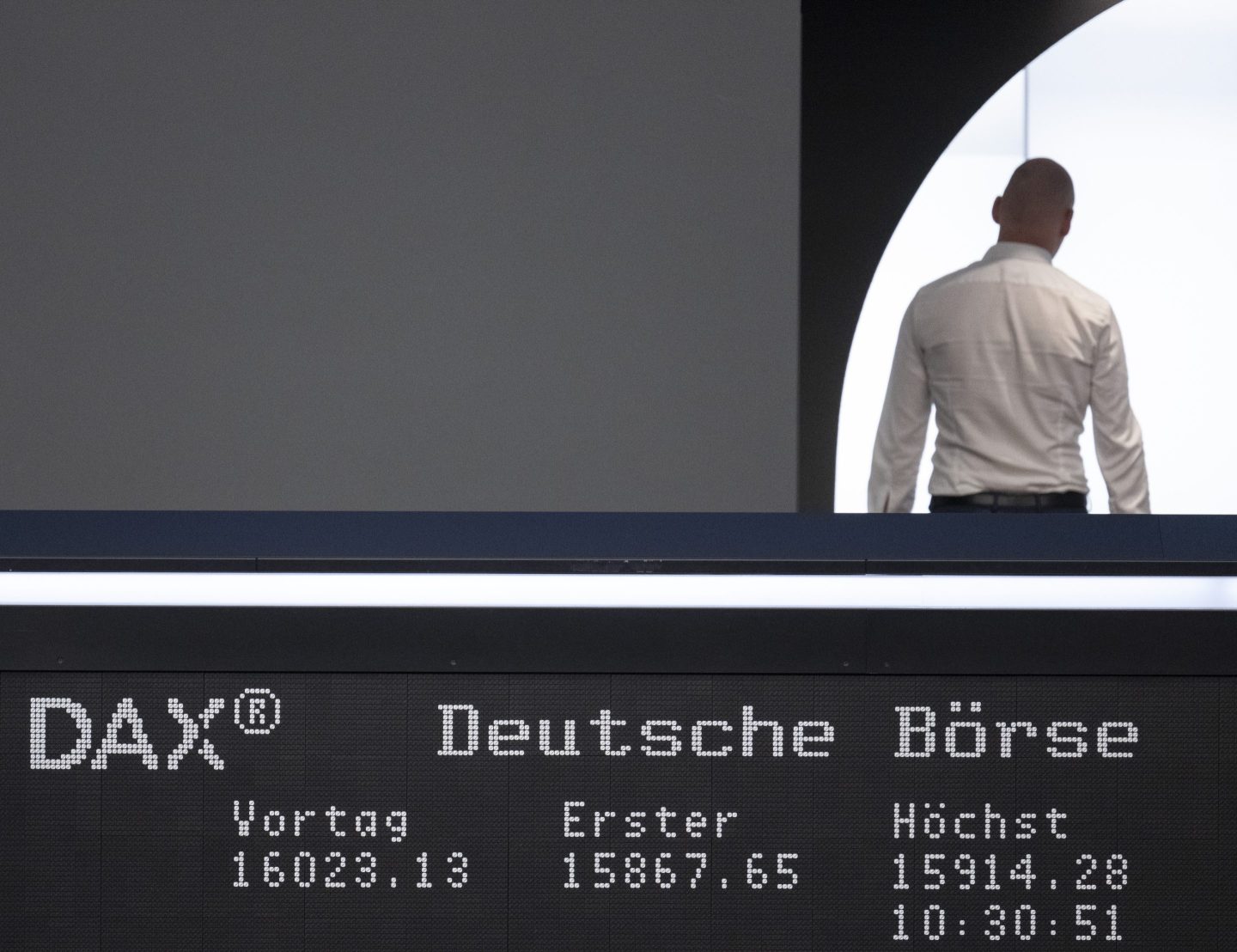
A global quest seems to be occurring to move company listings to the U.S. Seismic shifts lie ahead as European equity markets struggle to woo new capital and geopolitical turmoil leads to volatility in Asian markets, sparking a chaotic tango of liquidity and valuations. Wall Street has an old adage, “The trend is your friend.” That’s true. But you must be going in the same direction the market is heading.
The necessary once-a-year trip by international finance directors to visit current and potential investors in New York, Boston, Chicago, and Los Angeles, might now be more mandatory–and may have a different twist as discussions evolve beyond performance and strategy and into comparing the advantages of marketplace listings.
Listings sprout wings and fly across the pond
The presence of a stock exchange in nearly every European country, numbering more than 35, might seem positive at first glance. However, only five of these exchanges boast a market capitalization exceeding $1 trillion.
As a result, equity valuations in these markets are deteriorating, leading to diminished liquidity and lower price-to-earnings (P/E) ratios, due in part to small pools of capital and investors, compared to U.S.-based stocks.
EU exchanges could pool resources, but that would be almost as likely as merging countries.
London, once hailed as the primary European financial hub, has lost its allure and status in the post-Brexit era.
To complicate matters further, bourses in Amsterdam, Paris and Frankfurt, all vying for prominence, now face mounting pressures and fierce competition, resulting in the loss of listings.
Europe’s leading equities markets, with a combined capitalization of $13 trillion, pale in comparison to the staggering value of more than $45 trillion of U.S. counterparts. Additionally, the number of international companies listed on the NYSE and Nasdaq is witnessing a remarkable 41% increase, surging from 1,016 in 2020 to more than 1,440 presently.
In a worrying trend for European markers, Ireland building materials giant CRH will exit the FTSE 100, and British chip designer ARM, as well as data analytics Ascential, have filed for U.S. listings. Linde, Germany’s largest industrial gas company, is abandoning its dual listing, favoring NYSE over the DAX.
Asian markets dance with complexity, geopolitics, and a dash of volatility
Asian equity markets are taking center stage amidst a labyrinthine economic landscape. However, they remain entangled in a web of quirks and conundrums, distinct from their European counterparts but no less troublesome.
With more than 40 Asian countries boasting their own stock exchanges, it’s a grand spectacle where Tokyo, China (Shanghai, Shenzhen), Hong Kong, and India play leading roles.
However, tensions between major powers, trade and territorial disputes, economic sanctions and local pesky government regulation, diverse customs and languages, and limited foreign investor participation due to restrictions on foreign ownership, all impact liquidity, affect valuations, and the ability to raise capital.
And if that’s not enough, Asian equity markets have relatively little analyst coverage, with trading dependent on wacky market dynamics.
All this drives Asian companies to seek U.S. listings. Notably, in January 2023, 252 PRC companies were listed on U.S. exchanges, with a market capitalization of approximately $1 trillion.
Advantages and challenges of listing in the U.S.
In a recent interview, Dick Grasso, who was the longest-serving chairman and CEO of the New York Stock Exchange, said, “Regardless of where a company is currently listed, each year boards and top management should evaluate if a U.S. listing enhances the appeal of its shares on a global level. Additionally, a U.S. presence can make a significant difference in positioning the company story, as well as marketing products and services.”
This annual evaluation must consider financial market dynamics, accounting and reporting requirements, taxation, and a comparison of fees. Additional factors encompass executive time and enhanced value through improved liquidity and broader ownership. Such reviews should also take place if a company is listed in the U.S. to make the most of the benefits and visibility of its listing.
One key aspect that sets the U.S. equity market apart: the significant participation of individual investors. Unlike other markets where individual ownership is minimal, in the U.S., individual share ownership accounts for approximately 30 to 35% of a company’s outstanding shares in American-based companies.
Americans engage in equity markets through a diverse range of vehicles, including ETFs (exchange-traded funds), IRAs (individual retirement accounts), mutual funds, and company 401(k) retirement plans. This creates an immense and continuously growing pool of capital and ownership that is readily accessible to U.S. listed companies.
The majority of Americans buy and hold stocks as investments and savings, using them to purchase a home, finance children’s education, plan for retirement or support future generations. This long-term investment approach is the primary driver of equity ownership, overshadowing the relatively smaller percentage of day and algorithmic traders in daily volumes.
Moreover, encouraged by investors, many companies established stock buyback programs. Coupled with management equity options, this results in fewer shares available on the open market, further bolstering ownership proportions for individuals.
A fully fledged U.S. listing is not suitable for every company. Some companies may not be ready for U.S. markets. Others are too small. Several may have a U.S. listing as an American Depository Receipt (ADR).
Some might follow a phased process that could evolve into a full U.S. listing. This can be accomplished with an unsponsored ADR. Companies should seek independent advice from nonconflicted market experts about this or any approach.
Non-U.S.-based companies also have higher levels of privacy practices, which sometimes clash with America’s market culture of transparency. U.S.-listed companies are closely scrutinized, so attempting to conceal negative information or hoping it will go unnoticed is ineffective. Management must deal with reputational threats, misinformation, and omnipresent online commentary that immediately impact stock value.
America’s greatest investor, Warren Buffett, once said “Only when the tide goes out do you discover who’s been swimming naked.”
In today’s interconnected global markets, this analogy is remarkably relevant.
Richard Torrenzano is the CEO of The Torrenzano Group, which helps organizations take control of how they are perceived. For nearly a decade, he was a member of the New York Stock Exchange Management (policy) and (executive) Committees. Richard is a sought-after expert and a leading commentator on financial markets, brands, crisis media, and reputation.
Paul Tweed, the founder of WP Tweed & Co., has more than 30 years of experience as an international media lawyer specializing in brand protection and reputation, including related financial and regulatory issues, with offices in London, Dublin, and Belfast serving a significant corporate client base from both sides of the Atlantic.
The opinions expressed in Fortune.com commentary pieces are solely the views of their authors and do not necessarily reflect the opinions and beliefs of Fortune.
More must-read commentary published by Fortune:
- Asana CEO: ‘The way we work right now will soon look vestigial. Here’s how A.I. will make work more human’
- The alt-right economy is failing. Here’s the real performance of anti-woke entrepreneurs
- E-bike injuries: ‘We’re only seeing the tip of the iceberg,’ trauma experts warn
- A year after Roe v. Wade was overturned, an unworkable patchwork of state laws leaves corporate America more vulnerable to government overreach