For Americans, a report saying inequality has dramatically fallen seems absurd. In the West, the gap between the rich and poor has been widening, and the middle class is gradually vanishing. But on a global scale, economic equality has improved to the highest level since the late 19th century, according to new research by one of the world’s foremost experts on the topic. “It’s very good news,” he told Fortune.
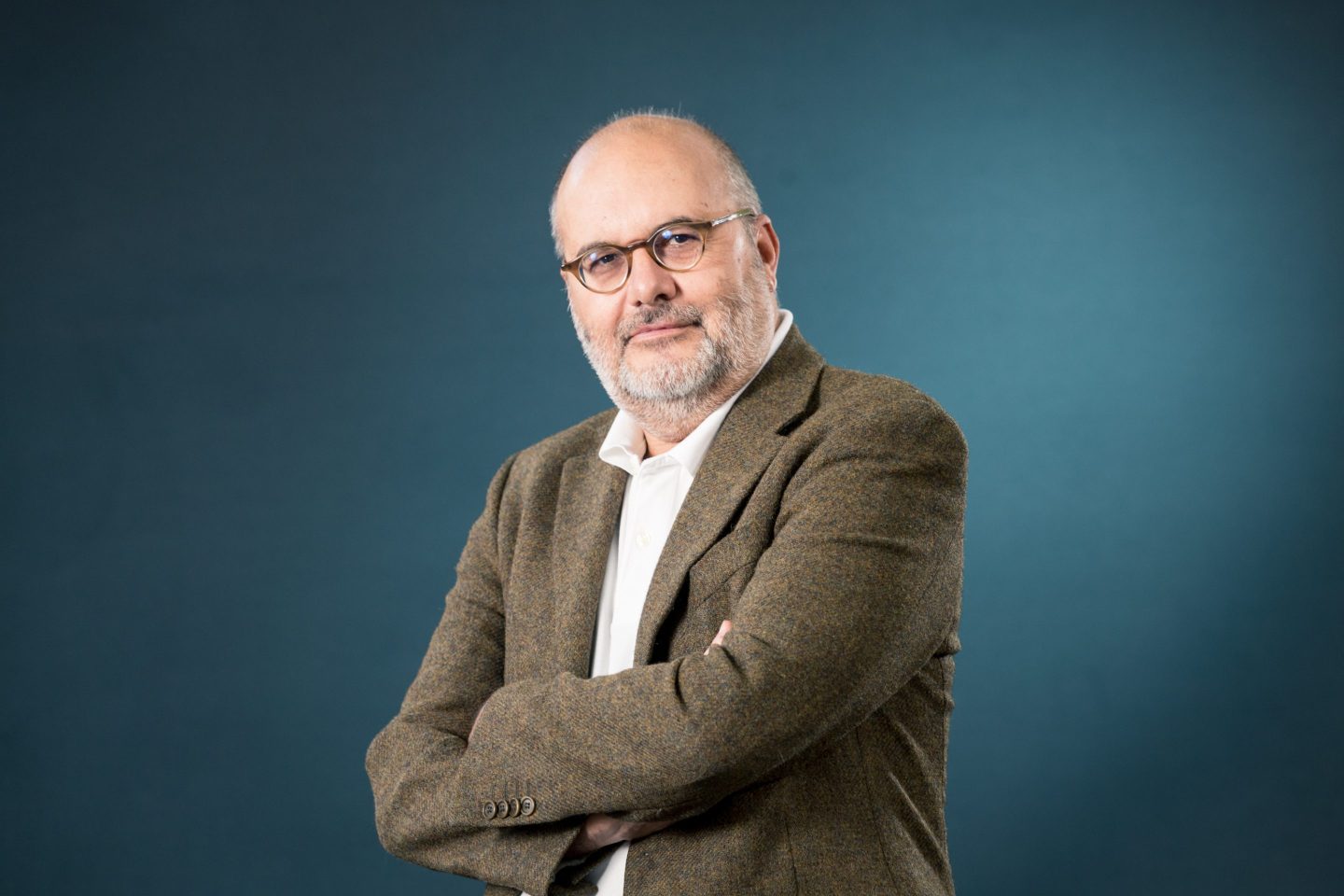
“Inequality in individual countries has been generally, in the last 30 years, up,” economist Branko Milanović said in an interview with Fortune about his findings. “But global inequality at the same time has been going down. So these two things are not contradictory. Simply, global inequality depends on rates of growth of different countries.”
Milanović is one of the world’s foremost experts on global inequality, having previously served as the World Bank’s lead research economist and authored several books on the topic, including Worlds Apart (2005) and The Haves and the Have-Nots (2011). Currently a professor at the City University of New York, Milanović has been a visiting scholar at several universities including Oxford, the London School of Economics, and Johns Hopkins. He published his findings in a large essay for Foreign Affairs titled “The Great Convergence.”
Milanović measures inequality using the Gini coefficient, in which zero is perfect equality and 100 is total inequality. The world’s score was 60.1 in 2018, the most recent year for which data is available, down from 61.8 five years prior in 2013. The global Gini coefficient for each year is usually only calculated a few years later, because it requires over 130 countries’ individual income distributions.
As with so many features of the modern global economy, he says, you have to look at China to really understand it.
A story decades in the making
Global inequality began to fall two decades ago, when China’s economy started to boom, Milanović writes. China’s explosive growth has been a main driver of the global inequality decline, partly because it’s home to over 1 billion humans, nearly one-fifth of the world population. Its meteoric rise on the world stage has closed the chasm between the West and the rest of the world, according to Milanović.
There are now more rich people in Asia than there were two decades ago. For the rich or middle class in North America and Europe, this means less purchasing power on a global scale. Especially for the Western middle class, luxuries like international travel or state-of-the-art tech will become increasingly unaffordable.
In his essay, Milanović gives the example of a worker in Germany no longer being able to take a luxurious four-week tour of Thailand, and instead opting for a shorter or cheaper vacation. This is because as more people become wealthy globally, some people are displaced from the global middle or upper-middle class. The wealthiest Westerners will remain the world’s richest, but the middle earners will feel the squeeze of the changing global income distribution. A global economic balancing of the scales is finally eroding the Western hegemony, Milanović said.
“It’s very good news. There is no reason why for two centuries, people from the West should’ve been at the top,” he said. “Now they will not be at the top, and I don’t see that as a catastrophic outcome. I see it as a rather good outcome.”
The current shuffling of the global wealth pyramid is the most significant since the Industrial Revolution, according to Milanović’s research. Because the U.S. is the world’s largest economy, it would be “very difficult” if not impossible for it to match the rate of growth by Asian giants like China, India, and Indonesia. Even China is now so developed that it cannot maintain its previous pace.
All eyes turn to Africa
Of course, global equality does not benefit the populations of each country. In fact, the increasingly even distribution of wealth globally comes as inequality increases in certain Western societies, because now people of neighboring classes (like upper middle class and upper class) in the West belong to hugely different classes in the worldwide hierarchy. Several decades ago, the upper, upper middle, and middle classes in the U.S. were among the world’s richest, but that’s no longer the case.
“What’s interesting is that actually [falling global inequality] would reduce the real income of people in lower deciles in the West,” Milanović said. “Even if nothing changes domestically, real incomes will become more polarized.”
The impact of the COVID-19 pandemic, the state of U.S.-China relations, and Russia’s invasion of Ukraine make it difficult to forecast the future of global inequality, Milanović said. However, the spotlight will likely shift from Asia to Africa. Because China’s GDP has already significantly improved, it cannot continue to dramatically drive global inequality down, as such movement requires rapid economic growth.
Africa has the advantage of high birth rates, and thus a growing population and an expanding workforce, unlike the rest of the world, where birth rates are falling below replacement levels. Most African countries are also poor, meaning they have the potential to increase their wealth considerably and eclipse the growth rate of richer countries. However, Milanović does not have much optimism for that scenario, considering that only six African countries have maintained a 5% growth rate for at least five years since 1950.
“What is new is the discussion of the role of Africa, because Africa is the only continent with an increasing population,” Milanović told Fortune. “In order to actually continue with the decrease in inequality, it will have to grow fast, but that’s fairly unlikely.”