
• Home
  • Latest
  • Fortune 500
  • Finance
  • Tech
  • Leadership
  • Lifestyle
  • Rankings
  • Multimedia

Trendingnow

1

The U.S. spent $30 billion to ditch textbooks for laptops and tablets: The result is the first generation less cognitively capable than their parents

2

Peter Thiel and other tech billionaires are publicly shielding their children from the products that made them rich

3

Trump embraces Australian retirement system backed by Larry Fink

1

The U.S. spent $30 billion to ditch textbooks for laptops and tablets: The result is the first generation less cognitively capable than their parents

2

Peter Thiel and other tech billionaires are publicly shielding their children from the products that made them rich

3

Trump embraces Australian retirement system backed by Larry Fink
FinanceEconomy

JPMorgan’s Bob Michele manages $700 billion—and today’s bull run reminds him of the calm before the Lehman collapse

Christiaan Hetzner
By
Christiaan Hetzner
Christiaan Hetzner
Senior Reporter
Down Arrow Button Icon
Christiaan Hetzner
By
Christiaan Hetzner
Christiaan Hetzner
Senior Reporter
Down Arrow Button Icon
June 12, 2023, 8:19 AM ET
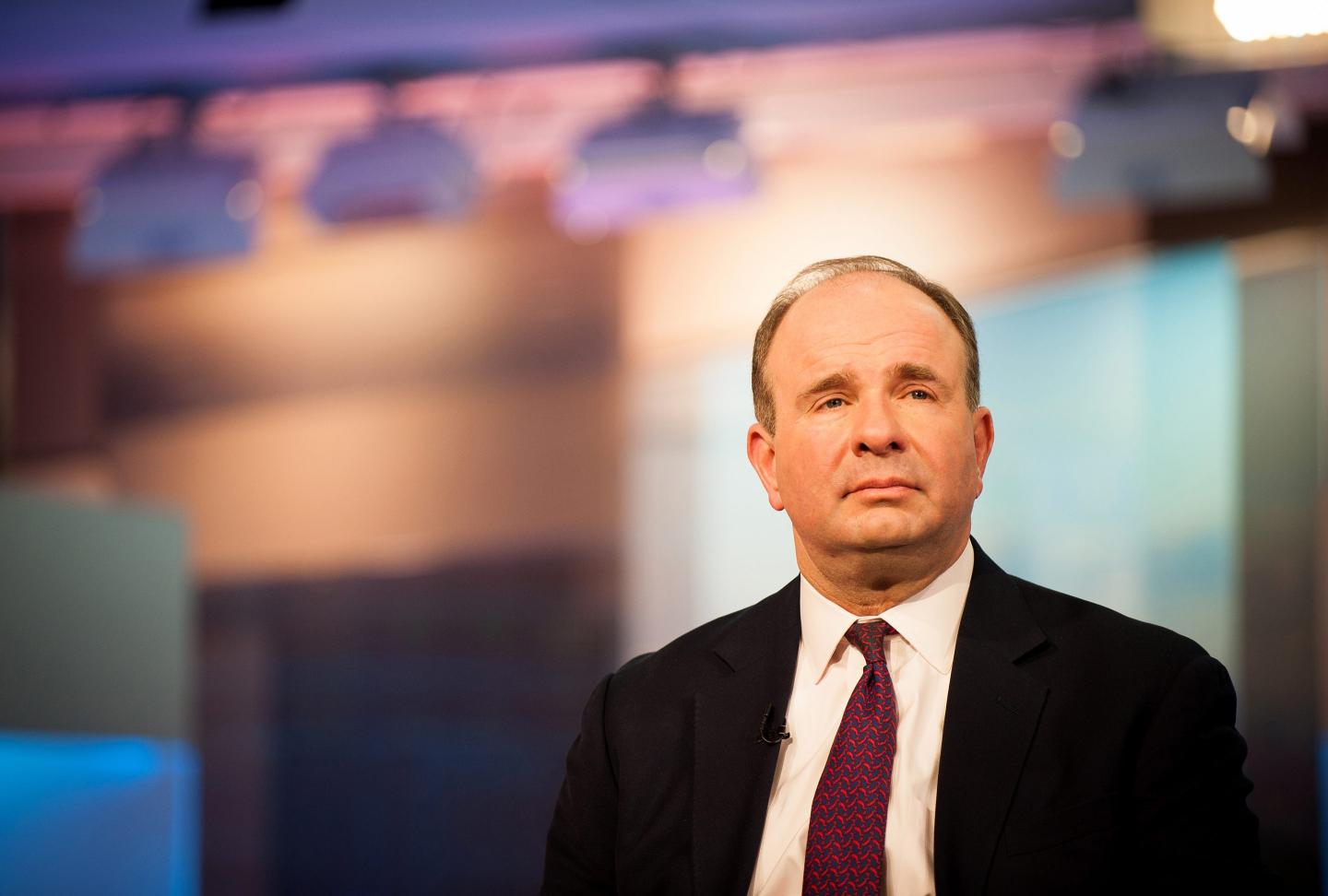
J.P. Morgan's Bob Michele manages $700 billion in investments.
JPMorgan’s Bob Michele sees too many parallels to the 2008 calm before the storm to dismiss the risks out of hand.Kholood Eid—Bloomberg/Getty Images
Add Fortune on Google for similar content.

It’s often said those who don’t learn from history are doomed to repeat it—and JPMorgan’s chief investment officer thinks markets need to take a refresher history course.  

Bob Michele, who is responsible for managing $700 billion in assets for the world’s most valuable bank, believes there are too many current parallels to the 2008 global financial crisis to simply dismiss the idea of a repeat out of hand. 

Despite three of the four largest bank failures in U.S. history occurring this spring, economic data has proved resilient and equity prices have continued their march higher, underpinned by hopes for a coming productivity surge, thanks to generative artificial intelligence. 

Fifteen years ago, JPMorgan famously bought Wall Street’s fifth largest investment bank, Bear Stearns, in a government-brokered deal to stave off its collapse—not unlike its recent acquisition of First Republic Bank that looks to have stopped further contagion among regional lenders.

“This does remind me an awful lot of that March-to-June period in 2008,” Michele told CNBC in an interview on Friday, citing the three-month rally that followed the Bear deal. “The markets viewed it as…there was a crisis, there was a policy response, and the crisis is solved.”

Michele is now stress testing his assets for a 3% to 5% contraction in economic activity over a couple of quarters, since he’s not buying rosy predictions from Goldman Sachs that the U.S. can escape even the type of mild recession that has already befallen Europe.

“It would be a miracle if this ended without recession,” said Michele, who also serves as global head of fixed income for JPMorgan’s asset management arm.

The sheer size of the economy can often mean that by the time leaks spring in the facade, the structural damage has already been done. 

Risks abound, from equity prices to commercial real estate

Many Wall Street veterans hadn’t launched their careers the last time the U.S. confronted inflation rates that were this high, and the subsequent draconian tightening by the Fed may not have been felt yet. This is because real rates—i.e., once adjusted for annualized inflation rates of 4.4%, using the Fed’s preferred yardstick—while no longer negative, have not reached the point that they constitute being materially restrictive to economic growth. 

And although residential property has become less of a concern, vacancy rates in the commercial real estate (CRE) sector have shot up following the shift toward remote work. 

More than $1.4 trillion in U.S. CRE loans are due to mature by 2027, with $270 billion alone coming due this year, according to real estate data provider Trepp. Much of this debt will have to be rolled over at higher rates.

“There are a lot of companies sitting on very low-cost funding,” Michele said. “When they go to refinance, it will double, triple, or they won’t be able to [roll it over], and they’ll have to go through some sort of restructuring or default.”

Another red flag for Investors is the aftershock from the debt ceiling negotiations. The Treasury General Account, Uncle Sam’s coffer, is nearly exhausted owing to a restriction on issuing new IOUs that was in place until the talks were resolved. 

Now a $1 trillion tsunami of high-quality government paper is slated to hit markets before September, at a time when Michele warns the Fed is already draining $95 billion in liquidity—the oxygen that fuels asset prices—every month through quantitative tightening.

Should investors like billionaire Ken Griffin, boss of Wall Street’s most successful hedge fund, decide the A.I. hype is more bubble than substance at current valuations, outflows from riskier stocks into safer bonds yielding respectable returns could hammer equities.

Economic threat was dismissed all the way until the end

What few might remember is that the subprime crisis was actually a train wreck moving so slowly few imagined at the time the cataclysm that was to befall the globe in the latter half of 2008.

Arguably the starting shot came at the end of March 2007, when Fed Chair Ben Bernanke told Congress spillover risks to the broader economy emanating from the subprime mortgage market were “likely to be contained.”

At the time he spoke, the largest independent U.S. provider of loans to homebuyers with poor credit scores, New Century Financial, was already teetering on the edge; the following week it would ultimately file for Chapter 11 bankruptcy. 

The problems at Bear Stearns didn’t even begin to materialize until the subsequent June, when the investment bank engineered a $3.2 billion rescue of its own hedge funds that speculated on the U.S. housing market. 

Its March 2008 shotgun wedding to JPMorgan seemed to mark the high-water mark of the crisis, but it still took another six months before the bankruptcy of Lehman Brothers. 

Just as important, Lehman, while the most spectacular victim, was by no means the only one.

American International Group, the world’s largest insurer at the time, required a staggering $182 billion in taxpayer aid because of risky bets taken by a small number of London employees at AIG Financial Products, a relatively unknown unit. 

Fannie Mae and Freddie Mac, the two government sponsored enterprises backing roughly half of all U.S. home loans, became wards of the state. Major banks like Washington Mutual, Wachovia, and Merrill Lynch either collapsed or were gobbled up on the cheap.

“There are a lot of things that resonate with 2008,” Michele said. “Yet until it happened, it was largely dismissed.”

About the Author
Christiaan Hetzner
By Christiaan HetznerSenior Reporter
Instagram iconLinkedIn iconTwitter icon

Christiaan Hetzner is a former writer for Fortune, where he covered Europe’s changing business landscape.

See full bioRight Arrow Button Icon
Add Fortune on Google for similar content.

Latest in Finance

Finance
Lorem ipsum dolor sit amet, consectetur adipiscing elit, sed do eiusmod tempor incididunt ut labore et dolore magna aliqua. Ut enim ad minim veniam
By Fortune Editors
October 20, 2025
Finance
Lorem ipsum dolor sit amet, consectetur adipiscing elit, sed do eiusmod tempor incididunt ut labore et dolore magna aliqua. Ut enim ad minim veniam
By Fortune Editors
October 20, 2025
Finance
Lorem ipsum dolor sit amet, consectetur adipiscing elit, sed do eiusmod tempor incididunt ut labore et dolore magna aliqua. Ut enim ad minim veniam
By Fortune Editors
October 20, 2025
Finance
Lorem ipsum dolor sit amet, consectetur adipiscing elit, sed do eiusmod tempor incididunt ut labore et dolore magna aliqua. Ut enim ad minim veniam
By Fortune Editors
October 20, 2025
Finance
Lorem ipsum dolor sit amet, consectetur adipiscing elit, sed do eiusmod tempor incididunt ut labore et dolore magna aliqua. Ut enim ad minim veniam
By Fortune Editors
October 20, 2025
Finance
Lorem ipsum dolor sit amet, consectetur adipiscing elit, sed do eiusmod tempor incididunt ut labore et dolore magna aliqua. Ut enim ad minim veniam
By Fortune Editors
October 20, 2025

Most Popular

Finance
Lorem ipsum dolor sit amet, consectetur adipiscing elit, sed do eiusmod tempor incididunt ut labore et dolore magna aliqua. Ut enim ad minim veniam
By Fortune Editors
October 20, 2025
Finance
Lorem ipsum dolor sit amet, consectetur adipiscing elit, sed do eiusmod tempor incididunt ut labore et dolore magna aliqua. Ut enim ad minim veniam
By Fortune Editors
October 20, 2025
Finance
Lorem ipsum dolor sit amet, consectetur adipiscing elit, sed do eiusmod tempor incididunt ut labore et dolore magna aliqua. Ut enim ad minim veniam
By Fortune Editors
October 20, 2025
Finance
Lorem ipsum dolor sit amet, consectetur adipiscing elit, sed do eiusmod tempor incididunt ut labore et dolore magna aliqua. Ut enim ad minim veniam
By Fortune Editors
October 20, 2025
Finance
Lorem ipsum dolor sit amet, consectetur adipiscing elit, sed do eiusmod tempor incididunt ut labore et dolore magna aliqua. Ut enim ad minim veniam
By Fortune Editors
October 20, 2025
Finance
Lorem ipsum dolor sit amet, consectetur adipiscing elit, sed do eiusmod tempor incididunt ut labore et dolore magna aliqua. Ut enim ad minim veniam
By Fortune Editors
October 20, 2025
Fortune Secondary Logo
Rankings
  • 100 Best Companies
  • Fortune 500
  • Global 500
  • Fortune 500 Europe
  • Most Powerful Women
  • World's Most Admired Companies
  • See All Rankings
  • Lists Calendar
Sections
  • Finance
  • Fortune Crypto
  • Features
  • Leadership
  • Health
  • Commentary
  • Success
  • Retail
  • Mpw
  • Tech
  • Lifestyle
  • CEO Initiative
  • Asia
  • Politics
  • Conferences
  • Europe
  • Newsletters
  • Personal Finance
  • Environment
  • Magazine
  • Education
Customer Support
  • Frequently Asked Questions
  • Customer Service Portal
  • Privacy Policy
  • Terms Of Use
  • Single Issues For Purchase
  • International Print
Commercial Services
  • Advertising
  • Fortune Brand Studio
  • Fortune Analytics
  • Fortune Conferences
  • Business Development
  • Group Subscriptions
About Us
  • About Us
  • Press Center
  • Work At Fortune
  • Terms And Conditions
  • Site Map
  • About Us
  • Press Center
  • Work At Fortune
  • Terms And Conditions
  • Site Map
  • Facebook icon
  • Twitter icon
  • LinkedIn icon
  • Instagram icon
  • Pinterest icon

Latest in Finance

SoFi® vs. College Ave student loans
Personal Financestudent loans and debt
SoFi® vs. College Ave student loans
By Joseph HostetlerJuly 13, 2026
3 hours ago
SoFi® private student loans review 2026
Personal FinanceLoans
SoFi® private student loans review 2026
By Joseph HostetlerJuly 13, 2026
3 hours ago
college
Personal FinanceColleges and Universities
The real reason college costs 43% of family income isn’t tuition
By Thomas Adam and The ConversationJuly 13, 2026
4 hours ago
Trump takes a page from Iran’s playbook on the Strait of Hormuz, leveraging U.S. influence over the contested chokepoint to generate revenue
Middle EastIran
Trump takes a page from Iran’s playbook on the Strait of Hormuz, leveraging U.S. influence over the contested chokepoint to generate revenue
By Jason MaJuly 13, 2026
5 hours ago
Meta’s AI data center cost went from $10 billion to $50 billion in under 2 years—and split the town in two
Big TechMeta
Meta’s AI data center cost went from $10 billion to $50 billion in under 2 years—and split the town in two
By Sydney LakeJuly 13, 2026
7 hours ago
U.S. and Iran both say they control the Strait of Hormuz amid attacks that threaten return to all-out war and global economic upheaval
EnergyIran
U.S. and Iran both say they control the Strait of Hormuz amid attacks that threaten return to all-out war and global economic upheaval
By The Associated Press and Jon GambrellJuly 13, 2026
9 hours ago

Most Popular

The U.S. spent $30 billion to ditch textbooks for laptops and tablets: The result is the first generation less cognitively capable than their parents
Innovation
The U.S. spent $30 billion to ditch textbooks for laptops and tablets: The result is the first generation less cognitively capable than their parents
By Sasha RogelbergJuly 12, 2026
1 day ago
Peter Thiel and other tech billionaires are publicly shielding their children from the products that made them rich
Big Tech
Peter Thiel and other tech billionaires are publicly shielding their children from the products that made them rich
By Marco Quiroz-GutierrezJuly 12, 2026
1 day ago
Trump embraces Australian retirement system backed by Larry Fink
Personal Finance
Trump embraces Australian retirement system backed by Larry Fink
By Brianna Sosa and BloombergJuly 12, 2026
1 day ago
Current price of oil as of July 13, 2026
Personal Finance
Current price of oil as of July 13, 2026
By Joseph HostetlerJuly 13, 2026
13 hours ago
Ex-PepsiCo CEO Indra Nooyi worked from midnight until 5 a.m. as a receptionist to pay for her Yale degree—and she says ‘respect went up’ because of it
Success
Ex-PepsiCo CEO Indra Nooyi worked from midnight until 5 a.m. as a receptionist to pay for her Yale degree—and she says ‘respect went up’ because of it
By Preston ForeJuly 6, 2026
7 days ago
Wyoming officials say Meta’s 715,000-square-foot data center is responsible for contaminating its water system with a rare bacterium
Environment
Wyoming officials say Meta’s 715,000-square-foot data center is responsible for contaminating its water system with a rare bacterium
By Sasha RogelbergJuly 10, 2026
3 days ago

© 2026 Fortune Media IP Limited. All Rights Reserved. Use of this site constitutes acceptance of our Terms of Use and Privacy Policy | CA Notice at Collection and Privacy Notice | Do Not Sell/Share My Personal Information
FORTUNE is a trademark of Fortune Media IP Limited, registered in the U.S. and other countries. FORTUNE may receive compensation for some links to products and services on this website. Offers may be subject to change without notice.