The campaign to win reparations for Black Americans plans to bring broader support for smaller nonprofits advancing the cause, with a new philanthropic funding initiative announced Friday at the “Alight Align Arise” national conference in Atlanta.
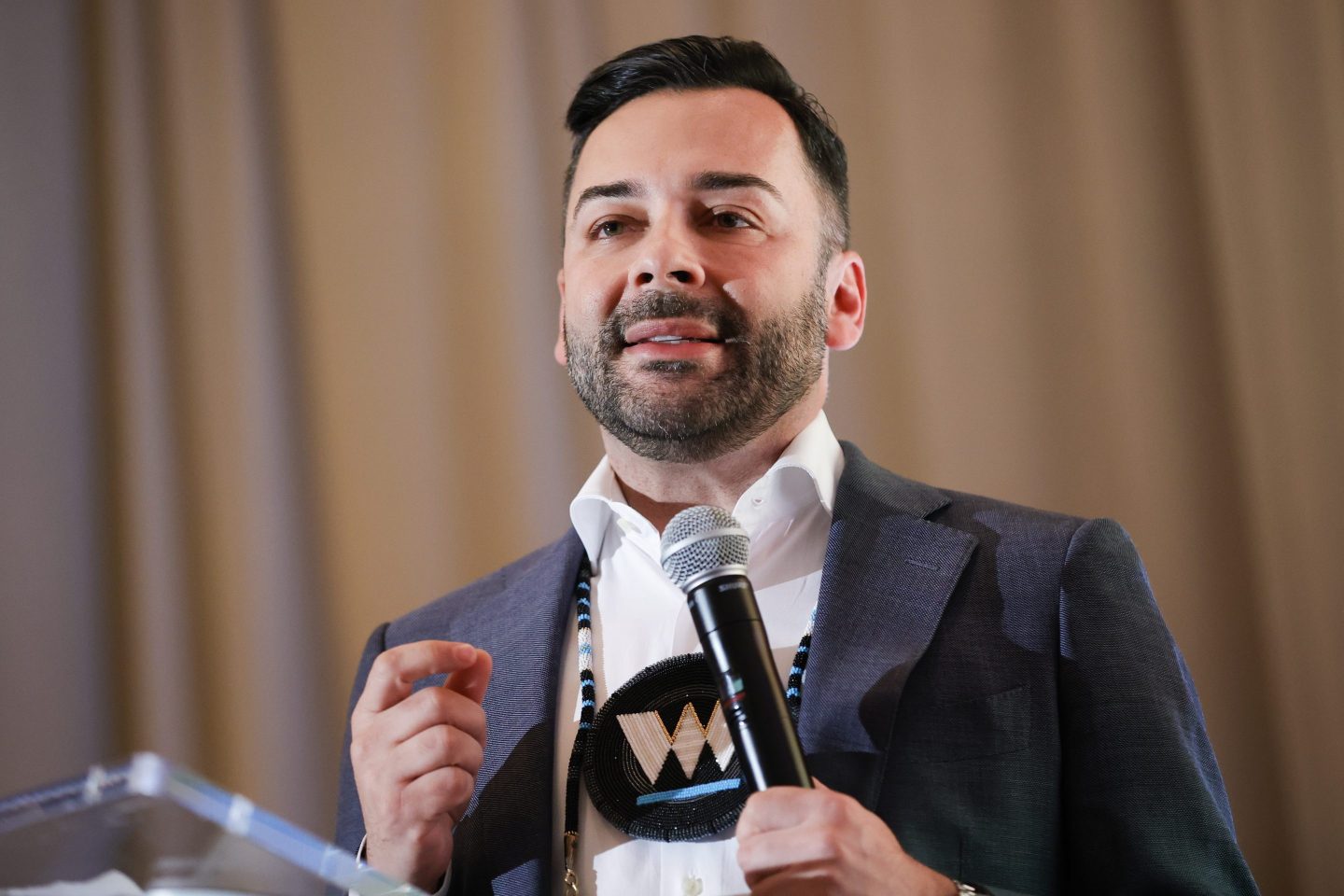
The Decolonizing Wealth Project, an organization dedicated to creating racial equity through education and “radical reparative giving,” is committing $20 million over five years to boost campaigns for reparations across the country, along with a research collaboration with Boston University to map reparation projects.
The project’s founder and CEO Edgar Villanueva announced the plans at the Atlanta gathering of advocates, including the writer Ta-Nehisi Coates, journalist Nikole Hannah-Jones and U.S. Rep. Jamaal Bowman, the Democratic congressman whose district represent parts of The Bronx and Westchester County in New York.
“The point of all of this for us is to elevate the issue and the opportunity for reparations and to resource these groups who have been doing this work, often for a little or no money, and it takes the money to win,” said Villanueva in an interview.
The nonprofit, which is fiscally sponsored by Allied Media Projects, has not yet fully funded the commitment but has brought in millions of dollars in unrestricted grants from the likes of the Ford Foundation and the John D. and Catherine T. MacArthur Foundation in recent years. That’s in addition to hundreds of thousands of dollars in donations from individuals to their reparations campaign fund supporting Black and Indigenous groups, called Liberated Capital, which the MacArthur Foundation supports.
Even before the police killing of George Floyd three years ago, institutions and municipalities began examining their own roles in systems that oppressed Black Americans, including slavery, redlining and gentrification. They also looked at policies impacting other communities of color.
Last year, Harvard University pledged $100 million to atone for its extensive ties with slavery. In 2021, the Minnesota-based Bush Foundation committed $100 million, which they raised through issuing emergency bonds during the pandemic, to address economic inequality in Black and Native American communities. Also in 2021, the city of Evanston, Illinois, launched a program to pay $10 million to facilitate home repairs or down payments for Black residents, the first of its kind in the U.S.
Civil rights lawyer and professor at the Harvard Kennedy School, Cornell William Brooks, has a quilt hanging in his office that was made from the clothing of his great-great grandfather, which he points to as just one measure of the present connection to the impact of slavery. His scholarship looks at the many ways the U.S. government compensates groups who have been harmed, though not yet Black Americans.
“The consequence of not having this reparations discourse and debate is that our history is being erased, and as importantly if not more importantly, literally people being robbed of what they earned,” Brooks said, referencing for example, Black World War II veterans who were unable to use the housing and education benefits of the G.I. Bill.
While overall, most Americans do not support reparations, younger people do, which both Brooks and Villanueva see as a sign of the strength of the movement.
“As the demands for reparations are increasing, we’re also seeing an attack on history,” Villanueva said, referencing efforts to ban books and change school curriculums to diminish references to reparations among other topics.
The Decolonizing Wealth Project will also fund research into what stories and arguments influence people to support reparations. They will likely point to previous payments made to groups of people, like Japanese Americans incarcerated during the Second World War or official apologies made by the U.S government for Native American boarding schools.
The price tag associated with proposed cash compensation has drawn skepticism, for example, in California where a reparations task force estimated the state is responsible for more than $500 billion in damages due to decades of overpolicing, mass incarceration and redlining. The state currently faces a projected $31.5 billion deficit.
The California commission voted last year that any compensation be limited to descendants of Black people living in the United States before the end of the 19th century and more recently, limited eligibility to people living in California for at least six months while certain discriminatory practices and policies were in effect.
Martin Gilens, a public policy professor at UCLA, said parameters that direct potential benefits to groups the wider population sees as deserving may help to win support for such initiatives. He wrote a book about how misconceptions that welfare disproportionately benefited Black people led to diminished support for those programs.
Reparations opponents argue that current taxpayers should not be responsible for damages for historical wrongs.
“It’s kind of a foreign concept to Americans, this idea of collective reparations for collective harms,” said Gilens.
Brooks, the professor and civil rights lawyer, argues the local campaigns run by nonprofits won’t be able to resolve the call for reparations, though they lay the groundwork for more comprehensive action.
“They are absolutely necessary in trying to ensure that the federal government and local governments, institutions, companies, communities do what they can for the harms that they in fact create.” Brooks said.
Some people see reparations as a handout that takes something away from them, which Rep. Bowman disputes.
“That’s not how our federal spending works and that’s not how this works,” he told The Associated Press. “It’s not taking from Peter to pay Paul.”
Will Cordery is a philanthropy consultant and directs the Reparative Action Fund at Satterberg Foundation, which supports the Decolonizing Wealth Project. In his experience, individuals and smaller family foundations have been much quicker to grapple with and support reparations than larger foundations, which are more bound by their missions and internal procedures.
He hopes that funding more nonprofits to work on reparations campaigns will mean in five years that more people understand that reparations is not just about handing over money but about healing past harms.
“How much more do we need in order to really have some reckoning?” Cordery said. “I hope that we have moved the narrative and thereby the support for repair in this country.”