Compared to the 1990s, when the internet arose, the world is in a much more precarious and disunited position. Geopolitical tensions are increasing the risk of geographic fragmentation. This matters for technology standards. If the world begins to fracture just as the digital and physical realms start coming together, machines could lose the ability to communicate across borders, limiting the exponential potential of digital innovation.
The International Telecommunication Union (ITU) secretary-general, Doreen Bogdan-Martin, has called for the industry to speak “the same language” and reach a consensus on global technical standards to make digital networks not only more connected and efficient but, crucially, more sustainable and accessible. That’s a view that we wholeheartedly agree with at Nokia.
When people can’t understand one another, it can be awkward or even amusing; but when machines don’t talk the same language, it can be costly–and sometimes fatal. From planes, trains, and automobiles, to medical devices and shipping containers, to the voltage of the electricity coming from the wall socket of a hotel room–all require a degree of standardization for their smooth operation across national borders.
Standards help ensure products and devices made by different manufacturers remain interoperable. And shared standards help spur innovation.
Look at the internet. The success of the World Wide Web was shaped by the invisible architecture of shared standards, common protocols, and interoperability. That open foundation enabled different players, across different countries, to contribute the complementary elements that make up the internet as we know it.
Digitalization is rapidly reaching the shores of almost every industry, from agriculture to energy to manufacturing to transport. As a business-to-business technology innovation leader, Nokia is helping to ensure that this wave brings badly needed productivity, efficiency, safety, and sustainability gains to a range of industries.
Research from Accenture found industrial enterprises that have harnessed digital technologies–such as automation, machine learning, cloud and data analytics, digital twins, and agile engineering–reduced idea-to-product time by 9.5% and demand-to-delivery time by 10.9%. Another study, by McKinsey, found that enterprises leading the way in integrating machine intelligence into their operations improved their forecasting analytics by 13% compared to just 3% for digital laggards. And taking a longer-term perspective, Nokia’s Bell Labs Consulting project 5G-enabled industrial digitalization will help grow global GDP by $8 trillion by 2030.
So, the prize on offer is big. But the pitfalls are also becoming bigger.
By 2030, as we move from the 5G age into the 6G era, and as consumer, enterprise, and industrial metaverses emerge, every physical thing it makes sense to connect will be connected.
Our company’s purpose is to create technology that helps the world act together. Cooperating with peers and competitors to define technology standards is an important part of that. Nokia is active in 300 standardization and industry organizations globally, including the ITU, the European Telecommunications Standards Institute (ETSI), and the O-RAN (Open RAN) Alliance.
Collaboration on standards helps ensure that important topics such as energy efficiency, sustainability, inclusion, human rights, and safety and privacy regulations are discussed alongside technical aspects such as radio spectrum allocation, so they can be embedded into new technologies at the design stage.
Nokia plays a leading role in shaping 5G and 6G standards to support interoperability and innovation and encourage a healthy and competitive business environment. A prime example is how we license our inventions, on fair terms, to more than 200 different companies, giving them a quicker and more cost-effective way of getting new products and solutions to market, with consumers the main beneficiaries.
Working together also helps us to preserve a balanced and transparent licensing system for intellectual property and patents, which rewards innovation and incentivizes the necessary R&D investment to create the technologies of tomorrow. Ultimately, companies can only invest in research and contribute to open standards development if they’re confident of receiving fair and reasonable royalties for their innovations.
If we want to create technology that we can trust, then we need to act together on shared standards.
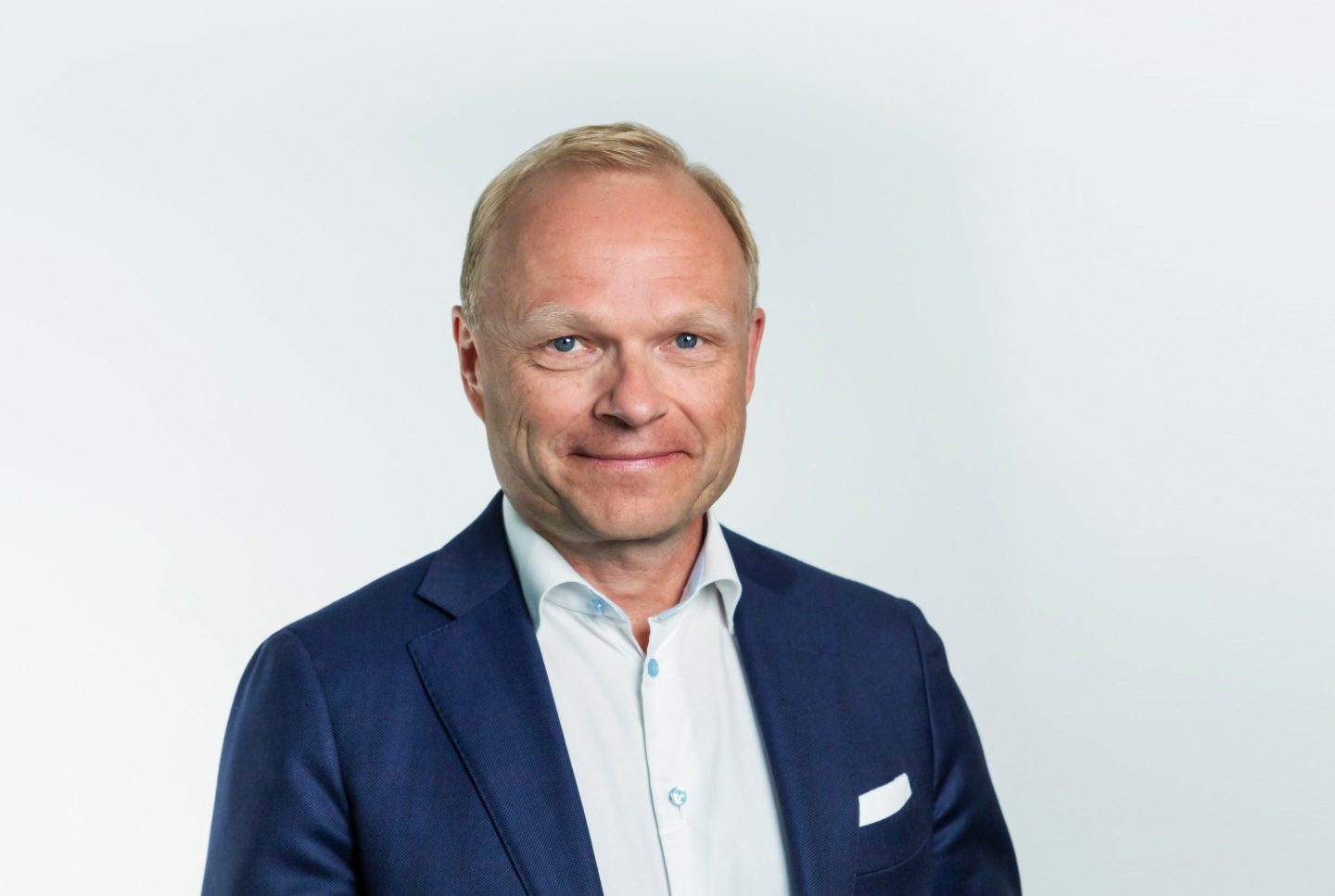
Pekka Lundmark is the president and CEO of Nokia, a Fortune Global 500 company.
The opinions expressed in Fortune.com commentary pieces are solely the views of their authors and do not necessarily reflect the opinions and beliefs of Fortune.
More must-read commentary published by Fortune:
- The ‘Elon Paradox’: He sells Teslas–but you’d expect him to drive a Ram. Here’s what your car says about your politics
- The alt-right economy is failing. Here’s the real performance of anti-woke entrepreneurs
- The debt ceiling deal has reduced access to supplemental food plans. Here’s why that’s a false economy
- E-bike injuries: ‘We’re only seeing the tip of the iceberg,’ trauma experts warn