Apple appears poised to unveil a long-rumored headset that will place its users between the virtual and real world, while also testing the technology trendsetter’s ability to popularize new-fangled devices after others failed to capture the public’s imagination.
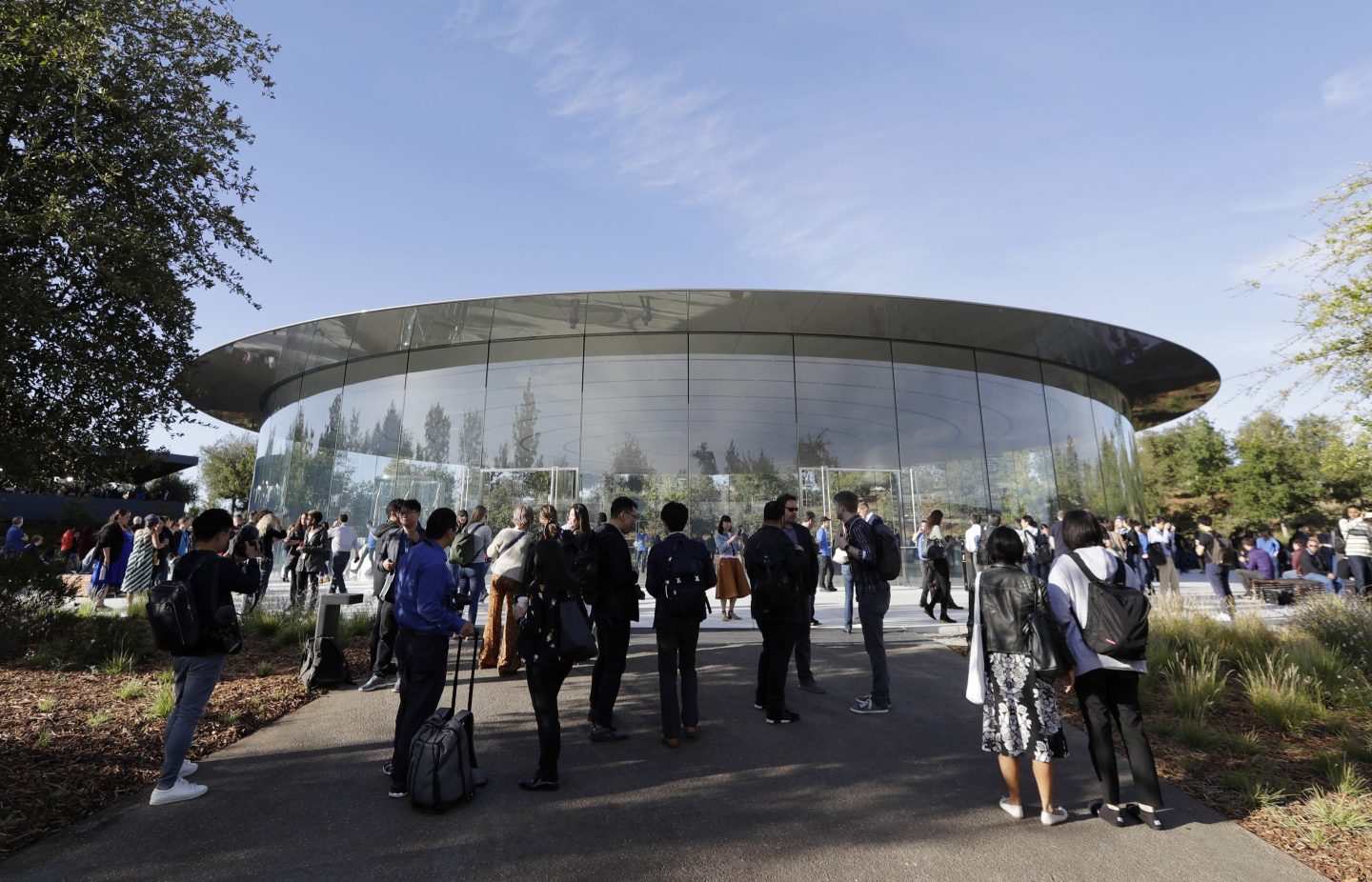
After years of speculation, the stage is set for the widely anticipated announcement to be made Monday at Apple’s annual developers conference in a Cupertino, California, theater named after the company’s late co-founder Steve Jobs. Apple is also likely to use the event to show off its latest Mac computer, preview the next operating system for the iPhone and discuss its strategy for artificial intelligence.
But the star of the show is expected to be a pair of goggles — perhaps called “Reality Pro,” according to media leaks — that could become another milestone in Apple’s lore of releasing game-changing technology, even though the company hasn’t always been the first to try its hand at making a particular device.
Apple’s lineage of breakthroughs date back to a bow-tied Jobs peddling the first Mac in 1984 —a tradition that continued with the iPod in 2001, the iPhone in 2007, the iPad in 2010, the Apple Watch in 2014 and its AirPods in 2016.
But with a hefty price tag that could be in the $3,000 range, Apple’s new headset may also be greeted with a lukewarm reception from all but affluent technophiles.
If the new device turns out to be a niche product, it would leave Apple in the same bind as other major tech companies and startups that have tried selling headsets or glasses equipped with technology that either thrusts people into artificial worlds or projects digital images with scenery and things that are actually in front of them — a format known as “augmented reality.”
Apple’s goggles are expected be sleekly designed and capable of toggling between totally virtual or augmented options, a blend sometimes known as “mixed reality.” That flexibility also is sometimes called external reality, or XR for shorthand.
Facebook founder Mark Zuckerberg has been describing these alternate three-dimensional realities as the “metaverse.” It’s a geeky concept that he tried to push into the mainstream by changing the name of his social networking company to Meta Platforms in 2021 and then pouring billions of dollars into improving the virtual technology.
But the metaverse largely remains a digital ghost town, although Meta’s virtual reality headset, the Quest, remains the top-selling device in a category that so far has mostly appealed to video game players looking for even more immersive experiences.
Apple executives seem likely to avoid referring to the metaverse, given the skepticism that has quickly developed around that term, when they discuss the potential of the company’s new headset.
In recent years, Apple CEO Tim Cook has periodically touted augmented reality as technology’s next quantum leap, while not setting a specific timeline for when it will gain mass appeal.
“If you look back in a point in time, you know, zoom out to the future and look back, you’ll wonder how you led your life without augmented reality,” Cook, who is 62, said last September while speaking to an audience of students in Italy. “Just like today you wonder how did people like me grow up without the internet. You know, so I think it could be that profound. And it’s not going to be profound overnight.”
The response to virtual, augmented and mixed reality has been decidedly ho-hum so far. Some of the gadgets deploying the technology have even been derisively mocked, with the most notable example being Google’s internet-connected glasses released more than a decade ago.
After Google co-founder Sergey Brin initially drummed up excitement about the device by demonstrating an early model’s potential “wow factor” with a skydiving stunt staged during a San Francisco tech conference, consumers quickly became turned off to a product that allowed its users to surreptitiously take pictures and video. The backlash became so intense that people who wore the gear became known as “Glassholes,” leading Google to withdraw the product a few years after its debut.
Microsoft also has had limited success with HoloLens, a mixed-reality headset released in 2016, although the software maker earlier this year insisted it remains committed to the technology.
Magic Leap, a startup that stirred excitement with previews of a mixed-reality technology that could conjure the spectacle of a whale breaching through a gymnasium floor, had so much trouble marketing its first headset to consumers in 2018 that it has since shifted its focus to industrial, healthcare and emergency uses.
Daniel Diez, Magic Leap’s chief transformation officer, said there are four major questions Apple’s goggles will have to answer: “What can people do with it? What does this thing look and feel like? Is it comfortable to wear? And how much is it going to cost?”
The anticipation that Apple’s goggles are going to sell for several thousand dollars already has dampened expectations for the product. Although he expects Apple’s goggles to boast “jaw dropping” technology, Wedbush Securities analyst Dan Ives said he expects the company to sell just 150,000 units during the device’s first year on the market — a mere speck in the company’s portfolio. By comparison, Apple sells more than 200 million iPhones, its marquee product a year. But the iPhone wasn’t an immediate sensation, with sales of fewer than 12 million units in its first full year on the market.
In a move apparently aimed at magnifying the expected price of Apple’s goggles, Zuckerberg made a point of saying last week that the next Quest headset will sell for $500, an announcement made four months before Meta Platform plans to showcase the latest device at its tech conference.
Since 2016, the average annual shipments of virtual- and augmented-reality devices have averaged 8.6 million units, according to the research firm CCS Insight. The firm expects sales to remain sluggish this year, with a sales projection of about 11 million of the devices before gradually climbing to 67 million in 2026.
But those forecasts were obviously made before it’s known whether Apple might be releasing a product that alters the landscape.
“I would never count out Apple, especially with the consumer market and especially when it comes to finding those killer applications and solutions,” Magic Leap’s Diez said. “If someone is going to crack the consumer market early, I wouldn’t be surprised it would be Apple.”