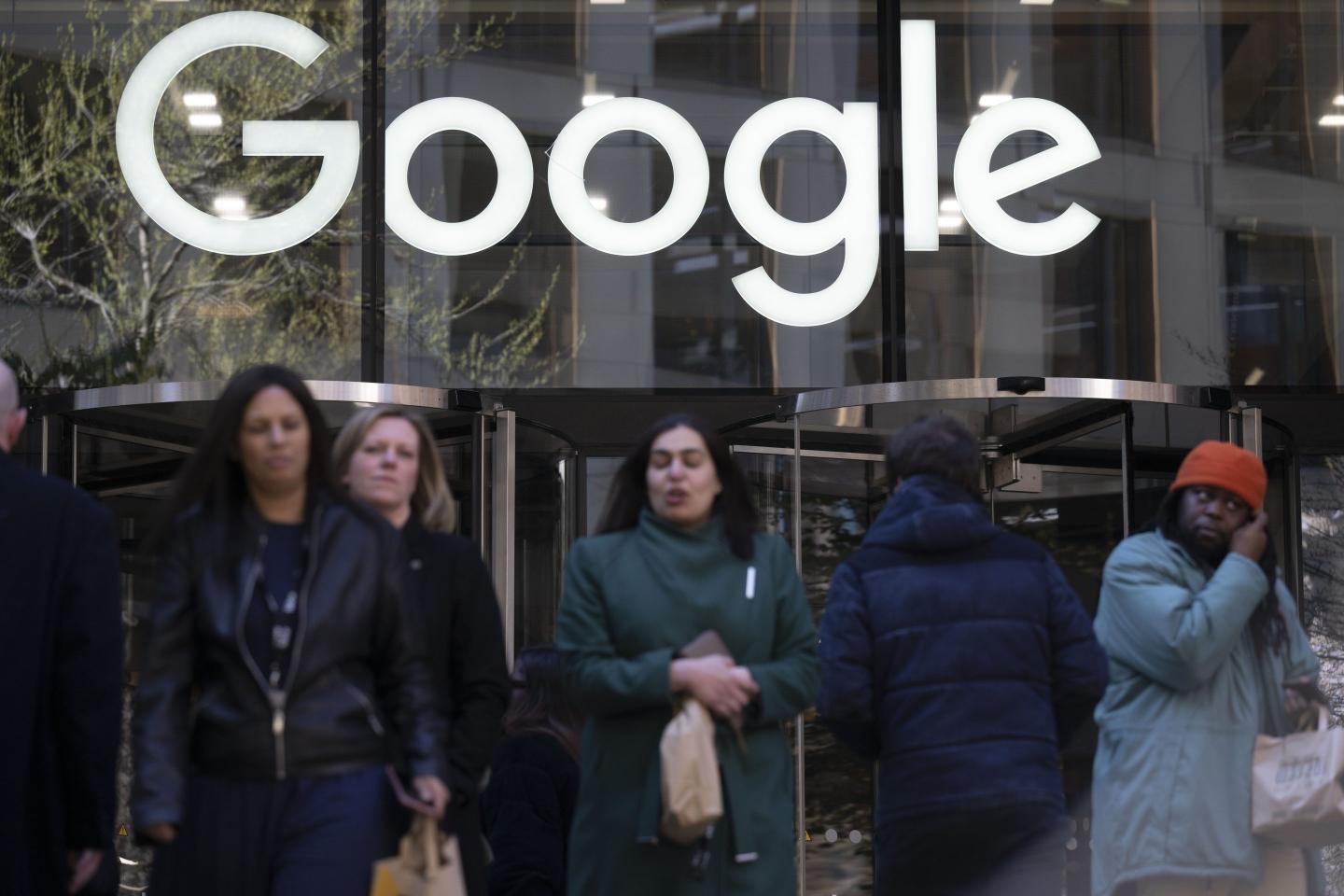
Last week, employees at Google parent Alphabet Inc. called for better treatment of staff during the layoff process in an open letter to CEO Sundar Pichai, after the company announced it was cutting a further 12,000 jobs. The kinds of consideration workers asked for included freezing new hires, seeking voluntary redundancies before compulsory ones, giving priority to laid-off workers for job vacancies, and letting workers finish scheduled periods of paid time off, such as parental and bereavement leave.
The letter, and the nature of the demands, are an indication of the frustration and mistrust following mass layoffs at Google earlier in the year, in which many employees had their access terminated in the middle of the night. Google’s approach to firing seemed to run counter to the company’s long-stated culture of employee well-being.
So what went wrong? How did we get here? And where are employee-employer relationships headed?
When COVID hit, it sparked a WFH boom. About a year into that, fatigue, isolation, and work anxiety set off the Great Resignation–the record number of people that have left their jobs since the beginning of the pandemic. Employers, seeking the productivity, innovation, and sense of belonging that comes with physical interaction at the workplace, started calling their employees back to their desks. Not everyone was happy, and “quiet quitting” spread. Soon that was met with “quiet firing.” In the meantime, markets have cooled, geopolitical tensions have risen, and the global economy’s 2023 outlook looks only “slightly less gloomy.”
Tech, following several bumper years of growth, hiring, and perks, is being affected worse than most. Now is the time of “loud firing.”
Some 200,000 tech workers have been laid off in the U.S. in the last 12 months, according to Layoffs.fyi, a website tracking industry layoffs. The cuts have been broad, including high performers and senior managers, from firms large and small. “We hired for a different economic reality than we face today,” Pichai told employees in the memo announcing the mass layoffs.
At least, they got a memo. Elon Musk’s chaotic takeover of Twitter and the subsequent mass layoffs there–including many who were laid off just before Christmas without any warning–seem to have set the tone for the rest of the tech industry to embark on what many believe to be a brutal and tone-deaf approach to layoffs. Microsoft, for example, hosted a private Sting concert at Davos the night before firing 10,000 people.
While the tech layoffs have been happening since at least the second quarter of 2022, it was Google’s recent mass layoffs–and specifically, the way they were done–that have garnered the most attention. Many of those laid off from Google have taken to social media to express their frustration at the way they were laid off–via automated emails in the middle of the night, being suddenly locked out of their corporate accounts, and abruptly losing access to things they’ve taken for granted for years.
The tech industry has long fostered an attitude that its workers are part of a family working together for a common goal. Silicon Valley was not Wall Street, where the workplace can be highly transactional. At Google, the company calls its workers Googlers. Meta calls its employees Metamates. Law firms and investment banks did not use such terms. Tech companies encouraged employees to bring their “whole self to work,” linking work with life.
The mass layoffs have put that ethos in danger, and it’s the reason many recently fired employees now feel betrayed.
Perhaps this is a natural outcome of these companies–Google, Meta, Microsoft, Apple, Twitter, Tesla, Amazon–growing into their late 20s, 30s, and even 40s. They make up seven out of the top 10 companies in the Fortune 500 by market capitalization. At that point, your list of stakeholders, and shareholders, is vastly larger than the scrappy startup years.
I worked in talent and career development at Google between 2005 and 2010, a period that included the 2008 financial crisis and its aftermath. I was involved in layoffs in EMEA and saw for myself how data-driven Google was in this process. Still, back then, the initial list was manually pulled.
Historically, Google uses data to help managers make decisions. This time, it seemed to me like data was used to actually make the firing decisions. While Google says no algorithms were involved in their recent mass layoffs, the approach seems to run counter to standard People Ops processes, in which these conversations would be filtered by local managers. Employees were let go via automated messages and account switch-offs at 3 a.m., which is just awful. And while Google has given a generous severance package, it’s a shame to see it undermined by the way the termination notice was delivered.
It’s almost as if they asked engineering to solve a business problem: Let’s use software to make decisions for us that remove the human element from the difficult decision-making process of who to fire and who to keep, and then automate those so no humans have to have difficult conversations with employees, who are sure to ask them all sorts of difficult, complex, and perplexing questions. Hit Enter.
Trust in the company–its values and principles, its relationships with its employees past, present, and future–seems not to have made the cut for the code.
It’s too early to determine whether this mass experiment in efficiency over emotional intelligence (EQ) was worth it. It erodes the trust that these companies have put years into building. It’s a very “Googley” way to tackle the problem: It’s potentially very efficient, but it creates a culture of fear and uncertainty. In a tight-knit industry, it removes leaders from difficult decisions with colleagues and friends (the computer made me do it!).
There will be longer-term repercussions from this approach. The most immediate will be the morale of the employees left behind, who no longer trust in their individual manager’s autonomy. Loyalty could become an issue in future recruitment. It could also undermine tech companies’ reputations and the trust people have in their products.
For employers, it’s a wake-up call. They should be keeping an eye on positive examples of which companies get this right and maintain trust with those departing as well as those who get to stay. This applies to young startups too. What we don’t want is for startups to start using ChatGPT to lay off workers. In tough economic times, we shouldn’t lose sight of the immense innovation and opportunities that startups represent.
Innovation depends on an environment of vulnerability and experimentation–where you can make mistakes and speak your mind–to survive. If “loud firing” becomes the norm, it will have a chilling effect on innovation. Nobody wins from that.
There is no doubt that algorithms and A.I. can be useful. They can be used to identify the most productive employees, give the most accurate performance reviews, and make sure that the process is as fair as possible. Transparency on bias coded into the system also builds trust. But it’s important to remember that there is still a human element involved in the process.
Founders should be cautious about relying too much on technology when deciding layoffs. They still need to tell the company why they’re making the cuts, and they need to tell the story of how their company is going to be successful in the future if they hope to retain employees or attract new talent. You must tell the people that stay behind why they should continue to do so. You can’t just hide behind your screen and hope employees don’t come ask you tough questions, because they will, as they should. As leaders, you need to be able to justify the who, when, and why.
Ultimately, it comes down to companies being better attuned to the fact that tech is fundamentally about working on something bigger than yourself. Invest in people–and if you must make the tough decision to cut jobs, be as respectful, transparent, and generous as possible.
Dan Hynes is a partner at Atomico, where he leads the VC firm’s growth acceleration team. Prior to joining Atomico, Dan held talent leadership roles at Cisco, Google, and Skype.
The opinions expressed in Fortune.com commentary pieces are solely the views of their authors and do not necessarily reflect the opinions and beliefs of Fortune.
More must-read commentary published by Fortune:
- A recession in 2023 is now inevitable. Layoffs in tech and finance will spread to other sectors
- Energy analysts have been making gaseous calls since Russia invaded Ukraine. It’s time to clear away the smoke of economic groupthink
- I am a Starbucks barista who doesn’t qualify for all the wonderful benefits you keep hearing about. We want the ‘different kind of company’ that Howard Schultz promised but failed to deliver
- The average NFL owner is 75–and not rich enough to hang onto their team