• Home
  • Latest
  • Fortune 500
  • Finance
  • Tech
  • Leadership
  • Lifestyle
  • Rankings
  • Multimedia
EnvironmentEnvironment

Can you put a price on one of the most important rivers in the world? Some researchers are giving it a shot

By
Stefan Lovgren
Stefan Lovgren
and
The Associated Press
Down Arrow Button Icon
By
Stefan Lovgren
Stefan Lovgren
and
The Associated Press
Down Arrow Button Icon
April 4, 2023, 4:49 PM ET
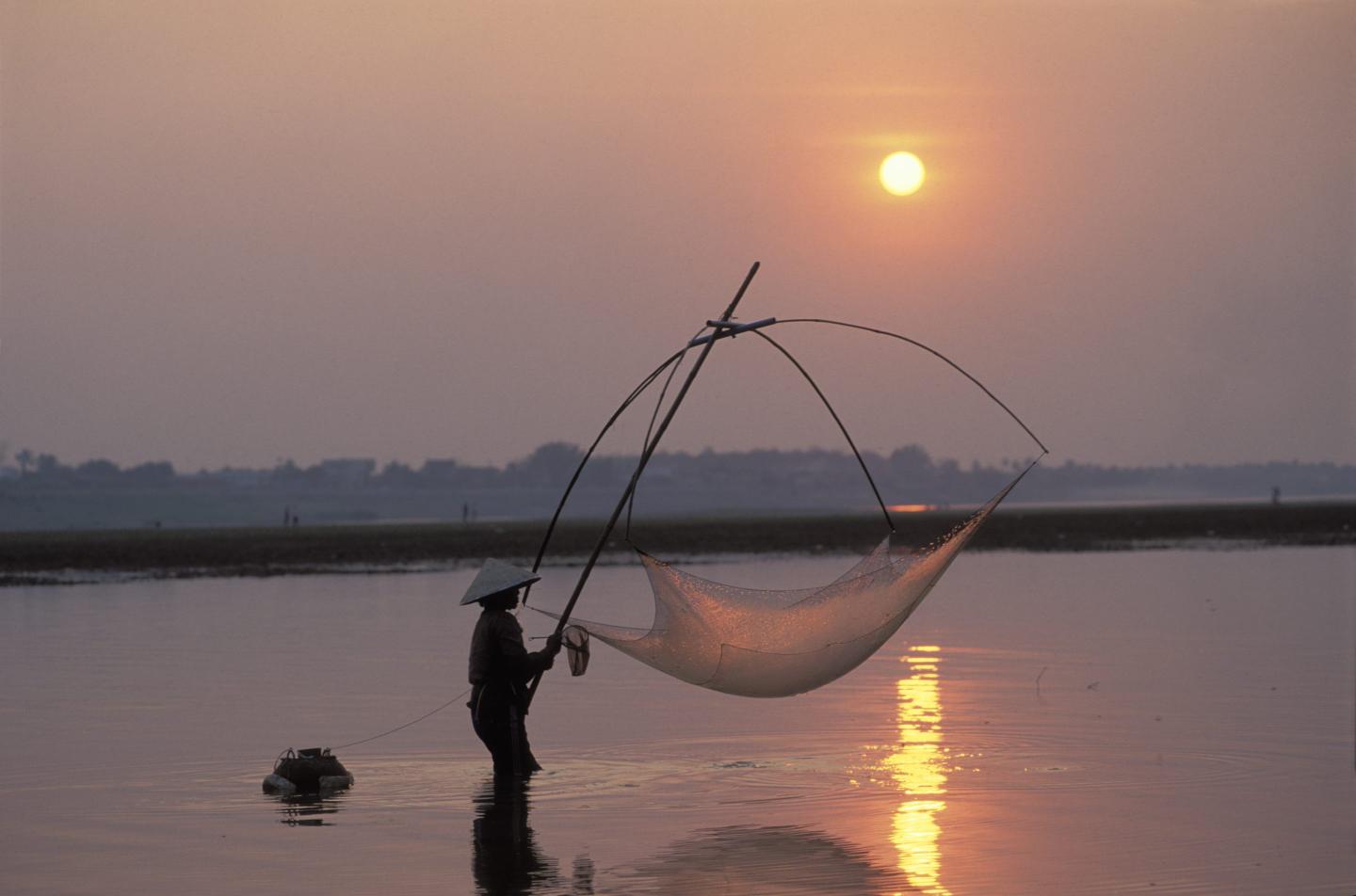
Fishing at Sunset on the Mekong River
Fishing at Sunset on the Mekong RiverChristophe Boisvieux—Getty Images

Southeast Asia’s Mekong may be the most important river in the world. Known as the “mother of waters,” it is home to the world’s largest inland fishery, and the huge amounts of sediments it transports feed some of the planet’s most fertile farmlands. Tens of millions of people depend on it for their livelihoods.

But how valuable is it in monetary terms? Is it possible to put a dollar value on the multitude of ecosystem services it provides, to help keep those services healthy into the future?

That’s what my research colleagues and I are trying to figure out, focusing on two countries that hold the river’s most productive areas for fishing and farming: Cambodia and Vietnam.

Understanding the value of a river is essential for good management and decision-making, such as where to develop infrastructure and where to protect nature. This is particularly true of the Mekong, which has come under enormous pressure in recent years from overfishing, dam building and climate change, and where decisions about development projects often do not take environmental costs into account.

“Rivers such as the Mekong function as life-support systems for entire regions,” said Rafael Schmitt, lead scientist at the Natural Capital Project at Stanford University, who has studied the Mekong system for many years. “Understanding their values, in monetary terms, can be critical to fairly judge the impacts that infrastructure development will have on these functions.”

Calculating that value isn’t simple, though. Most of the natural benefits that a river brings are, naturally, under water, and thus hidden from direct observation. Ecosystem services may be hard to track because rivers often flow over large distances and sometimes across national borders.

Enter natural capital accounting

The theory of natural capital suggests that ecosystem services provided by nature – such as water filtration, flood control and raw materials – have economic value that should be taken into account when making decisions that affect these systems.

Some people argue that it’s morally wrong to put a financial price on nature, and that doing so undermines people’s intrinsic motivation to value and protect nature. Critics say valuations often do not capture the whole worth of a natural service.

Proponents maintain that natural capital accounting puts a spotlight on natural systems’ value when weighed against commercial pressures. They say it brings visibility to natural benefits that are otherwise hidden, using language that policymakers can better understand and utilize.

Several countries have incorporated natural capital accounting in recent years, including Costa Rica, Canada and Botswana. Often, that has led to better protection of natural resources, such as mangrove forests that protect fragile coastlines. The U.S. government also announced a strategy in 2023 to start developing metrics to account for the value of underlying natural assets, such as critical minerals, forests and rivers.

However, natural capital studies have largely focused on terrestrial ecosystems, where the trade-offs between human interventions and conservation are easier to see.

When valuing rivers, the challenges run much deeper. “If you cut down a forest, the impact is directly visible,” Schmitt points out. “A river might look pristine, but its functioning may be profoundly altered by a faraway dam.”

Accounting for hydropower

Hydropower provides one example of the challenges in making decisions about a river without understanding its full value. It’s often much easier to calculate the value of a hydropower dam than the value of the river’s fish, or sediment that eventually becomes fertile farmland.

The rivers of the Mekong Basin have been widely exploited for power production in recent decades, with a proliferation of dams in China, Laos and elsewhere. The Mekong Dam Monitor, run by the nonprofit Stimson Center, monitors dams and their environmental impacts in the Mekong Basin in near-real time.

While hydropower is clearly an economic benefit – powering homes and businesses, and contributing to a country’s GDP – dams also alter river flows and block both fish migration and sediment delivery.

Droughts in the Mekong in recent years, linked to El Niño and exacerbated by climate change, were made worse by dam operators holding back water. That caused water levels to drop to historical low levels, with devastating consequences for fisheries. In the Tonlé Sap Lake, Southeast Asia’s largest lake and the heart of the Mekong fishery, thousands of fishers were forced to abandon their occupation, and many commercial fisheries had to close.

One project under scrutiny now in the Mekong Basin is a small dam being constructed on the Sekong River, a tributary, in Laos near the Cambodian border. While the dam is expected to generate a very small amount of electricity, preliminary studies show it will have a dramatically negative impact on many migratory fish populations in the Sekong, which remains the last major free-flowing tributary in the Mekong River Basin.

Valuing the ‘lifeblood of the region’

The Mekong River originates in the Tibetan highlands and runs for 2,700 miles (about 4,350 kilometers) through six countries before emptying into the South China Sea.

Its ecological and biological riches are clearly considerable. The river system is home to over 1,000 species of fish, and the annual fish catch in just the lower basin, below China, is estimated at more than 2 million metric tons.

“The river has been the lifeblood of the region for centuries,” says Zeb Hogan, a biologist at the University of Nevada, Reno, who leads the USAID-funded Wonders of the Mekong research project, which I work on. “It is the ultimate renewable resource – if it is allowed to function properly.”

Establishing the financial worth of fish is more complicated than it appears, though. Many people in the Mekong region are subsistence fishers for whom fish have little to no market value but are crucial to their survival.

The river is also home to some of the largest freshwater fish in the world, like giant stingray and catfish and critically endangered species. “How do you value a species’ right to exist?” asks Hogan.

Sediment, which fertilizes floodplains and builds up the Mekong Delta, has been relatively easy to quantify, says Schmitt, the Stanford scientist. According to his analysis, the Mekong, in its natural state, delivers 160 million tons of sediment each year.

However, dams let through only about 50 million tons, while sand mining in Cambodia and Vietnam extracts 90 million, meaning more sediment is blocked or removed from the river than is delivered to its natural destination. As a result, the Mekong Delta, which naturally would receive much of the sediment, has suffered tremendous river erosion, with thousands of homes being swept away.

A potential ‘World Heritage Site’ designation

A river’s natural services may also include cultural and social benefits that can be difficult to place monetary values on.

A new proposal seeks to designate a bio-rich stretch of the Mekong River in northern Cambodia as a UNESCO World Heritage Site. If successful, such a designation may bring with it a certain amount of prestige that is hard to put in numbers.

The complexities of the Mekong River make our project a challenging undertaking. At the same time, it is the rich diversity of natural benefits that the Mekong provides that make this work important, so that future decisions can be made based on true costs.

Stefan Lovgren is a research scientist College of Science, University of Nevada, Reno

Subscribe to Well Adjusted, our newsletter full of simple strategies to work smarter and live better, from the Fortune Well team. Sign up today.
About the Authors
By Stefan Lovgren
See full bioRight Arrow Button Icon
By The Associated Press
See full bioRight Arrow Button Icon

Latest in Environment

Finance
Lorem ipsum dolor sit amet, consectetur adipiscing elit, sed do eiusmod tempor incididunt ut labore et dolore magna aliqua. Ut enim ad minim veniam
By Fortune Editors
October 20, 2025
Finance
Lorem ipsum dolor sit amet, consectetur adipiscing elit, sed do eiusmod tempor incididunt ut labore et dolore magna aliqua. Ut enim ad minim veniam
By Fortune Editors
October 20, 2025
Finance
Lorem ipsum dolor sit amet, consectetur adipiscing elit, sed do eiusmod tempor incididunt ut labore et dolore magna aliqua. Ut enim ad minim veniam
By Fortune Editors
October 20, 2025
Finance
Lorem ipsum dolor sit amet, consectetur adipiscing elit, sed do eiusmod tempor incididunt ut labore et dolore magna aliqua. Ut enim ad minim veniam
By Fortune Editors
October 20, 2025
Finance
Lorem ipsum dolor sit amet, consectetur adipiscing elit, sed do eiusmod tempor incididunt ut labore et dolore magna aliqua. Ut enim ad minim veniam
By Fortune Editors
October 20, 2025
Finance
Lorem ipsum dolor sit amet, consectetur adipiscing elit, sed do eiusmod tempor incididunt ut labore et dolore magna aliqua. Ut enim ad minim veniam
By Fortune Editors
October 20, 2025

Most Popular

Finance
Lorem ipsum dolor sit amet, consectetur adipiscing elit, sed do eiusmod tempor incididunt ut labore et dolore magna aliqua. Ut enim ad minim veniam
By Fortune Editors
October 20, 2025
Finance
Lorem ipsum dolor sit amet, consectetur adipiscing elit, sed do eiusmod tempor incididunt ut labore et dolore magna aliqua. Ut enim ad minim veniam
By Fortune Editors
October 20, 2025
Finance
Lorem ipsum dolor sit amet, consectetur adipiscing elit, sed do eiusmod tempor incididunt ut labore et dolore magna aliqua. Ut enim ad minim veniam
By Fortune Editors
October 20, 2025
Finance
Lorem ipsum dolor sit amet, consectetur adipiscing elit, sed do eiusmod tempor incididunt ut labore et dolore magna aliqua. Ut enim ad minim veniam
By Fortune Editors
October 20, 2025
Finance
Lorem ipsum dolor sit amet, consectetur adipiscing elit, sed do eiusmod tempor incididunt ut labore et dolore magna aliqua. Ut enim ad minim veniam
By Fortune Editors
October 20, 2025
Finance
Lorem ipsum dolor sit amet, consectetur adipiscing elit, sed do eiusmod tempor incididunt ut labore et dolore magna aliqua. Ut enim ad minim veniam
By Fortune Editors
October 20, 2025
Fortune Secondary Logo
Rankings
  • 100 Best Companies
  • Fortune 500
  • Global 500
  • Fortune 500 Europe
  • Most Powerful Women
  • World's Most Admired Companies
  • See All Rankings
  • Lists Calendar
Sections
  • Finance
  • Fortune Crypto
  • Features
  • Leadership
  • Health
  • Commentary
  • Success
  • Retail
  • Mpw
  • Tech
  • Lifestyle
  • CEO Initiative
  • Asia
  • Politics
  • Conferences
  • Europe
  • Newsletters
  • Personal Finance
  • Environment
  • Magazine
  • Education
Customer Support
  • Frequently Asked Questions
  • Customer Service Portal
  • Privacy Policy
  • Terms Of Use
  • Single Issues For Purchase
  • International Print
Commercial Services
  • Advertising
  • Fortune Brand Studio
  • Fortune Analytics
  • Fortune Conferences
  • Business Development
  • Group Subscriptions
About Us
  • About Us
  • Press Center
  • Work At Fortune
  • Terms And Conditions
  • Site Map
  • About Us
  • Press Center
  • Work At Fortune
  • Terms And Conditions
  • Site Map
  • Facebook icon
  • Twitter icon
  • LinkedIn icon
  • Instagram icon
  • Pinterest icon

Latest in Environment

A large oil-exporting hub will be built in the deepwater Gulf of Mexico amid the Iran war—but only because Japan and the White House are paying for it
Energycrude oil
A large oil-exporting hub will be built in the deepwater Gulf of Mexico amid the Iran war—but only because Japan and the White House are paying for it
By Jordan BlumMay 8, 2026
2 days ago
An almond farmer inspects a fruit on a tree.
North AmericaAgriculture
California farmers must destroy 420,000 peach trees after Del Monte closes its canneries and cancels more than $550 million in long-term contracts
By Sasha RogelbergMay 7, 2026
2 days ago
bears
EnvironmentAlaska
Judge allows Alaska wildlife agents to resume shooting bears from helicopters to protect recovering caribou herd
By Becky Bohrer and The Associated PressMay 7, 2026
2 days ago
Debris from the White House East Wing demolition was dumped at a nearby public golf course and contains toxic metals, National Park report finds
PoliticsWhite House
Debris from the White House East Wing demolition was dumped at a nearby public golf course and contains toxic metals, National Park report finds
By Sasha RogelbergMay 7, 2026
3 days ago
ben
CommentaryFood and drink
Magnum owns Ben & Jerry’s. Now it’s destroying what made the brand worth buying
By David Bronner, Michael Bronner and Ryan GellertMay 7, 2026
3 days ago
At 75, Ted Turner told Fortune he gave himself 5 more years. He got 12—and spent them warning the world was ending
C-SuiteMedia
At 75, Ted Turner told Fortune he gave himself 5 more years. He got 12—and spent them warning the world was ending
By Ashley LutzMay 6, 2026
3 days ago

Most Popular

California farmers must destroy 420,000 peach trees after Del Monte closes its canneries and cancels more than $550 million in long-term contracts
North America
California farmers must destroy 420,000 peach trees after Del Monte closes its canneries and cancels more than $550 million in long-term contracts
By Sasha RogelbergMay 7, 2026
2 days ago
A Michigan farm town voted down plans for a giant OpenAI-Oracle data center. Weeks later, construction began
Magazine
A Michigan farm town voted down plans for a giant OpenAI-Oracle data center. Weeks later, construction began
By Sharon GoldmanMay 6, 2026
4 days ago
'Blue dot fever' plagues musicians like Post Malone, Meghan Trainor, and Zayn as a growing list of artists cancel tours due to lagging ticket sales
Arts & Entertainment
'Blue dot fever' plagues musicians like Post Malone, Meghan Trainor, and Zayn as a growing list of artists cancel tours due to lagging ticket sales
By Dave Lozo and Morning BrewMay 7, 2026
2 days ago
The CEO of Maersk, which ships 14% of everything you buy, said the Iran war is adding $500 million in monthly costs it's trying not to pass down
Energy
The CEO of Maersk, which ships 14% of everything you buy, said the Iran war is adding $500 million in monthly costs it's trying not to pass down
By Sasha RogelbergMay 8, 2026
1 day ago
Current price of oil as of May 8, 2026
Personal Finance
Current price of oil as of May 8, 2026
By Joseph HostetlerMay 8, 2026
1 day ago
You're probably safe from the Hantavirus outbreak, but here's what you absolutely must not do, experts say
Politics
You're probably safe from the Hantavirus outbreak, but here's what you absolutely must not do, experts say
By Catherina GioinoMay 8, 2026
23 hours ago

© 2026 Fortune Media IP Limited. All Rights Reserved. Use of this site constitutes acceptance of our Terms of Use and Privacy Policy | CA Notice at Collection and Privacy Notice | Do Not Sell/Share My Personal Information
FORTUNE is a trademark of Fortune Media IP Limited, registered in the U.S. and other countries. FORTUNE may receive compensation for some links to products and services on this website. Offers may be subject to change without notice.