• Home
  • Latest
  • Fortune 500
  • Finance
  • Tech
  • Leadership
  • Lifestyle
  • Rankings
  • Multimedia
TechMisinformation

Teaching internet literacy: The growing movement working to offset an explosion of online misinformation

By
David Klepper
David Klepper
and
The Associated Press
Down Arrow Button Icon
By
David Klepper
David Klepper
and
The Associated Press
Down Arrow Button Icon
March 20, 2023, 8:12 AM ET
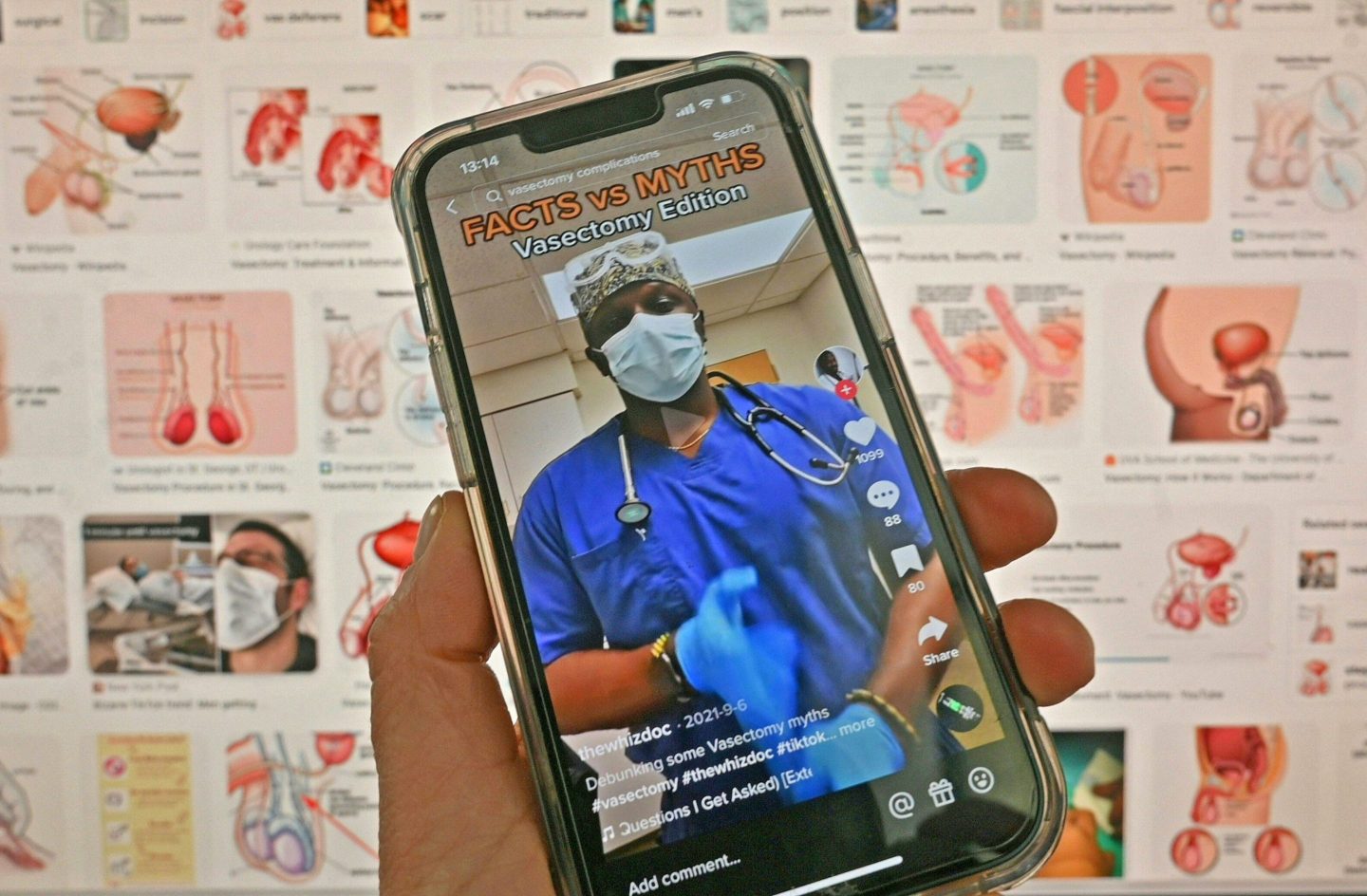
editor looking at online information about vasectomy procedures.
In the U.S., attempts to teach internet literacy have run into political opposition from people who equate it to thought control.STF/AFP/Getty Images

Shawn Lee, a high school social studies teacher in Seattle, wants to see lessons on the internet akin to a kind of 21st century driver’s education, an essential for modern life.

Lee has tried to bring that kind of education into his classroom, with lessons about the need to double-check online sources, to diversify newsfeeds and to bring critical thinking to the web. He’s also created an organization for other teachers to share resources.

“This technology is so new that no one taught us how to use it,” Lee said. “People are like, ‘There’s nothing we can do,’ and they throw their hands in the air. I disagree with that. I would like to think the republic can survive an algorithm.”

Lee’s efforts are part of a growing movement of educators and misinformation researchers working to offset an explosion of online misinformation about everything from presidential politics to pandemics. So far, the U.S. lags many other democracies in waging this battle, and the consequences of inaction are clear.

But for teachers already facing myriad demands in the classroom, incorporating internet literacy can be a challenge — especially given how politicized misinformation about vaccines, public health, voting, climate change and Russia’s war in Ukraine has become. The title of a talk for a recent gathering of Lee’s group: “How to talk about conspiracy theories without getting fired.”

“It’s not teaching what to think, but how to think,” said Julie Smith, an expert on media literacy who teaches at Webster University in Webster Groves, Missouri. “It’s engaging about engaging your brain. It’s asking, ‘Who created this? Why? Why am I seeing it now? How does it make me feel and why?’”

New laws and algorithm changes are often offered as the most promising ways of combating online misinformation, even as tech companies study their own solutions.

Teaching internet literacy, however, may be the most effective method. New Jersey, Illinois and Texas are among states that have recently implemented new standards for teaching internet literacy, a broad category that can include lessons about how the internet and social media work, along with a focus on how to spot misinformation by cross-checking multiple sources and staying wary of claims with missing context or highly emotional headlines.

Media literacy lessons are often included in history, government or other social studies classes, and typically offered at the high school level, though experts say it’s never too early — or late — to help people become better users of the internet.

Finnish children begin to learn about the internet in preschool, part of a robust anti-misinformation program that aims to make the country’s residents more resistant to false online claims. Finland has a long history of combating propaganda and misinformation spread by one of its neighbors, Russia, and expanded its current efforts after Russia’s 2014 invasion of Crimea set off another wave of disinformation.

“Media literacy was one of our priorities before the time of the internet,” Petri Honkonen, Finland’s minister of science and culture, said in a recent interview. “The point is critical thinking, and that is a skill that everybody needs more and more. We have to somehow protect people. We also must protect democracy.”

Honkonen spoke with The Associated Press earlier this year during a trip to Washington that included meetings to discuss Finland’s work to fight online misinformation. One recent report on media literacy efforts in western democracies placed Finland at the top. Canada ranked seventh, while the U.S. came in at No. 18.

In Finland the lessons don’t end with primary school. Public service announcements offer tips on avoiding false online claims and checking multiple sources. Additional programs are geared toward older adults, who can be especially vulnerable to misinformation compared to younger users more at home on the internet.

In the U.S., attempts to teach internet literacy have run into political opposition from people who equate it to thought control. Lee, the Seattle teacher, said that concern prevents some teachers from even trying.

Several years ago, the University of Washington launched MisinfoDay, which brought high schoolers and their teachers together for a one-day event featuring speakers, exercises and activities focused on media literacy. Seven hundred students from across the state attended one of three MisinfoDays this year.

Jevin West, the University of Washington professor who created the event, said he’s heard from educators in other states and as far away as Australia who are interested in creating something similar.

“Maybe eventually, someday, nationally here in the United States, we have a day devoted to the idea of media literacy,” West said. “There are all sorts of things we can do in terms of regulations, technology, in terms of research, but nothing is going to be more important than this idea of making us more resilient” to misinformation.

For teachers already struggling with other classroom demands, adding media literacy can seem like just one more obligation. But it’s a skill that is just as important as computer engineering or software coding for the future economy, according to Erin McNeill, a Massachusetts mother who started Media Literacy Now, a national nonprofit that advocates for digital literacy education.

“This is an innovation issue,” McNeill said. “Basic communication is part of our information economy, and there will be huge implications for our economy if we don’t get this right.”

The driver’s education analogy comes up a lot when talking to media literacy experts. Automobiles first went into production in the early 20th century and soon became popular. But it was nearly three decades before the first driver’s education courses were offered.

What changed? Governments passed laws regulating vehicle safety and driver behavior. Auto companies added features like collapsible steering columns, seat belts and air bags. And in the mid-1930s, safety advocates began to push for mandated driver’s education.

That combination of government, industry and educators is seen as a model by many misinformation and media literacy researchers. Any effective solution to the challenges posed by online misinformation, they say, must by necessity include an educational component.

Media literacy in Canadian schools began decades ago and initially focused on television before being expanded throughout the digital era. Now it’s accepted as an essential part of preparing students, according to Matthew Johnson, director of education at MediaSmarts, an organization that leads media literacy programs in Canada.

“We need speed limits, we need well-designed roads and good regulations to ensure cars are safe. But we also teach people how to drive safely,” he said. “Whatever regulators do, whatever online platforms do, content always winds up in front of an audience, and they need to have the tools to engage critically with it.”


Subscribe to Well Adjusted, our newsletter full of simple strategies to work smarter and live better, from the Fortune Well team. Sign up today.
About the Authors
By David Klepper
See full bioRight Arrow Button Icon
By The Associated Press
See full bioRight Arrow Button Icon

Latest in Tech

Finance
Lorem ipsum dolor sit amet, consectetur adipiscing elit, sed do eiusmod tempor incididunt ut labore et dolore magna aliqua. Ut enim ad minim veniam
By Fortune Editors
October 20, 2025
Finance
Lorem ipsum dolor sit amet, consectetur adipiscing elit, sed do eiusmod tempor incididunt ut labore et dolore magna aliqua. Ut enim ad minim veniam
By Fortune Editors
October 20, 2025
Finance
Lorem ipsum dolor sit amet, consectetur adipiscing elit, sed do eiusmod tempor incididunt ut labore et dolore magna aliqua. Ut enim ad minim veniam
By Fortune Editors
October 20, 2025
Finance
Lorem ipsum dolor sit amet, consectetur adipiscing elit, sed do eiusmod tempor incididunt ut labore et dolore magna aliqua. Ut enim ad minim veniam
By Fortune Editors
October 20, 2025
Finance
Lorem ipsum dolor sit amet, consectetur adipiscing elit, sed do eiusmod tempor incididunt ut labore et dolore magna aliqua. Ut enim ad minim veniam
By Fortune Editors
October 20, 2025
Finance
Lorem ipsum dolor sit amet, consectetur adipiscing elit, sed do eiusmod tempor incididunt ut labore et dolore magna aliqua. Ut enim ad minim veniam
By Fortune Editors
October 20, 2025

Most Popular

Finance
Lorem ipsum dolor sit amet, consectetur adipiscing elit, sed do eiusmod tempor incididunt ut labore et dolore magna aliqua. Ut enim ad minim veniam
By Fortune Editors
October 20, 2025
Finance
Lorem ipsum dolor sit amet, consectetur adipiscing elit, sed do eiusmod tempor incididunt ut labore et dolore magna aliqua. Ut enim ad minim veniam
By Fortune Editors
October 20, 2025
Finance
Lorem ipsum dolor sit amet, consectetur adipiscing elit, sed do eiusmod tempor incididunt ut labore et dolore magna aliqua. Ut enim ad minim veniam
By Fortune Editors
October 20, 2025
Finance
Lorem ipsum dolor sit amet, consectetur adipiscing elit, sed do eiusmod tempor incididunt ut labore et dolore magna aliqua. Ut enim ad minim veniam
By Fortune Editors
October 20, 2025
Finance
Lorem ipsum dolor sit amet, consectetur adipiscing elit, sed do eiusmod tempor incididunt ut labore et dolore magna aliqua. Ut enim ad minim veniam
By Fortune Editors
October 20, 2025
Finance
Lorem ipsum dolor sit amet, consectetur adipiscing elit, sed do eiusmod tempor incididunt ut labore et dolore magna aliqua. Ut enim ad minim veniam
By Fortune Editors
October 20, 2025
Rankings
  • 100 Best Companies
  • Fortune 500
  • Global 500
  • Fortune 500 Europe
  • Most Powerful Women
  • Future 50
  • World’s Most Admired Companies
  • See All Rankings
Sections
  • Finance
  • Leadership
  • Success
  • Tech
  • Asia
  • Europe
  • Environment
  • Fortune Crypto
  • Health
  • Retail
  • Lifestyle
  • Politics
  • Newsletters
  • Magazine
  • Features
  • Commentary
  • Mpw
  • CEO Initiative
  • Conferences
  • Personal Finance
  • Education
Customer Support
  • Frequently Asked Questions
  • Customer Service Portal
  • Privacy Policy
  • Terms Of Use
  • Single Issues For Purchase
  • International Print
Commercial Services
  • Advertising
  • Fortune Brand Studio
  • Fortune Analytics
  • Fortune Conferences
  • Business Development
About Us
  • About Us
  • Editorial Calendar
  • Press Center
  • Work At Fortune
  • Diversity And Inclusion
  • Terms And Conditions
  • Site Map
  • Facebook icon
  • Twitter icon
  • LinkedIn icon
  • Instagram icon
  • Pinterest icon

Latest in Tech

A smartphone displaying the Google Gemini logo.
AIEye on AI
As ‘agentic commerce’ gains ground, companies shouldn’t put too much faith in ‘GEO,’ one industry insider warns
By Jeremy KahnJanuary 13, 2026
9 hours ago
AIChatbots
Being mean to ChatGPT can boost its accuracy, but scientists warn you may regret it
By Marco Quiroz-GutierrezJanuary 13, 2026
11 hours ago
AIGoldman Sachs Group
‘Humans could go the way of horses’: Goldman calculated how bad the AI ‘job apocalypse’ will be—and its analysts were pleasantly surprised
By Jim EdwardsJanuary 13, 2026
11 hours ago
Mark Zuckerberg
Future of WorkMeta
Meta is changing its performance review to reward output over effort, taking a page from Amazon and X
By Jake AngeloJanuary 13, 2026
12 hours ago
Warren Buffett on the phone
SuccessProductivity
Gen X CEO uses AI versions of Steve Jobs and Warren Buffett as a ‘fantasy board of directors’ to help him prepare for meetings and performance reviews
By Preston ForeJanuary 13, 2026
12 hours ago
Mercor Founders - Adarsh Hiremath, Brendan Foody
AIskills
Chief people officers—and Jamie Dimon—say AI can’t learn ‘human skills.’ The world’s youngest self-made billionaires want to prove them wrong
By Jake AngeloJanuary 13, 2026
13 hours ago

Most Popular

placeholder alt text
Economy
Treasury spent $276 billion in interest on the national debt in the final three months of 2025, says the CBO—up $30 billion from a year prior
By Eleanor PringleJanuary 12, 2026
2 days ago
placeholder alt text
Newsletters
The oil CEO who stood up to Trump is a follower of the disciplined 'Exxon way' and has a history of blunt statements
By Jordan BlumJanuary 13, 2026
18 hours ago
placeholder alt text
Tech
Elon Musk asked people to upload their medical data to X so his AI company could learn to interpret MRIs and CT scans
By Sasha RogelbergJanuary 11, 2026
2 days ago
placeholder alt text
Economy
The longer the Supreme Court delays its tariff decision, the better it is for President Trump
By Jim EdwardsJanuary 13, 2026
18 hours ago
placeholder alt text
Success
Despite his $2.6 billion net worth, MrBeast says he’s having to borrow cash and doesn’t even have enough money in his bank account to buy McDonald’s
By Emma BurleighJanuary 13, 2026
13 hours ago
placeholder alt text
Success
An exec at $62 billion giant Colgate says Gen Z workers, despite getting flak for being woke and lazy, are actually ‘pushing us to get better’
By Emma BurleighJanuary 10, 2026
4 days ago

© 2025 Fortune Media IP Limited. All Rights Reserved. Use of this site constitutes acceptance of our Terms of Use and Privacy Policy | CA Notice at Collection and Privacy Notice | Do Not Sell/Share My Personal Information
FORTUNE is a trademark of Fortune Media IP Limited, registered in the U.S. and other countries. FORTUNE may receive compensation for some links to products and services on this website. Offers may be subject to change without notice.