• Home
  • Latest
  • Fortune 500
  • Finance
  • Tech
  • Leadership
  • Lifestyle
  • Rankings
  • Multimedia
Financefinancial services

Why the banking system is safe despite the second-biggest bank failure in U.S. history, according to a finance professor

By
William Chittenden
William Chittenden
and
The Conversation
The Conversation
Down Arrow Button Icon
By
William Chittenden
William Chittenden
and
The Conversation
The Conversation
Down Arrow Button Icon
March 12, 2023, 12:19 PM ET
Silicon Valley Bank
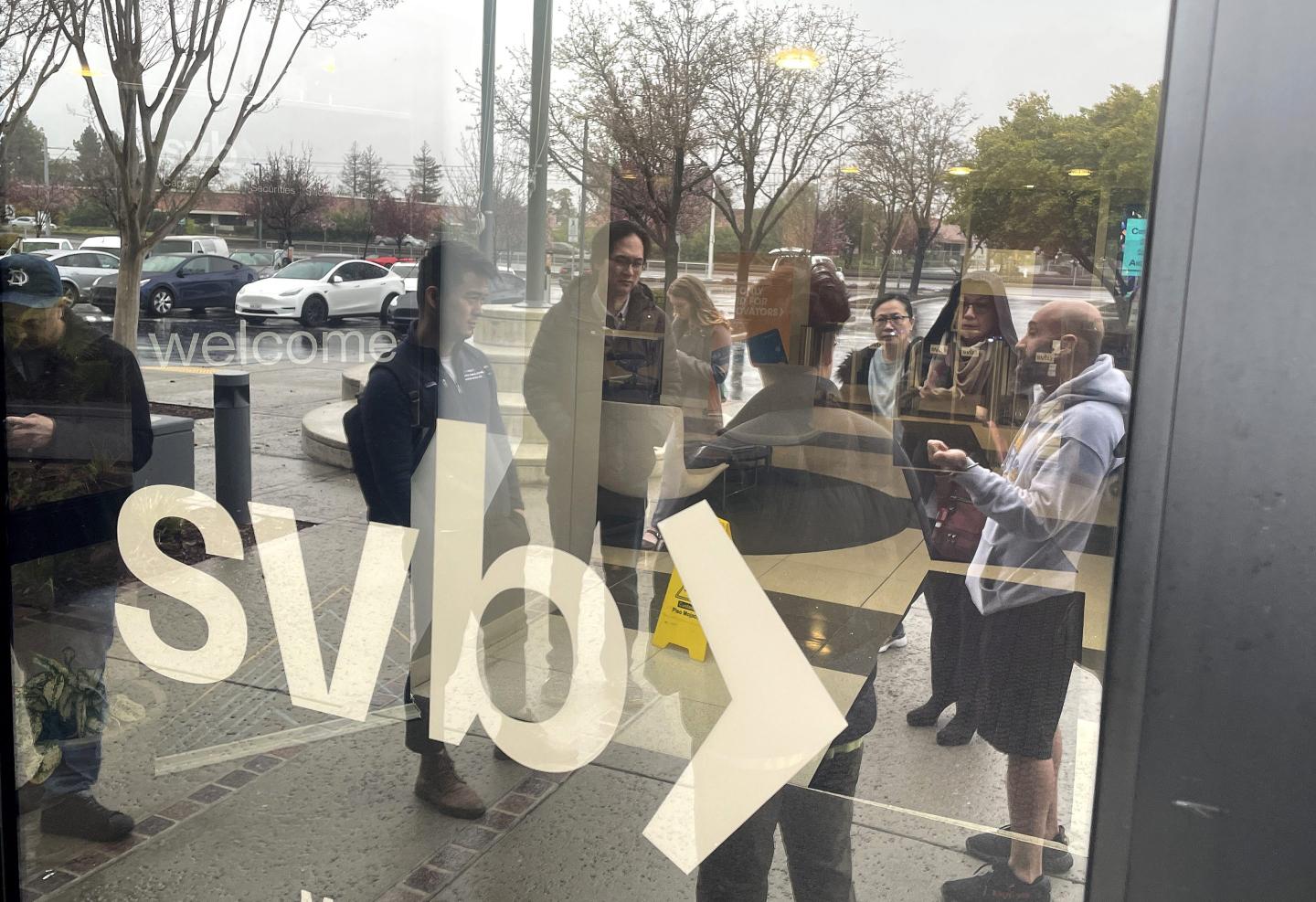
People line up outside the shuttered Silicon Valley Bank (SVB) headquarters on March 10, 2023, in Santa Clara, Calif.Justin Sullivan—Getty Images

Silicon Valley Bank, which catered to the tech industry for three decades, collapsed on March 10, 2023, after the Santa Clara, Calif.-based lender suffered from an old-fashioned bank run. State regulators seized the bank and made the Federal Deposit Insurance Corporation its receiver.

SVB, as it’s known, was the biggest U.S. lender to fail since the 2008 global financial crisis–and the second-biggest ever.

We asked William Chittenden, associate professor of finance at Texas State University, to explain what happened and whether Americans should be worried about the safety of their financial system.

Why did Silicon Valley Bank collapse so suddenly?

The short answer is that SVB did not have enough cash to pay depositors so the regulators closed the bank.

The longer answer begins during the pandemic, when SVB and many other banks were raking in more deposits than they could lend out to borrowers. In 2021, deposits at SVB doubled.

But they had to do something with all that money. So, what they could not lend out, they invested in ultra-safe U.S. Treasury securities. The problem is the rapid increase in interest rates in 2022 and 2023 caused the value of these securities to plunge. A characteristic of bonds and similar securities is that when yields or interest rates go up, prices go down, and vice versa.

The bank recently said it took a $1.8 billion hit on the sale of some of those securities and they were unable to raise capital to offset the loss as their stock began dropping. That prompted prominent venture capital firms to advise the companies they invest in to pull their business from Silicon Valley Bank. This had a snowball effect that led a growing number of SVB depositors to withdraw their money too.

The investment losses, coupled with the withdrawals, were so large that regulators had no choice but to step in to shut the bank down to protect depositors.

Are the deposits now safe?

From a practical perspective, the FDIC is now running the bank.

It is typical for the FDIC to shut a bank down on a Friday and have the bank reopen the following Monday. In this case, the FDIC has already announced that the bank will reopen on March 13 as the Deposit Insurance National Bank of Santa Clara.

At the end of 2022, SVB had $175.4 billion in deposits. It’s not clear how much of those deposits remain with the bank and how much of those are insured and 100% safe.

For depositors with $250,000 or less in cash at SVB, the FDIC said that customers will have access to all of their money when the bank reopens.

For those with uninsured deposits at SVB—basically anything above the FDIC limit of $250,000—they may or may not receive back the rest of their money. These depositors will be given a “Receiver’s Certificate” by the FDIC for the uninsured amount of their deposits. The FDIC has already said it will pay some of the uninsured deposits by next week, with additional payments possible as the regulator liquidates SVB’s assets. But if SVB’s investments have to be sold at a significant loss, uninsured depositors may not get any additional payment.

What was the last U.S. bank to fail?

Prior to the failure of SVB, the most recent bank failures occurred in October 2020, when both Almena State Bank in Kansas and First City Bank of Florida were taken over by the FDIC.

Both of these banks were relatively small, with about $200 million in deposits combined.

SVB was the biggest bank to fail since September 2008, when Washington Mutual failed with $307 billion in assets. WaMu fell in the wake of investment bank Lehman Brothers’ collapse, which nearly took down the global financial system.

On the whole, U.S. bank failures aren’t all that common. For example, there were none in 2021 and 2022.

Is there any risk that more banks might fail?

At the end of 2022, SVB was the 16th-largest bank in the United States with $209 billion in assets.

That sounds like a lot—and it is—but that’s just 0.91% of all banking assets in the U.S. There is little risk that SVB’s failure will spill over to other banks.

Having said that, SVB’s collapse does highlight the risk that many banks have in their investment portfolios. If interest rates continue to rise, and the Federal Reserve has indicated that they will, the value of the investment portfolios of banks across the U.S. will continue to go down.

While these losses are just on paper—meaning they’re not realized until the assets are sold—they still can increase a bank’s overall risk. How much the risk will go up will vary from bank to bank.

The good news is that most banks currently have enough capital to absorb these losses—however large—in part because of efforts taken by the Fed after the 2008 financial crisis to ensure financial firms can weather any storm.

So rest easy for now. The banking system is sound.

William Chittenden is associate professor of finance, Texas State University.

This article is republished from The Conversation under a Creative Commons license. Read the original article.

Fortune's CFO Daily newsletter is the must-read analysis every finance professional needs to get ahead. Sign up today.

About the Authors
By William Chittenden
See full bioRight Arrow Button Icon
By The Conversation
See full bioRight Arrow Button Icon

Latest in Finance

Finance
Lorem ipsum dolor sit amet, consectetur adipiscing elit, sed do eiusmod tempor incididunt ut labore et dolore magna aliqua. Ut enim ad minim veniam
By Fortune Editors
October 20, 2025
Finance
Lorem ipsum dolor sit amet, consectetur adipiscing elit, sed do eiusmod tempor incididunt ut labore et dolore magna aliqua. Ut enim ad minim veniam
By Fortune Editors
October 20, 2025
Finance
Lorem ipsum dolor sit amet, consectetur adipiscing elit, sed do eiusmod tempor incididunt ut labore et dolore magna aliqua. Ut enim ad minim veniam
By Fortune Editors
October 20, 2025
Finance
Lorem ipsum dolor sit amet, consectetur adipiscing elit, sed do eiusmod tempor incididunt ut labore et dolore magna aliqua. Ut enim ad minim veniam
By Fortune Editors
October 20, 2025
Finance
Lorem ipsum dolor sit amet, consectetur adipiscing elit, sed do eiusmod tempor incididunt ut labore et dolore magna aliqua. Ut enim ad minim veniam
By Fortune Editors
October 20, 2025
Finance
Lorem ipsum dolor sit amet, consectetur adipiscing elit, sed do eiusmod tempor incididunt ut labore et dolore magna aliqua. Ut enim ad minim veniam
By Fortune Editors
October 20, 2025

Most Popular

Finance
Lorem ipsum dolor sit amet, consectetur adipiscing elit, sed do eiusmod tempor incididunt ut labore et dolore magna aliqua. Ut enim ad minim veniam
By Fortune Editors
October 20, 2025
Finance
Lorem ipsum dolor sit amet, consectetur adipiscing elit, sed do eiusmod tempor incididunt ut labore et dolore magna aliqua. Ut enim ad minim veniam
By Fortune Editors
October 20, 2025
Finance
Lorem ipsum dolor sit amet, consectetur adipiscing elit, sed do eiusmod tempor incididunt ut labore et dolore magna aliqua. Ut enim ad minim veniam
By Fortune Editors
October 20, 2025
Finance
Lorem ipsum dolor sit amet, consectetur adipiscing elit, sed do eiusmod tempor incididunt ut labore et dolore magna aliqua. Ut enim ad minim veniam
By Fortune Editors
October 20, 2025
Finance
Lorem ipsum dolor sit amet, consectetur adipiscing elit, sed do eiusmod tempor incididunt ut labore et dolore magna aliqua. Ut enim ad minim veniam
By Fortune Editors
October 20, 2025
Finance
Lorem ipsum dolor sit amet, consectetur adipiscing elit, sed do eiusmod tempor incididunt ut labore et dolore magna aliqua. Ut enim ad minim veniam
By Fortune Editors
October 20, 2025
Fortune Secondary Logo
Rankings
  • 100 Best Companies
  • Fortune 500
  • Global 500
  • Fortune 500 Europe
  • Most Powerful Women
  • World's Most Admired Companies
  • See All Rankings
  • Lists Calendar
Sections
  • Finance
  • Fortune Crypto
  • Features
  • Leadership
  • Health
  • Commentary
  • Success
  • Retail
  • Mpw
  • Tech
  • Lifestyle
  • CEO Initiative
  • Asia
  • Politics
  • Conferences
  • Europe
  • Newsletters
  • Personal Finance
  • Environment
  • Magazine
  • Education
Customer Support
  • Frequently Asked Questions
  • Customer Service Portal
  • Privacy Policy
  • Terms Of Use
  • Single Issues For Purchase
  • International Print
Commercial Services
  • Advertising
  • Fortune Brand Studio
  • Fortune Analytics
  • Fortune Conferences
  • Business Development
  • Group Subscriptions
About Us
  • About Us
  • Press Center
  • Work At Fortune
  • Terms And Conditions
  • Site Map
  • About Us
  • Press Center
  • Work At Fortune
  • Terms And Conditions
  • Site Map
  • Facebook icon
  • Twitter icon
  • LinkedIn icon
  • Instagram icon
  • Pinterest icon

Latest in Finance

Mohamed Aly El-Erian during a Bloomberg Television interview in London, UK, on Monday, Sept. 25, 2023.
EconomyRecession
The global economy has a month—eight weeks at most—to avoid a recession, warns top economist
By Eleanor PringleApril 30, 2026
1 hour ago
Global investors are shrugging off Iran worries and returning to markets in Asia, the ‘backbone of the whole AI value chain’
AsiaInvestment
Global investors are shrugging off Iran worries and returning to markets in Asia, the ‘backbone of the whole AI value chain’
By Angelica AngApril 30, 2026
1 hour ago
Photo: Donald Trump
Big TechMarkets
With no end in sight, Trump considers new options in Iran war—including the ‘Dark Eagle’ hypersonic missile
By Jim EdwardsApril 30, 2026
2 hours ago
Top CD rates today, April 30, 2026: Lock in up to up to 4.20%
Personal FinanceCertificates of Deposit (CDs)
Top CD rates today, April 30, 2026: Lock in up to up to 4.20%
By Glen Luke FlanaganApril 30, 2026
2 hours ago
Today’s top high-yield savings rates: Up to 5.00% on April 30, 2026
Personal FinanceSavings accounts
Today’s top high-yield savings rates: Up to 5.00% on April 30, 2026
By Glen Luke FlanaganApril 30, 2026
2 hours ago
tillis
CommentaryCongress
Thom Tillis: Free markets built American prosperity. Government intervention puts it at risk
By Thom Tillis and John StanfordApril 30, 2026
3 hours ago

Most Popular

Apple cofounder Ronald Wayne—whose stake would be worth up to $400 billion had he not sold it in 1976—says that at 91, he has no regrets
Success
Apple cofounder Ronald Wayne—whose stake would be worth up to $400 billion had he not sold it in 1976—says that at 91, he has no regrets
By Preston ForeApril 27, 2026
3 days ago
‘Take the money and run’: Johns Hopkins economist Steve Hanke on why the UAE quit OPEC
Energy
‘Take the money and run’: Johns Hopkins economist Steve Hanke on why the UAE quit OPEC
By Shawn TullyApril 29, 2026
1 day ago
Jamie Dimon gets candid about national debt: ‘There will be a bond crisis, and then we’ll have to deal with it’
Economy
Jamie Dimon gets candid about national debt: ‘There will be a bond crisis, and then we’ll have to deal with it’
By Eleanor PringleApril 29, 2026
1 day ago
‘The cost of compute is far beyond the costs of the employees’: Nvidia executive says right now AI is more expensive than paying human workers
AI
‘The cost of compute is far beyond the costs of the employees’: Nvidia executive says right now AI is more expensive than paying human workers
By Sasha RogelbergApril 28, 2026
2 days ago
‘They left me no choice’: Powell isn’t going anywhere—blocking Trump from another Fed appointee
Banking
‘They left me no choice’: Powell isn’t going anywhere—blocking Trump from another Fed appointee
By Eva RoytburgApril 29, 2026
17 hours ago
More than two-thirds of U.S. schools say they’re unable to afford the cost of student free lunch—and MAHA’s dietary guidelines may make it worse
Economy
More than two-thirds of U.S. schools say they’re unable to afford the cost of student free lunch—and MAHA’s dietary guidelines may make it worse
By Sasha RogelbergApril 29, 2026
1 day ago

© 2026 Fortune Media IP Limited. All Rights Reserved. Use of this site constitutes acceptance of our Terms of Use and Privacy Policy | CA Notice at Collection and Privacy Notice | Do Not Sell/Share My Personal Information
FORTUNE is a trademark of Fortune Media IP Limited, registered in the U.S. and other countries. FORTUNE may receive compensation for some links to products and services on this website. Offers may be subject to change without notice.