After sweeping through battles in statehouses across the country, the war against ESG investing is heating up in Congress.
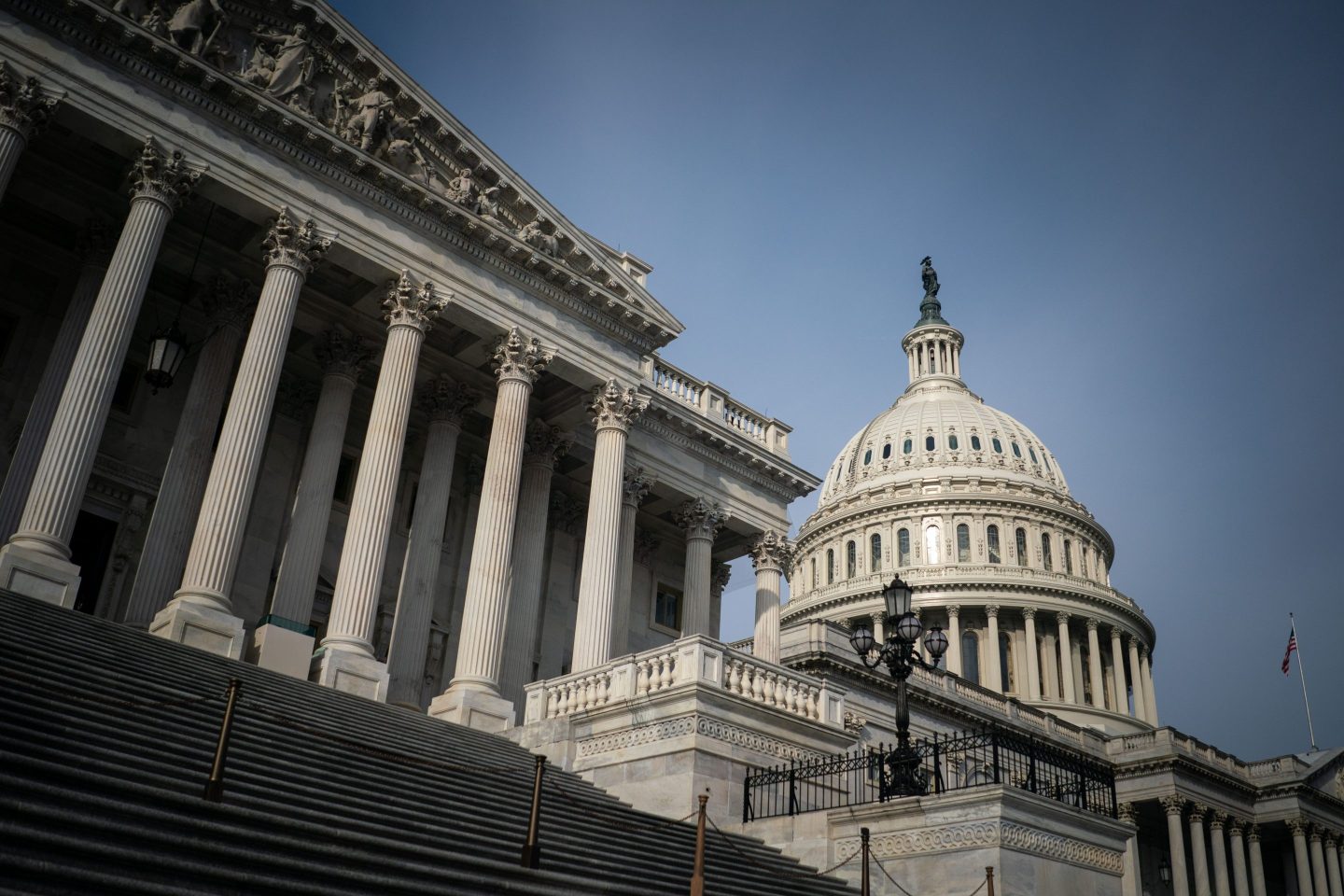
The Senate voted Wednesday to overturn a Labor Department rule allowing retirement plans to consider environmental, social and governance factors when making investment decisions, following a similar vote by House Republicans on Tuesday. It sets the stage for a potential first veto by President Joe Biden.
Critics say ESG investments allocate money based on political agendas, such as a drive against climate change, rather than on earning the best returns for savers. They say ESG is just the latest example of the world trying to get “woke.”
The ESG industry, meanwhile, says it helps highlight companies that may be riskier than traditional investing guidelines alone might suggest. That could lead to more stable, safer returns for savers. It also says using an ESG lens could help investors find better, more profitable opportunities.
ESG has become popular across a wide range of investors, from smaller-pocketed regular people to pension funds responsible for the retirements of millions of workers.
WHAT IS ESG?
It’s an acronym, with each of the letters describing an additional lens that some investors use to decide whether a particular stock or bond looks like a good buy.
Before risking their money, all investors including both traditional and ESG ones look at how much revenue a company is bringing in, how much profit it’s making and what the prospects are for the future.
ESG investors then layer on a few more specific considerations.
WHAT IS E?
Environment. It can pay to avoid companies with poor records on the environment, the thinking goes, because they may be at greater risk of big fines from regulators. Or their businesses could be at particular risk of getting upended by future government attempts to protect the environment.
Such risks may not be as appreciated by those using just traditional investment analysis, which could lead to too-high stock prices, ESG advocates say. That in turn would mean too-high risk.
On the flip side, measuring a company’s environmental awareness could also unearth companies that could be better positioned for the future. Companies that care about climate change may be better prepared for its repercussions, whether that means potential flooding damage at factory sites or the risks of increased wildfires.
WHAT IS S?
Social. This is a wide-ranging category that focuses on a company’s relationships with people, both within it and outside.
Investors measuring a company’s social impact often look at whether pay is fair and working conditions are good through the rank and file, for example, because that can lead to better retention of employees, lower turnover costs and ultimately better profits.
Others consider a company’s record on data protection and privacy, where lax protocols could lead to leaks that drive customers away.
Increasingly, companies are also getting called upon to take positions on big social issues, such as abortion or the Black Lives Matter movement. Some ESG investors encourage this, saying companies’ employees and customers want to hear it.
Not every ESG investor considers all these factors, but they all get lumped in together under the “S” umbrella.
WHAT IS G?
Governance, which essentially means the company is running itself well.
That includes tying executives’ pay to the company’s performance, whether that’s defined by the stock price, profits or something else, and having strong, independent directors on the board to act as a powerful check on CEOs.
HOW BIG OF A DEAL IS ESG?
Investors who use one or more ESG criteria or push companies on such issues as a group controlled $8.4 trillion in U.S.-domiciled assets in 2022. That’s according to the most recent count by US SIF, a trade group representing the sustainable and responsible investing industry.
That’s enough money to buy Tesla, one of the most valuable U.S. stocks, more than 11 times over. It also means ESG accounted for $1 of every $8 in all U.S. assets under professional management.
With stock and bond markets tumbling last year, the flow of dollars into ESG funds has slowed since setting a peak in early 2021. U.S. sustainable funds pulled in a net $3 billion over the course of 2022, according to Morningstar.
Not only have sharp drops for all kinds of investment prices raised worries, so has the increased political backlash. During the final three months of 2022, which was a particularly tough period for financial markets, investors pulled nearly $6.2 billion more out of sustainable funds than they put in, according to Morningstar.
Still, despite the slowdown, demand is still higher for sustainable funds than for their traditional peers.
IS IT JUST MILLENNIALS DOING IT?
No, the vast majority of money in ESG investments comes from huge investors like pension funds, insurance companies, endowments at universities and foundations and other big institutional investors.
WHAT IMPACT IS IT HAVING?
ESG investors are pushing for more engagement with companies, discussing their concerns about the environment, social issues and governance. They’re also casting their votes at annual shareholder meetings with ESG issues more in mind.
In 2021 a relatively small fund known as Engine No. 1 shocked corporate America after it convinced some of Wall Street’s biggest investment firms to approve its proposal to replace three directors on Exxon Mobil’s board, citing a decarbonizing world.
Investors are also pushing executives across corporate America to give more details about their carbon emissions, measurements about their impacts on human rights and audits for racial equity.
It’s all an evolution from the industry’s early days, when “socially responsible” investing was quite simplistic. Early funds would just promise not to own stocks of tobacco companies, gun makers, or other companies seen as distasteful.
AND THE BACKLASH?
Some politicians have denounced ESG as a politicization of investing.
Some in the business world also have been particularly critical of rating agencies that try to boil complex issues down to simple ESG scores.
Tesla CEO Elon Musk last year called ESG a scam that “has been weaponized by phony social justice warriors,” for example. His criticism came shortly after Tesla got kicked out of the S&P 500 ESG index.
The index tries to hold only companies with better ESG scores within each industry, while holding similar amounts of energy stocks, tech stocks and other sectors as the broader S&P 500 index. That means Exxon Mobil could remain in the S&P 500 ESG index, even if it’s pulling fossil fuels from the ground to burn, because it rates better than peer energy companies.
ARE THOSE THE ONLY CONTROVERSIES?
No. Any boom brings in opportunists, and regulators have warned of some potentially misleading statements.
That could include firms claiming to be ESG-driven but owning shares in companies with low ESG scores. It’s reminiscent of how products along supermarket aisles get accused of “greenwashing,” or pitching their wares as “green” even if they’re not.
Part of that could be how big the ESG industry has become, with some players taking a lighter touch.
Some funds pledge not to own stocks of any companies seen as dangerous, for example. Others will try to own only companies that get the highest ratings from scorekeepers on ESG issues. Still others try to buy only companies that score the best within their specific industry, even if the score is very low overall.
Such nuance can make for confusion among investors trying to find the right ESG fund for them.
Learn how to navigate and strengthen trust in your business with The Trust Factor, a weekly newsletter examining what leaders need to succeed. Sign up here.