After a weeks-long media circus culminating in Sam Bankman-Fried’s arrest on Monday, the Senate Banking Committee held a muted hearing on Wednesday, calling four expert witnesses representing opposite sides of the crypto skeptic spectrum.
Last week, chair Sherrod Brown (D-Ohio) and ranking member Pat Toomey (R-Penn.) invited Bankman-Fried to testify under threat of subpoena. After he declined, Brown and Toomey issued a statement that the disgraced crypto founder’s lawyers were “unwilling to accept service of a subpoena” with their client still in the Bahamas. Following his arrest on Monday, the drama lost its relevance.
Instead, the Senate Banking Committee invited four witnesses, an odd pairing of two academics and two TV stars, O.C. veteran Ben McKenzie and Shark Tank host Kevin O’Leary.
Unlike Tuesday’s hearing in front of the House Financial Services Committee, where FTX’s caretaker CEO, John Ray III, testified, the Senate Banking Committee was less interested in diagnosing the collapse of the exchange and more focused on the crypto ecosystem going forward.
As Brown said during his opening remarks, the hearing was “bigger than one person or one firm, and that’s the point.”
TV stars and policy wonks
The Banking Committee was split on potential threats posed by crypto and what lawmakers should do about it, which was reflected in the witness list.
McKenzie has branched out from his Hollywood résumé to become one of the most prominent crypto critics, initially criticizing fellow celebrities for shilling shitcoins and since delving into the weeds of the ecosystem, including traveling to El Salvador to detail its failures in adopting Bitcoin as legal tender.
His counterpart, Hilary J. Allen, is a law professor at American University and another vocal critic, and she urged lawmakers in her opening remarks to ensure that any cryptocurrency regulation does not make it “too big to fail.”
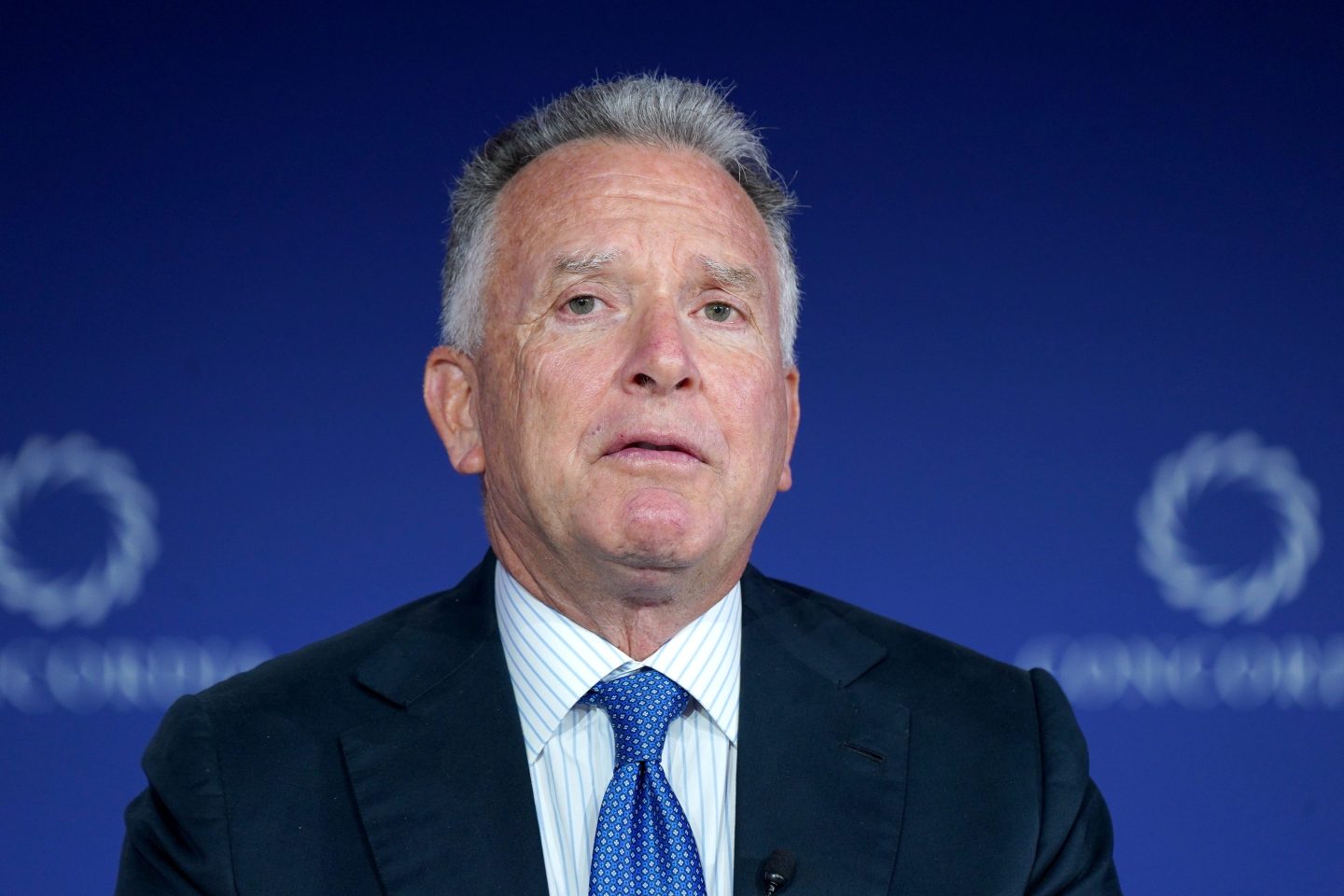
On the other side was Kevin O’Leary, the celebrity investor and crypto booster. As O’Leary detailed in his testimony, he had a close relationship with FTX, receiving $15 million to serve as a spokesperson and investing $1 million of his own money into the exchange, which he has now “marked down to zero.”
In a moment that raised eyebrows, he said that he spoke with Bankman-Fried after the collapse, with Bankman-Fried convincing him that the failure of FTX came at the hands of its rival, Binance. Bankman-Fried spent as much as $3 billion buying back FTX equity owned by Binance, which O’Leary said wiped out its balance sheet.
Despite seemingly putting the blame on Binance and not any fraud committed by FTX, O’Leary did tell Fortune after the hearing that he expects more details to come out in the coming weeks about FTX’s accounting failures.
O’Leary was joined by Jennifer Schulp, director of financial regulation studies at the free-market-minded Cato Institute, who similarly touted crypto—and specifically DeFi—as a necessary innovation.
“Risk is a natural component of markets,” she said in her opening remarks. “Failure is often necessary for development.”
A committee divided
The 24-member committee used the witnesses as foils, asking questions to each that seemed to support their own views on cryptocurrency. The split began on the top, with Brown more of a skeptic and Toomey advocating for regulation to ensure that crypto can thrive on American soil.
“Code committed no crime,” Toomey said during his opening remarks. “Short of enacting draconian, authoritarian policies, cryptocurrency cannot be stopped.”
Brown and Toomey have called for different approaches to regulation, and Fortune caught up with each after the hearing. Toomey, who is retiring after this session, has called for several crypto provisions to be added to the “omnibus” spending bill. He told Fortune that the most ambitious one, a stablecoin bill with Senators Kirsten Gillibrand (D-N.Y.) and Cynthia Lummis (R-Wyo.), was a “long shot,” but said that two others—a “de minimis” exception and a fix to the definition of “brokers”—were still possible.
While Brown has called for comprehensive regulation—which he reiterated in a letter to Treasury Secretary Janet Yellen following FTX’s collapse—it’s unclear what types of legislation he would support.
“It’s going to be difficult to pass anything,” he told Fortune after the hearing, adding that his priority was empowering the Securities and Exchange Commission to step up and “do its job.” Most crypto supporters are critical of the SEC, instead preferring legislation that expands the oversight and funding of the Commodity Futures Trading Commission to oversee the sector.
Sen. Elizabeth Warren (D-Mass.) was a late arrival to the hearing, using her time to ask questions about the risks of money laundering endemic to crypto—the subject of a bill that she also proposed on Wednesday.
Warren asked Allen, the law professor, about the ability to mask transactions using blockchain technology, which Allen agreed with, describing crypto as a “privacy nightmare” for everyday people and a boon for criminals.
As we move into the next congressional session, every lawmaker seems in agreement about the need for regulation—the only question is what it might look like.
At the end of the hearing, Brown asked if crypto companies could comply with existing laws.
Allen said that they couldn’t, adding that this is why the industry is calling for “bespoke” regulations.
“Good answer,” Brown replied.
Our new weekly Impact Report newsletter examines how ESG news and trends are shaping the roles and responsibilities of today’s executives. Subscribe here.