• Home
  • Latest
  • Fortune 500
  • Finance
  • Tech
  • Leadership
  • Lifestyle
  • Rankings
  • Multimedia
FinanceEconomy

The Fed’s target for inflation is a made-up number that lacks any concrete evidence. That’s kind of the point

By
Veronika Dolar, Assistant Professor of Economics, SUNY Old Westbury
and
The Conversation
The Conversation
Down Arrow Button Icon
By
Veronika Dolar, Assistant Professor of Economics, SUNY Old Westbury
and
The Conversation
The Conversation
Down Arrow Button Icon
December 12, 2022, 12:59 PM ET
Jerome Powell
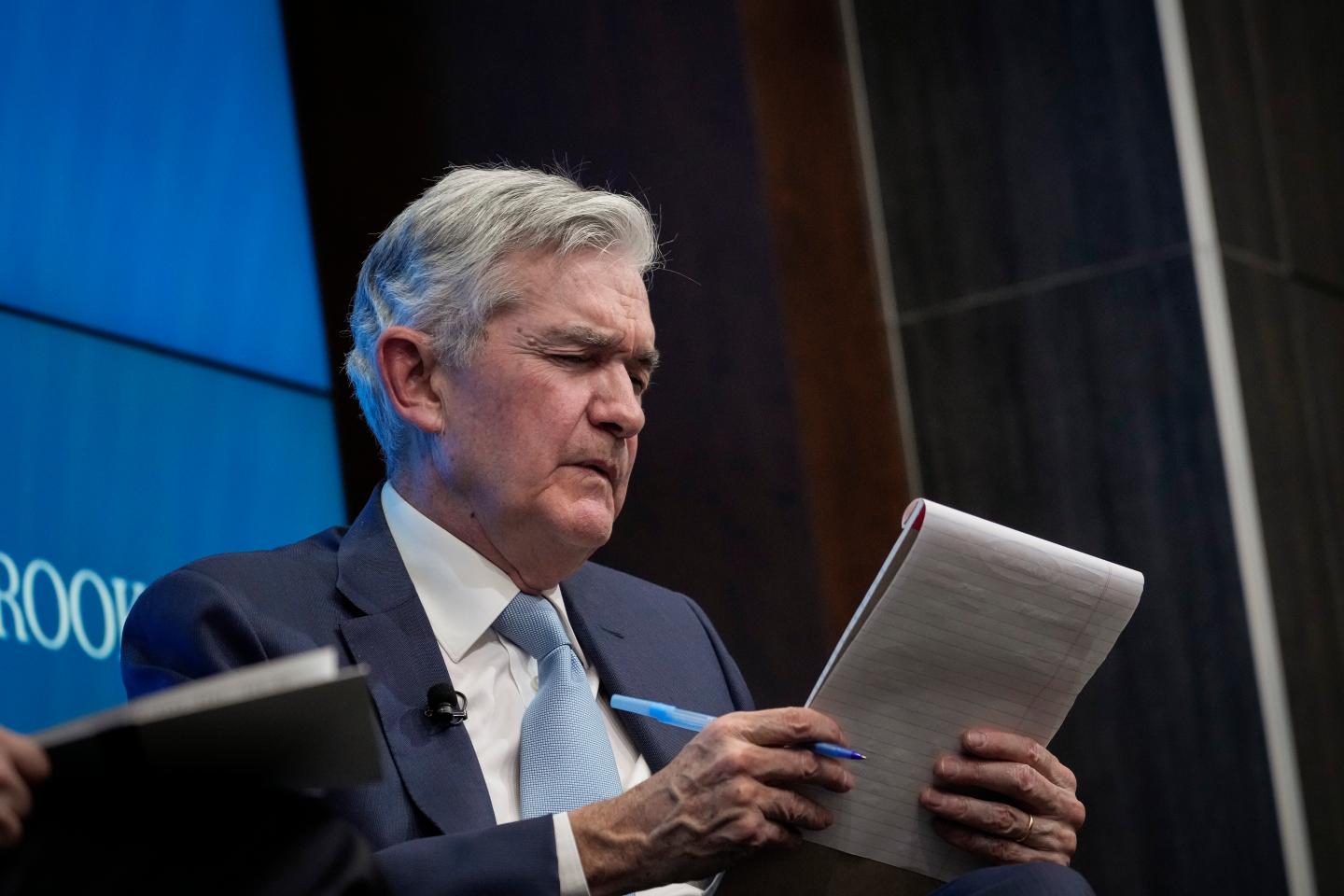
Jerome Powell is sticking with the long-time 2% target.Drew Angerer—Getty Images

What’s so special about the number 2? Quite a lot, if you’re a central banker—and that number is followed by a percent sign.

That’s been the de facto or official target inflation rate for the Federal Reserve, the European Central Bank and many other similar institutions since at least the 1990s.

But in recent months, inflation in the U.S. and elsewhere has soared, forcing the Fed and its counterparts to jack up interest rates to bring it down to near their target level.

As an economist who has studied the movements of key economic indicators like inflation, I know that low and stable inflation is essential for a well-functioning economy. But why does the target have to be 2%? Why not 3%? Or even zero?

Soaring inflation

The U.S. inflation rate hit its 2022 peak in July at an annual rate of 9.1%. The last time consumer prices were rising this fast was back in 1981—over 40 years ago.

Since March 2022, the Fed has been actively trying to decrease inflation. In order to do this, the Fed has been hiking its benchmark borrowing rate—from effectively 0% back in March 2022 to the current range of 3.75% to 4%. And it’s expected to lift interest rates another 0.5 percentage point on Dec. 14 and even more in 2023.

Most economists agree that an inflation rate approaching 8% is too high, but what should it be? If rising prices are so terrible, why not shoot for zero inflation?
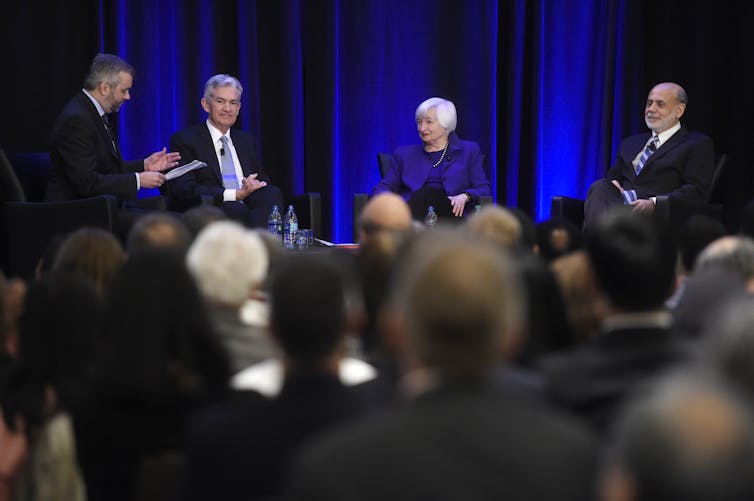
Two white men and a white woman sit in chairs on a stage in front of an audience as another man stands nearby
The past three Fed chairs – seated from left, Jerome Powell, Janet Yellen and Ben Bernanke – agreed on the need to target 2% inflation. AP Photo/Annie Rice

Maintaining stable prices

One of the Fed’s core mandates, alongside low unemployment, is maintaining stable prices.

Since 1996, Fed policymakers have generally adopted the stance that their target for doing so was an inflation rate of around 2%. In January 2012, then-Chairman Ben Bernanke made this target official, and both of his successors, including current Chair Jerome Powell, have made clear that the Fed sees 2% as the appropriate desired rate of inflation.

Until very recently, though, the problem wasn’t that inflation was too high—it was that it was too low. That prompted Powell in 2020, when inflation was barely more than 1%, to call this a cause for concern and say the Fed would let it rise above 2%.

Many of you may find it counterintuitive that the Fed would want to push up inflation. But inflation that is persistently too low can pose serious risks to the economy.

These risks—namely sparking a deflationary spiral—are why central banks like the Fed would never want to adopt a 0% inflation target.

Perils of deflation

When the economy shrinks during a recession with a fall in gross domestic product, aggregate demand for all the things it produces falls as well. As a result, prices no longer rise and may even start to fall—a condition called deflation.

Deflation is the exact opposite of inflation—instead of prices rising over time, they are falling. At first, it would seem that falling and lower prices are a good thing—who wouldn’t want to buy the same thing at a lower price and see their purchasing power go up?

But deflation can actually be pretty devastating for the economy. When people feel prices are headed down—not just temporarily, like big sales over the holidays, but for weeks, months or even years—they actually delay purchases in the hopes that they can buy things for less at a later date.

For example, if you are thinking of buying a new car that currently costs US $60,000, during periods of deflation you realize that if you wait another month, you can buy this car for $55,000. As a result, you don’t buy the car today. But after a month, when the car is now for sale for $55,000, the same logic applies. Why buy a car today, when you can wait another month and buy a car for $50,000 next month.

This lower spending leads to less income for producers, which can lead to unemployment. In addition, businesses, too, delay spending since they expect prices to fall further. This negative feedback loop—the deflationary spiral—generates higher unemployment, even lower prices and even less spending.

In short, deflation leads to more deflation. Throughout most of U.S. history, periods of deflation usually go hand in hand with economic downturns.

Everything in moderation

So it’s pretty clear some inflation is probably necessary to avoid a deflation trap, but how much? Could it be 1%, 3% or even 4%?

Maybe. There isn’t any strong theoretical or empirical evidence for an inflation target of exactly 2%. The figure’s origin is a bit murky, but some reports suggest it simply came from a casual remark made by the New Zealand finance minister back in the late 1980s during a TV interview.

Moreover, there’s concern that creating economic targets for economic indicators like inflation corrupts the usefulness of the metric. Charles Goodhart, an economist who worked for the Bank of England, created an eponymous law that states: “When a measure becomes a target, it ceases to be a good measure.”

Since a core mission of the Fed is price stability, the target is beside the point. The main thing is that the Fed guide the economy toward an inflation rate high enough to allow it room to lower interest rates if it needs to stimulate the economy but low enough that it doesn’t seriously erode consumer purchasing power.

Like with so many things, moderation is key.

Veronika Dolar, Assistant Professor of Economics, SUNY Old Westbury

This article is republished from The Conversation under a Creative Commons license. Read the original article.

Our new weekly Impact Report newsletter examines how ESG news and trends are shaping the roles and responsibilities of today's executives. Subscribe here.

About the Authors
By Veronika Dolar, Assistant Professor of Economics, SUNY Old Westbury
See full bioRight Arrow Button Icon
By The Conversation
See full bioRight Arrow Button Icon

Latest in Finance

Finance
Lorem ipsum dolor sit amet, consectetur adipiscing elit, sed do eiusmod tempor incididunt ut labore et dolore magna aliqua. Ut enim ad minim veniam
By Fortune Editors
October 20, 2025
Finance
Lorem ipsum dolor sit amet, consectetur adipiscing elit, sed do eiusmod tempor incididunt ut labore et dolore magna aliqua. Ut enim ad minim veniam
By Fortune Editors
October 20, 2025
Finance
Lorem ipsum dolor sit amet, consectetur adipiscing elit, sed do eiusmod tempor incididunt ut labore et dolore magna aliqua. Ut enim ad minim veniam
By Fortune Editors
October 20, 2025
Finance
Lorem ipsum dolor sit amet, consectetur adipiscing elit, sed do eiusmod tempor incididunt ut labore et dolore magna aliqua. Ut enim ad minim veniam
By Fortune Editors
October 20, 2025
Finance
Lorem ipsum dolor sit amet, consectetur adipiscing elit, sed do eiusmod tempor incididunt ut labore et dolore magna aliqua. Ut enim ad minim veniam
By Fortune Editors
October 20, 2025
Finance
Lorem ipsum dolor sit amet, consectetur adipiscing elit, sed do eiusmod tempor incididunt ut labore et dolore magna aliqua. Ut enim ad minim veniam
By Fortune Editors
October 20, 2025

Most Popular

Finance
Lorem ipsum dolor sit amet, consectetur adipiscing elit, sed do eiusmod tempor incididunt ut labore et dolore magna aliqua. Ut enim ad minim veniam
By Fortune Editors
October 20, 2025
Finance
Lorem ipsum dolor sit amet, consectetur adipiscing elit, sed do eiusmod tempor incididunt ut labore et dolore magna aliqua. Ut enim ad minim veniam
By Fortune Editors
October 20, 2025
Finance
Lorem ipsum dolor sit amet, consectetur adipiscing elit, sed do eiusmod tempor incididunt ut labore et dolore magna aliqua. Ut enim ad minim veniam
By Fortune Editors
October 20, 2025
Finance
Lorem ipsum dolor sit amet, consectetur adipiscing elit, sed do eiusmod tempor incididunt ut labore et dolore magna aliqua. Ut enim ad minim veniam
By Fortune Editors
October 20, 2025
Finance
Lorem ipsum dolor sit amet, consectetur adipiscing elit, sed do eiusmod tempor incididunt ut labore et dolore magna aliqua. Ut enim ad minim veniam
By Fortune Editors
October 20, 2025
Finance
Lorem ipsum dolor sit amet, consectetur adipiscing elit, sed do eiusmod tempor incididunt ut labore et dolore magna aliqua. Ut enim ad minim veniam
By Fortune Editors
October 20, 2025
Fortune Secondary Logo
Rankings
  • 100 Best Companies
  • Fortune 500
  • Global 500
  • Fortune 500 Europe
  • Most Powerful Women
  • World's Most Admired Companies
  • See All Rankings
  • Lists Calendar
Sections
  • Finance
  • Fortune Crypto
  • Features
  • Leadership
  • Health
  • Commentary
  • Success
  • Retail
  • Mpw
  • Tech
  • Lifestyle
  • CEO Initiative
  • Asia
  • Politics
  • Conferences
  • Europe
  • Newsletters
  • Personal Finance
  • Environment
  • Magazine
  • Education
Customer Support
  • Frequently Asked Questions
  • Customer Service Portal
  • Privacy Policy
  • Terms Of Use
  • Single Issues For Purchase
  • International Print
Commercial Services
  • Advertising
  • Fortune Brand Studio
  • Fortune Analytics
  • Fortune Conferences
  • Business Development
  • Group Subscriptions
About Us
  • About Us
  • Press Center
  • Work At Fortune
  • Terms And Conditions
  • Site Map
  • About Us
  • Press Center
  • Work At Fortune
  • Terms And Conditions
  • Site Map
  • Facebook icon
  • Twitter icon
  • LinkedIn icon
  • Instagram icon
  • Pinterest icon

Latest in Finance

Man in suit coat with hands gesturing
Investingtech stocks
Supermicro CEO insists ‘no one’ beyond indicted employees were involved in alleged $2.5 billion smuggling scheme
By Amanda GerutMay 5, 2026
3 hours ago
Over 98% of stablecoins are dollar backed. That’s good for the U.S.—until it’s not
Cryptostablecoins
Over 98% of stablecoins are dollar backed. That’s good for the U.S.—until it’s not
By Jeff John RobertsMay 5, 2026
6 hours ago
brian
Future of WorkLeadership
Coinbase’s Brian Armstrong replacing ‘pure managers’ with ‘player-coaches’ is another sign the org chart is changing in a big way
By Nick LichtenbergMay 5, 2026
8 hours ago
Wage garnishment: How it works, limits, and what you can do
Personal Financemoney management
Wage garnishment: How it works, limits, and what you can do
By Joseph HostetlerMay 5, 2026
9 hours ago
dimon, amodei
Cybersecuritycyber
Jamie Dimon and Dario Amodei sidestep question about whether the AI cyber ‘freakout’ is warranted
By Nick LichtenbergMay 5, 2026
10 hours ago
dario
Economydisruption
Dario Amodei spent last year warning of an AI white-collar bloodbath. Now he’s changing the narrative
By Nick LichtenbergMay 5, 2026
10 hours ago

Most Popular

Clean energy's winning argument is the one it refuses to make
Commentary
Clean energy's winning argument is the one it refuses to make
By David CraneMay 5, 2026
18 hours ago
Current price of oil as of May 5, 2026
Personal Finance
Current price of oil as of May 5, 2026
By Joseph HostetlerMay 5, 2026
16 hours ago
Diary of a CEO founder says he hired someone with 'zero' work experience because she 'thanked the security guard by name' before the interview
Success
Diary of a CEO founder says he hired someone with 'zero' work experience because she 'thanked the security guard by name' before the interview
By Emma BurleighMay 3, 2026
3 days ago
Gen Z workers say showing up 10 minutes late to work is as good as on time—but baby boomer bosses have zero tolerance for tardiness, research reveals
Success
Gen Z workers say showing up 10 minutes late to work is as good as on time—but baby boomer bosses have zero tolerance for tardiness, research reveals
By Orianna Rosa RoyleMay 5, 2026
16 hours ago
China stopped issuing new robotaxi licenses over a glitch. America can't stop them from rolling into active shooter situations
Law
China stopped issuing new robotaxi licenses over a glitch. America can't stop them from rolling into active shooter situations
By Catherina GioinoMay 4, 2026
1 day ago
Current price of silver as of Monday, May 4, 2026
Personal Finance
Current price of silver as of Monday, May 4, 2026
By Joseph HostetlerMay 4, 2026
2 days ago

© 2026 Fortune Media IP Limited. All Rights Reserved. Use of this site constitutes acceptance of our Terms of Use and Privacy Policy | CA Notice at Collection and Privacy Notice | Do Not Sell/Share My Personal Information
FORTUNE is a trademark of Fortune Media IP Limited, registered in the U.S. and other countries. FORTUNE may receive compensation for some links to products and services on this website. Offers may be subject to change without notice.