• Home
  • Latest
  • Fortune 500
  • Finance
  • Tech
  • Leadership
  • Lifestyle
  • Rankings
  • Multimedia
Environmentwind turbines

California is trying to create the country’s first offshore wind farms—Here’s how that works, and what it will take to make it happen

By
Matthew Lackner
Matthew Lackner
and
The Conversation
The Conversation
Down Arrow Button Icon
By
Matthew Lackner
Matthew Lackner
and
The Conversation
The Conversation
Down Arrow Button Icon
December 9, 2022, 11:38 AM ET
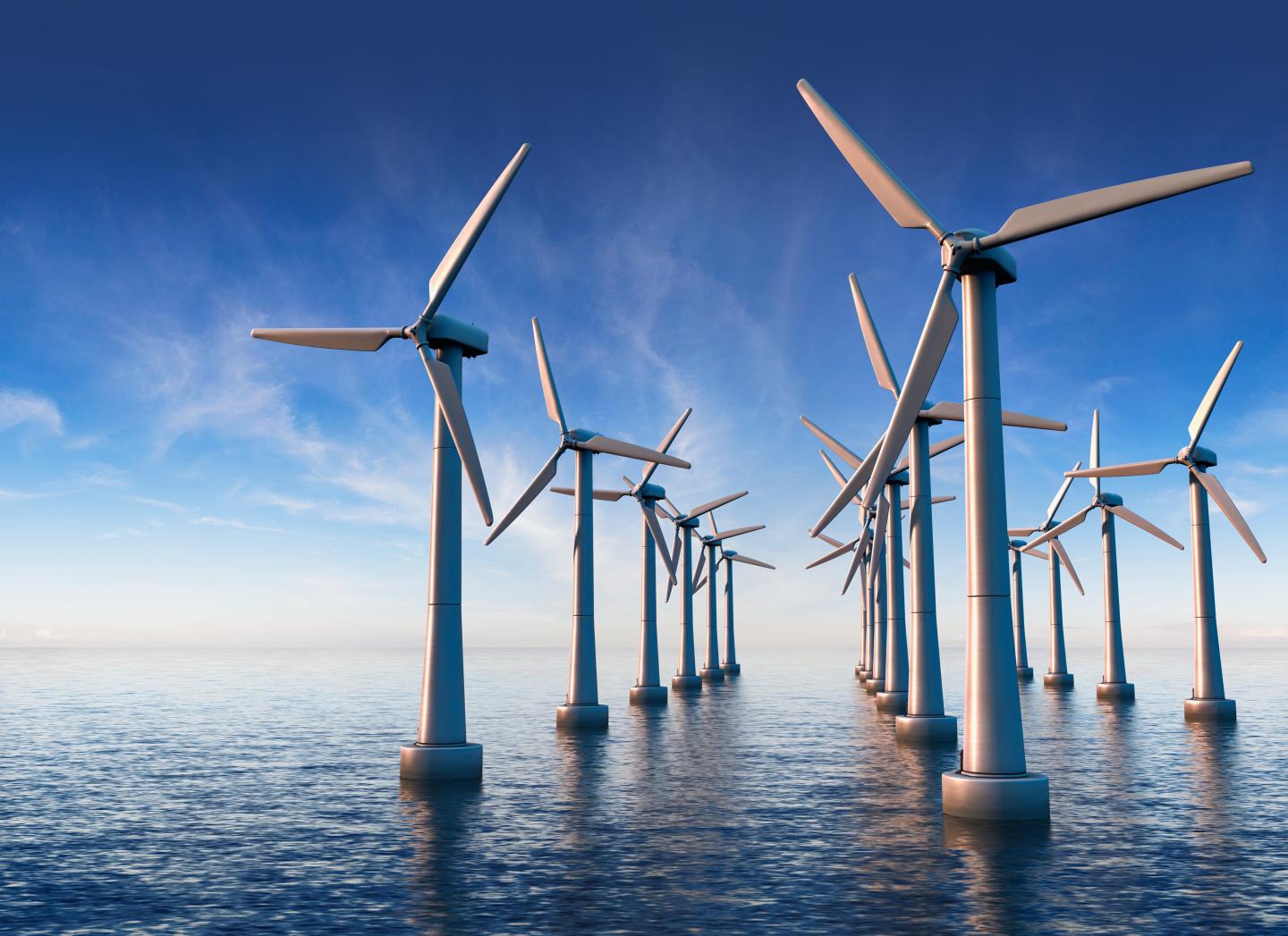
A wind farm on the ocean.
A photo of a wind farm. Matthias Kulka—Getty Images

Northern California has some of the strongest offshore winds in the U.S., with immense potential to produce clean energy. But it also has a problem. Its continental shelf drops off quickly, making building traditional wind turbines directly on the seafloor costly if not impossible.

Once water gets more than about 200 feet deep – roughly the height of an 18-story building – these “monopile” structures are pretty much out of the question.

A solution has emerged that’s being tested in several locations around the world: wind turbines that float.

In California, where drought has put pressure on the hydropower supply, the state is moving forward on a plan to develop the nation’s first floating offshore wind farms. On Dec. 7, 2022, the federal government auctioned off five lease areas about 20 miles off the California coast to companies with plans to develop floating wind farms. The bids were lower than recent leases off the Atlantic coast, where wind farms can be anchored to the seafloor, but still significant, together exceeding US$757 million.

So, how do floating wind farms work?

Three main ways to float a turbine

A floating wind turbine works just like other wind turbines – wind pushes on the blades, causing the rotor to turn, which drives a generator that creates electricity. But instead of having its tower embedded directly into the ground or the seafloor, a floating wind turbine sits on a platform with mooring lines, such as chains or ropes, that connect to anchors in the seabed below.

These mooring lines hold the turbine in place against the wind and keep it connected to the cable that sends its electricity back to shore.

Most of the stability is provided by the floating platform itself. The trick is to design the platform so the turbine doesn’t tip too far in strong winds or storms.

There are three main types of platforms:

  • A spar buoy platform is a long hollow cylinder that extends downward from the turbine tower. It floats vertically in deep water, weighted with ballast in the bottom of the cylinder to lower its center of gravity. It’s then anchored in place, but with slack lines that allow it to move with the water to avoid damage. Spar buoys have been used by the oil and gas industry for years for offshore operations.
  • Semisubmersible platforms have large floating hulls that spread out from the tower, also anchored to prevent drifting. Designers have been experimenting with multiple turbines on some of these hulls.
  • Tension leg platforms have smaller platforms with taut lines running straight to the floor below. These are lighter but more vulnerable to earthquakes or tsunamis because they rely more on the mooring lines and anchors for stability.

Each platform must support the weight of the turbine and remain stable while the turbine operates. It can do this in part because the hollow platform, often made of large steel or concrete structures, provides buoyancy to support the turbine. Since some can be fully assembled in port and towed out for installation, they might be far cheaper than fixed-bottom structures, which require specialty vessels for installation on site.

Floating platforms can support wind turbines that can produce 10 megawatts or more of power – that’s similar in size to other offshore wind turbines and several times larger than the capacity of a typical onshore wind turbine you might see in a field.

Why do we need floating turbines?

Some of the strongest wind resources are away from shore in locations with hundreds of feet of water below, such as off the U.S. West Coast, the Great Lakes, the Mediterranean Sea and the coast of Japan.

The U.S. lease areas auctioned off in early December cover about 583 square miles in two regions – one off central California’s Morro Bay and the other near the Oregon state line. The water off California gets deep quickly, so any wind farm that is even a few miles from shore will require floating turbines.

Once built, wind farms in those five areas could provide about 4.6 gigawatts of clean electricity, enough to power 1.5 million homes, according to government estimates. The winning companies suggested they could produce even more power.

But getting actual wind turbines on the water will take time. The winners of the lease auction will undergo a Justice Department anti-trust review and then a long planning, permitting and environmental review process that typically takes several years.

Globally, several full-scale demonstration projects with floating wind turbines are already operating in Europe and Asia. The Hywind Scotland project became the first commercial-scale offshore floating wind farm in 2017, with five 6-megawatt turbines supported by spar buoys designed by the Norwegian energy company Equinor.

Equinor Wind US had one of the winning bids off Central California. Another winning bidder was RWE Offshore Wind Holdings. RWE operates wind farms in Europe and has three floating wind turbine demonstration projects. The other companies involved – Copenhagen Infrastructure Partners, Invenergy and Ocean Winds – have Atlantic Coast leases or existing offshore wind farms.

While floating offshore wind farms are becoming a commercial technology, there are still technical challenges that need to be solved. The platform motion may cause higher forces on the blades and tower, and more complicated and unsteady aerodynamics. Also, as water depths get very deep, the cost of the mooring lines, anchors and electrical cabling may become very high, so cheaper but still reliable technologies will be needed.

But we can expect to see more offshore turbines supported by floating structures in the near future.

Our new weekly Impact Report newsletter examines how ESG news and trends are shaping the roles and responsibilities of today's executives. Subscribe here.
About the Authors
By Matthew Lackner
See full bioRight Arrow Button Icon
By The Conversation
See full bioRight Arrow Button Icon

Latest in Environment

Finance
Lorem ipsum dolor sit amet, consectetur adipiscing elit, sed do eiusmod tempor incididunt ut labore et dolore magna aliqua. Ut enim ad minim veniam
By Fortune Editors
October 20, 2025
Finance
Lorem ipsum dolor sit amet, consectetur adipiscing elit, sed do eiusmod tempor incididunt ut labore et dolore magna aliqua. Ut enim ad minim veniam
By Fortune Editors
October 20, 2025
Finance
Lorem ipsum dolor sit amet, consectetur adipiscing elit, sed do eiusmod tempor incididunt ut labore et dolore magna aliqua. Ut enim ad minim veniam
By Fortune Editors
October 20, 2025
Finance
Lorem ipsum dolor sit amet, consectetur adipiscing elit, sed do eiusmod tempor incididunt ut labore et dolore magna aliqua. Ut enim ad minim veniam
By Fortune Editors
October 20, 2025
Finance
Lorem ipsum dolor sit amet, consectetur adipiscing elit, sed do eiusmod tempor incididunt ut labore et dolore magna aliqua. Ut enim ad minim veniam
By Fortune Editors
October 20, 2025
Finance
Lorem ipsum dolor sit amet, consectetur adipiscing elit, sed do eiusmod tempor incididunt ut labore et dolore magna aliqua. Ut enim ad minim veniam
By Fortune Editors
October 20, 2025

Most Popular

Finance
Lorem ipsum dolor sit amet, consectetur adipiscing elit, sed do eiusmod tempor incididunt ut labore et dolore magna aliqua. Ut enim ad minim veniam
By Fortune Editors
October 20, 2025
Finance
Lorem ipsum dolor sit amet, consectetur adipiscing elit, sed do eiusmod tempor incididunt ut labore et dolore magna aliqua. Ut enim ad minim veniam
By Fortune Editors
October 20, 2025
Finance
Lorem ipsum dolor sit amet, consectetur adipiscing elit, sed do eiusmod tempor incididunt ut labore et dolore magna aliqua. Ut enim ad minim veniam
By Fortune Editors
October 20, 2025
Finance
Lorem ipsum dolor sit amet, consectetur adipiscing elit, sed do eiusmod tempor incididunt ut labore et dolore magna aliqua. Ut enim ad minim veniam
By Fortune Editors
October 20, 2025
Finance
Lorem ipsum dolor sit amet, consectetur adipiscing elit, sed do eiusmod tempor incididunt ut labore et dolore magna aliqua. Ut enim ad minim veniam
By Fortune Editors
October 20, 2025
Finance
Lorem ipsum dolor sit amet, consectetur adipiscing elit, sed do eiusmod tempor incididunt ut labore et dolore magna aliqua. Ut enim ad minim veniam
By Fortune Editors
October 20, 2025
Fortune Secondary Logo
Rankings
  • 100 Best Companies
  • Fortune 500
  • Global 500
  • Fortune 500 Europe
  • Most Powerful Women
  • World's Most Admired Companies
  • See All Rankings
  • Lists Calendar
Sections
  • Finance
  • Fortune Crypto
  • Features
  • Leadership
  • Health
  • Commentary
  • Success
  • Retail
  • Mpw
  • Tech
  • Lifestyle
  • CEO Initiative
  • Asia
  • Politics
  • Conferences
  • Europe
  • Newsletters
  • Personal Finance
  • Environment
  • Magazine
  • Education
Customer Support
  • Frequently Asked Questions
  • Customer Service Portal
  • Privacy Policy
  • Terms Of Use
  • Single Issues For Purchase
  • International Print
Commercial Services
  • Advertising
  • Fortune Brand Studio
  • Fortune Analytics
  • Fortune Conferences
  • Business Development
  • Group Subscriptions
About Us
  • About Us
  • Press Center
  • Work At Fortune
  • Terms And Conditions
  • Site Map
  • About Us
  • Press Center
  • Work At Fortune
  • Terms And Conditions
  • Site Map
  • Facebook icon
  • Twitter icon
  • LinkedIn icon
  • Instagram icon
  • Pinterest icon

Latest in Environment

A large oil-exporting hub will be built in the deepwater Gulf of Mexico amid the Iran war—but only because Japan and the White House are paying for it
Energycrude oil
A large oil-exporting hub will be built in the deepwater Gulf of Mexico amid the Iran war—but only because Japan and the White House are paying for it
By Jordan BlumMay 8, 2026
10 hours ago
An almond farmer inspects a fruit on a tree.
North AmericaAgriculture
California farmers must destroy 420,000 peach trees after Del Monte closes its canneries and cancels more than $550 million in long-term contracts
By Sasha RogelbergMay 7, 2026
20 hours ago
bears
EnvironmentAlaska
Judge allows Alaska wildlife agents to resume shooting bears from helicopters to protect recovering caribou herd
By Becky Bohrer and The Associated PressMay 7, 2026
1 day ago
Debris from the White House East Wing demolition was dumped at a nearby public golf course and contains toxic metals, National Park report finds
PoliticsWhite House
Debris from the White House East Wing demolition was dumped at a nearby public golf course and contains toxic metals, National Park report finds
By Sasha RogelbergMay 7, 2026
1 day ago
ben
CommentaryFood and drink
Magnum owns Ben & Jerry’s. Now it’s destroying what made the brand worth buying
By David Bronner, Michael Bronner and Ryan GellertMay 7, 2026
1 day ago
At 75, Ted Turner told Fortune he gave himself 5 more years. He got 12—and spent them warning the world was ending
C-SuiteMedia
At 75, Ted Turner told Fortune he gave himself 5 more years. He got 12—and spent them warning the world was ending
By Ashley LutzMay 6, 2026
2 days ago

Most Popular

California farmers must destroy 420,000 peach trees after Del Monte closes its canneries and cancels more than $550 million in long-term contracts
North America
California farmers must destroy 420,000 peach trees after Del Monte closes its canneries and cancels more than $550 million in long-term contracts
By Sasha RogelbergMay 7, 2026
20 hours ago
U.S. Treasury will have to borrow $2 trillion this year just to continue functioning—more than $166 billion every month
Economy
U.S. Treasury will have to borrow $2 trillion this year just to continue functioning—more than $166 billion every month
By Eleanor PringleMay 7, 2026
1 day ago
'Blue dot fever' plagues musicians like Post Malone, Meghan Trainor, and Zayn as a growing list of artists cancel tours due to lagging ticket sales
Arts & Entertainment
'Blue dot fever' plagues musicians like Post Malone, Meghan Trainor, and Zayn as a growing list of artists cancel tours due to lagging ticket sales
By Dave Lozo and Morning BrewMay 7, 2026
22 hours ago
A Michigan farm town voted down plans for a giant OpenAI-Oracle data center. Weeks later, construction began
Magazine
A Michigan farm town voted down plans for a giant OpenAI-Oracle data center. Weeks later, construction began
By Sharon GoldmanMay 6, 2026
2 days ago
Current price of oil as of May 7, 2026
Personal Finance
Current price of oil as of May 7, 2026
By Joseph HostetlerMay 7, 2026
1 day ago
Airbnb CEO Brian Chesky warns two types of people won’t survive the AI era: ‘pure people managers’ and workers who resist change
Success
Airbnb CEO Brian Chesky warns two types of people won’t survive the AI era: ‘pure people managers’ and workers who resist change
By Emma BurleighMay 7, 2026
1 day ago

© 2026 Fortune Media IP Limited. All Rights Reserved. Use of this site constitutes acceptance of our Terms of Use and Privacy Policy | CA Notice at Collection and Privacy Notice | Do Not Sell/Share My Personal Information
FORTUNE is a trademark of Fortune Media IP Limited, registered in the U.S. and other countries. FORTUNE may receive compensation for some links to products and services on this website. Offers may be subject to change without notice.